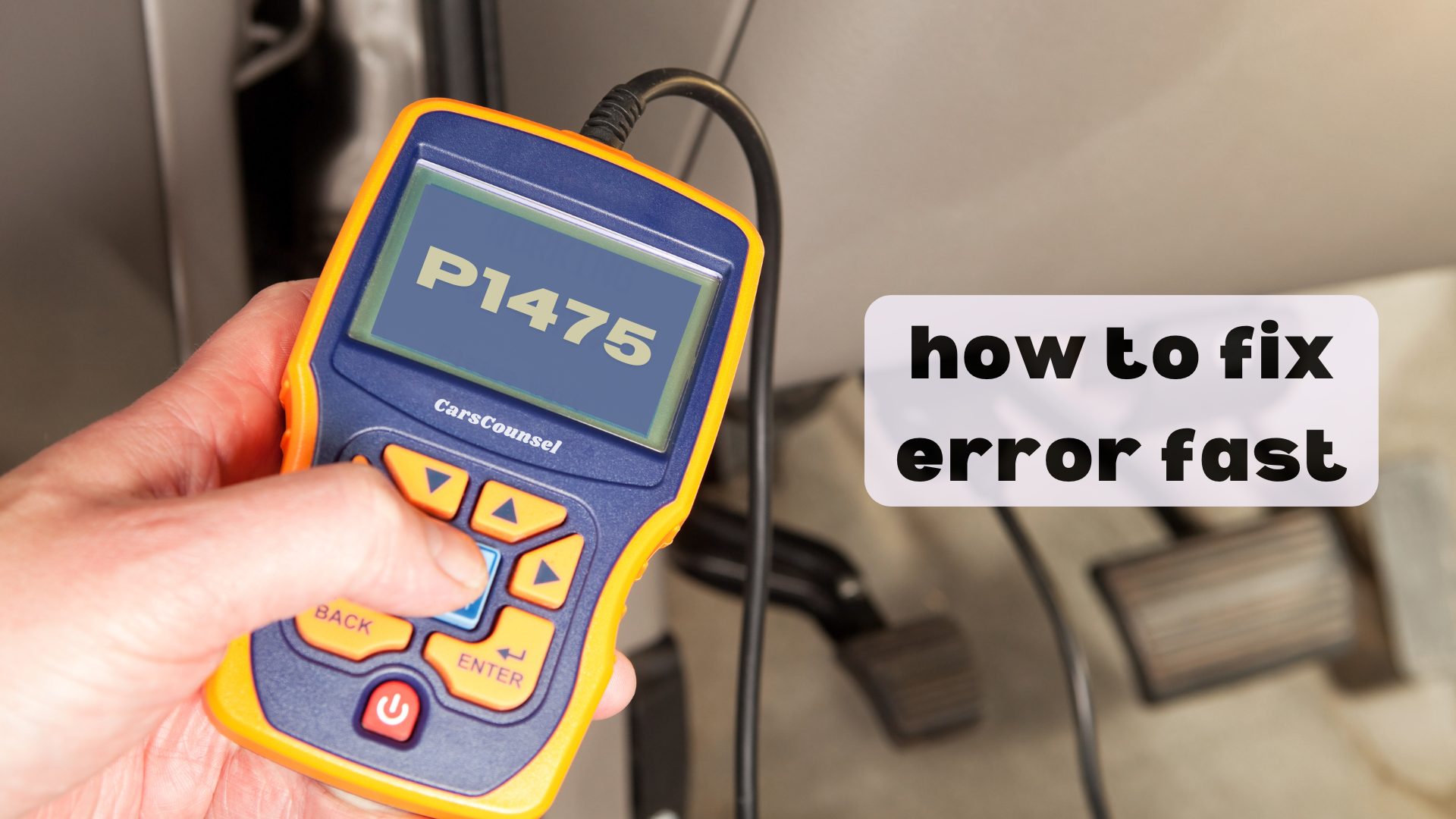
P1475 is a manufacturer-specific OBD-II diagnostic trouble code. Because it is manufacturer-specific, its exact definition depends entirely on the vehicle application, ranging from EVAP leak detection to A/C pressure sensors.
The exact application must be verified before diagnosis. The code indicates a detected condition in the relevant circuit, but testing is required to identify the root cause.
Quick Navigation
Key Takeaways
- P1475 is a manufacturer-specific code, meaning its exact definition varies by automaker and vehicle application.
- On some Volkswagen and Chrysler applications, it indicates a fault in the evaporative emissions leak detection pump circuit.
- On certain Ford, GM, and Honda applications, it may relate to the A/C refrigerant pressure sensor or cooling fan relay circuit.
- Diagnosis requires verifying the exact factory definition and testing the relevant wiring, sensors, or control modules.
P1475 Code Description and Implications
P1475 is a manufacturer-specific powertrain code. Because the second digit is “1”, the definition is controlled by the automaker rather than the SAE standardized list.
Some Volkswagen, Audi, and Chrysler applications: P1475 indicates an electrical fault in the evaporative emissions (EVAP) leak detection pump control circuit.
Certain Ford, GM, and Honda applications: P1475 may indicate a high voltage condition in the A/C refrigerant pressure sensor circuit or a fault in the cooling fan relay circuit.
Some specific diesel applications: P1475 can relate to a particulate matter sensor or exhaust system circuit fault.
When the control module detects this condition, it sets this error code. Because this is a manufacturer-specific code, the exact definition and diagnostic steps vary by automaker.
Common Causes of the P1475 Code
Possible causes depend entirely on the specific vehicle application.
For EVAP leak detection pump applications, causes include damaged wiring in the pump harness, corroded connectors, a failed leak detection pump, or a blocked EVAP vent line.
For A/C pressure sensor applications, causes may include a failed refrigerant pressure sensor, damaged wiring, low or overcharged A/C refrigerant levels, or a faulty climate control module.
For cooling fan or particulate matter sensor applications, causes include failed relays, damaged sensor elements, or internal control module faults.
Symptoms Associated With P1475
Symptoms vary based on the affected system and the specific vehicle application.
On EVAP applications, the primary symptom is an illuminated check engine light, and the vehicle will likely fail an emissions inspection.
On A/C or cooling fan applications, symptoms may include the air conditioning blowing warm air, the radiator cooling fans failing to operate, or engine overheating.
Diagnosing the P1475 Trouble Code
Diagnosis must begin by confirming the exact factory definition for the specific make, model, and year.
For EVAP applications, technicians inspect the leak detection pump wiring and test the pump’s electrical operation and vacuum supply according to the manufacturer’s procedure.
For A/C applications, diagnosis involves checking the actual refrigerant pressure with manifold gauges and comparing it to the sensor’s voltage reading on a scan tool.
Repairing the P1475 Issue
Repairs follow the confirmed diagnosis for the specific application.
If wiring damage or a short circuit is found, repairing the harness and clearing the code resolves the electrical fault.
If the leak detection pump, A/C pressure sensor, or cooling fan relay fails the electrical tests, replacing the confirmed failed component is required.
Cost Considerations for P1475 Repairs
Repair costs vary widely depending on the underlying fault and the vehicle application.
Replacing an EVAP leak detection pump or an A/C pressure sensor involves standard parts and labor.
If the repair requires recovering and recharging the A/C refrigerant system, additional labor and material costs apply.
Cost depends on diagnostic time, component accessibility, required parts, programming requirements, and labor.
Prevention Strategies for Future Occurrences
Inspecting exposed EVAP and engine bay wiring harnesses can help identify developing damage from road debris, heat, or corrosion.
Ensuring the A/C system is serviced by qualified professionals helps prevent improper refrigerant charges that can trigger pressure sensor faults.
Troubleshooting Tips and Best Practices
Never assume a manufacturer-specific code has a universal meaning. Always verify the exact factory service information for your specific vehicle before beginning diagnosis.
Do not replace the leak detection pump or A/C sensor without first verifying the wiring, connectors, and actual system pressures or vacuum supply.
If P1475 is accompanied by other EVAP or A/C system codes, the diagnosis must address the combined system faults rather than treating them in isolation.
More OBD-II Codes
| P1431 | P1433 | P1441 | P1450 |
| P1456 | P1457 | P1476 | P1478 |
| P1479 | P1480 | P1481 | P1482 |
| P0440 | P0441 | P0442 | P0446 |
| P0455 | P0456 | P0171 | P0174 |
| P0300 | P0420 | P0430 | P0135 |
Frequently Asked Questions
Is P1475 a generic OBD-II code?
No. P1475 is a manufacturer-specific code, meaning its exact definition and diagnostic procedure depend entirely on the vehicle’s make, model, and application.
Can I drive my vehicle with a P1475 code?
It depends on the application. If it relates to the EVAP system, driving is usually safe. If it indicates an A/C pressure or cooling fan fault, the engine may overheat.
Will a P1475 code cause an emissions failure?
Yes, if the code on your specific vehicle relates to the EVAP leak detection pump or particulate matter sensor, the vehicle will likely fail an emissions inspection until repaired.
Does P1475 always mean the sensor is broken?
No. The code often points to an electrical fault like damaged wiring, a corroded connector, or a mechanical issue like a blocked EVAP vent line or incorrect refrigerant charge.
How do I clear a manufacturer-specific P1475 code?
Clearing the code requires fixing the underlying electrical, mechanical, or pressure fault. Simply using a scan tool to erase the code will not repair the root cause.
What Should You Do About the P1475 Code?
Confirm the exact factory definition for your specific vehicle, then follow the applicable manufacturer diagnostic procedure for the relevant system and components.
Because P1475 is manufacturer-specific, testing the exact wiring circuits, sensors, or control modules identified by the factory service information is required to find the root cause.
Once the fault is confirmed, perform the necessary repairs and verify the fix by clearing the codes and completing a test drive.

