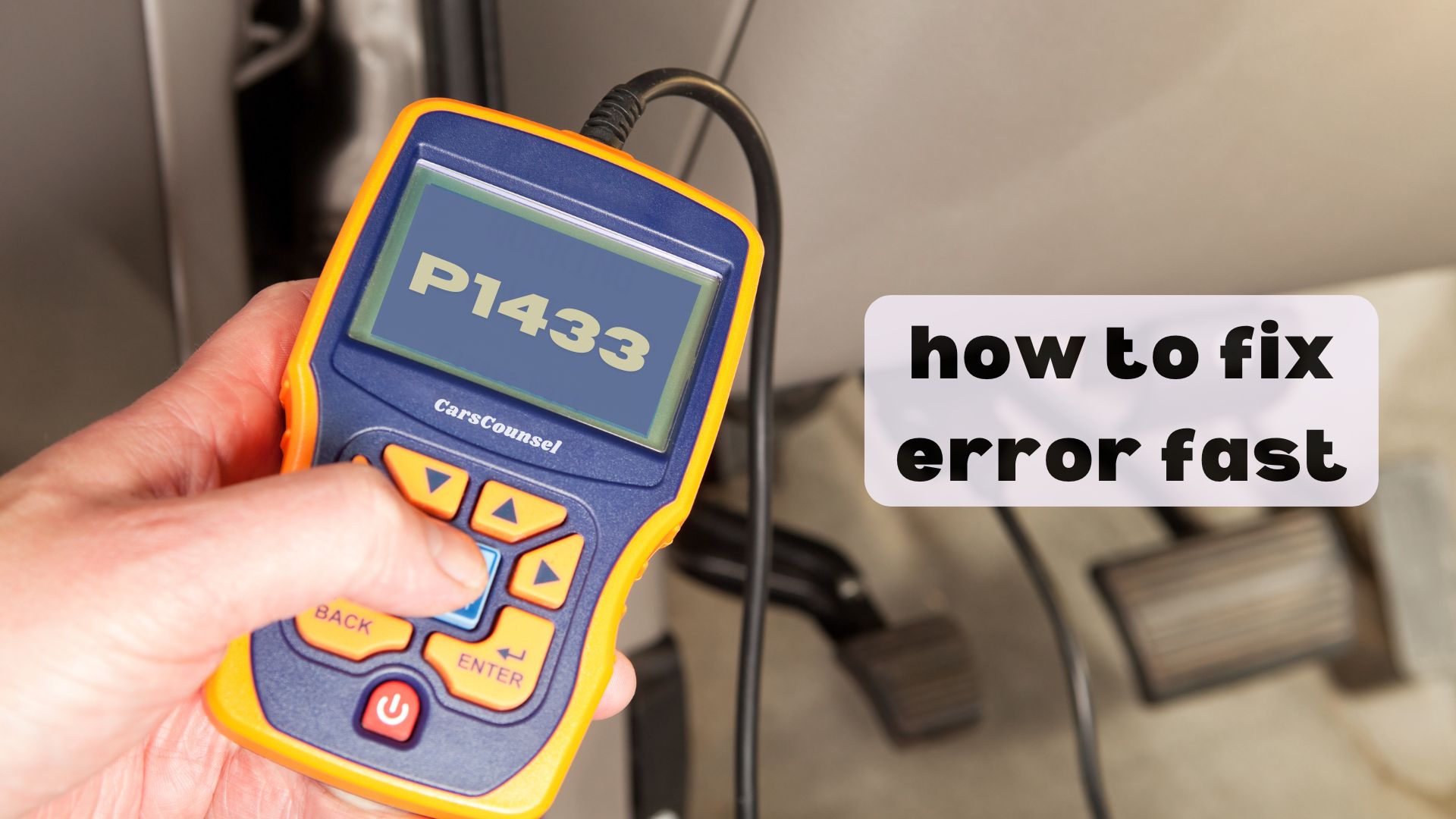
The P1433 code is a manufacturer-specific powertrain code. Because it is manufacturer-specific, its exact definition depends entirely on the vehicle application, ranging from fuel level sensor circuits to A/C refrigerant temperature or EVAP purge valves.
This code identifies a detected electrical circuit condition or system malfunction, not necessarily a failed component. Proper diagnosis requires verifying the exact factory definition for your vehicle and testing the relevant circuits.
Quick Navigation
Key Takeaways
- The P1433 code is manufacturer-specific, indicating issues like a fuel level sensor circuit fault, A/C temperature sensor fault, or EVAP system malfunction.
- Possible causes include wiring faults, poor electrical connections, failed sensors, or module driver issues.
- Symptoms vary by application and may include an inaccurate fuel gauge, A/C system disablement, or an illuminated Check Engine Light.
- Diagnosis requires confirming the exact factory definition and testing the specific circuit for opens, shorts, or excessive resistance.
- Repairs vary by application and may involve wiring repair, sensor replacement, or solenoid replacement.
P1433 Code Description and Implications
P1433 is a manufacturer-specific code. Its exact definition depends entirely on the vehicle application.
Some General Motors (GM), Saab, and Saturn applications: The code indicates a “Fuel Level Sensor 2 Circuit High Input,” meaning the Powertrain Control Module (PCM) has detected a voltage signal from the secondary fuel level sensor that is higher than the normal operating range.
Certain Ford applications: The code typically indicates an “A/C Refrigerant Temperature Sensor Circuit High,” where the PCM detects an electrical issue causing an abnormally high voltage signal from the A/C temperature sensor.
Some Volkswagen, Audi, and Honda applications: The code may relate to an EVAP purge valve circuit malfunction or an EVAP bypass solenoid valve circuit fault. Because definitions vary, verifying the exact factory service information is mandatory.
Common Causes of the P1433 Code
Several conditions can trigger this manufacturer-specific malfunction code. Identifying the exact cause requires electrical testing of the specific circuit.
- For fuel level sensor applications: An open circuit, short to voltage, or high resistance in the sensor signal wire or ground circuit.
- For A/C temperature sensor applications: A failed sensor element or a short to voltage in the signal circuit.
- For EVAP applications: A failed purge valve solenoid, broken wiring, or poor electrical connections at the valve or PCM.
- Corroded, loose, or contaminated electrical connectors at the component or the control module.
- A faulty PCM or internal module driver issue (rare, usually only after circuit verification).
Symptoms Associated With P1433
Symptoms vary significantly depending on which system the code monitors on your specific vehicle.
- Illuminated Check Engine Light.
- On fuel level applications: An inaccurate or erratic fuel gauge reading, or the low fuel warning light illuminating incorrectly.
- On A/C applications: The air conditioning system may be disabled by the PCM to prevent compressor damage due to lack of valid temperature data.
- On EVAP applications: The vehicle may fail an emissions inspection due to an incomplete EVAP monitor, with no noticeable drivability issues.
Diagnosing the P1433 Trouble Code
Diagnosis must begin by confirming the exact factory definition for your specific make and model.
- Verify the exact manufacturer definition and locate the wiring diagram for the specific sensor or solenoid circuit.
- Visually inspect the wiring harness and connectors at the component and the control module, looking for broken wires, chafing, or corrosion.
- Use a digital multimeter to measure the resistance of the sensor or solenoid and compare it to manufacturer specifications.
- Check the signal circuit for continuity and verify there are no shorts to voltage or open circuits.
- Use a scan tool to monitor the live data for the fuel level, A/C temperature, or EVAP valve command to see if the data is rational.
Repairing the P1433 Issue
Repairs depend entirely on the confirmed root cause of the circuit malfunction.
- If wiring damage or an open/short circuit is found, repair or replace the affected harness sections and secure the routing.
- Clean or replace corroded connectors to restore proper electrical contact and circuit integrity.
- If the fuel level sensor, A/C temperature sensor, or EVAP purge valve fails electrical testing, replace it using a component meeting the correct vehicle specification.
- If testing confirms the PCM driver is faulty and all external circuits are intact, follow the manufacturer procedure for module replacement.
Cost Considerations for P1433 Repairs
Cost depends on diagnostic time, component accessibility, required parts, programming requirements, and labor.
Replacing an externally mounted EVAP purge valve or A/C sensor is generally less expensive than diagnosing and replacing a fuel level sensor assembly, which often requires dropping the fuel tank or removing the rear seat to access the fuel pump module.
Prevention Strategies for Future Occurrences
While electrical failures are not always preventable, some practices can reduce the risk of circuit issues.
- Inspecting exposed wiring and connectors can help identify developing damage from heat exposure, chafing, or road debris.
- Keeping electrical connections clean and sealed helps prevent moisture intrusion and corrosion in harsh climates.
- Ensuring proper routing of the wiring harness during previous repairs prevents the wires from resting on hot exhaust components or sharp metal edges.
Troubleshooting Tips and Best Practices
Always consult the exact manufacturer service information for your vehicle’s wiring diagram and pinout values.
- Do not assume a sensor or solenoid is faulty simply because the code points to its circuit; wiring damage and connector corrosion are frequently the actual cause.
- For fuel level applications, check for related fuel gauge or fuel pump module codes that may indicate a broader issue with the sending unit assembly.
- Verify technical service bulletins for your specific make and model, as some manufacturers issue updated wiring harnesses or revised sensor part numbers for recurring circuit faults.
More OBD-II Codes
| P1431 | P1423 | P1421 | P1420 |
| P1418 | P1416 | P1441 | P1444 |
| P1445 | P1446 | P1447 | P1448 |
| P0440 | P0441 | P0442 | P0444 |
| P0445 | P0446 | P0449 | P0450 |
| P0451 | P0452 | P0453 | P0455 |
Frequently Asked Questions
Is the P1433 code generic or manufacturer-specific?
No. P1433 is a manufacturer-specific code. Its exact definition varies by vehicle make, commonly indicating a fuel level sensor, A/C temperature sensor, or EVAP system circuit fault.
Can I drive my car with a P1433 code?
It depends on the application. If it relates to the fuel level sensor, you may run out of gas unexpectedly. If it relates to the A/C or EVAP system, the vehicle is generally safe to drive but should be repaired soon.
Will a bad fuel level sensor cause a P1433 code?
Yes. On GM and related applications, an open circuit or high voltage signal from a failing secondary fuel level sensor will trigger this specific circuit malfunction code.
Can an EVAP leak trigger the P1433 code?
Typically no. P1433 is an electrical circuit code for a solenoid or sensor. However, a faulty EVAP purge valve could cause secondary EVAP flow or leak codes.
Will a P1433 code cause an emissions test failure?
Yes. Any code that illuminates the Check Engine Light will typically cause an automatic failure during an OBD-II emissions inspection until the underlying issue is diagnosed and repaired.
What Should You Do About the P1433 Code?
Confirm the exact factory definition for your specific vehicle application. Follow the applicable manufacturer diagnostic procedure to test the relevant system circuits, sensors, or solenoids.
Repair or replace the confirmed failed component or fix the identified wiring fault, then retest the system to ensure proper operation.

