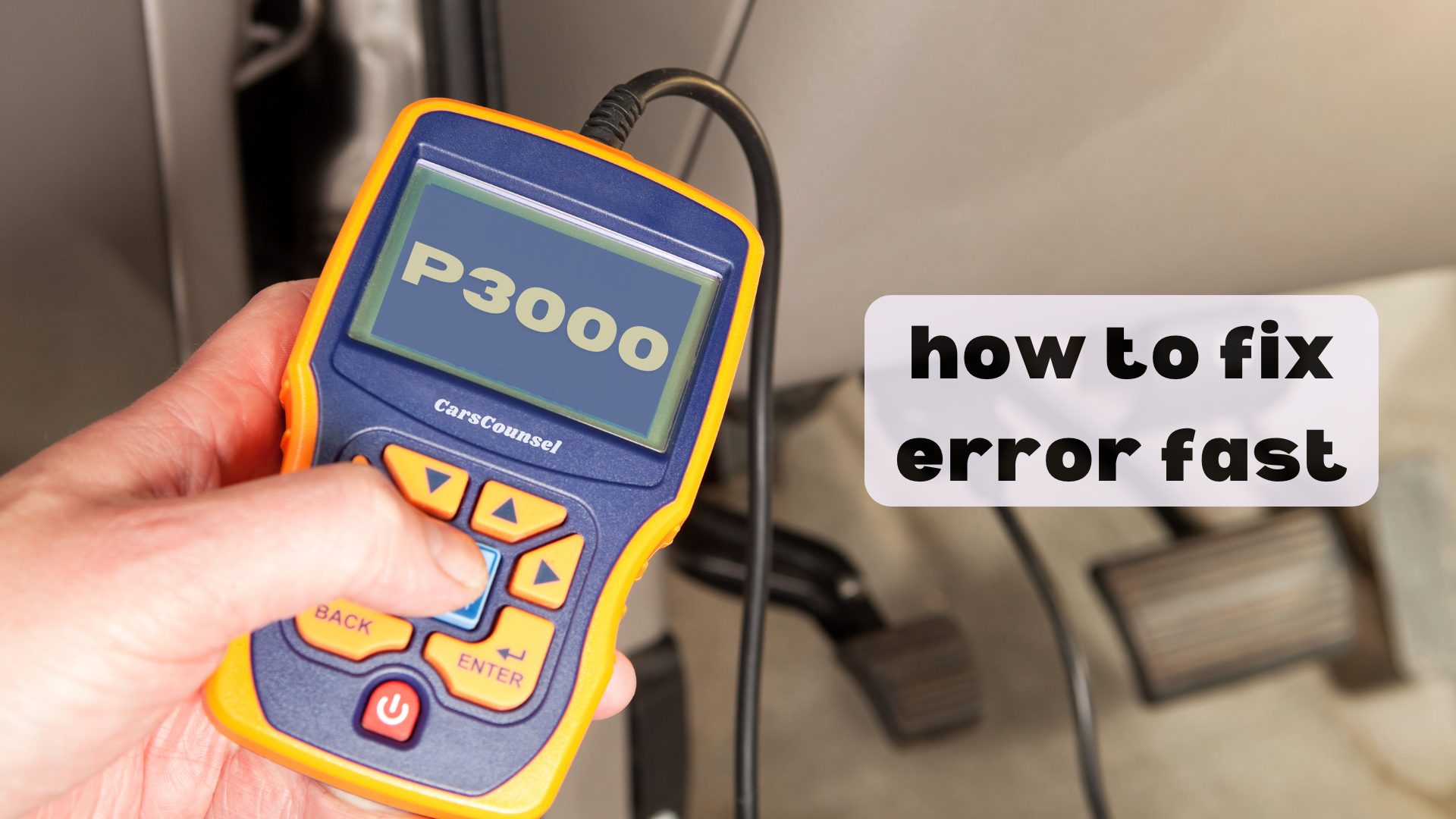
Among OBD-II trouble codes, P3000 is a manufacturer-specific definition indicating a High-Voltage Battery Control System Malfunction. It is heavily associated with hybrid vehicles and means the engine control module detected a fault signal from the hybrid battery system.
Because this code points to a complex high-voltage system, exact application verification is required. The code indicates a system-level condition, and reading specific sub-codes is necessary to isolate the fault to the battery pack, cooling system, or control module.
Quick Navigation
Key Takeaways
- Condition detected: The ECM received a fault signal from the hybrid battery control system, indicating a high-voltage battery issue.
- Sub-codes required: P3000 is a master code; reading sub-codes from the hybrid battery ECU is necessary to pinpoint the exact fault.
- Low fuel trigger: Running out of gas or driving with a nearly empty tank can over-discharge the hybrid battery and trigger this code.
- High-voltage safety: Diagnosis and repair of high-voltage components require specialized training and equipment.
P3000 Code Description and Implications
P3000 is a manufacturer-specific definition for HV Battery Control System Malfunction. In hybrid vehicles, the Engine Control Module (ECM) monitors the high-voltage battery system through the Hybrid Vehicle Control IC or battery ECU.
When the battery ECU detects a fault within the high-voltage system, it sends a signal to the ECM to store P3000. This acts as a master code, indicating a system malfunction rather than a specific component failure.
Common Causes of the P3000 Code
- Low fuel or over-discharged battery: Running the vehicle out of fuel forces the hybrid battery to crank the engine repeatedly, draining it below safe voltage limits.
- Failed hybrid battery pack: Internal battery modules may degrade or fail, causing voltage imbalances or capacity loss.
- Battery cooling system failure: A blocked cooling fan intake or failed fan can cause the battery to overheat and trigger a fault.
- High-voltage wiring or connection issues: Corrosion, loose connections, or damage to the high-voltage safety interlock circuits.
Symptoms Associated With P3000
Possible symptoms include:
- Illuminated Check Engine Light, Master Warning Light, and hybrid system warning indicators.
- Reduced power, limp mode activation, or the vehicle refusing to enter “Ready” mode.
- Engine running continuously in an attempt to charge the high-voltage battery.
- Vehicle stalling or shutting down unexpectedly.
Diagnosing the P3000 Trouble Code
Diagnosing a high-voltage system code requires an advanced scan tool capable of communicating with the Hybrid Vehicle ECU. High-voltage components should only be serviced by qualified technicians.
- Check fuel level: Ensure the tank has adequate fuel. If the vehicle was run dry, adding fuel and clearing codes may be required.
- Scan for sub-codes: Read the Hybrid Vehicle ECU for specific sub-codes to identify the exact failing module or circuit.
- Inspect battery cooling system: Check the hybrid battery cooling fan, filter, and intake ducts for blockages or debris.
- Verify data: Monitor live hybrid battery data, including individual module voltages and temperatures, to identify imbalances.
Repairing the P3000 Issue
Repairs must follow confirmed diagnosis. Never attempt to open or repair high-voltage battery modules without proper certification and personal protective equipment.
- Refuel and reset: If caused by low fuel, add fuel, clear codes, and monitor. A specialized grid charger may be needed if the battery is deeply discharged.
- Clean cooling system: Clear debris from the battery cooling fan and ducts, and replace the cabin air filter if it restricts airflow.
- Battery reconditioning or replacement: If internal modules are degraded, the hybrid battery pack may need to be reconditioned or replaced with a unit meeting the correct vehicle specification.
- Repair wiring: Fix any damaged low-voltage communication circuits between the ECM and the hybrid battery ECU.
Cost Considerations for P3000 Repairs
Cost depends on diagnostic time, component accessibility, required parts, programming requirements, and labor.
Replacing a complete hybrid battery assembly is a major repair, while addressing a cooling system blockage or low-fuel condition involves minimal parts.
Prevention Strategies for Future Occurrences
- Avoid running the fuel tank to empty: Driving with a nearly empty tank can over-discharge the high-voltage battery and cause permanent cell damage.
- Keep the cooling intake clean: Ensure the hybrid battery cooling fan intake and filter remain unobstructed to prevent overheating.
Troubleshooting Tips and Best Practices
- Always check for sub-codes: P3000 alone does not identify the specific failed component. Reading the Hybrid Vehicle ECU is mandatory for accurate diagnosis.
- Do not ignore cooling issues: A blocked battery cooling fan will rapidly degrade the hybrid battery modules due to excessive heat.
- Check for TSBs: Some manufacturers issue Technical Service Bulletins for hybrid battery control module software updates that may address false fault detection.
More OBD-II Codes
| P2942 | P2A04 | P2BA8 | P2723 |
| P2601 | P2600 | P3400 | P3401 |
| P3425 | P3441 | P3449 | P3497 |
| P0688 | P0690 | P0600 | P0601 |
| P0420 | P0430 | P0171 | P0174 |
| P0300 | P0301 | P0302 | P0303 |
Frequently Asked Questions
Can running out of gas cause a P3000 code?
Yes. If a hybrid vehicle runs out of fuel, the system may repeatedly attempt to start the engine using the hybrid battery. This can over-discharge the battery below safe voltage limits, triggering the P3000 code.
Is it safe to drive with a P3000 code?
Driving is not recommended. A P3000 code indicates a high-voltage system fault. The vehicle may enter a reduced-power limp mode, shut down unexpectedly, or fail to restart, leaving you stranded.
Will clearing the code fix the P3000 issue?
Clearing the code will not repair a failed battery module or blocked cooling system. If the code was triggered solely by a low-fuel condition, clearing it after refueling may resolve the issue, but battery health should be verified.
Does P3000 mean the entire hybrid battery needs replacement?
Not necessarily. P3000 is a master code indicating a system fault. The root cause could be a blocked cooling fan, a wiring issue, or a single degraded module. Proper sub-code diagnosis is required before replacing the pack.
Can I replace hybrid battery components myself?
High-voltage hybrid systems operate at lethal voltages. Diagnosis and repair of high-voltage components, including the battery pack and orange cables, should only be performed by qualified technicians with proper safety equipment.
What Should You Do About the P3000 Code?
Because the P3000 code indicates a high-voltage battery control system malfunction, it requires verifying the fuel level, cooling system, and reading specific sub-codes before replacing components. Confirm the exact factory definition for your vehicle.
Inspect the battery cooling intake for blockages, check the hybrid battery live data, and test the relevant system and components. Follow the manufacturer’s diagnostic procedure to isolate the faulty component, repair the confirmed root cause, and verify the repair.

