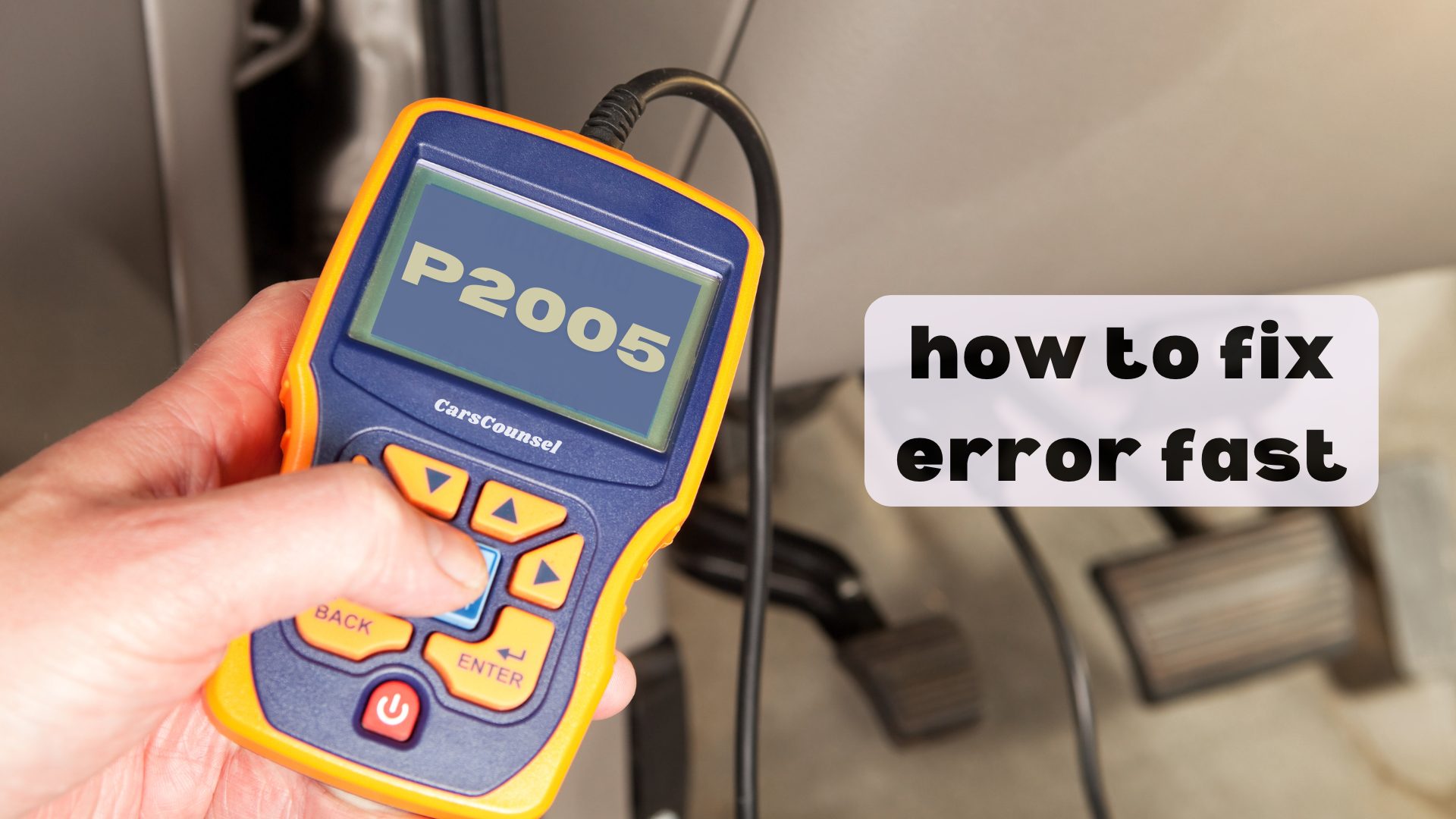
P2005 is a generic OBD-II powertrain code defined as “Intake Manifold Runner Control Stuck Open Bank 2.” It applies to vehicles equipped with variable intake manifold systems.
This code indicates the powertrain control module detected that the runner flaps on Bank 2 are not closing as commanded. It does not automatically prove the actuator has failed.
Quick Navigation
Key Takeaways
- P2005 indicates the intake manifold runner control system on Bank 2 is stuck in the open position.
- Possible causes include heavy carbon buildup binding the flaps, a failed actuator, or wiring issues.
- Diagnosis requires inspecting the physical linkage and testing the actuator circuit before replacing parts.
- Repairs range from cleaning carbon deposits to replacing the IMRC actuator or intake manifold assembly.
P2005 Code Description and Implications
P2005 is a generic OBD-II diagnostic trouble code. It indicates that the powertrain control module (PCM) has detected an issue with the Intake Manifold Runner Control (IMRC) system on Bank 2.
The IMRC system uses flaps or valves inside the intake manifold to alter the airflow path, optimizing torque at low RPMs and power at high RPMs. Bank 2 refers to the engine bank that does not contain cylinder number one.
When the PCM commands the runners to close and detects they remain stuck open, it sets P2005. This condition disrupts the intended airflow dynamics, affecting engine performance and efficiency.
Common Causes of the P2005 Code
Because P2005 monitors the physical position and electrical control of the IMRC system, the root cause usually involves mechanical binding or electrical faults.
Heavy carbon buildup inside the intake manifold can physically bind the runner flaps or the linkage, preventing them from closing fully.
A failed IMRC actuator, solenoid, or control valve may lack the mechanical force or vacuum pressure required to move the flaps.
Damaged, chafed, or corroded wiring in the actuator control circuit can interrupt the PCM’s command signal.
In some applications, a broken plastic linkage or gear inside the intake manifold will disconnect the actuator from the runner flaps.
Symptoms Associated With P2005
The most consistent symptom is an illuminated Check Engine Light.
Drivers may experience a lack of low-end torque, sluggish acceleration, or rough idling because the intake runners cannot optimize airflow at lower engine speeds.
Fuel economy may decrease as the engine operates less efficiently without the intended intake manifold tuning.
MIL behavior varies by application. Some vehicles may illuminate the Check Engine Light immediately, while others may require multiple drive cycles to set the code.
Diagnosing the P2005 Trouble Code
Diagnosis must begin by confirming the exact factory definition and service information for the specific make, model, and engine.
Retrieve the code and record any freeze-frame data or related error codes using a scan tool capable of commanding the IMRC actuator and displaying live data.
Visually inspect the intake manifold linkage and actuator on Bank 2. Check for broken plastic clips, disconnected rods, or heavy carbon buildup restricting movement.
If the mechanical linkage moves freely by hand, test the actuator’s electrical circuit for proper voltage, ground, and control signals from the PCM.
If the actuator receives the correct signal but fails to move, the actuator itself is likely faulty.
Repairing the P2005 Issue
Repairs must follow the confirmed root cause identified during mechanical and electrical testing.
If heavy carbon buildup is binding the flaps, remove the intake manifold and thoroughly clean the runners, flaps, and linkage.
If the plastic linkage or gears are broken, replace the broken components or the entire intake manifold assembly if the parts are not serviced separately.
If the wiring is damaged, repair or replace the affected harness section.
If the IMRC actuator or solenoid fails electrical or functional testing, replace the confirmed failed component with a part meeting the correct vehicle specification.
Cost Considerations for P2005 Repairs
Repair costs for P2005 vary based on the underlying fault, vehicle accessibility, and local labor rates.
Cleaning carbon buildup involves moderate labor time to remove and clean the intake manifold.
Replacing an external IMRC actuator or solenoid involves minimal to moderate labor and standard parts costs.
If the internal linkage is broken and requires a complete intake manifold replacement, parts and labor costs will increase significantly.
Cost depends on diagnostic time, component accessibility, required parts, programming requirements, and labor.
Prevention Strategies for Future Occurrences
Using top-tier fuel and performing regular intake system cleanings can help minimize carbon accumulation on the intake manifold runners and flaps.
Addressing excessive oil consumption or faulty PCV systems reduces the amount of oil vapor entering the intake tract, which contributes to heavy carbon sludge that binds IMRC components.
Troubleshooting Tips and Best Practices
Do not assume a P2005 code requires replacing the entire intake manifold; on many applications, a simple broken plastic clip or a vacuum leak to the actuator is the root cause.
Always check the physical linkage first. Many IMRC codes are triggered by a disconnected rod or a cracked plastic gear that is visible during a basic visual inspection.
Check for applicable technical service bulletins, as manufacturers occasionally release updated intake manifold designs, revised actuator part numbers, or PCM software recalibrations to address chronic carbon binding or linkage failures.
More OBD-II Codes
| P1870 | P1860 | P1815 | P1810 |
| P2002 | P2004 | P2006 | P2007 |
| P2008 | P2009 | P2012 | P2014 |
| P2015 | P0171 | P0174 | P0101 |
| P0300 | P0420 | P0430 | P0172 |
| P0173 | P0170 | P0100 | P0111 |
Frequently Asked Questions
Is P2005 a generic or manufacturer-specific code?
Yes. P2005 is a generic OBD-II code standardized by SAE. It carries the same basic definition across all manufacturers, though exact diagnostic procedures vary by application.
Can a P2005 code cause my engine to stall?
It is possible. If the intake runners are stuck open, the engine may suffer from a severe lack of low-end torque and rough idling, which can lead to stalling.
Will P2005 clear itself if I clean the intake manifold?
Not automatically. While cleaning the carbon buildup may resolve the mechanical binding, the stored code usually requires a scan tool to clear before the monitor can reset.
Is it safe to drive with the P2005 code active?
The vehicle is usually safe to drive to a repair facility. However, you will likely experience reduced acceleration and poor fuel economy, making highway merging or towing unsafe.
Does P2005 mean I need a new intake manifold?
No. While a broken internal linkage might require manifold replacement on some applications, external actuators, wiring faults, or simple carbon buildup are frequent causes. Never replace parts without confirmed diagnosis.
What Should You Do About the P2005 Code?
Confirm the exact factory definition and diagnostic procedure for your specific vehicle application.
Follow the applicable manufacturer diagnostic sequence to test the IMRC linkage, actuator circuit, and vacuum supply.
Repair or replace the confirmed failed component, then retest the system to ensure the intake runners operate correctly.

