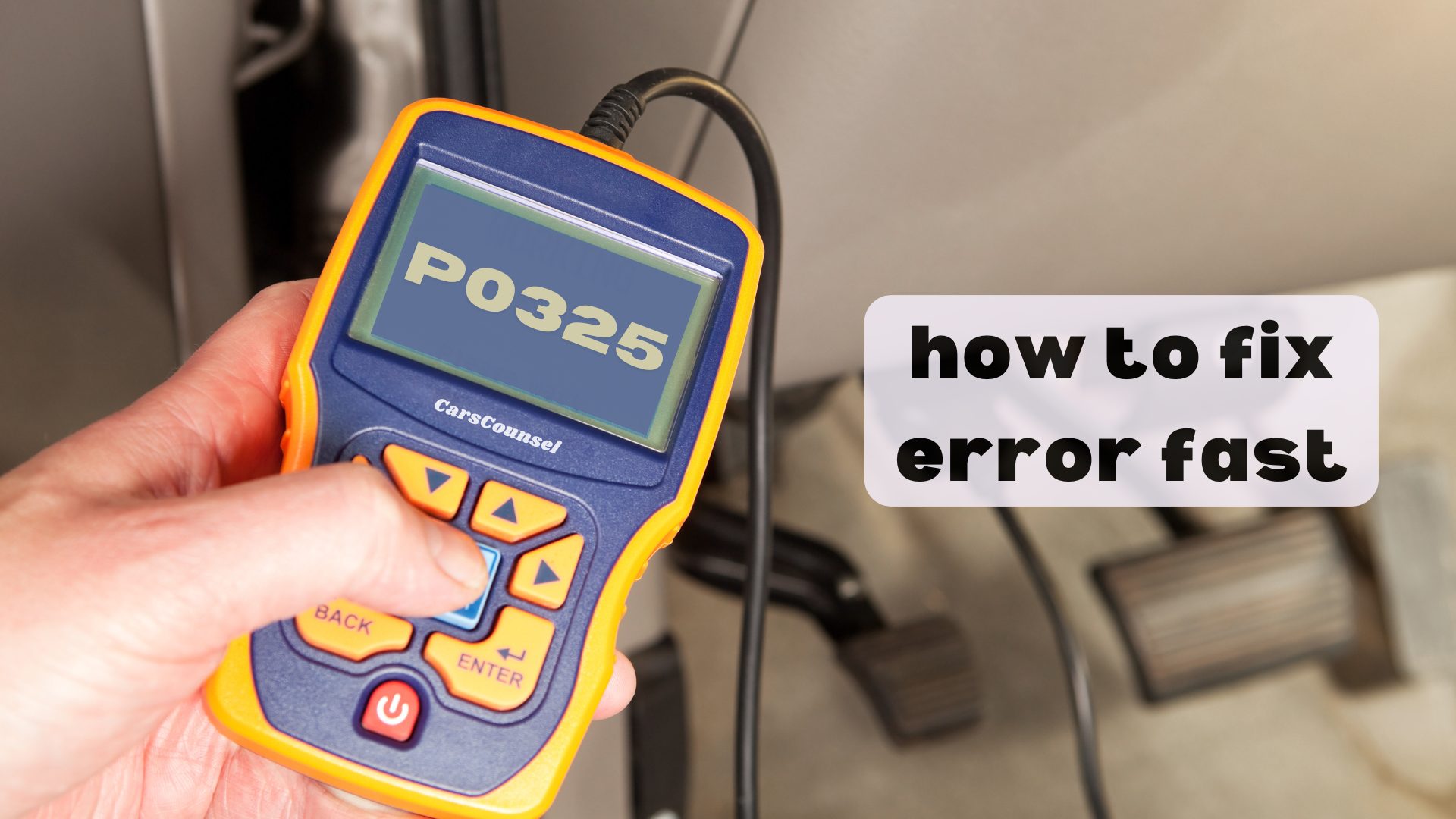
The P0325 code is a generic OBD-II diagnostic trouble code indicating a malfunction in the knock sensor 1 circuit for bank 1 or a single-sensor engine. The powertrain control module detects an unexpected voltage or signal condition.
Because P0325 is a generic circuit code, it points to an electrical fault rather than a confirmed failed part. Testing the wiring, connectors, and sensor signal is necessary to identify the exact root cause.
Quick Navigation
Key Takeaways
- P0325 is a generic OBD-II code indicating an electrical circuit malfunction in the knock sensor 1 circuit.
- Possible causes include damaged wiring, corroded connectors, a failed sensor, or improper sensor installation.
- Symptoms often include an illuminated check engine light, reduced engine power, and decreased fuel economy.
- Diagnosis requires inspecting the sensor circuit and verifying the signal using a multimeter or oscilloscope.
P0325 Code Description and Implications
The PCM monitors the knock sensor to detect engine detonation, also known as spark knock. When abnormal vibrations occur, the sensor sends a voltage signal to the PCM, which then retards ignition timing to protect the engine.
If the PCM detects an open, short, or out-of-range signal in the circuit, it sets this error code. The module typically defaults to a conservative timing map to prevent potential engine damage.
Because this is a generic code, the fundamental definition remains consistent across all automakers, though specific diagnostic steps and sensor locations vary.
Common Causes of the P0325 Code
Possible causes include damaged, chafed, or broken wiring in the knock sensor signal or ground circuits.
Corroded, loose, or fluid-contaminated electrical connectors at the sensor or PCM can also interrupt the signal.
A failed knock sensor that no longer generates a proper electrical signal is another potential cause.
Improper sensor installation, such as incorrect tightening torque or using the wrong part number, can prevent accurate vibration detection.
Symptoms Associated With P0325
The primary symptom of a P0325 code is an illuminated check engine light on the dashboard.
Drivers may experience reduced engine power and acceleration because the PCM retards ignition timing to a safe default setting when the sensor is offline.
Decreased fuel economy is also common due to the suboptimal ignition timing strategy.
In some cases, if actual mechanical engine knock is present and mimicking a circuit fault, a pinging noise may be audible under load.
Diagnosing the P0325 Trouble Code
Diagnosis begins by verifying the exact factory service information and visually inspecting the knock sensor wiring and connectors for physical damage or corrosion.
Technicians use a digital multimeter to check the sensor’s internal resistance and verify the circuit continuity back to the PCM.
An oscilloscope or advanced scan tool is used to view the live sensor waveform and verify the signal pattern matches the manufacturer’s specification while the engine is running.
Repairing the P0325 Issue
If testing confirms the wiring harness is damaged or shorted, repairing the circuit and protecting the wires resolves the electrical fault.
If the sensor fails the electrical and signal tests, replacing the confirmed failed component and clearing the code is required.
When installing a new knock sensor, it must be torqued exactly to the manufacturer’s specification to ensure proper vibration transfer and signal accuracy.
Cost Considerations for P0325 Repairs
Repair costs vary depending on the underlying fault and component accessibility. The knock sensor itself is usually an inexpensive part.
However, labor costs can be significant if the sensor is buried beneath the intake manifold, requiring extensive disassembly to access.
Cost depends on diagnostic time, component accessibility, required parts, programming requirements, and labor.
Prevention Strategies for Future Occurrences
Using the correct fuel octane rating specified by the manufacturer helps prevent severe engine detonation that can physically damage the knock sensor over time.
Addressing any underlying mechanical engine noises, such as bearing knock or piston slap, prevents the sensor from being subjected to abnormal vibration frequencies.
Troubleshooting Tips and Best Practices
Never assume a circuit code automatically requires replacing the knock sensor. Always verify the wiring continuity and connector condition first.
Clearing the code without repairing the electrical fault will only result in the monitor failing again during the next drive cycle.
If P0325 is accompanied by misfire codes or mechanical noise, the diagnosis must address the combined system faults and verify the engine’s internal mechanical condition.
More OBD-II Codes
| P0320 | P0313 | P0306 | P0305 |
| P0304 | P0303 | P0327 | P0330 |
| P0332 | P0335 | P0339 | P0340 |
| P0300 | P0301 | P0302 | P0321 |
| P0420 | P0430 | P0171 | P0174 |
| P0440 | P0441 | P0442 | P0455 |
Frequently Asked Questions
Is P0325 a generic OBD-II code?
Yes. P0325 is a generic OBD-II code, meaning its core definition regarding a knock sensor 1 circuit malfunction applies universally across all vehicle makes and models.
Can I drive my vehicle with a P0325 code?
Yes, but with caution. The PCM will retard ignition timing to protect the engine, which reduces power and fuel economy. Prolonged driving with compromised timing may affect performance.
Will a P0325 code cause engine damage?
It depends on the cause. If the circuit is simply broken, the PCM’s default timing map usually prevents damage. If the code is triggered by actual mechanical engine knock, severe damage can occur.
Does a P0325 code affect fuel economy?
Yes. When the PCM detects a knock sensor circuit fault, it disables active timing adjustment and defaults to a retarded ignition map to prevent detonation, which directly reduces fuel efficiency.
How much does it cost to fix a P0325 code?
Costs vary widely. The sensor itself is relatively inexpensive, but labor can be high if the sensor is located beneath the intake manifold and requires significant disassembly to access.
What Should You Do About the P0325 Code?
Confirm the exact factory diagnostic procedure for your specific vehicle, then inspect the knock sensor circuit for physical damage or corrosion.
Because P0325 indicates an electrical fault in the relevant system and components, testing the sensor, wiring, and signal pattern is required to find the root cause.
Once the fault is confirmed, perform the necessary repairs and verify the fix by clearing the codes and completing a test drive.

