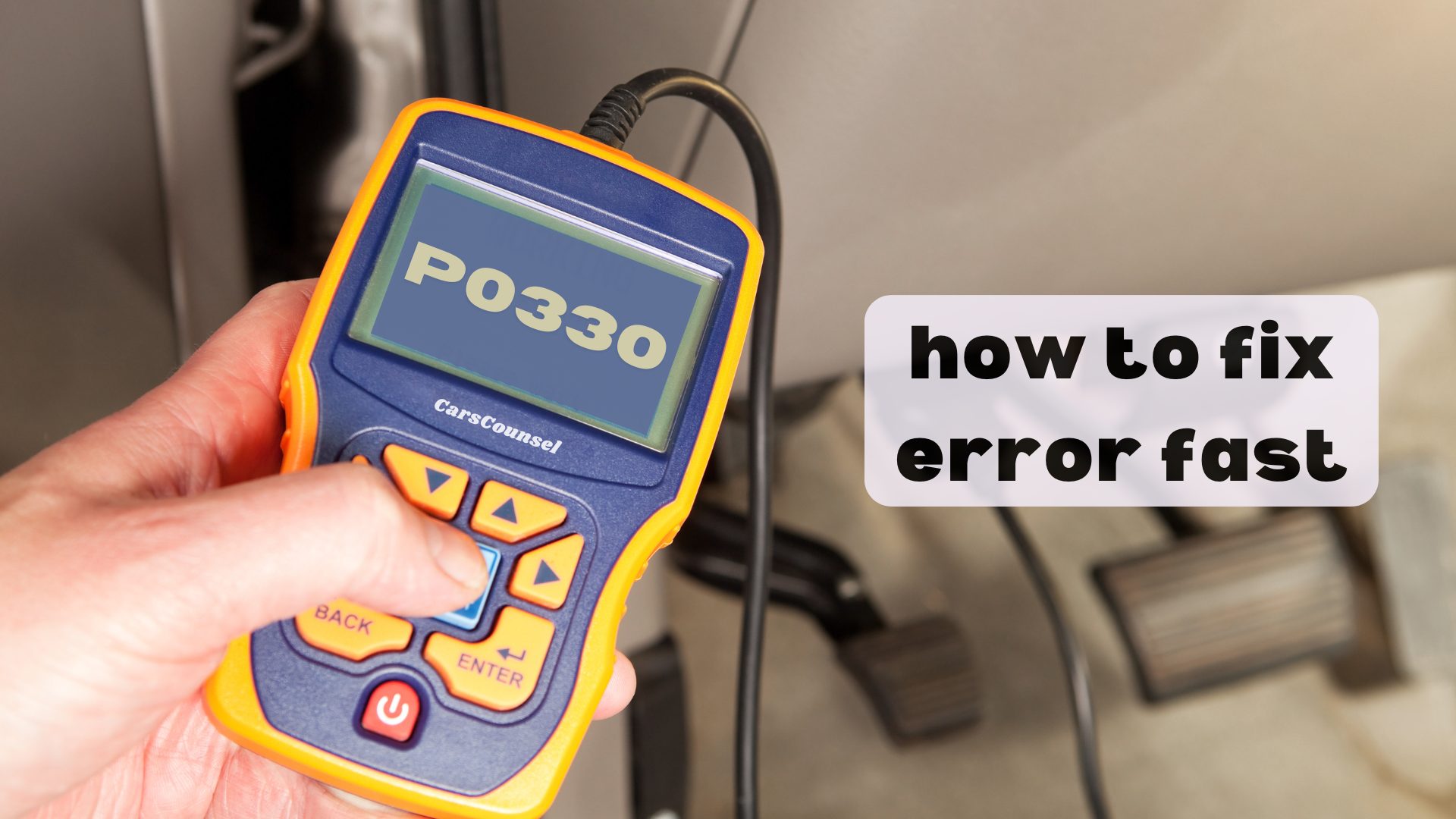
P0330 is a generic OBD-II diagnostic trouble code indicating that the powertrain control module has detected a malfunction in the knock sensor 2 circuit on engine bank 2. Bank 2 is the side of the engine that does not contain cylinder number one.
Because this code identifies an electrical circuit fault rather than normal engine knocking, proper diagnosis requires testing the sensor wiring, connectors, and the sensor itself before replacing any components.
Quick Navigation
Key Takeaways
- P0330 indicates a malfunction in the knock sensor 2 circuit on engine bank 2.
- Possible causes include damaged wiring, corroded connectors, or a failed knock sensor.
- Symptoms typically include an illuminated Check Engine Light and potentially retarded ignition timing.
- Diagnosis involves checking the sensor circuit for opens, shorts, and verifying the sensor’s resistance or signal output.
P0330 Code Description and Implications
P0330 is a generic fault code applicable to OBD-II equipped vehicles with multiple engine banks, such as V6 or V8 engines.
The knock sensor detects abnormal combustion vibrations, known as spark knock or detonation. It sends a voltage signal to the Engine Control Unit (ECU), which then adjusts ignition timing to prevent engine damage.
When the ECU detects an invalid voltage signal from the bank 2 knock sensor circuit, it stores P0330.
Common Causes of the P0330 Code
Diagnostic trouble codes for circuit malfunctions stem from electrical faults within the sensor wiring or the sensor itself.
Possible causes include a failed knock sensor with an internal electrical fault.
Damaged, chafed, or broken wiring in the knock sensor circuit can interrupt the signal to the ECU.
Corroded, loose, or disconnected electrical connectors at the sensor or ECU can also trigger the code.
In rare cases, excessive mechanical engine noise from a failing internal component can overwhelm the sensor, though this typically sets a performance code rather than a strict circuit code.
Symptoms Associated With P0330
Symptoms associated with a knock sensor circuit fault are generally related to engine management and warning indicators.
The primary symptom is an illuminated Check Engine Light on the dashboard.
The ECU may default to a conservative ignition timing map to protect the engine, resulting in reduced power, sluggish acceleration, or decreased fuel economy.
You will not typically hear engine knocking from this specific code, as the code indicates a sensor circuit failure, not necessarily abnormal combustion.
Diagnosing the P0330 Trouble Code
Diagnosis must begin by verifying the exact engine configuration to locate bank 2 and the specific knock sensor.
Inspect the wiring harness and connectors leading to the bank 2 knock sensor for physical damage, heat exposure, or corrosion.
Use a multimeter to test the knock sensor’s resistance and compare it to the manufacturer’s specifications for the exact vehicle.
Check the signal circuit for continuity and verify there are no shorts to ground or voltage.
If the wiring and reference signals are correct but the sensor fails testing, the sensor itself may be faulty.
Repairing the P0330 Issue
Repairs must follow confirmed diagnostic testing to address the root cause of the circuit fault.
If a short or open is found in the wiring harness, repair or replace the affected section and ensure proper shielding.
If the connector is corroded or damaged, repair the terminals or replace the connector pigtail.
If the sensor fails electrical testing, replace it with a component meeting the correct vehicle specification.
After repairs, clear the codes and perform a test drive to verify the ECU receives a valid signal.
Cost Considerations for P0330 Repairs
Cost depends on diagnostic time, component accessibility, required parts, and labor.
Replacing a knock sensor can be straightforward if it is mounted externally on the engine block.
However, on some engine designs, the knock sensors are located beneath the intake manifold, requiring significant labor to access them.
Prevention Strategies for Future Occurrences
Inspecting exposed wiring harnesses near hot exhaust components and ensuring electrical connectors remain clean can help prevent circuit faults.
Protecting the sensor wiring from road debris and excessive engine heat helps maintain the integrity of the circuit.
Troubleshooting Tips and Best Practices
Do not confuse a knock sensor circuit code with an actual engine mechanical knock. P0330 points to the electrical signal, not the physical sound of the engine.
Codes like P0325 or P0332 may appear if the wiring harness is damaged in a shared area.
Using the correct fuel octane rating prevents actual engine knock, but it will not fix a P0330 circuit malfunction.
More OBD-II Codes
| P0325 | P0327 | P0300 | P0299 |
| P0206 | P0204 | P0332 | P0335 |
| P0339 | P0340 | P0411 | P0420 |
| P0301 | P0302 | P0303 | P0304 |
| P0305 | P0306 | P0011 | P0014 |
| P0010 | P0012 | P0016 | P0017 |
Frequently Asked Questions
Is P0330 a generic OBD-II code?
Yes. P0330 is a generic code applicable to OBD-II compliant vehicles with multiple engine banks, indicating a malfunction in the bank 2 knock sensor circuit.
Can I drive with a P0330 code?
You can drive the vehicle, but the ECU may retard ignition timing to protect the engine. This can cause reduced power and lower fuel economy until the issue is resolved.
Does P0330 mean my engine is knocking?
No. P0330 indicates an electrical fault in the knock sensor circuit. It does not necessarily mean the engine is physically experiencing abnormal combustion or detonation.
Will using higher octane fuel fix a P0330 code?
No. While higher octane fuel prevents physical engine knock, P0330 is an electrical circuit malfunction. Changing fuel will not repair damaged wiring or a failed sensor.
Can I clear the P0330 code by disconnecting the battery?
Disconnecting the battery may temporarily clear the code, but it does not repair the electrical fault. The code will return once the ECU runs its self-test.
What Should You Do About the P0330 Code?
Confirm the exact condition of the bank 2 knock sensor circuit by testing the wiring, connectors, and sensor resistance.
Repair or replace the confirmed failed components, then retest the system and complete a drive cycle to verify the repair.

