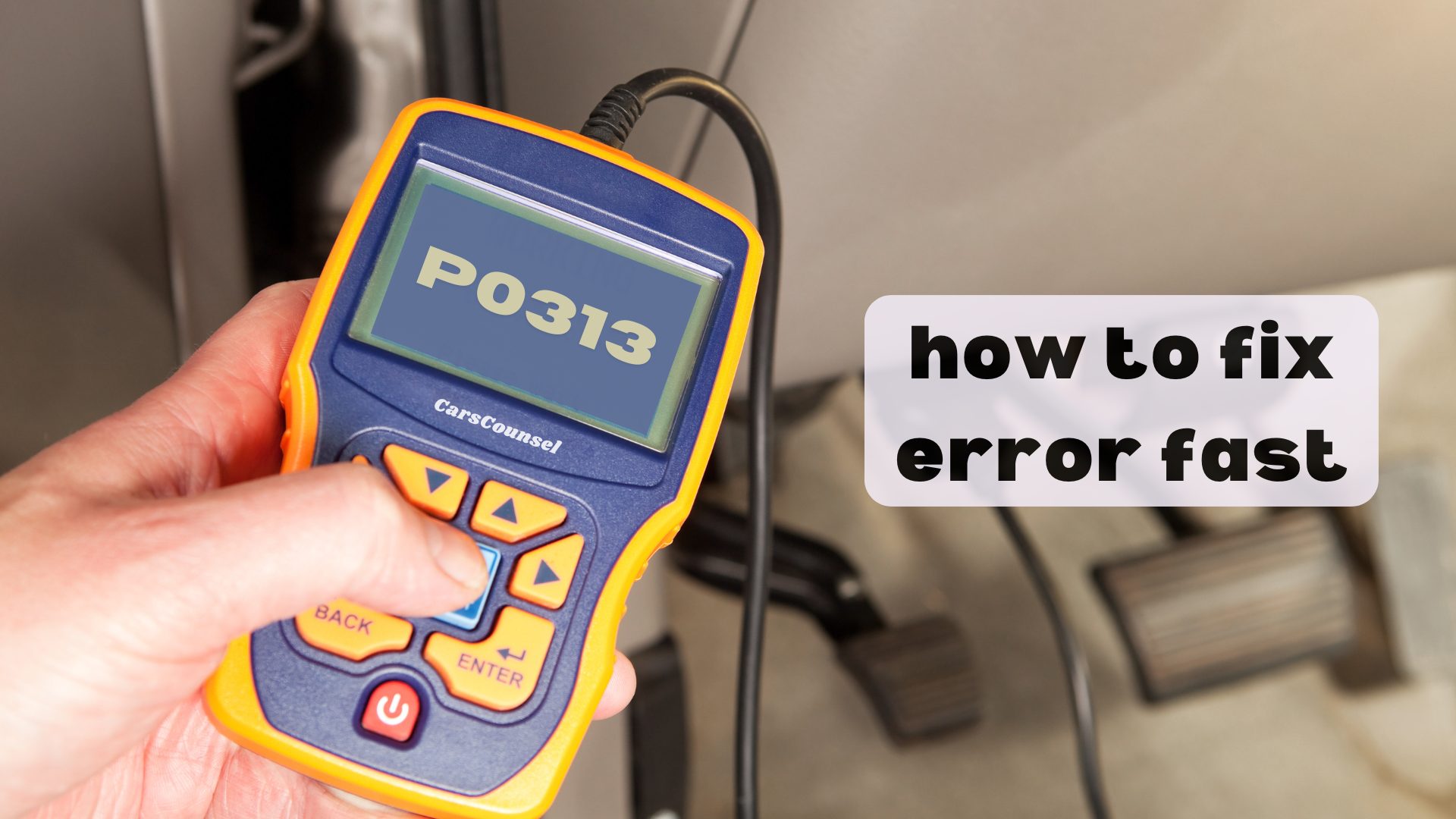
The P0313 code is a generic OBD-II diagnostic trouble code indicating “Misfire Detected with Low Fuel.” It means the powertrain control module detected an engine misfire while the fuel tank level was critically low.
This code does not automatically prove an ignition or mechanical component has failed. Diagnosis requires verifying the fuel level, refilling the tank, and clearing the code before testing other systems.
Quick Navigation
Key Takeaways
- The P0313 code indicates the control module detected an engine misfire while the fuel tank level was below the required threshold for accurate monitoring.
- Possible causes include a low fuel level, fuel starvation from sloshing, or an underlying ignition or mechanical misfire condition.
- Diagnosis involves refilling the fuel tank, clearing the code, and driving the vehicle to see if the misfire returns.
- Repairs may simply require adding fuel, or addressing confirmed ignition, fuel delivery, or mechanical faults if the code persists.
P0313 Code Description and Implications
The P0313 code indicates that the powertrain control module detected an engine misfire while the fuel level was critically low. This generic trouble code applies to most OBD-II equipped vehicles.
The misfire monitor requires a stable fuel supply to accurately determine if a misfire is caused by an ignition, fuel, or mechanical fault. When the fuel level drops too low, fuel sloshing can cause temporary starvation.
Because the module cannot confidently isolate the root cause of the misfire under low-fuel conditions, it stores this specific code instead of a standard cylinder misfire code.
Common Causes of the P0313 Code
A critically low fuel tank is the primary trigger. When the fuel level drops below the manufacturer’s threshold, the misfire monitor disables or flags low-fuel misfires to prevent false diagnostics.
Fuel sloshing during cornering, braking, or driving on steep inclines can uncover the fuel pump pickup, causing temporary fuel starvation and a lean misfire condition.
An underlying ignition, fuel delivery, or mechanical fault may also be present, but the low fuel condition prevents the module from accurately diagnosing the specific failing cylinder or system.
Symptoms Associated With P0313
An illuminated Check Engine Light is expected once the monitor detects the misfire and low fuel condition. MIL behavior varies by application, and some vehicles may also flash the light if the misfire is severe.
You may experience rough idling, hesitation, or a lack of power, particularly when the fuel level is low and the vehicle is cornering or accelerating.
In some applications, the engine may stall or sputter if the fuel pump draws air into the fuel lines due to the low tank level.
Diagnosing the P0313 Trouble Code
Diagnosis must begin by checking the exact fuel level. If the tank is low, the first step is to refill it with the correct fuel type and clear the diagnostic trouble codes.
Drive the vehicle through a complete drive cycle to allow the misfire monitor to run again with a full tank. If the code does not return, the misfire was likely caused by fuel starvation.
If the P0313 code or a specific cylinder misfire code returns with a full tank, proceed with standard misfire diagnosis. Inspect spark plugs, ignition coils, fuel injectors, and engine compression.
Repairing the P0313 Issue
Repairs must follow confirmed diagnosis. If refilling the fuel tank and clearing the code resolves the issue, no further mechanical repair is required beyond maintaining adequate fuel levels.
If the misfire persists with a full tank, replace any confirmed failed ignition components, such as worn spark plugs or faulty ignition coils, using parts meeting the exact vehicle specification.
If fuel delivery or mechanical testing confirms a clogged fuel filter, weak fuel pump, or internal engine fault, repair or replace the confirmed failed component and retest the engine.
Cost Considerations for P0313 Repairs
Cost depends on diagnostic time, component accessibility, required parts, programming requirements, and labor.
If the issue is simply a low fuel tank, the only cost is the price of the fuel required to fill the tank.
If underlying ignition or fuel system components require replacement, the cost will depend on the specific failed parts and the labor required to access them.
Prevention Strategies for Future Occurrences
Keeping the fuel tank above one-quarter full helps ensure the fuel pump remains submerged, preventing fuel starvation and allowing the misfire monitor to operate correctly.
Avoiding driving on extremely low fuel reduces the risk of the fuel pump drawing in debris from the bottom of the tank or overheating due to lack of cooling.
Some misfires are caused by normal component wear and cannot be reliably prevented beyond following the manufacturer’s scheduled maintenance intervals.
Troubleshooting Tips and Best Practices
Do not attempt to diagnose a P0313 code by replacing ignition coils or spark plugs before simply refilling the fuel tank. The code specifically indicates that the fuel level was too low for accurate diagnosis.
Always clear the codes after adding fuel and drive the vehicle under various conditions to verify if the misfire was a temporary starvation event or a persistent mechanical fault.
Check for technical service bulletins for your exact vehicle application, as some manufacturers release updated fuel pump modules or software calibrations to address low-fuel misfire sensitivity.
More OBD-II Codes
| P0301 | P0302 | P0303 | P0304 |
| P0305 | P0306 | P0320 | P0321 |
| P0325 | P0327 | P0330 | P0332 |
| P0300 | P0335 | P0339 | P0340 |
| P0171 | P0174 | P0299 | P1345 |
| P0420 | P0430 | P0135 | P0101 |
Frequently Asked Questions
Is the P0313 code generic or manufacturer-specific?
Yes, P0313 is a generic SAE OBD-II diagnostic trouble code. However, the exact fuel level threshold and misfire monitoring parameters vary by manufacturer and vehicle application.
Will simply adding fuel clear the P0313 code?
Adding fuel will not automatically clear the code from the module’s memory. You must refill the tank and use a scan tool to clear the code, then drive the vehicle to verify the repair.
Does a P0313 code mean my engine has internal damage?
Not necessarily. This code often triggers simply because the fuel level is too low for the monitor to operate accurately. It does not automatically prove internal mechanical components have failed.
Can driving on a low fuel tank cause a misfire?
Yes. When the fuel level is critically low, fuel sloshing during cornering or braking can uncover the fuel pump pickup, causing temporary fuel starvation and a lean misfire condition.
Can I clear the P0313 code without fixing the problem?
Clearing the code only resets the warning light. If the underlying fuel starvation, ignition fault, or mechanical issue remains, the monitor will detect the condition again and turn the light back on.
What Should You Do About the P0313 Code?
Confirm the exact factory definition and check the current fuel level for your specific vehicle application. Follow the applicable manufacturer diagnostic procedure to verify whether the fault was caused by temporary fuel starvation or an underlying issue.
Once the fuel tank is full and the codes are cleared, retest the engine operation to ensure the misfire monitor completes successfully and no further faults are detected in the relevant system.

