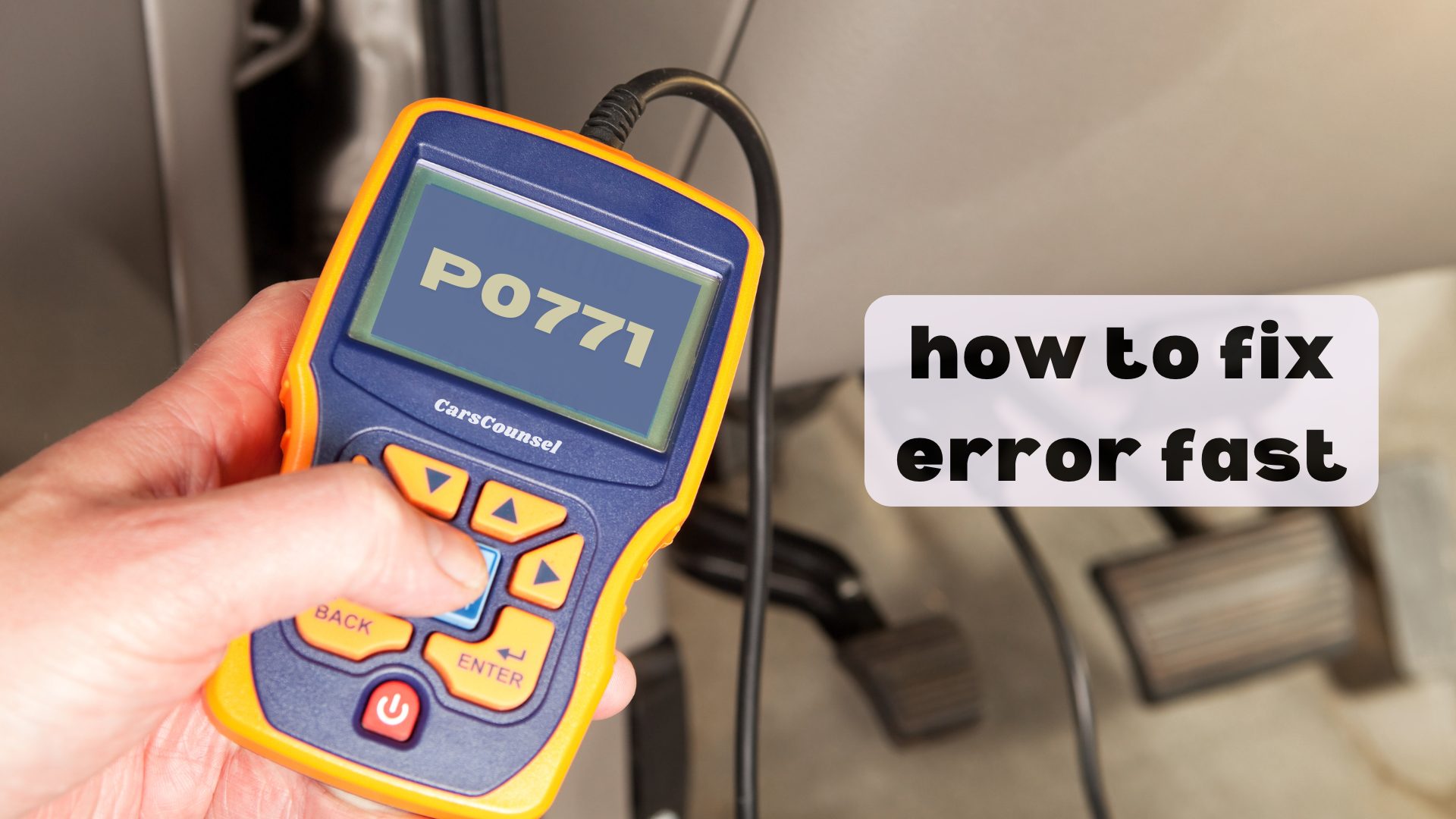
P0771 is a generic OBD-II powertrain code indicating a performance issue or “stuck off” condition with Shift Solenoid “E”. It applies universally across vehicles equipped with this specific transmission solenoid configuration.
This code identifies a detected hydraulic or electrical fault but does not automatically prove the solenoid itself has failed. The exact diagnostic path depends on the verified manufacturer service information.
Quick Navigation
Key Takeaways
- P0771 indicates the powertrain control module detected a performance or stuck-off fault in Shift Solenoid “E”.
- Possible causes include degraded transmission fluid, a failing solenoid, or damaged control circuit wiring.
- Diagnosis requires verifying fluid condition, testing the solenoid circuit, and monitoring live data.
- Repairs depend on the confirmed root cause and may involve fluid service or solenoid replacement.
P0771 Code Description and Implications
P0771 is a generic diagnostic trouble code. It indicates that the powertrain control module (PCM) or transmission control module (TCM) has detected that Shift Solenoid “E” is not performing as commanded.
Shift solenoids manage hydraulic fluid flow to engage specific clutch packs or bands. When Solenoid “E” is stuck off or underperforming, the transmission cannot execute specific gear shifts correctly.
This condition can cause the transmission to default to a fail-safe or limp mode to protect internal mechanical components from damage.
Common Causes of the P0771 Code
Low, dirty, or degraded transmission fluid can restrict hydraulic passages and prevent the solenoid from operating correctly.
A mechanically stuck or electrically failed Shift Solenoid “E” can prevent the valve from opening or closing.
Damaged wiring, poor electrical connections, or corroded connectors in the solenoid control circuit can interrupt the signal.
Internal mechanical wear, such as a stuck valve body valve or worn clutch packs, can mimic a solenoid performance fault.
Symptoms Associated With P0771
The most consistent symptom is an illuminated Check Engine Light.
Drivers may experience harsh, delayed, or missing gear shifts, particularly in the gears controlled by Solenoid “E”.
The transmission may slip, causing the engine RPM to flare without a corresponding increase in vehicle speed.
Some vehicles may enter a limp mode, restricting the transmission to a single gear to prevent further damage.
Diagnosing the P0771 Trouble Code
Diagnosis must begin by verifying the exact transmission type and checking for any related error codes using a scan tool capable of accessing transmission live data.
Inspect the transmission fluid level and condition. Fluid that is low, dark, or smells burnt indicates internal wear or a lack of maintenance.
If the fluid is acceptable, inspect the wiring harness and connectors at the transmission for physical damage or corrosion.
Test the Shift Solenoid “E” circuit for proper resistance, and monitor solenoid command and slip data during a road test.
Repairing the P0771 Issue
Repairs must follow the confirmed root cause identified during electrical and mechanical testing.
If the fluid is degraded and no electrical faults are found, a transmission fluid and filter service may resolve the hydraulic restriction.
If Shift Solenoid “E” is confirmed faulty or mechanically stuck, replace the solenoid or the valve body assembly as directed.
If internal mechanical failure is confirmed through pressure testing or slip data, the transmission may require a rebuild or replacement.
Cost Considerations for P0771 Repairs
Repair costs for P0771 vary widely based on the underlying fault, vehicle accessibility, and local labor rates.
A transmission fluid and filter service involves moderate parts and labor costs.
Replacing a shift solenoid or valve body requires dropping the transmission pan, increasing labor time.
Cost depends on diagnostic time, component accessibility, required parts, programming requirements, and labor.
Prevention Strategies for Future Occurrences
Performing regular transmission fluid and filter changes using the manufacturer-specified fluid helps maintain proper hydraulic pressure and prevents solenoid restrictions.
Addressing minor leaks promptly prevents low fluid levels that can lead to slipping and severe internal damage.
Troubleshooting Tips and Best Practices
Do not assume a P0771 code requires a complete transmission rebuild immediately; degraded fluid or a failing shift solenoid are possible culprits.
Always check the transmission fluid level and condition first, as shifting complaints often stem from neglected fluid maintenance.
Check for applicable technical service bulletins, as manufacturers occasionally release updated valve body assemblies or revised solenoid packs to address chronic shifting faults.
More OBD-II Codes
| P0766 | P0765 | P0761 | P0758 |
| P0757 | P0756 | P0773 | P0775 |
| P0776 | P0777 | P0778 | P0780 |
| P0700 | P0731 | P0732 | P0733 |
| P0741 | P0742 | P0743 | P0745 |
| P0750 | P0751 | P0752 | P0753 |
Frequently Asked Questions
Is P0771 a generic or manufacturer-specific code?
Yes. P0771 is a generic SAE OBD-II code. It carries the same basic definition across manufacturers, though exact diagnostic procedures vary by application.
Can low transmission fluid cause a P0771 code?
Yes. Low or degraded transmission fluid can restrict hydraulic passages, preventing Shift Solenoid “E” from operating correctly and triggering the performance fault.
Will P0771 clear itself if I change the fluid?
Not automatically. While fresh fluid may resolve a hydraulic restriction, the stored code requires a scan tool to clear before the monitor can reset.
Is it safe to drive with the P0771 code active?
Driving is conditional. If the transmission is slipping or entering limp mode, continued driving can cause severe internal mechanical damage. Prompt diagnosis is essential.
Does P0771 mean my transmission needs a rebuild?
No. P0771 identifies a detected solenoid performance fault. While internal wear can cause this, low fluid, a faulty solenoid, or wiring issues must be ruled out.
What Should You Do About the P0771 Code?
Confirm the exact factory definition and wiring diagrams for your specific vehicle application.
Follow the applicable manufacturer diagnostic procedure to test the relevant shift solenoid circuits, fluid condition, and internal mechanical components.
Repair or replace the confirmed failed component, then retest the system to ensure the transmission shifts correctly.

