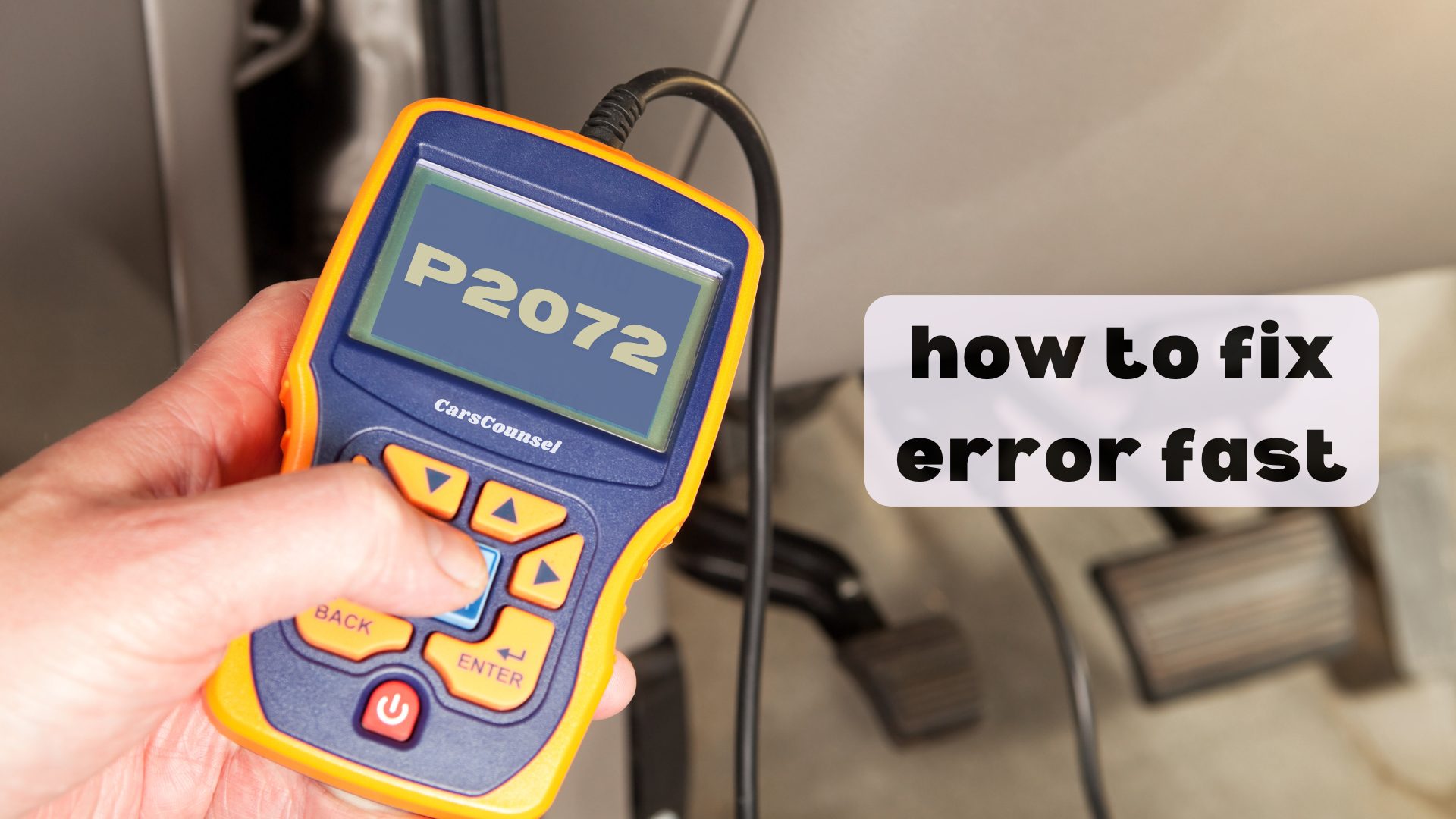
P2072 is a generic OBD-II powertrain code indicating that the powertrain control module (PCM) has detected an ice blockage in the throttle actuator control system on Bank 1. This code is standardized across many vehicle manufacturers.
Because this code monitors for physical restrictions like ice or condensation freezing the throttle plate, it does not automatically prove an electronic component has failed. Exact diagnostic testing is required to verify the throttle body condition and related systems.
Quick Navigation
Key Takeaways
- P2072 indicates the PCM detected an ice blockage or physical restriction preventing the throttle plate from moving on Bank 1.
- This condition typically occurs during cold startups when moisture in the intake system freezes on the throttle body.
- Possible causes include excessive crankcase vapors freezing in the intake, a faulty PCV system, or a malfunctioning throttle body heater circuit.
- Diagnosis requires inspecting the throttle body for ice or carbon buildup and verifying the PCV system operation before replacing parts.
P2072 Code Description and Implications
P2072 is a generic OBD-II diagnostic trouble code defined as Throttle Actuator Control System – Ice Blockage (Bank 1).
The PCM monitors the electronic throttle body during cold engine startups. If the throttle actuator motor cannot move the throttle plate to the expected position due to physical resistance, the PCM interprets this as an ice blockage.
While the code specifically names ice blockage, it can also be triggered by severe carbon buildup or mechanical binding inside the throttle body that mimics the resistance of frozen moisture.
This code is frequently seen on Ford, Lincoln, and Chrysler applications, though it can appear on other makes.
Common Causes of the P2072 Code
- Excessive moisture or oil vapors entering the intake manifold and freezing on the throttle plate during cold weather.
- A malfunctioning Positive Crankcase Ventilation (PCV) system or oil separator allowing too much vapor into the intake.
- Severe carbon buildup physically restricting the throttle plate movement.
- A failed throttle body heating element, if equipped, designed to prevent ice formation.
- An internally failed electronic throttle body actuator motor or binding throttle shaft.
Symptoms Associated With P2072
- Illuminated Check Engine Light and potentially a flashing electronic throttle control warning.
- The vehicle entering a fail-safe or limp mode, severely limiting engine RPM and vehicle speed.
- Hard starting or extended cranking times during cold weather.
- Reduced throttle response or a noticeable lack of power during acceleration.
Diagnosing the P2072 Trouble Code
Diagnosing P2072 requires verifying the physical condition of the throttle body and the systems that introduce vapors into the intake.
First, retrieve all stored OBD2 issues and freeze-frame data to confirm the code occurred during a cold startup.
Next, visually inspect the electronic throttle body bore and plate for ice, moisture, or heavy carbon deposits.
If ice or moisture is present, check the PCV system, oil separator, and breather hoses for blockages or failures that are introducing excessive vapors into the intake tract.
If no ice is found, test the throttle actuator motor and related heater circuits according to the manufacturer procedure to rule out electrical or mechanical binding faults.
Repairing the P2072 Issue
Repairs must follow confirmed diagnostic testing.
If excessive moisture or oil vapor is confirmed, repair or replace the PCV valve, oil separator, or related breather hoses to prevent vapors from reaching the throttle body.
If the throttle body is heavily coked with carbon, clean the bore and plate using an approved throttle body cleaner.
If the throttle body heater circuit is confirmed failed or the actuator motor is mechanically bound, replace the electronic throttle body assembly and perform any required relearn procedures.
Cost Considerations for P2072 Repairs
Cost depends on diagnostic time, component accessibility, required parts, programming requirements, and labor.
Cleaning the throttle body or replacing a PCV hose involves minimal parts and labor. Replacing an electronic throttle body assembly requires higher parts costs and may require specialized scan tool programming to calibrate the new unit.
Prevention Strategies for Future Occurrences
Maintaining the PCV system and replacing the oil separator at recommended intervals helps prevent excessive oil vapors from entering the intake and freezing on the throttle plate.
Using high-quality fuel and addressing minor oil consumption issues can reduce the rate of carbon buildup inside the throttle body bore.
Troubleshooting Tips and Best Practices
Do not immediately replace the electronic throttle body when a P2072 code appears in cold weather. The root cause is often a failing PCV system introducing moisture that freezes overnight.
Check for technical service bulletins (TSBs) related to throttle body icing, PCV system updates, or software recalibrations for your specific make and model.
On some applications, manufacturers have issued updated oil separators or revised PCM software to better manage cold-start throttle actuator strategies.
More OBD-II Codes
| P2002 | P2004 | P2005 | P2006 |
| P2008 | P2009 | P2073 | P2074 |
| P2076 | P2078 | P2080 | P2088 |
| P2100 | P2101 | P2102 | P2103 |
| P2104 | P0505 | P0100 | P0101 |
| P0171 | P0300 | P0420 | P0700 |
Frequently Asked Questions
Is P2072 a generic or manufacturer-specific code?
Yes. P2072 is a generic OBD-II code. It has a standardized definition across many vehicle makes, indicating an ice blockage or restriction in the throttle actuator control system.
Can a bad PCV valve cause a P2072 code?
Yes. A failing PCV valve or oil separator can introduce excessive oil vapors into the intake tract. During cold weather, these vapors can freeze on the throttle plate and trigger this code.
Will disconnecting the battery clear a P2072 code?
Disconnecting the battery may temporarily clear the code, but it does not repair the underlying restriction or PCV system fault. The code will return if the physical blockage or vapor issue remains.
Does P2072 mean my throttle body is broken?
No. While a failed throttle body actuator is possible, P2072 usually points to external physical restrictions like ice formation from moisture, carbon buildup, or excessive crankcase vapors.
Is it safe to drive with a P2072 code?
Driving is not recommended. The PCM may place the vehicle in a fail-safe or limp mode, severely limiting engine power and top speed to protect the engine and drivetrain.
What Should You Do About the P2072 Code?
Confirm the exact factory definition and diagnostic procedure for your specific vehicle application. Because P2072 monitors the throttle actuator control system for physical restrictions, a thorough evaluation of the throttle body and PCV system is required.
Inspect the relevant intake components, throttle body bore, and breather hoses for confirmed faults. Repair or replace the confirmed failed components, then retest the system to verify the repair.

