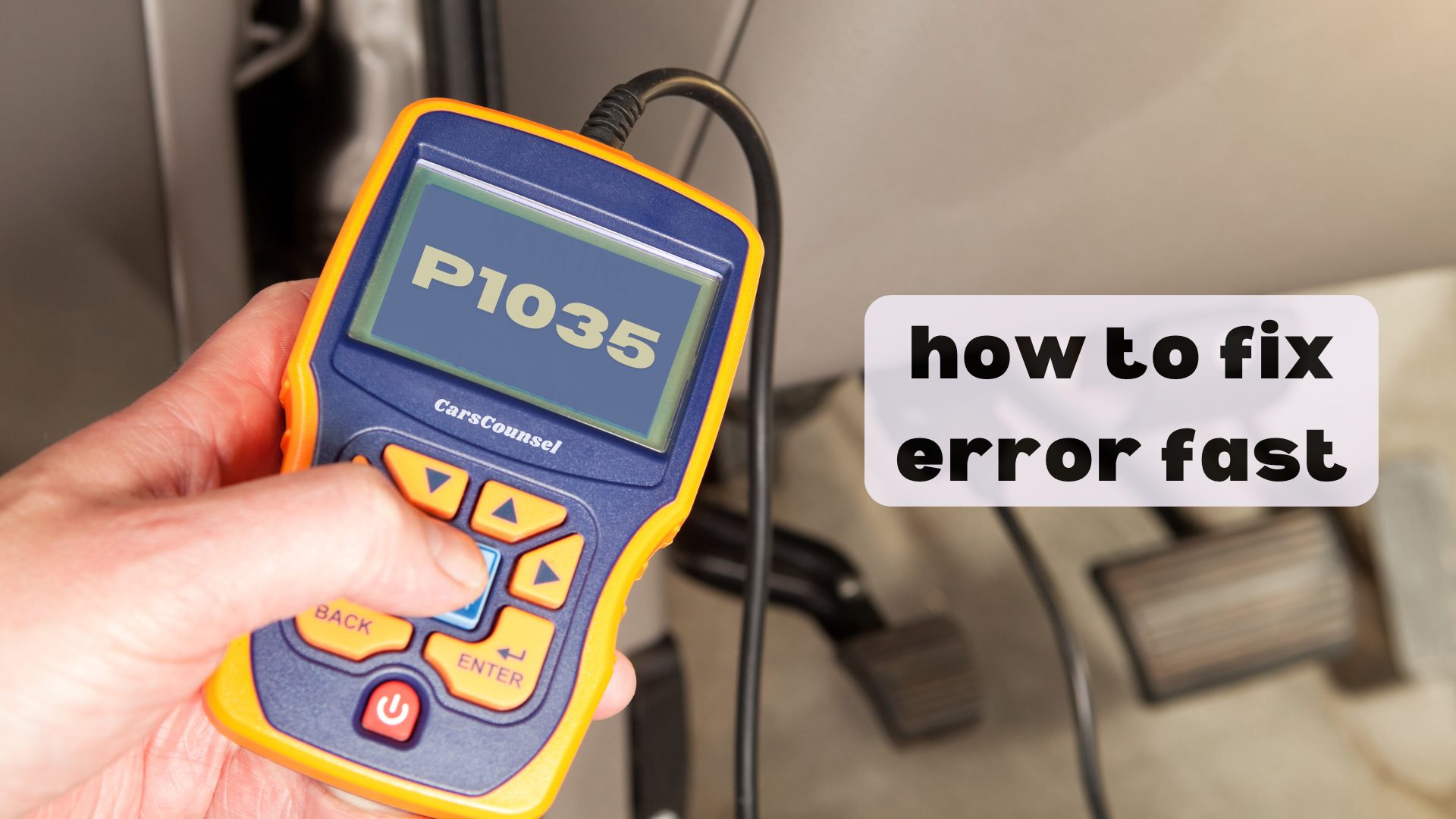
P1035 is a manufacturer-specific powertrain code, meaning its exact definition depends entirely on the vehicle’s make and model. It commonly indicates a NOx sensor fault on VW/Audi, an oxygen sensor heater issue on GM/Honda, or an oil supply solenoid fault on other applications.
Because definitions vary significantly, exact application verification is required before diagnosing this error code. The code indicates a detected condition, and testing is necessary to isolate the fault to the specific sensor, wiring, or control module.
Quick Navigation
Key Takeaways
- Condition detected: Varies by manufacturer, ranging from a NOx sensor signal fault to an oxygen sensor heater circuit issue.
- Application verification: Exact application must be verified before attempting any electrical or component diagnosis.
- Diagnostic paths: May involve testing sensor heater resistance, inspecting NOx sensor wiring, or checking an oil supply solenoid circuit.
- Component testing: The specific sensor or solenoid, related fuses, and wiring must be evaluated to isolate the root cause.
P1035 Code Description and Implications
P1035 is a manufacturer-specific code, and its exact definition depends on the vehicle application.
VW, Audi, Skoda, and Seat applications: P1035 typically indicates a Nitrogen Oxide (NOx) Sensor (G295) signal implausible fault or a heater circuit issue. This sensor monitors the efficiency of the Selective Catalytic Reduction (SCR) system or lean-burn combustion.
GM, Honda, Toyota, and Dodge applications: On these vehicles, P1035 often indicates a Heated Oxygen Sensor (HO2S) Heater Control Circuit fault for Bank 1 Sensor 1. The powertrain control module detected an issue with the internal heater element that brings the sensor up to operating temperature.
Certain European and BMW applications: P1035 may indicate a Cylinder 1 Oil Supply Solenoid Valve Driver Open Circuit, relating to the variable valve timing or valvetrain lubrication system.
Common Causes of the P1035 Code
- Failed NOx sensor (VAG): The internal sensing element or heater inside the NOx sensor may fail, sending an implausible signal to the module.
- Failed O2 sensor heater (GM/Honda/Toyota): The internal heater element inside the upstream oxygen sensor can burn out or short out.
- Blown fuse or wiring damage: A blown heater circuit fuse, chafed harness, or corroded connector can interrupt power to the sensor or solenoid.
- Failed oil supply solenoid (BMW/Others): An internal open circuit in the cylinder 1 oil solenoid valve or its control wiring.
Symptoms Associated With P1035
- Illuminated Check Engine Light or specific emissions warning message.
- Reduced engine power or limp mode (common on VAG applications with NOx faults).
- Poor fuel economy or rough cold idle (on O2 heater circuit applications).
- Valvetrain noise or variable valve timing faults (on oil solenoid applications).
Diagnosing the P1035 Trouble Code
- Verify the exact definition: Confirm the specific P1035 definition for your exact make, model, and year using manufacturer service information.
- For O2/NOx heater circuits: Use a digital multimeter to measure the resistance of the sensor’s heater pins. Compare the reading to manufacturer specifications. Check the relevant heater fuse in the engine bay fuse box.
- For NOx signal faults: Inspect the sensor connector for corrosion or exhaust soot. Check for exhaust leaks upstream of the sensor that could skew readings.
- For oil solenoid faults: Measure the solenoid resistance and inspect the wiring harness for open circuits or broken pins near the valve cover.
Repairing the P1035 Issue
- Sensor or solenoid replacement: If the component fails resistance testing or is confirmed internally shorted/open, replace it with a component meeting the correct vehicle specification.
- Fuse replacement: If a heater circuit fuse is blown, replace it and investigate why it blew (such as a shorted sensor heater or chafed wire).
- Wiring repair: Repair any chafed wires or replace corroded connectors to restore a clean electrical path.
- Software update: On some VAG applications, a PCM software update may be required to address false NOx sensor rationality codes.
Cost Considerations for P1035 Repairs
Cost depends on diagnostic time, component accessibility, required parts, programming requirements, and labor.
Replacing an upstream oxygen sensor or an external oil solenoid is generally straightforward. However, NOx sensors can be expensive, and some may require module adaptation or coding after installation.
Prevention Strategies for Future Occurrences
- Protect exhaust wiring: Ensure sensor wiring harnesses are securely routed and clipped away from hot exhaust manifolds and sharp heat shields to prevent melting and short circuits.
- Address exhaust leaks: Repair exhaust manifold or downpipe leaks promptly, as false air entering the exhaust stream can degrade NOx and oxygen sensors prematurely.
Troubleshooting Tips and Best Practices
- Do not ignore a blown fuse: If the O2 sensor heater fuse is blown, do not just replace the fuse and the sensor. Trace the wiring to find the short to ground that caused the fuse to blow in the first place.
- Check for TSBs: Some manufacturers issue Technical Service Bulletins for updated sensor part numbers or revised PCM software to address chronic implausible signal codes.
- Use the correct oil: On applications where P1035 relates to an oil supply solenoid, using the incorrect oil viscosity or neglecting oil changes can cause sludge to clog the solenoid screen.
More OBD-II Codes
| P1032 | P1031 | P1028 | P1018 |
| P1017 | P1016 | P1036 | P1050 |
| P1062 | P1083 | P1084 | P1086 |
| P0130 | P0131 | P0135 | P0141 |
| P2002 | P2004 | P2005 | P2006 |
| P2007 | P2008 | P2014 | P2015 |
Frequently Asked Questions
Can a blown fuse cause a P1035 code?
Yes. On applications monitoring an oxygen sensor heater circuit, a blown heater fuse in the engine bay fuse box will cut power to the sensor, triggering the circuit fault code.
Is it safe to drive with a P1035 code?
It depends on the application. If it is an O2 heater fault, the vehicle is generally safe to drive but may have poor cold-start emissions. If it is a VAG NOx sensor or oil solenoid fault, the vehicle may enter limp mode.
Will replacing the oxygen sensor fix a P1035 code?
It will fix the issue if the sensor’s internal heater element has failed. However, if the root cause is a blown fuse, a broken wire, or a corroded connector, replacing the sensor alone will not resolve the fault.
Does P1035 mean my PCM needs to be replaced?
Not necessarily. P1035 indicates a fault in the external sensor or solenoid circuit. The root cause is typically a failed sensor, damaged wiring, or a blown fuse. Proper circuit testing is required before condemning the PCM.
Can an exhaust leak trigger a P1035 code?
Yes, on VAG applications monitoring the NOx sensor. An exhaust leak upstream of the sensor can introduce false air, skewing the NOx readings and causing the PCM to flag an implausible signal fault.
What Should You Do About the P1035 Code?
Because the P1035 code is manufacturer-specific, its exact meaning depends on your vehicle’s make and model. It requires verifying the factory definition before replacing any components.
Confirm whether your application uses this code for a NOx sensor fault, an oxygen sensor heater issue, or an oil supply solenoid circuit. Follow the manufacturer’s diagnostic procedure to isolate the faulty component, repair the confirmed root cause, and verify the repair.


Comments are closed.