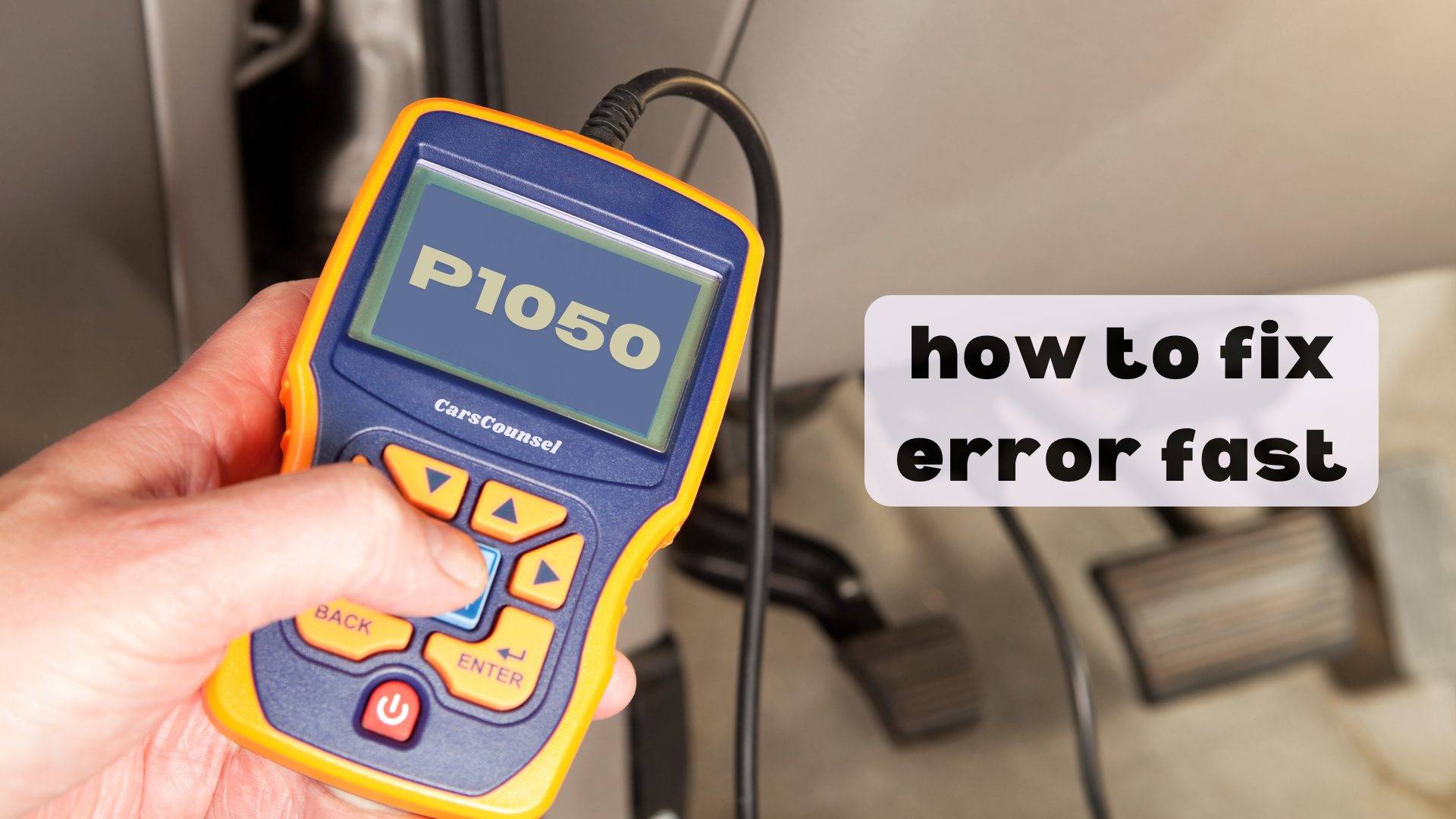
P1050 is a manufacturer-specific diagnostic trouble code. Its exact definition depends entirely on the vehicle application, commonly indicating a reductant level sensor fault on GM diesels or a Valvetronic system issue on BMW applications.
Because definitions vary, the exact application must be verified before diagnosis. The code identifies a detected condition, and testing is required to confirm whether the named component or its wiring is the actual root cause.
Quick Navigation
Key Takeaways
- P1050 is a manufacturer-specific code with different definitions across vehicle brands.
- On many GM diesel applications, it indicates a reductant level sensor reporting an invalid range.
- On BMW applications, it relates to a Valvetronic eccentric shaft sensor or variable valve timing control circuit fault.
- Accurate diagnosis requires verifying the exact factory definition and testing the relevant circuits.
P1050 Code Description and Implications
P1050 is a manufacturer-specific powertrain code, meaning its exact definition depends on the vehicle application.
Some GM diesel applications: The code typically indicates a reductant level sensor invalid range. The control module detected that the diesel exhaust fluid (DEF) level sensor is reporting values outside its calibrated parameters.
Certain BMW applications: The code often relates to a Valvetronic control circuit or variable camshaft adjustment valve fault on Bank 1, indicating an issue with the variable valve timing system.
These trouble codes require identifying the exact manufacturer definition before beginning any diagnostic steps.
Common Causes of the P1050 Code
Because the definition varies by manufacturer, the possible causes depend on the specific vehicle system being monitored.
For GM diesel applications, possible causes include a failed DEF level sensor, contaminated diesel exhaust fluid, or damaged wiring at the reductant tank.
For BMW Valvetronic applications, causes may involve a failed eccentric shaft sensor, low engine oil level or pressure, a failing Valvetronic motor, or damaged wiring.
Symptoms Associated With P1050
Symptoms depend entirely on the specific system generating the fault code.
On GM diesel applications, drivers may experience an illuminated Check Engine Light, a DEF warning message, or reduced engine power if the emissions system is compromised.
On BMW applications, symptoms may include limp mode, severe loss of power, rough idling, or engine stalling due to the variable valve timing system defaulting to a safe position.
Diagnosing the P1050 Trouble Code
Diagnosis must begin by confirming the exact factory definition for the specific vehicle make, model, and engine.
For GM diesel applications, inspect the DEF fluid for contamination and test the reductant level sensor circuit for proper voltage, ground, and signal continuity.
For BMW applications, verify the engine oil level and condition first, then inspect the Valvetronic eccentric shaft sensor and motor circuits according to the manufacturer procedure.
Repairing the P1050 Issue
Repairs must follow the confirmed root cause identified during system-specific testing.
If testing confirms a failed reductant level sensor on a GM application, replace the sensor assembly with a component meeting the correct vehicle specification and clear the codes.
If a Valvetronic sensor or motor is confirmed faulty on a BMW application, replace the component, perform the required limit position learning procedure, and verify the repair.
Cost Considerations for P1050 Repairs
Repair costs for the P1050 code vary widely based on the underlying fault, component accessibility, and local labor rates.
Replacing a DEF level sensor often requires draining the tank or replacing the entire pump and sensor module, which involves significant parts and labor costs.
Replacing a Valvetronic eccentric shaft sensor or motor on a BMW involves extensive labor to access the valve cover and internal engine components.
Cost depends on diagnostic time, required parts, programming requirements, and labor.
Prevention Strategies for Future Occurrences
For diesel applications, using high-quality diesel exhaust fluid and keeping the tank free of contaminants can help prevent sensor degradation.
For BMW applications, maintaining the correct engine oil level and performing regular oil changes is critical, as the Valvetronic system relies on clean oil pressure to operate correctly.
Troubleshooting Tips and Best Practices
Do not assume the code requires replacing the sensor or motor immediately; wiring faults or low fluid levels are possible culprits.
Always check for applicable technical service bulletins, as manufacturers occasionally release revised components or software updates to address chronic sensor or Valvetronic faults.
Use a high-quality scan tool capable of accessing specific modules to view live data, command states, and perform relearn procedures.
More OBD-II Codes
| P1016 | P1017 | P1018 | P1032 |
| P1035 | P1036 | P1062 | P1083 |
| P1084 | P1086 | P1088 | P1090 |
| P1092 | P1094 | P1096 | P1098 |
| P1101 | P1102 | P1103 | P1104 |
| P1105 | P1106 | P1107 | P1108 |
Frequently Asked Questions
Is P1050 a generic OBD-II code?
No. P1050 is a manufacturer-specific code. Its exact definition depends on the vehicle make, commonly relating to a DEF level sensor or a Valvetronic system fault.
Can I drive with a P1050 code?
Driving is conditional. On some applications, it may trigger a reduced power mode or limp home mode. On others, it may only illuminate a warning light without immediate drivability issues.
Will clearing the P1050 code fix the problem?
Clearing the code does not repair the root cause. If a failed sensor, low oil level, or wiring fault exists, the code will return after the monitor runs again.
Does P1050 always mean the DEF sensor is bad?
No. While some GM applications relate to the DEF sensor, P1050 is manufacturer-specific and points to a Valvetronic system or other components depending on the vehicle.
How do I know which P1050 definition applies to my car?
Consult the factory service information or a reliable repair database for your exact vehicle make, model, year, and engine to verify the manufacturer-specific definition.
What Should You Do About the P1050 Code?
Confirm the exact factory definition for your specific vehicle make and engine configuration.
Follow the applicable manufacturer diagnostic procedure to test the relevant system and components.
Repair or replace the confirmed failed component, then retest the system to ensure the monitor completes successfully.

