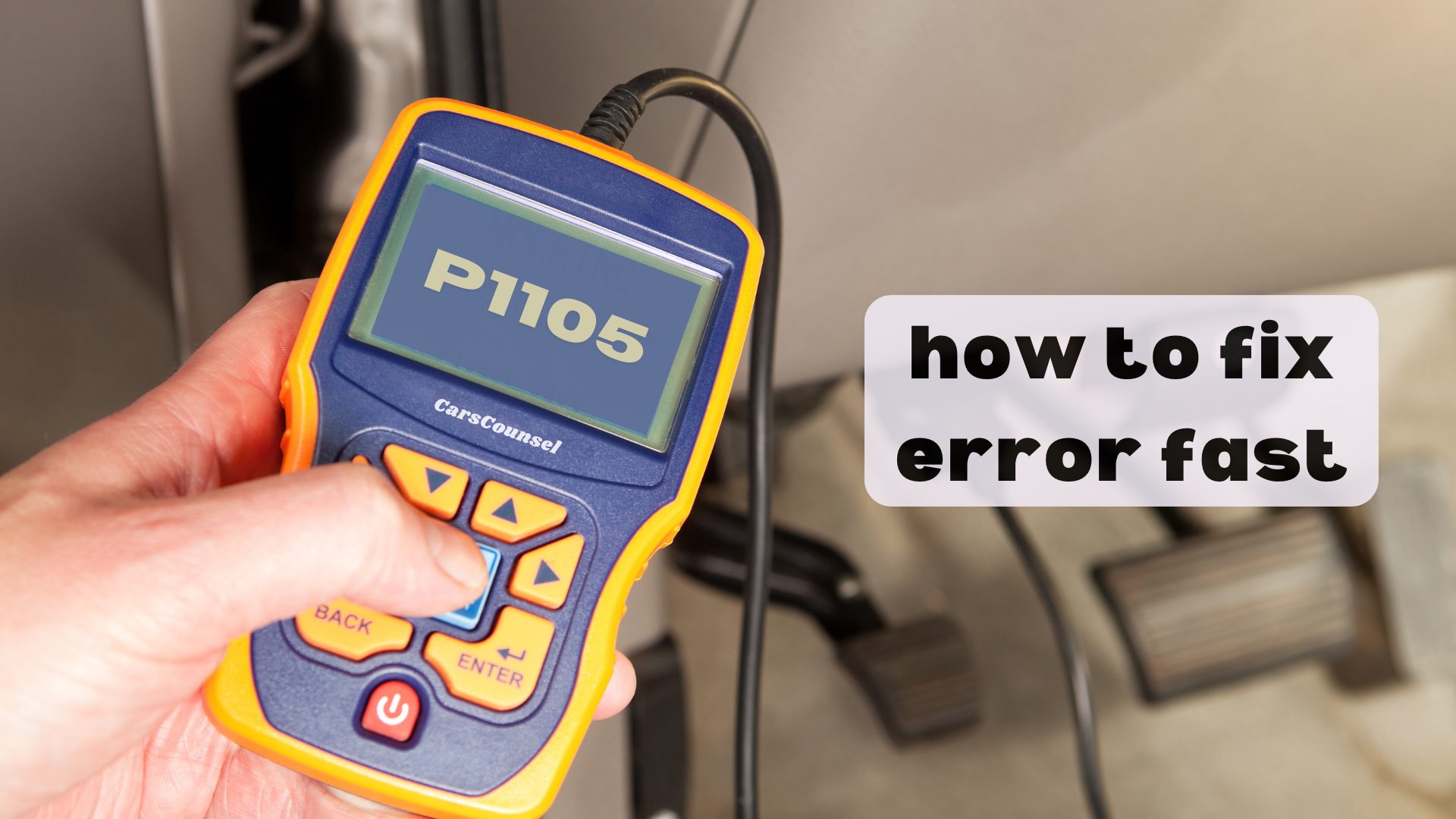
The P1105 code is a manufacturer-specific OBD-II diagnostic trouble code. Its exact definition depends on the vehicle application, but it generally relates to a fault in a manifold absolute pressure (MAP) sensor, barometric pressure switch, or fuel pressure sensor circuit.
Because definitions vary by manufacturer, the exact diagnostic path requires verifying your specific vehicle’s factory service information. The code identifies a detected condition, not necessarily a failed part.
Quick Navigation
Key Takeaways
- P1105 is a manufacturer-specific code indicating a fault in a MAP sensor, barometric pressure switch, or fuel pressure sensor circuit.
- Possible causes include damaged wiring, blocked vacuum hoses, or internal sensor failures.
- Symptoms may include poor engine performance, rough idling, and an illuminated check engine light.
- Diagnosis requires verifying the exact factory definition and testing the relevant sensor circuits.
P1105 Code Description and Implications
P1105 is a manufacturer-specific code, meaning its exact definition varies by automaker. The powertrain control module uses this code to flag an anomaly within a specific pressure sensor or switch circuit.
Some Nissan and Infiniti applications: P1105 indicates a malfunction in the Manifold Absolute Pressure (MAP) or Barometric Pressure (BARO) switch input circuit. This switch helps the module distinguish between atmospheric and manifold pressure.
Certain GM and Toyota applications: This code may indicate a fault in the fuel pressure sensor circuit or a secondary air injection system component. The specific error code meaning dictates the test.
Common Causes of the P1105 Code
Wiring and connector damage: Sensor harnesses route through the engine bay and are exposed to extreme heat and vibration. Chafed wires or corroded pins can interrupt the signal or reference voltage.
Vacuum hose issues: On applications using a MAP or BARO switch, a cracked, disconnected, or blocked vacuum hose will prevent the sensor from reading the correct manifold pressure.
Component failure: The internal circuitry of the pressure sensor or switch may fail, causing it to output a signal outside the expected range or become completely unresponsive.
Symptoms Associated With P1105
Because pressure sensors directly influence fuel delivery and ignition timing, a P1105 fault can cause noticeable drivability concerns.
You may experience rough idling, hesitation during acceleration, or decreased fuel economy. The engine may also enter a limp mode to protect itself from incorrect fuel mixtures.
You will see an illuminated check engine light. The vehicle will likely fail an emissions inspection until the system is repaired and the monitors complete.
Diagnosing the P1105 Trouble Code
Diagnosis must begin by confirming the exact factory definition and wiring diagram for your specific make, model, and year. Retrieve freeze frame data to understand the conditions when the code set.
Inspect the sensor wiring harness, connectors, and any attached vacuum hoses for physical damage, heat exposure, or disconnections. Repair any visible damage before proceeding to electrical tests.
Use a multimeter or scan tool to monitor the sensor live data and test the reference voltage, signal, and ground circuits. Compare your readings against the manufacturer’s specifications.
Repairing the P1105 Issue
Repairs must follow confirmed diagnostic testing. Do not replace the pressure sensor without verifying the wiring harness and vacuum supply first.
If a vacuum hose is cracked or disconnected, replace the hose and ensure a tight seal. If wiring damage is found, repair the harness using proper soldering and heat shrink techniques.
If the sensor fails electrical testing or outputs irrational live data, replace it with a component meeting the exact vehicle specification, then clear the codes.
Cost Considerations for P1105 Repairs
Repair costs depend on the confirmed root cause, component accessibility, and local labor rates. Replacing a vacuum hose or repairing a wire is generally inexpensive.
If the MAP, BARO, or fuel pressure sensor requires replacement, parts and labor costs will increase. Always factor in the cost of proper diagnostic time.
Prevention Strategies for Future Occurrences
Inspecting exposed vacuum hoses and sensor wiring during routine maintenance can help identify developing damage before it causes a circuit fault.
Keeping the engine bay free of excessive oil leaks and debris can help prevent sensor connectors from degrading or shorting out over time.
Troubleshooting Tips and Best Practices
Always verify the exact definition of P1105 for your specific vehicle. Assuming it is always a failed MAP sensor can lead to misdiagnosis when a simple vacuum leak is the actual cause.
Do not ignore the reference voltage. A shorted 5-volt reference circuit can pull down the entire sensor network, causing multiple seemingly unrelated codes to set simultaneously.
Check for related codes that might point to a shared ground circuit, a failing powertrain control module, or a systemic charging system voltage issue.
More OBD-II Codes
| P1104 | P1103 | P1098 | P1096 |
| P1094 | P1092 | P1106 | P1107 |
| P1108 | P1109 | P1110 | P1111 |
| P0107 | P0108 | P1101 | P1102 |
| P0171 | P0172 | P0174 | P0101 |
| P1171 | P1172 | P1173 | P1174 |
Frequently Asked Questions
Is P1105 a generic or manufacturer-specific code?
P1105 is a manufacturer-specific code. Its exact definition and diagnostic procedure vary depending on the vehicle make, model, and year. Always consult the factory service information for your specific application.
Can a vacuum leak cause a P1105 code?
Yes. On applications where P1105 relates to a MAP or BARO switch, a cracked or disconnected vacuum hose will prevent the sensor from reading the correct pressure, triggering the code.
Is it safe to drive with a P1105 code?
Driving is not recommended if the vehicle is experiencing severe hesitation, stalling, or limp mode. Incorrect pressure sensor data can cause the engine to run excessively rich or lean, potentially damaging the catalytic converter.
Will replacing the sensor always fix P1105?
Not always. P1105 indicates a circuit or performance fault. The root cause could be damaged wiring, a poor connection, or a blocked vacuum port. Proper electrical and mechanical testing is required first.
Can a bad MAP sensor affect fuel economy?
Yes. The MAP sensor provides critical data for calculating engine load. If it sends incorrect data, the control module may inject too much fuel, leading to noticeably decreased fuel economy and rich exhaust conditions.
What Should You Do About the P1105 Code?
Confirm the exact factory definition and wiring diagram for your specific vehicle application. Inspect the relevant pressure sensor circuits, vacuum hoses, and connectors for physical damage or restrictions.
Perform targeted electrical testing on the relevant system and components to isolate the fault. Repair the confirmed root cause, then verify the repair by clearing the codes and monitoring live data.

