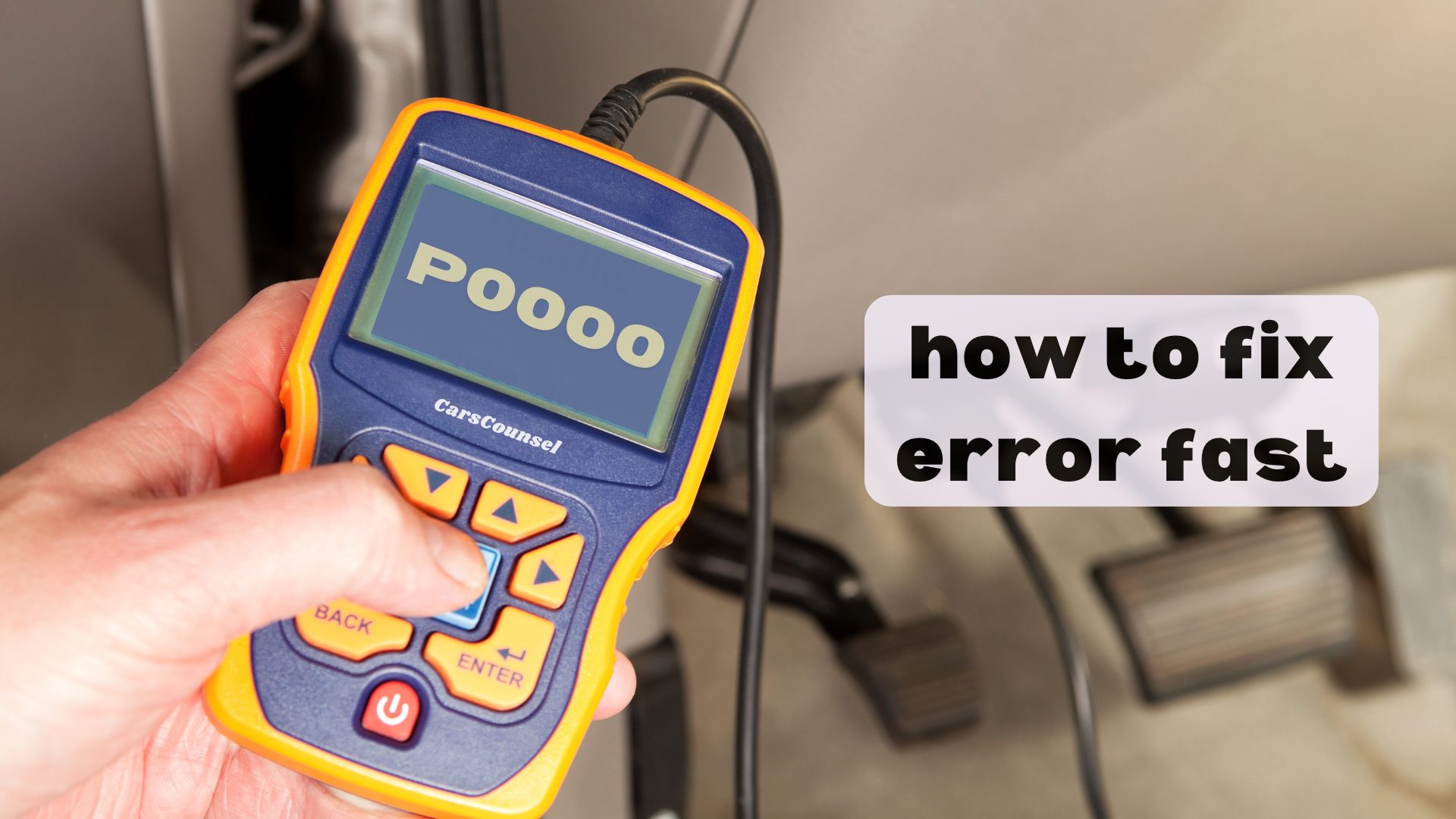
P0000 is a generic OBD-II placeholder code that simply means “No Diagnostic Trouble Codes Found.” It indicates that the vehicle’s onboard diagnostic system has completed its self-tests and detected no active powertrain faults.
Seeing this code is generally a positive result confirming a clean scan. However, if your Check Engine Light is illuminated while P0000 is displayed, your scan tool may lack the capability to read manufacturer-specific or network codes.
Quick Navigation
Key Takeaways
- P0000 is not a fault code; it is a standardized placeholder indicating that no diagnostic trouble codes are currently stored in the powertrain control module.
- If the Check Engine Light is off, a P0000 reading simply confirms that the vehicle’s emissions and powertrain monitors are passing.
- If the Check Engine Light is on but the scanner reads P0000, the tool may be incompatible with the vehicle’s manufacturer-specific or network protocols.
- Diagnosing a discrepancy between an illuminated warning light and a P0000 scan result requires a more advanced, OEM-compatible diagnostic tool.
P0000 Code Description and Implications
The P0000 code is not an actual diagnostic trouble code indicating a vehicle malfunction. Instead, it is a standardized SAE placeholder that translates to “No Diagnostic Trouble Codes Found.”
When an OBD-II scanner communicates with the Powertrain Control Module (PCM) and retrieves P0000, it means the vehicle’s self-test monitors have run and detected no faults within the generic emissions and powertrain parameters.
For a vehicle owner, seeing P0000 during a routine scan is the desired outcome. It confirms that the engine management system is operating within normal parameters and no generic faults are stored.
However, confusion arises when the Check Engine Light is illuminated on the dashboard, but the scan tool only displays P0000. This discrepancy does not mean the car has a hidden P0000 glitch.
Instead, it usually indicates that the scan tool being used is a basic generic reader incapable of accessing manufacturer-specific codes, body codes, chassis codes, or network communication faults.
Common Causes of the P0000 Code
Because P0000 means “no codes found,” it does not have mechanical or electrical causes in the traditional sense. It is simply the default output of a clean system.
If the Check Engine Light is on but the scanner reads P0000, the underlying causes for the discrepancy involve the diagnostic equipment or the vehicle’s communication network.
Incompatible Scan Tool: Basic OBD-II scanners only read generic SAE powertrain codes (P0xxx). If the vehicle has a manufacturer-specific code or a body/network code, a basic tool will not display it and may default to showing P0000.
Communication Network Issues: In rare cases, a fault in the Data Link Connector (DLC) wiring or a module communication failure can prevent the scanner from retrieving the actual stored codes, resulting in a null reading despite an illuminated warning light.
Cleared Memory: If the battery was recently disconnected or the codes were just cleared, the PCM memory is empty. The system will report P0000 until the monitors run and detect a fault again.
Symptoms Associated With P0000
By definition, a true P0000 reading produces no drivability symptoms, warning lights, or performance issues because no fault exists in the generic powertrain system.
If the vehicle is exhibiting symptoms such as rough idling, stalling, or poor fuel economy, but the scanner reads P0000, the actual fault is being missed by the diagnostic tool.
An illuminated Check Engine Light combined with a P0000 scan result is the primary symptom that your current diagnostic equipment is insufficient for the vehicle’s specific fault.
Diagnosing the P0000 Trouble Code
Diagnosing a P0000 reading depends entirely on whether the Check Engine Light is off or on.
If the warning light is off and the scanner reads P0000, no diagnosis is required. The vehicle has passed its generic OBD-II self-tests, and the powertrain system is functioning normally.
If the warning light is on but the scanner reads P0000, you must upgrade your diagnostic approach to find the actual stored code.
Use a professional-grade or OEM-compatible scan tool capable of reading manufacturer-specific powertrain codes, as well as Body (B), Chassis (C), and Network (U) trouble codes.
Verify that the scan tool is successfully communicating with all modules on the vehicle’s network. If the tool cannot establish communication with the PCM or other modules, inspect the Data Link Connector for damaged pins or blown fuses.
Repairing the P0000 Issue
There is no repair for a P0000 code itself, as it represents a clean diagnostic scan.
If a professional scan tool reveals the actual manufacturer-specific or network code that the basic tool missed, follow the specific diagnostic and repair procedures for that newly identified code.
If the DLC is damaged or a communication bus fault is preventing the scanner from reading the PCM, repair the wiring or address the network communication issue according to the manufacturer’s wiring diagrams.
Cost Considerations for P0000 Repairs
Because P0000 indicates the absence of a fault, there are no repair costs associated with the code itself.
If a more advanced scan tool is required to uncover a hidden manufacturer-specific code, the cost will depend on the professional diagnostic labor rates and the subsequent repairs needed for the actual fault.
Cost depends on diagnostic time, component accessibility, required parts, programming requirements, and labor for the actual underlying issue once properly identified.
Prevention Strategies for Future Occurrences
Since P0000 simply means no generic faults are present, there are no mechanical prevention strategies required to avoid this code.
To prevent diagnostic confusion in the future, ensure you have access to a high-quality OBD-II scanner that supports manufacturer-specific protocols for your exact vehicle make and model.
Keeping the vehicle’s battery terminals clean and secure prevents accidental voltage drops that could wipe the PCM memory and reset the readiness monitors, which temporarily results in a clean but incomplete scan.
Troubleshooting Tips and Best Practices
Never attempt to replace engine sensors or update ECU software based solely on a P0000 reading. P0000 is a pass code, not a failure code.
If you are preparing for an emissions inspection, a P0000 reading is a good sign, but you must also verify that all OBD-II readiness monitors have completed their self-tests.
A vehicle can display P0000 but still fail an emissions test if the monitors are “Not Ready” due to a recent battery disconnect or code clearing.
Always pair your scan tool reading with a visual check of the dashboard. If the Check Engine Light is on, trust the light and seek a more advanced diagnostic tool rather than assuming the P0000 reading means the car is perfectly fine.
More OBD-II Codes
| P0001 | P0002 | P0003 | P0004 |
| P0010 | P0011 | P0012 | P0013 |
| P0014 | P0016 | P0017 | P0020 |
| P0100 | P0101 | P0107 | P0108 |
| P0111 | P0112 | P0113 | P0117 |
| P0118 | P0121 | P0122 | P0123 |
Frequently Asked Questions
Is P0000 a bad code?
No. P0000 is not a fault code. It is a standardized SAE placeholder that simply means “No Diagnostic Trouble Codes Found.” It indicates that the generic powertrain monitors have passed without detecting any errors.
Why is my Check Engine Light on if the code is P0000?
If the light is on but your scanner reads P0000, your scan tool is likely a basic generic reader. It cannot read manufacturer-specific, body, or network codes where the actual fault is stored.
Can a bad OBD-II scanner cause a P0000 code?
A basic scanner will not cause a fault, but it can fail to communicate with specific vehicle modules. This limitation results in a null or P0000 reading even when manufacturer-specific codes are actively stored.
Will my car pass an emissions test with a P0000 code?
A P0000 reading means no generic faults are present, which is required to pass. However, you must also ensure all OBD-II readiness monitors are “Ready.” If they are incomplete, the vehicle will fail.
Should I clear a P0000 code?
There is no need to clear a P0000 code because it is not an error. Clearing the computer will only reset your readiness monitors, causing the vehicle to fail an emissions inspection until the monitors complete.
What Should You Do About the P0000 Code?
Recognize that P0000 is a positive result indicating no generic powertrain faults are currently stored in the vehicle’s computer.
If your Check Engine Light is off and the vehicle is driving normally, no further action is required.
If your Check Engine Light is illuminated, do not assume the vehicle is fault-free based on a P0000 reading.
Use a professional-grade scan tool capable of reading manufacturer-specific and network codes to identify the actual underlying issue, then follow the appropriate diagnostic procedures for that specific fault.

