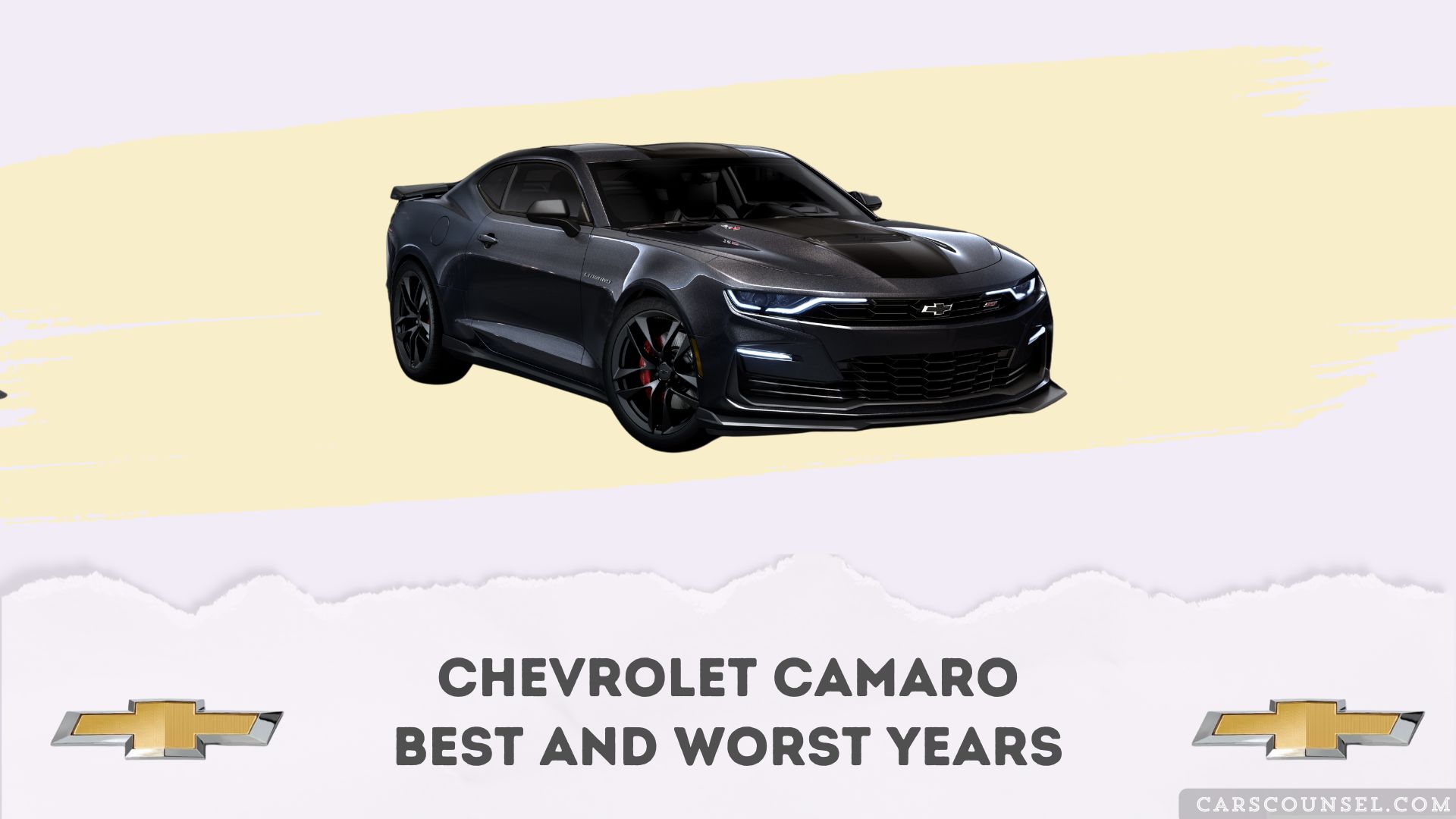
The best Chevrolet Camaro model years are 2017 through 2024. These late sixth-generation models offer a sorted Alpha platform and excellent powertrain reliability. Buyers should avoid the 2010 model year due to severe first-year production issues and V6 engine flaws.
Rankings are comparative, meaning no used Camaro is entirely flawless. Maintenance history, overall condition, and previous ownership habits heavily influence long-term durability. Always verify open recalls before purchasing.
Reliability varies significantly by engine and generation. The sixth-generation Alpha chassis is vastly superior to the heavier fifth generation. V8 configurations generally exhibit fewer systemic issues than early fifth-generation V6 models.
Quick Navigation
Best and Worst Chevrolet Camaro Years at a Glance
| Model Year | Verdict | Main Reason | Buyer Guidance |
|---|---|---|---|
| 2017–2024 | Best Choice | Mature Alpha platform, reliable powertrains | Top pick for performance and daily driving |
| 2016 | Good With Inspection | First year of sixth generation | Check for early-production electrical quirks |
| 2014–2015 | Good Choice | Refined fifth generation | Best budget option for older V8 models |
| 2011–2013 | Approach Carefully | Lingering V6 timing chain concerns | Verify engine service history carefully |
| 2010 | Avoid | First-year redesign, heavy chassis, V6 flaws | Skip this year entirely |
Key Takeaways
- 2017 through 2024 are the strongest choices, featuring the highly capable Alpha platform.
- The 2010 model year is the worst, plagued by early fifth-generation V6 timing chain failures.
- 2011 through 2013 models require careful inspection of the V6 engine and electrical systems.
- 2024 marks the final production year of the Chevrolet Camaro.
- Always check the VIN for open recalls and verify maintenance records before buying.
How We Evaluated the Chevrolet Camaro Model Years
Our analysis reviews official recalls, manufacturer service campaigns, and consumer complaint databases. We weigh defect severity, repair complexity, and long-term ownership costs.
Complaints are not confirmed failure rates. A high complaint volume often reflects sales popularity rather than inherent mechanical doom.
Recent models have less road exposure, making long-term durability harder to quantify. “Best” indicates comparatively stronger reliability, not absolute perfection.
Best Chevrolet Camaro Years
2017–2024: Best Choice
The sixth generation hit its stride after the initial 2016 launch year. These models benefit from General Motors’ lightweight Alpha platform, delivering sharp handling and robust structural rigidity.
The LT1 6.2L V8 and the turbocharged 2.0L four-cylinder are exceptionally reliable powertrains. Even the 3.6L V6 received significant updates, eliminating the timing chain worries of earlier generations.
As the final production run concludes with the 2024 model year, these late examples represent the pinnacle of Camaro engineering. Parts availability remains excellent.
2014–2015: Good Choice
If you prefer the retro styling of the fifth generation, the final two years are the safest bets. Chevrolet introduced a significantly upgraded interior and refined the powertrain calibration.
The 2014 refresh addressed many early electrical gremlins. The 6.2L V8 models from these years are particularly stout, offering modern performance without the first-year growing pains.
Buyers should still prioritize examples with documented maintenance. Outward visibility remains compromised compared to the newer Alpha chassis.
Best Year by Buyer Type
Best Overall: 2020
The 2020 model year sits perfectly in the sweet spot of the sixth generation. It features sorted electronics, reliable powertrains, and avoids the depreciation of brand-new examples.
Best Enthusiast Choice: 2018–2024 SS 1LE
For track-focused buyers, the SS 1LE package offers incredible suspension components. The LT1 V8 in these years is highly dependable under rigorous driving conditions.
Best Budget Option: 2015 LT or SS
Late fifth-generation models offer aggressive styling at a lower entry price. Stick to the V8 configurations to bypass the older V6 engine vulnerabilities.
Years to Approach Carefully
2011–2013: Approach Carefully
These middle fifth-generation years improved upon the 2010 launch, but they still harbor the problematic 3.6L V6 engine. Timing chain stretch is a documented concern that requires expensive repairs.
Electrical glitches, particularly with the infotainment system and steering wheel controls, are also prevalent. If you must buy from this era, prioritize the V8 models and demand rigorous service records.
2016: Good With Inspection
The 2016 model year introduced the brilliant Alpha platform. However, as a first-year redesign, it experienced minor assembly and electrical teething issues.
Most examples have been sorted under warranty. Have a mechanic inspect the suspension components and verify that all software updates were applied by the dealer.
Worst Chevrolet Camaro Years
2010: Avoid
The 2010 Camaro marked the return of the nameplate after a long hiatus, but the execution was flawed. The car was excessively heavy, and the retro styling severely compromised outward visibility.
More importantly, the early 3.6L V6 engine suffered from premature timing chain stretch. This defect can lead to catastrophic engine failure if ignored, resulting in massive repair bills.
Combined with first-year electrical bugs and a sluggish automatic transmission, the 2010 model year simply offers too much risk for used buyers.
Chevrolet Camaro Reliability by Generation
Fifth Generation (2010–2015)
Built on the heavier Zeta platform, this generation prioritized retro styling over dynamics. Early years are plagued by V6 engine and electrical issues.
The 2014–2015 refresh improved interior quality and powertrain reliability. However, the heavy chassis and poor visibility remain inherent drawbacks compared to modern sports coupes.
Sixth Generation (2016–2024)
Transitioning to the Alpha platform transformed the Camaro into a world-class sports car. It is significantly lighter, more agile, and mechanically superior.
The powertrain lineup, including the LT1 V8, is remarkably robust. This generation shares its underlying architecture with Cadillac sedans, resulting in a much more refined ownership experience.
Common Chevrolet Camaro Problems
V6 Timing Chain Stretch
Affecting primarily 2010–2013 models equipped with the 3.6L V6, this issue causes the check engine light to illuminate and the engine to run poorly.
Replacing the timing chains requires extensive labor, often exceeding $2,000. Buyers should listen for a distinct rattling noise on cold starts.
Poor Outward Visibility
The fifth generation’s high beltline and thick pillars create massive blind spots. This design flaw increases the risk of minor collisions and makes parking difficult.
Electrical and Infotainment Glitches
Early fifth-generation models frequently experience failing steering wheel controls and unresponsive touchscreens. While mostly an annoyance, these issues can distract the driver and degrade the ownership experience.
What to Check Before Buying a Used Chevrolet Camaro
- Verify the VIN for open safety recalls, especially regarding airbag modules.
- Listen for timing chain rattle on cold starts for any 2010–2013 V6 model.
- Test all steering wheel controls and infotainment screen functions.
- Inspect the rear differential for leaks on high-horsepower V8 models.
- Check for uneven tire wear, which may indicate abused suspension components.
- Arrange an independent pre-purchase inspection to verify chassis and powertrain health.
Related Buying Guides
- Chevrolet Blazer best and worst years: Consider this modern Chevy crossover if you need daily practicality alongside aggressive styling.
- Chevrolet Bolt best and worst years: Explore this electric alternative if you want Chevy reliability with zero emissions and lower running costs.
- Chevrolet Captiva best and worst years: Review this compact SUV option for buyers needing more cargo space than a sports coupe can provide.
- Chevrolet Colorado best and worst years: Check out Chevy’s midsize truck if your lifestyle demands towing capability and an open bed.
Frequently Asked Questions
What is the most reliable Chevrolet Camaro year?
The 2020 model year is widely considered the most reliable. It benefits from a mature Alpha platform, refined electronics, and highly dependable LT1 V8 and turbocharged four-cylinder engine options.
Is the 2010 Camaro a good used car?
No, the 2010 Camaro is a year to avoid. It suffers from severe first-year production flaws, including premature V6 timing chain stretch, heavy chassis dynamics, and poor outward visibility.
When did Chevrolet stop making the Camaro?
General Motors ended Camaro production after the 2024 model year. The 2024 models represent the final iteration of the sixth-generation Alpha platform.
Do Camaros have transmission problems?
Most Camaros feature reliable automatic and manual transmissions. However, early fifth-generation models with the V6 engine occasionally exhibit sluggish shifting and torque converter shudder.
Are V8 Camaros more reliable than V6 models?
Generally, yes. The 6.2L LT1 V8 found in newer SS models, and the older LS3 engines, are exceptionally robust. Early fifth-generation V6 engines are prone to expensive timing chain failures.
How long can a Chevrolet Camaro last?
Well-maintained examples, particularly those with V8 powertrains, can easily reach high mileage. Longevity heavily depends on rigorous maintenance, driving habits, and avoiding deferred repairs.
Choosing the Right Chevrolet Camaro Model Year
The best Chevrolet Camaro years are 2017 through 2024. These sixth-generation models offer an exceptional blend of performance, handling, and long-term reliability.
Avoid the 2010 model year entirely due to severe V6 engine flaws and first-year redesign issues. If shopping on a budget, target the 2014 or 2015 models.
Always verify the VIN for open recalls, demand comprehensive service records, and secure an independent pre-purchase inspection before finalizing your purchase.

