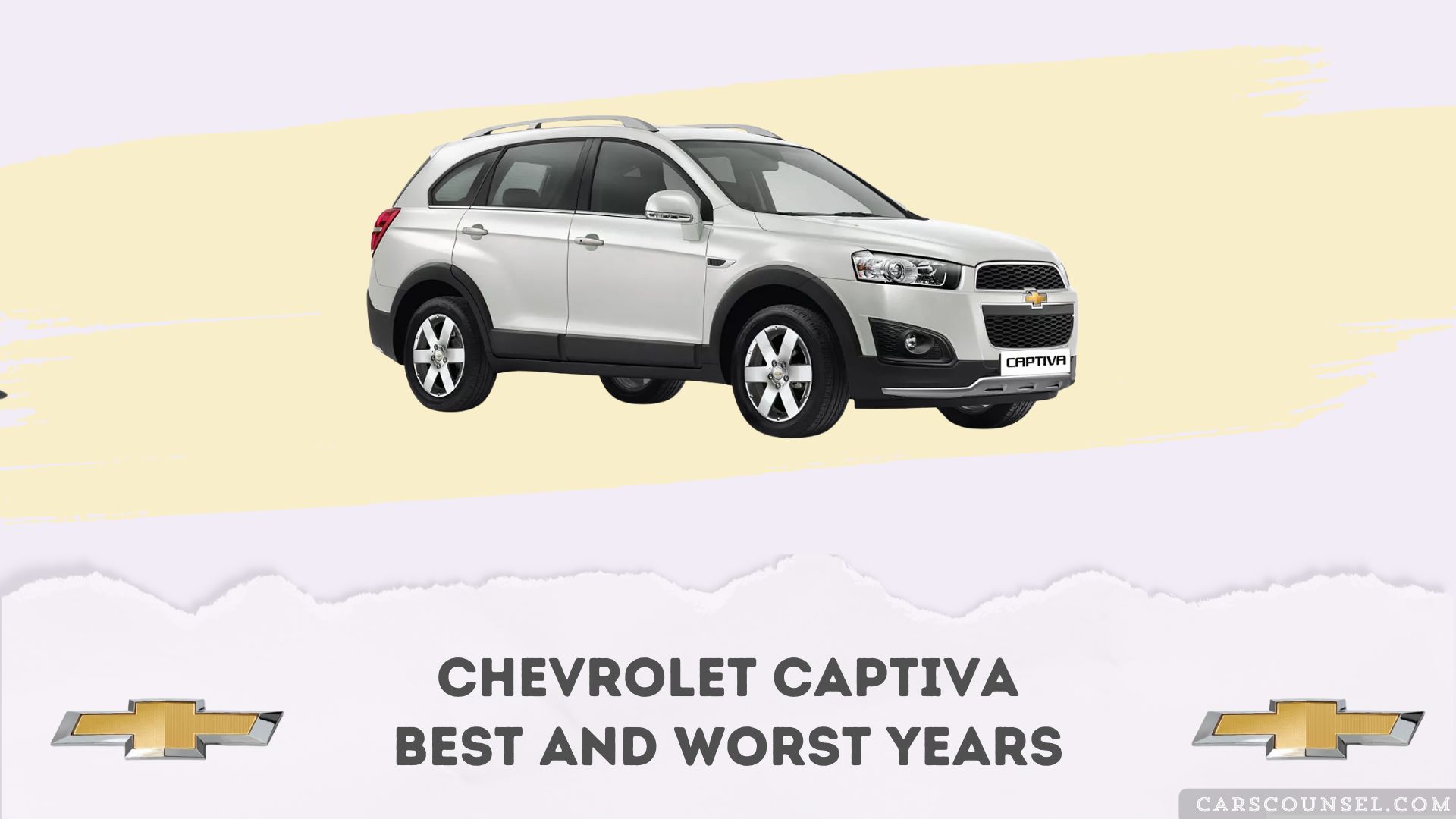
The best Chevrolet Captiva Sport years are 2014 and 2015, featuring a refreshed interior and mature assembly. Buyers should avoid the inaugural 2012 model due to severe first-year powertrain glitches and approach 2013 carefully.
These rankings are comparative, and no used fleet vehicle is entirely flawless. Strict maintenance history, previous rental abuse, and rust prevention heavily influence long-term reliability and ownership costs for these compact SUVs.
Significant differences exist between the early 3.0-liter V6 and the standard 2.4-liter inline-four engines. The 2014 facelift also vastly improved daily usability, though the underlying Ecotec timing chain risks remain across all years.
Quick Navigation
Best and Worst Chevrolet Captiva Years at a Glance
| Model Year Range | Verdict | Main Reason | Buyer Guidance |
|---|---|---|---|
| 2012 | Avoid | First-year V6 and I4 engine flaws | Bypass entirely |
| 2013 | Approach Carefully | 2.4L Ecotec timing chain stretch | Verify engine history |
| 2014-2015 | Good With Inspection | Refreshed styling, sorted assembly | Inspect timing chain |
Key Takeaways
- The 2014-2015 models represent the best choices, featuring an updated interior and refined assembly.
- Avoid the 2012 model year due to first-year production flaws and severe powertrain complaints.
- The 2.4-liter Ecotec engine across all years is prone to timing chain stretch and excessive oil consumption.
- Most US examples were former rental fleet vehicles, making a thorough pre-purchase inspection mandatory.
- Always verify the vehicle identification number for open recalls and insist on a specialist inspection.
How We Evaluated the Chevrolet Captiva Model Years
Our analysis reviews official recalls, manufacturer service campaigns, technical service bulletins, and long-term ownership data. We weigh the severity of mechanical failures against repair costs and daily usability.
Complaints are not failure rates, and a recall does not automatically make a year unreliable. Recent models have less ownership history, so best means comparatively stronger, not flawless.
Best Chevrolet Captiva Years
2014-2015 (Late Production)
The 2014 and 2015 models benefit from a comprehensive exterior facelift and a much-improved interior layout. These final production years feature sorted electronics and better overall build quality compared to the inaugural models.
Buyers must still verify that the 2.4-liter Ecotec timing chain has been replaced with updated components to prevent catastrophic engine failure.
Best Year by Buyer Type
Best Budget Option
The 2014 model offers the best balance of updated styling and lower depreciation for budget-conscious buyers, provided the engine and transmission have been strictly maintained.
Years to Approach Carefully
2013 (Mid-Cycle)
The 2013 model year dropped the V6 engine but continues to suffer from the 2.4-liter Ecotec timing chain and oil consumption issues. Transmission shudder is also frequently reported by owners.
A thorough inspection of the engine internals and transmission fluid condition is mandatory before purchase.
Worst Chevrolet Captiva Years
2012 (First Generation)
The inaugural 2012 model year is plagued by severe first-year production flaws, including faulty power steering racks, electrical gremlins, and early timing chain failures on both engines.
Due to the high risk of expensive powertrain repairs and widespread rental fleet abuse, buyers should bypass this year entirely.
Chevrolet Captiva Reliability by Generation
First Generation (2012-2015)
The US-market Captiva Sport was imported from South Korea and sold exclusively through rental fleets before being liquidated to the used market. While offering premium features for the price, the underlying Theta platform requires strict maintenance.
Common Chevrolet Captiva Problems
Engine Timing Chain Stretch
Affecting all years with the 2.4-liter Ecotec engine, the timing chain is prone to premature stretching due to oil starvation. This triggers a check engine light and can cause catastrophic valve interference if ignored.
Transmission Shudder
Found across the entire production run, the six-speed automatic transmission often exhibits violent shuddering during light acceleration. This typically requires a specialized fluid flush or complete torque converter replacement.
Power Steering Leaks
The power steering rack and pinion assembly is highly susceptible to fluid leaks and premature failure. Owners frequently report a whining noise followed by a complete loss of power steering assist.
What to Check Before Buying a Used Chevrolet Captiva
- Verify the VIN for open recalls and rental fleet history.
- Listen for timing chain rattle on cold starts across all 2.4-liter models.
- Test the automatic transmission for shuddering or harsh shifts.
- Inspect the power steering rack for fluid leaks and whining noises.
- Check the interior for excessive wear indicative of harsh rental fleet usage.
- Arrange a pre-purchase inspection with a qualified technician.
Related Buying Guides
- Chevrolet Blazer best and worst years – Midsize SUV alternative for buyers needing more power, modern safety features, and a larger cargo area.
- Chevrolet Bolt best and worst years – Electric hatchback alternative for buyers prioritizing zero-emissions commuting and minimal fuel costs over traditional SUV ride height.
- Chevrolet Camaro best and worst years – Performance coupe alternative for buyers willing to sacrifice rear-seat practicality and cargo space for engaging driving dynamics.
- Chevrolet Colorado best and worst years – Midsize pickup alternative for buyers who realize they need an open truck bed for hauling gear instead of an enclosed cargo area.
Frequently Asked Questions
Which Chevrolet Captiva year is most reliable?
The 2014 and 2015 models offer the strongest reliability records. They benefit from a mature assembly and updated interior, avoiding the severe first-year flaws of the 2012 model.
Does the Chevrolet Captiva have engine problems?
Yes, the 2.4-liter Ecotec engine used in most models is notorious for timing chain stretch and excessive oil consumption. Strict adherence to oil change intervals is mandatory.
Was the Captiva sold to the general public new?
No, the US-market Captiva Sport was sold almost exclusively to rental fleet companies. Most used examples are former rental vehicles, making a thorough inspection for abuse critical.
Is the Chevrolet Captiva expensive to maintain?
Yes. While purchase prices are low, neglected timing chain repairs, transmission shudder fixes, and power steering replacements can be financially devastating on a budget compact SUV.
Are there any common transmission issues?
The six-speed automatic transmission is prone to shuddering and harsh shifts, especially during light acceleration. A specialized fluid flush or torque converter replacement is often required.
Is the Captiva a good daily driver?
It can be, especially the 2014-2015 models. They offer comfortable seating and decent fuel economy, provided the underlying Ecotec engine and transmission have been properly maintained.
Choosing the Right Chevrolet Captiva Model Year
Choosing the right Chevrolet Captiva Sport requires paying close attention to the model year and maintenance history. The 2014 and 2015 models provide the most secure ownership experience for budget-conscious compact SUV buyers.
Buyers must strictly avoid the 2012 examples due to severe first-year risks. Ensuring the timing chain and transmission have been serviced is mandatory for all remaining years.
Before purchasing, verify the VIN for open recalls and hire a specialist for a thorough inspection. Knowing which models stand out ensures driving satisfaction rather than severe financial consequences.

