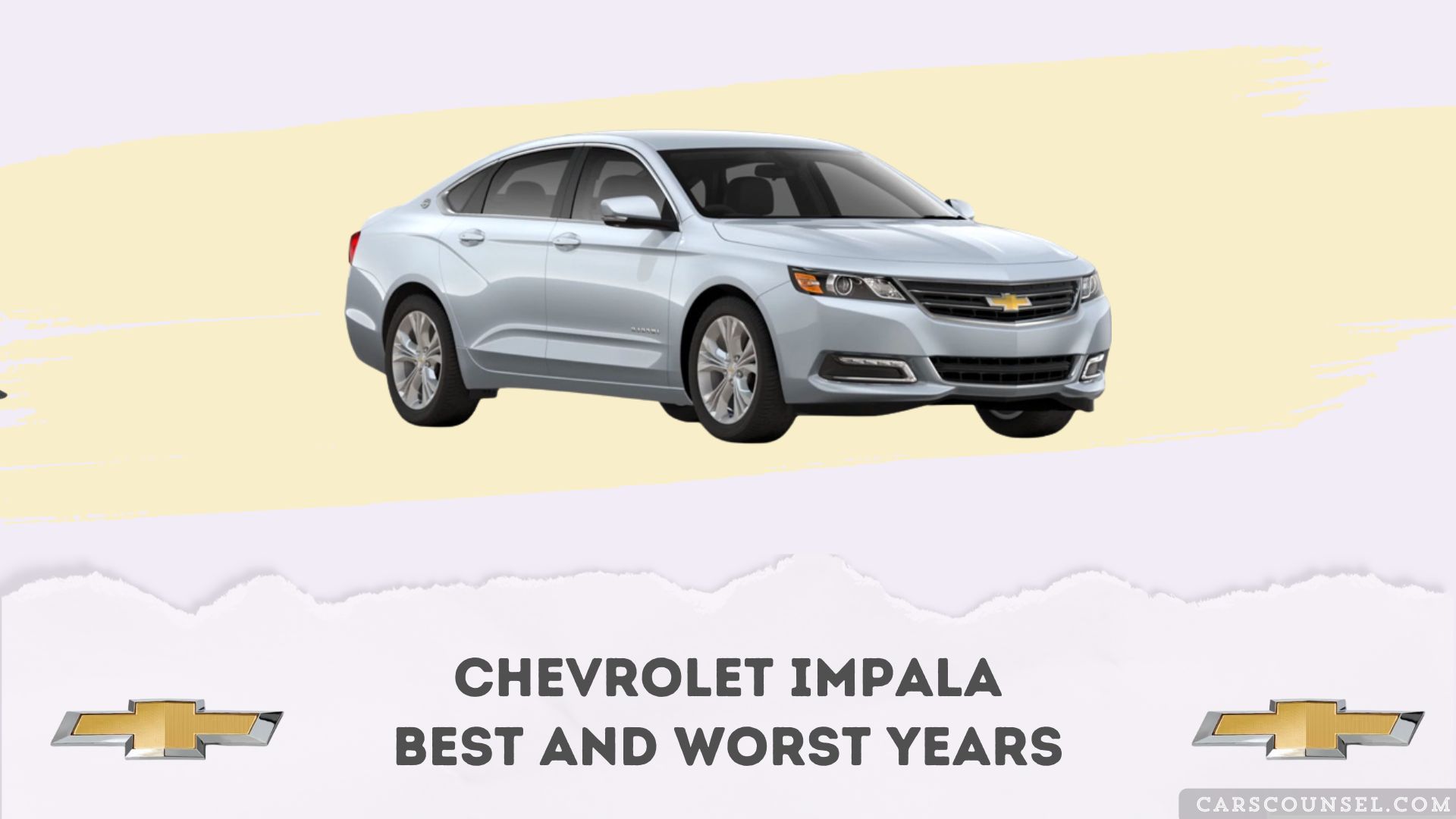
The best Chevrolet Impala years are 2015 through 2020, featuring a mature platform and dependable powertrains. Buyers should avoid 2006 through 2011 models due to severe engine and transmission defects.
These rankings are comparative, as no aging sedan is entirely flawless. Proper maintenance history and current mechanical condition remain critical factors for any used vehicle purchase.
Significant reliability differences exist between the older W-body architecture and the final generation. The later models introduced updated engines that resolved many earlier oil consumption and cooling system failures.
Quick Navigation
Best and Worst Chevrolet Impala Years at a Glance
| Model Year or Range | Verdict | Main Reason | Buyer Guidance |
|---|---|---|---|
| 2000-2005 | Approach Carefully | Intake manifold and Passlock issues | Inspect for coolant leaks |
| 2006-2011 | Avoid | Excessive oil consumption | High risk of engine failure |
| 2012-2013 | Mixed | Improved V6 but aging platform | Verify transmission operation |
| 2014 | Good Choice | First year of new generation | Check for early production quirks |
| 2015-2020 | Best Choice | Mature platform and reliable engines | Top pick for used buyers |
Key Takeaways
- The 2015 through 2020 model years offer the strongest reliability and the most refined ownership experience.
- Avoid 2006 through 2011 models entirely due to widespread excessive oil consumption and transmission failures.
- The 2000 through 2005 years require careful inspection for intake manifold gasket failures and security system faults.
- Production ended after the 2020 model year, meaning even the newest examples have several years of road use.
- Always verify the VIN for open recalls and arrange an independent pre-purchase inspection before buying.
How We Evaluated the Chevrolet Impala Model Years
Our analysis considers official NHTSA recalls, manufacturer service campaigns, and consumer complaint patterns across the Chevrolet lineup. We evaluate powertrain differences, generation changes, and repair complexity.
Complaints are not confirmed failure rates, and a recall does not automatically ruin a vehicle’s reputation. Older models require careful inspection, meaning our top picks represent comparatively stronger options.
Best Chevrolet Impala Years
2015-2020 (Best Choice)
These years benefit from the maturation of the eleventh-generation platform. The 3.6-liter V6 and 2.5-liter four-cylinder engines are largely sorted, avoiding the severe oil consumption issues of earlier models.
These models offer the strongest comparative reliability for buyers seeking a comfortable, spacious sedan with modern safety features and predictable maintenance requirements.
2014 (Good Choice)
As the first year of the final generation, the 2014 model introduced a completely redesigned interior and chassis. While generally reliable, first-year models can occasionally exhibit minor electrical or assembly quirks.
Buyers should prioritize examples with complete service records and verify that all available powertrain software updates were applied.
Best Year by Buyer Type
Best Overall: 2015-2020
These years provide the most dependable ownership experience, combining a comfortable ride with proven powertrain durability and modern infotainment systems.
Best Budget Option: 2012-2013
These late tenth-generation models feature the improved 3.6-liter V6 engine. They offer decent value but require a thorough inspection of the transmission and aging suspension components.
Years to Approach Carefully
2000-2005 (Approach Carefully)
The ninth-generation models are mechanically simple but suffer from two major flaws. The 3.8-liter V6 is notorious for intake manifold gasket failures, which can lead to coolant mixing with oil.
Additionally, the Passlock security system frequently fails, preventing the engine from starting. Buyers must verify that these specific issues have been properly addressed.
Worst Chevrolet Impala Years
2006-2011 (Avoid)
The early tenth-generation models are plagued by severe mechanical defects. The 3.5-liter and 3.9-liter V6 engines suffer from excessive oil consumption due to faulty piston ring designs, often requiring complete engine replacement.
Furthermore, the automatic transmissions in these years are prone to premature failure. The combination of engine and transmission risks makes these years a poor investment.
Chevrolet Impala Reliability by Generation
Ninth Generation (2000-2005)
Built on the older W-body platform, these models are known for interior space but struggle with aging plastic cooling components and security system faults. The 3.8-liter engine is robust if the intake gaskets are replaced.
Tenth Generation (2006-2013)
This generation introduced new V6 engines and a V8 option. The early years suffer from severe oil consumption, while the later years improved reliability with the 3.6-liter V6.
Eleventh Generation (2014-2020)
The final generation moved to a more modern architecture with significantly better build quality. The powertrains are dependable, making this the definitive choice for used buyers seeking a trouble-free sedan.
Common Chevrolet Impala Problems
Excessive Oil Consumption
The 2006 through 2011 models equipped with the 3.5-liter and 3.9-liter V6 engines frequently burn oil between changes. This can lead to low oil levels, engine knocking, and catastrophic internal failure if ignored.
Intake Manifold Gasket Failure
The 3.8-liter V6 in the 2000 through 2005 models uses a plastic intake manifold gasket that degrades over time. This allows coolant to leak externally or enter the oil passages, requiring immediate repair.
Passlock Security System
Many older models experience failures with the Passlock anti-theft system. The security light will illuminate, and the engine will crank but refuse to start, often requiring a sensor replacement or a bypass procedure.
Transmission Shudder and Failure
The automatic transmissions in the 2006 through 2011 models are known for harsh shifting, torque converter shudder, and eventual complete failure. Rebuilding or replacing the transmission is a major expense.
What to Check Before Buying a Used Chevrolet Impala
- Verify the vehicle history for any outstanding historical recalls, especially regarding airbag inflators.
- Inspect the engine bay for signs of coolant leaks or milky oil, indicating intake manifold gasket failure.
- Check the oil level and condition to assess potential oil consumption issues on tenth-generation models.
- Test the transmission for smooth shifting and ensure there is no shudder during highway acceleration.
- Verify that the Passlock security system functions correctly and the engine starts immediately.
- Arrange an independent pre-purchase inspection with a qualified technician.
Related Buying Guides
- Chevrolet Colorado: The midsize truck alternative for buyers who require towing capacity, utility, and a rugged platform instead of a traditional family sedan.
- Chevrolet Equinox: The compact crossover alternative for families who prioritize a higher seating position, modern safety features, and all-wheel-drive availability over maximum interior space.
Frequently Asked Questions
Which Chevrolet Impala year is the most reliable?
The 2015 through 2020 model years are the most reliable. They benefit from a mature platform, sorted powertrains, and modernized safety technology.
Does the Chevrolet Impala have engine problems?
Yes, the 2006 through 2011 models suffer from severe excessive oil consumption. The 2000 through 2005 models are known for intake manifold gasket failures.
Why did Chevrolet stop making the Impala?
Production ended after the 2020 model year as consumer demand shifted heavily toward crossovers and SUVs, leaving the full-size sedan segment largely abandoned.
Is the Chevrolet Impala expensive to maintain?
Maintenance costs are generally average for a full-size sedan. However, neglected examples from the 2006 through 2011 model years can incur massive engine repair bills.
Are newer Chevrolet Impala models reliable?
The 2014 through 2020 models are highly reliable compared to older generations. They feature updated engines that resolved the major oil consumption and cooling system defects.
What should I check on a used Impala?
Buyers must check for coolant leaks, test the transmission for shuddering, and verify the oil level. An independent pre-purchase inspection is mandatory for any used vehicle.
Choosing the Right Chevrolet Impala Model Year
Target the 2015 through 2020 model years for a refined, reliable full-size sedan experience with sorted powertrains and modern technology.
Avoid the 2006 through 2011 models entirely due to severe engine and transmission defects. Always test the drivetrain, check for fluid leaks, and secure an independent inspection.

