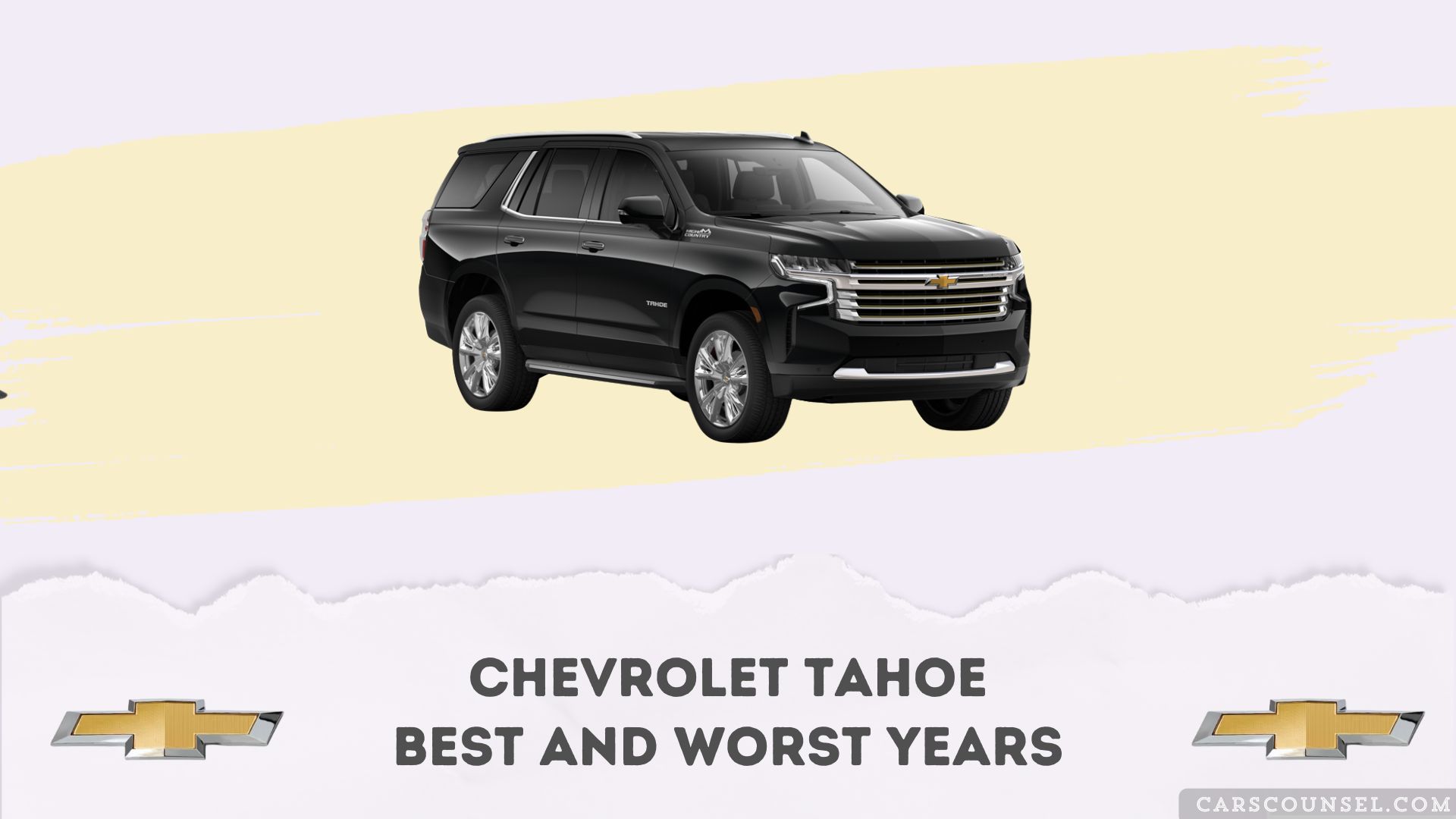
The best Chevrolet Tahoe model years are 2017 through 2020 and 2000 through 2003, offering sorted powertrains and durable V8 engines. Buyers should avoid 2007 through 2009 models due to severe engine and interior defects.
Rankings are comparative, as no aging full-size SUV is entirely flawless. Proper maintenance history, immediate repair of fluid leaks, and a thorough pre-purchase inspection remain essential for any used vehicle.
Significant differences exist between early pushrod V8s and later Active Fuel Management engines. The 2021 redesign introduced an independent rear suspension and new powertrains, requiring separate long-term evaluation.
Quick Navigation
Best and Worst Chevrolet Tahoe Years at a Glance
| Model Year or Range | Verdict | Main Reason | Buyer Guidance |
|---|---|---|---|
| 1995-1999 | Good Older Choice | Simple mechanics | Inspect for rust and age |
| 2000-2003 | Best Older Choice | Durable pre-AFM V8 engines | Verify timing and oil pressure |
| 2004-2006 | Approach Carefully | Early cylinder deactivation issues | Check for lifter noise |
| 2007-2009 | Avoid | Cracking dashes and AFM failure | High risk of expensive repairs |
| 2010-2014 | Good Choice | Improved GMT900 reliability | Inspect dashboard and transmission |
| 2015-2016 | Approach Carefully | First-year K2XX transmission shudder | Test drive for shifting smoothness |
| 2017-2020 | Best Late-Generation Choice | Sorted powertrains and features | Top pick for fourth-generation |
| 2021-2025 | Too New to Judge | All-new platform and powertrains | Await long-term reliability data |
Key Takeaways
- The 2017 through 2020 model years offer the most sorted fourth-generation ownership experience.
- Avoid 2007 through 2009 models due to severe Active Fuel Management failures and cracking dashboards.
- The 2021 redesign introduced an independent rear suspension, making recent models too new to judge.
- Cylinder deactivation lifter failure is a major verified concern across mid-2000s to late-2010s V8 engines.
- Always verify the VIN for open recalls, especially regarding Takata airbag inflators and power steering.
- Arrange an independent pre-purchase inspection to check for hidden oil leaks and transmission shudder.
How We Evaluated the Chevrolet Tahoe Model Years
Our analysis considers official NHTSA recalls, manufacturer service campaigns, and consumer complaint patterns across the Chevrolet lineup. We evaluate powertrain differences, generation changes, and repair complexity.
Complaints are not confirmed failure rates, and a recall does not automatically ruin a vehicle’s reputation. Older models require careful inspection, meaning our top picks represent comparatively stronger options.
Best Chevrolet Tahoe Years
2017-2020 (Best Late-Generation Choice)
These years benefit from the maturation of the K2XX platform. The 5.3-liter and 6.2-liter V8 engines are largely sorted, and the six-speed and ten-speed automatic transmissions operate smoothly.
These models offer the strongest comparative reliability for buyers seeking a modern full-size SUV with advanced safety features and comfortable highway manners.
2000-2003 (Best Older Choice)
Early second-generation models feature the legendary 5.3-liter LM7 V8 engine without cylinder deactivation. This simpler powertrain avoids the severe lifter and oil consumption issues that plagued later engines.
While age and mileage require careful inspection, these years remain highly sought after by enthusiasts and budget-conscious buyers seeking durable mechanicals.
Years to Approach Carefully
2015-2016 (Approach Carefully)
The initial years of the fourth generation introduced the new K2XX platform. Some owners reported transmission shudder, particularly with the eight-speed automatic, and lingering Active Fuel Management concerns.
Buyers should carefully test drive these models for shifting smoothness and verify that all available powertrain software updates were applied by previous owners.
2010-2014 (Good Choice)
These later third-generation models improved upon the early GMT900 years. The powertrains are generally reliable, though the interior materials and dashboard plastics remain vulnerable to severe cracking.
Ensure the dashboard is intact and inspect the suspension components, which may require replacement on higher-mileage examples.
Worst Chevrolet Tahoe Years
2007-2009 (Avoid)
The first years of the GMT900 generation suffer from multiple severe defects. The Active Fuel Management system frequently fails, destroying engine lifters and causing excessive oil consumption.
Additionally, the dashboards are notorious for severe cracking, and the exterior paint is prone to premature clear-coat failure. These models carry the highest risk of expensive mechanical repairs.
Chevrolet Tahoe Reliability by Generation
First and Second Generations (1995-2006)
The GMT400 and GMT800 platforms established the Tahoe as a durable body-on-frame SUV. The pre-2005 engines are incredibly robust, though finding low-mileage examples is increasingly difficult.
Third Generation (2007-2014)
This generation introduced the problematic Active Fuel Management system and cheaper interior materials. The later years (2013-2014) are significantly more reliable than the disastrous 2007 launch year.
Fourth Generation (2015-2020)
The K2XX platform improved ride quality and fuel economy. While the first two years had transmission teething issues, the 2017 through 2020 models represent the peak of this generation’s reliability.
Fifth Generation (2021-Present)
The current generation moved to an independent rear suspension and introduced a 3.0-liter Duramax diesel option. Because it represents a complete redesign, long-term reliability evidence remains limited.
Common Chevrolet Tahoe Problems
Active Fuel Management Failure
General Motors utilized cylinder deactivation to improve fuel economy on 5.3-liter and 6.2-liter V8 engines from 2005 through 2019. The hydraulic lifters can collapse, leading to catastrophic engine damage.
Cracking Dashboards
Third-generation models (2007-2014) suffer from a severe design flaw where the dashboard plastic warps and cracks due to sun exposure. This is a cosmetic issue but severely impacts interior quality.
Transmission Shudder
Certain fourth-generation models equipped with the eight-speed automatic transmission experience a noticeable shudder at highway speeds. This often requires a fluid flush or a torque converter replacement to resolve.
What to Check Before Buying a Used Chevrolet Tahoe
- Verify the vehicle history for any outstanding historical recalls, especially Takata airbag inflators.
- Listen for a ticking noise on cold startup, which indicates failing Active Fuel Management lifters.
- Inspect the dashboard for severe cracking and warping, common on GMT900 models.
- Test the transmission for shuddering or harsh shifts during highway acceleration.
- Check the underside for rust and inspect the suspension components for wear.
- Arrange an independent pre-purchase inspection with a qualified technician.
Related Buying Guides
- Chevrolet Suburban: The extended-wheelbase platform sibling for buyers who need maximum cargo space and third-row passenger comfort without sacrificing capability.
- Chevrolet Colorado: The midsize truck alternative for buyers who require towing capacity and utility but prefer a smaller, more maneuverable footprint for daily driving.
- Chevrolet Equinox: The compact crossover alternative for families who prioritize passenger comfort and fuel economy over maximum towing capacity and off-road ability.
Frequently Asked Questions
Which Chevrolet Tahoe year is the most reliable?
The 2017 through 2020 model years are the most reliable. They benefit from a mature platform, sorted powertrains, and modernized safety technology.
Does the Chevrolet Tahoe have engine problems?
Many V8 engines from 2005 through 2019 suffer from Active Fuel Management lifter failures. The early 2000 through 2003 models avoid this issue entirely.
Why do some Tahoe dashboards crack?
The 2007 through 2014 models use a dashboard plastic compound that becomes brittle and cracks under UV exposure. This is a widespread cosmetic defect.
Is the Chevrolet Tahoe expensive to maintain?
Full-size SUV maintenance costs are generally higher than average. Buyers should budget for potential out-of-warranty suspension, transmission, and engine repairs on older models.
Are newer Chevrolet Tahoe models reliable?
The 2021 and newer models feature an all-new platform and independent rear suspension. Because they represent a complete redesign, they currently lack long-term ownership data.
What should I check on a used Tahoe?
Buyers must listen for engine ticking, test the transmission for shudder, and inspect the dashboard. An independent pre-purchase inspection is mandatory for any used vehicle.
Choosing the Right Chevrolet Tahoe Model Year
Target the 2017 through 2020 model years for a refined, reliable full-size SUV experience with sorted powertrains and modern technology.
Avoid the 2007 through 2009 models entirely due to severe engine and interior defects. Always test the drivetrain, check for lifter noise, and secure an independent inspection.

