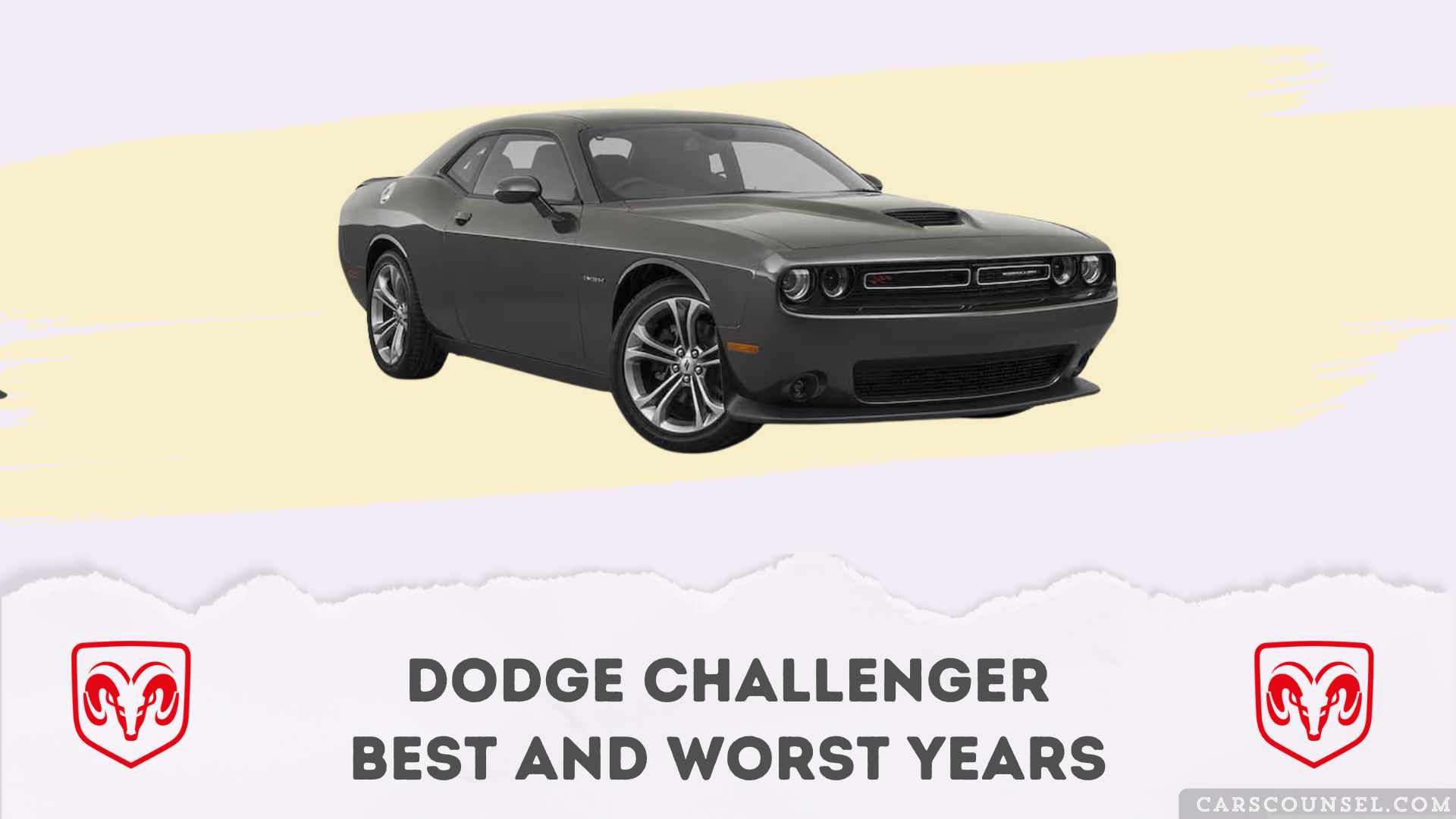
The best Dodge Challenger years are 2016 through 2022, offering refined powertrains and improved electronics. Buyers should generally avoid the 2011 through 2013 model years due to severe engine and electrical defects. The 2023 model is a top pick for collectors.
These rankings help you avoid the worst model years. No used muscle car is flawless, and high-performance examples often suffer from track abuse. A thorough pre-purchase inspection and complete service history remain essential.
Reliability varies significantly by engine. The V6 models experienced specific casting defects in early years, while the V8 configurations are generally robust but carry higher maintenance costs if driven aggressively.
Quick Navigation
Best and Worst Dodge Challenger Years at a Glance
| Model Year | Verdict | Main Reason | Buyer Guidance |
|---|---|---|---|
| 2023 | Best Enthusiast Choice | Final production year with collectible appeal | Verify maintenance on high-performance trims |
| 2016-2022 | Best Choice | Refined powertrains and standard ZF 8-speed | Check for track abuse on SRT models |
| 2015 | Good Choice | Major refresh with updated interior | Inspect early-production build quality |
| 2014 | Mixed | Transitional year for transmissions | Verify engine and transmission configuration |
| 2011-2013 | Avoid | V6 cylinder head issues and TIPM failures | Seek post-2014 models instead |
| 2008-2010 | Good With Inspection | Early third-generation electronics | Inspect TIPM and aging wiring |
Key Takeaways
- The 2016 through 2022 model years offer the best blend of modern features and proven reliability.
- Avoid the 2011 through 2013 model years due to expensive V6 engine and electrical system defects.
- The 3.6L Pentastar V6 had casting issues in early years, while the Hemi V8 remains largely robust.
- High-performance Hellcat and SRT models require strict maintenance verification due to the risk of track abuse.
- Recent model years have less long-term ownership data, though the platform is highly mature.
- Always check for open recalls and verify the VIN before purchasing any used muscle car.
How We Evaluated the Dodge Challenger Model Years
Our analysis reviews official safety recalls, manufacturer service campaigns, and consumer complaint patterns. We also evaluate powertrain differences, generation updates, and repair complexity.
Complaints are not confirmed failure rates, and a recall does not automatically make a vehicle unreliable. Recent models have limited long-term exposure. Our “Best” designation means a year is comparatively stronger, not flawless.
Best Dodge Challenger Years
2016-2022: Best Choice
The 2016 through 2022 model years represent the most mature phase of the third generation. Dodge standardized the excellent ZF 8-speed automatic transmission across all trims, improving both performance and drivability.
The 3.6L Pentastar V6 and 5.7L Hemi V8 engines are thoroughly refined by this point. Electrical gremlins that plagued earlier models were largely resolved. Buyers should still inspect SRT and Hellcat examples for signs of track abuse.
2023: Best Enthusiast Choice
As the final production year, the 2023 Challenger holds special appeal for collectors. Dodge introduced several “Last Call” special editions, making these vehicles highly desirable.
Mechanically, the 2023 models are identical to the proven 2022 configurations. Buyers are paying for exclusivity rather than new engineering. Ensure any high-horsepower variant has a documented history of careful ownership.
2015: Good Choice
The 2015 model year introduced a significant exterior and interior refresh. Dodge updated the infotainment systems and improved cabin materials, making the Challenger a more comfortable daily driver.
While the powertrains are solid, this was the first year of the new styling. Some early-production examples may exhibit minor build quality inconsistencies. A thorough pre-purchase inspection is recommended.
Best Dodge Challenger Year by Buyer Type
Best Overall: 2019-2022
The 2019 through 2022 model years offer the most refined electronics and proven powertrain reliability. They provide an excellent balance of modern features and long-term dependability.
Best Enthusiast Choice: 2023
The final production year carries immense collectible value, especially for special edition models.
Best Budget Option: 2008-2010
Early third-generation models are affordable, but buyers must budget for potential electrical repairs and aging components.
Years to Approach Carefully
2008-2010: Good With Inspection
These early third-generation models launched the modern Challenger revival. The 2008 model was limited to the high-performance SRT8, while 2009 and 2010 introduced V6 options.
The mechanicals are generally stout, but aging electronics are a concern. The Totally Integrated Power Module (TIPM) is prone to failure in these years, which can cause stalling or fuel pump issues.
2014: Mixed
The 2014 model year is a transitional period. V8 models received the excellent ZF 8-speed automatic transmission, significantly improving drivability over the older 5-speed units.
However, V6 models retained the older 5-speed automatic and were still susceptible to some lingering electrical complaints. Your verdict depends heavily on which engine and transmission configuration you choose.
Worst Dodge Challenger Years
2011-2013: Avoid
The 2011 through 2013 model years are plagued by two major, expensive defects. First, the newly introduced 3.6L Pentastar V6 suffered from cylinder head casting flaws, leading to misfires and coolant leaks.
Second, these years are notorious for Totally Integrated Power Module (TIPM) failures. A faulty TIPM can cause the engine to stall unexpectedly or prevent the vehicle from starting. We recommend skipping these years entirely.
Dodge Challenger Reliability by Generation
Third Generation (2008-2023)
The modern Challenger rode on the Chrysler LC platform, sharing its underlying architecture with the Dodge Charger. This long production run allowed Dodge to continually refine the vehicle.
Early years struggled with electrical integration and new engine teething issues. The 2015 facelift marked a turning point, bringing modernized interiors and standardized transmissions. Late-generation models are remarkably capable grand tourers.
Common Dodge Challenger Problems
Pentastar V6 Cylinder Head Failures
The 3.6L Pentastar V6 engine in 2011 through 2013 models is known for defective cylinder head castings. The left cylinder head is particularly vulnerable to cracking, which causes persistent misfires.
Repairing this issue requires replacing the cylinder head, which is a labor-intensive and costly procedure. Dodge eventually revised the casting, making 2014 and later V6 models much safer.
TIPM Electrical Failures
The Totally Integrated Power Module (TIPM) acts as the main electrical distribution center. In 2010 through 2013 models, internal solder joints and relays frequently fail.
Symptoms include random stalling, a failing alternator, and erratic accessory behavior. Replacing the TIPM is expensive, and aftermarket bypass kits are sometimes used as a temporary fix.
High-Performance Engine Abuse
The Challenger SRT and Hellcat models produce massive horsepower, making them prime candidates for track use and aggressive street driving. This abuse drastically reduces engine and drivetrain lifespan.
When buying any high-performance variant, demand comprehensive maintenance records. Look for signs of hard launches, which can severely damage the rear differential and transmission.
Repair-Cost Overview
| Problem | Commonly Affected Years | Approximate Repair Range | Important Notes |
|---|---|---|---|
| TIPM Replacement | 2010-2013 | $1,000 – $1,400 | Requires programming to the vehicle VIN |
| V6 Cylinder Head Replacement | 2011-2013 | $1,500 – $2,500 | Often requires replacing both heads and gaskets |
| Standard Brake Job | All Years | $300 – $500 | High-performance SRT models cost significantly more |
Repair costs vary widely by region, labor rates, and parts choice. High-performance trims require specialized components that increase maintenance expenses. Always obtain a localized estimate from a trusted mechanic before purchasing.
What to Check Before Buying a Used Dodge Challenger
- Verify the VIN for open safety recalls, particularly regarding Takata airbag inflators.
- Inspect the Totally Integrated Power Module (TIPM) for signs of melting or aftermarket bypasses.
- Check for coolant leaks and misfire codes on 2011-2013 V6 models.
- Review service history to ensure regular oil changes, especially on supercharged Hellcat engines.
- Inspect the rear differential and axle shafts for signs of hard launches or track abuse.
- Test the ignition switch and all electronic accessories, including power windows and the infotainment system.
- Arrange an independent pre-purchase inspection with a shop familiar with modern Mopar vehicles.
Related Buying Guides
- Dodge Charger years to avoid: The Challenger’s four-door sibling shares the same platform and powertrains, making its reliability patterns nearly identical.
- Dodge Viper best and worst years: For buyers seeking a raw, uncompromised sports car alternative, the legendary Viper offers a very different ownership experience.
Frequently Asked Questions
What is the most reliable Dodge Challenger year?
The 2016 through 2022 model years are the most reliable. They benefit from refined powertrains, standardized ZF 8-speed transmissions, and resolved electrical issues that plagued earlier models.
Are Dodge Challengers expensive to maintain?
Maintenance costs are moderate for V6 and standard V8 models. However, high-performance SRT and Hellcat variants consume tires, brakes, and fuel rapidly, making them significantly more expensive to own.
Did Dodge fix the Pentastar V6 cylinder head issue?
Yes, Dodge revised the cylinder head casting after the 2013 model year. If you want a V6 Challenger, choosing a 2014 or newer model eliminates this expensive engine defect.
Is the Dodge Challenger a good daily driver?
Late-generation models make excellent daily drivers due to their comfortable ride and spacious interiors. Early models feel much older and lack the modern infotainment and safety features expected today.
Which Challenger engine is the most dependable?
The 5.7L Hemi V8 is widely regarded as the most dependable engine in the lineup. It offers excellent performance and longevity, provided it receives regular oil changes and proper maintenance.
Why did Dodge stop making the Challenger?
Dodge discontinued the modern Challenger after the 2023 model year to comply with stricter emissions regulations and to transition the brand toward electrified powertrains and new vehicle architectures.
Choosing the Right Dodge Challenger Model Year
Target the 2016 through 2022 model years for the best balance of modern features and proven reliability. These years offer refined powertrains and avoid the costly electrical defects of earlier generations.
Avoid the 2011 through 2013 model years entirely due to severe V6 engine casting flaws and widespread TIPM failures. If you prefer an older car, inspect the electrical system thoroughly.
Always verify the VIN for open recalls and demand complete maintenance records. High-performance models require extra scrutiny to ensure they have not been destroyed by track abuse or neglect.

