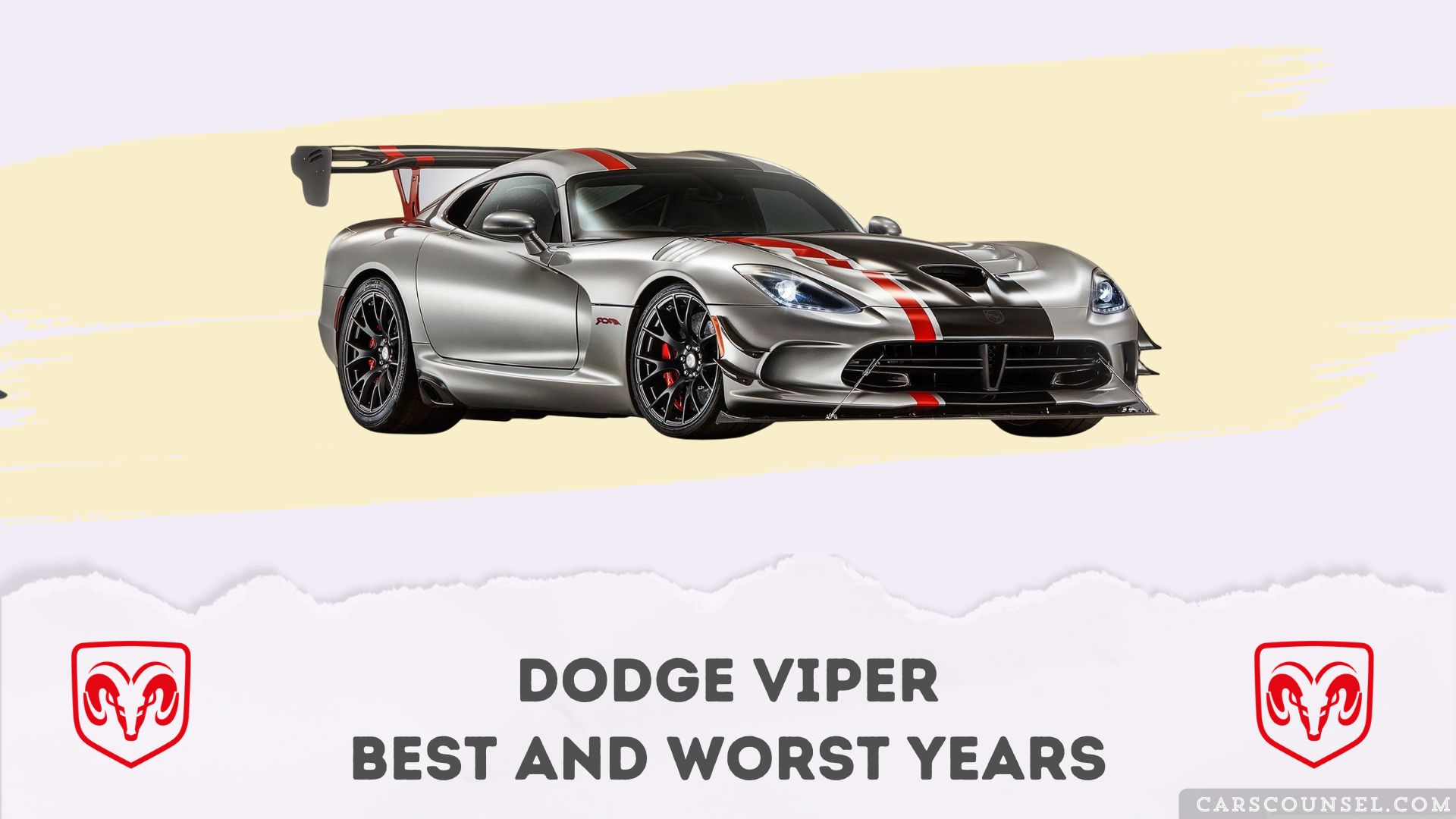
The best Dodge Viper years are 1996 through 2002 and 2014 through 2017. These model years offer refined performance and fewer first-year issues. Approach 1992 and 2013 models carefully due to early-production teething problems.
Rankings are comparative, and no Viper year is entirely flawless. Because these are high-performance sports cars, previous maintenance, track use, and overall condition matter far more than the specific model year alone.
Meaningful differences exist between generations. Engine displacement, suspension tuning, and safety equipment evolved significantly. Buyers must weigh the raw analog feel of early models against the modern capability of later versions.
Quick Navigation
Best and Worst Dodge Viper Years at a Glance
| Model Year | Verdict | Main Reason | Buyer Guidance |
|---|---|---|---|
| 1992-1995 | Approach Carefully | Lacks safety aids, heavy clutch | Expert drivers only |
| 1996-2002 | Best Older Choice | Iconic GTS coupe, durable 8.0L V10 | Highly desirable for collectors |
| 2003-2007 | Good With Inspection | New 8.3L engine, early axle issues | Check for track abuse |
| 2008-2010 | Good Choice | Massive 8.4L V10, improved management | Great blend of power and feel |
| 2011-2012 | Not Produced | Hiatus between generations | N/A |
| 2013 | Approach Carefully | First-year Gen V clutch issues | Verify transmission updates |
| 2014-2017 | Best Late-Generation Choice | Refined 640hp platform, ACR variants | Peak modern Viper performance |
Key Takeaways
- The 1996-2002 and 2014-2017 model years offer the strongest ownership experiences.
- Approach 1992 and 2013 models carefully due to first-year production quirks.
- The 8.0-liter and 8.4-liter V10 engines are generally robust when properly maintained.
- Most severe Viper problems stem from track abuse rather than factory defects.
- Always verify the vehicle identification number for open safety campaigns.
- Arrange an independent inspection to check for aftermarket modifications and suspension wear.
How We Evaluated the Dodge Viper Model Years
Our analysis considers official recalls, manufacturer programs, and consumer complaints. We also weigh powertrain differences, generation changes, and repair complexity.
Complaints are not confirmed defects or failure rates. A recall does not automatically make a year unreliable. Recent years simply have less long-term ownership history available for review.
Best means comparatively stronger, not flawless. The Viper is a low-volume, hand-built sports car. Condition and maintenance history always outweigh general model-year trends.
Best Dodge Viper Years
1996-2002 (Generation II)
The second generation transformed the Viper into a serious supercar contender. The introduction of the GTS coupe added structural rigidity and a highly desirable roofline.
These years feature the legendary 8.0-liter V10. Later models in this run received updated exhaust systems and improved interior materials. They remain highly sought after by collectors.
2014-2017 (Generation V)
Dodge refined the fifth generation after its initial launch. These models feature a massive 8.4-liter V10 producing 640 horsepower. The electronic stability control makes this immense power more manageable.
The 2016 and 2017 models represent the peak of the Viper lineage. The ACR variants offer extreme aerodynamic packages and track-focused suspension tuning for serious enthusiasts.
Best Year by Buyer Type
Best Enthusiast Choice: The 1999 GTS. It combines the iconic 8.0-liter V10 with the highly desirable coupe body style and improved chassis dynamics.
Best Modern Alternative: The 2015 Viper GTS. It offers modern infotainment, advanced safety nets, and massive braking power while retaining the raw V10 experience.
Years to Approach Carefully
1992-1995 (Generation I)
The original Viper is an automotive icon, but it lacks modern safety nets. There is no ABS, no traction control, and the cabin is extremely spartan.
These early cars require an expert driver. The heavy clutch, side-exit exhaust heat, and rudimentary steering demand constant attention. Inspect them thoroughly for early structural fatigue.
2013 (Generation V Launch)
The fifth generation returned with a new platform and a 640-horsepower engine. However, first-year models suffered from rough transmission shifting and premature clutch wear complaints.
Dodge addressed many of these issues in subsequent years. If considering a 2013 model, verify that the clutch and transmission have been updated or properly maintained.
Worst Dodge Viper Years
Truly bad Viper years are rare, as the hand-built V10 engines are generally robust. Most severe problems stem from track abuse or neglected maintenance rather than factory defects.
However, the 2003 launch of the third generation brought some early cooling system and axle shaft concerns. The 2013 launch year also saw the highest complaint volume for drivetrain issues.
Avoid any Viper with an undocumented modification history. Aftermarket superchargers, deleted emissions equipment, and unprofessional track preparations are the true worst enemies of these sports cars.
Dodge Viper Reliability by Generation
Generation I (1992-1995)
The first generation established the Viper myth. It is raw, analog, and demanding. Reliability is decent, but the lack of driver aids makes it unforgiving in poor conditions.
Generation II (1996-2002)
This generation is widely considered the most reliable and desirable. The GTS coupe fixed many early chassis flex issues. The 8.0-liter V10 is incredibly durable when properly cooled.
Generation III (2003-2007)
Dodge introduced a new 8.3-liter V10 and a stiffer chassis. While generally reliable, some early models experienced rear axle shaft weaknesses and cooling system inefficiencies during extended track use.
Generation IV (2008-2010)
The engine grew to 8.4 liters, producing 600 horsepower. This generation is highly reliable and features improved engine management. It bridges the gap between analog feel and modern power.
Generation V (2013-2017)
The final generation features a refined interior and advanced electronics. After the initial 2013 clutch issues were resolved, these cars proved to be incredibly capable and robust track weapons.
Common Dodge Viper Problems
Steering and Suspension
Early generations are known for steering knuckle wear and differential clunks. These issues often result from hard launches or pothole impacts. Inspect the front suspension components closely.
Cooling System
The massive V10 generates immense heat. Older models can struggle with cooling during slow traffic or track sessions. Check for aftermarket cooling upgrades and verify the radiator fans operate correctly.
Interior and Electrical
Gen II dashboards are notorious for melting or warping in direct sunlight. Later generations improved interior quality, but infotainment systems in the final generation can occasionally suffer from software glitches.
Repair-Cost Overview
| Problem | Affected Years | Approximate Range | Important Notes |
|---|---|---|---|
| Clutch Replacement | All | $1,500 – $2,500 | Requires specialized alignment |
| Rear Axle Shaft | 2003-2007 | $800 – $1,400 | Check for track abuse |
| Tire Replacement | All | $1,200 – $1,800 | High torque wears rear tires quickly |
Repair costs vary significantly by region, labor rate, and parts choice. Viper components are specialized and expensive. Always consult a Dodge specialist for accurate, model-specific repair estimates.
What to Check Before Buying a Used Dodge Viper
- Verify the vehicle identification number for open recalls.
- Review service history for consistent fluid changes.
- Inspect the clutch pedal feel and engagement point.
- Check for aftermarket modifications or deleted emissions equipment.
- Inspect the steering knuckles and differential for play.
- Test the cooling system under load.
- Look for signs of track abuse or roll cage installations.
- Arrange an independent pre-purchase inspection.
Related Buying Guides
- Dodge Challenger best and worst years: A practical muscle car alternative with usable back seats and daily comfort.
- Chevrolet Corvette C5 years to avoid: A direct performance rival offering similar thrills with lower maintenance costs.
- Dodge Ram 1500 years to avoid: For buyers who need heavy towing capability instead of sports car performance.
Frequently Asked Questions
What is the most reliable Dodge Viper generation?
The second generation (1996-2002) is widely considered the most reliable. It resolved early chassis issues and features the incredibly durable 8.0-liter V10 engine.
Are Dodge Vipers expensive to maintain?
Yes, maintenance costs are high. The V10 engine requires specialized fluids, and rear tires wear out extremely quickly due to the immense torque output.
Did Dodge fix the 2013 Viper transmission issues?
Dodge issued software updates and revised clutch components for later years. If buying a 2013 model, ensure the transmission control module has been updated by a dealer.
Is the Dodge Viper a good daily driver?
No, the Viper is a dedicated sports car. It has a heavy clutch, minimal cargo space, and a harsh ride that makes daily commuting uncomfortable.
Do Vipers have airbag recalls?
Some older models were included in broader industry safety campaigns. Always run the vehicle identification number through the official government database to check for open airbag recalls.
Which Viper year has the most horsepower?
The final generation (2013-2017) produces the most power. Its 8.4-liter V10 generates 640 horsepower and 600 lb-ft of torque from the factory.
Best Dodge Viper Years for Used Buyers
The strongest choices are the 1996-2002 and 2014-2017 model years. These generations offer the best balance of performance, reliability, and modern usability.
Avoid heavily modified examples and approach first-year models with caution. Always verify the service history, check for open recalls, and arrange an independent inspection before purchasing.

