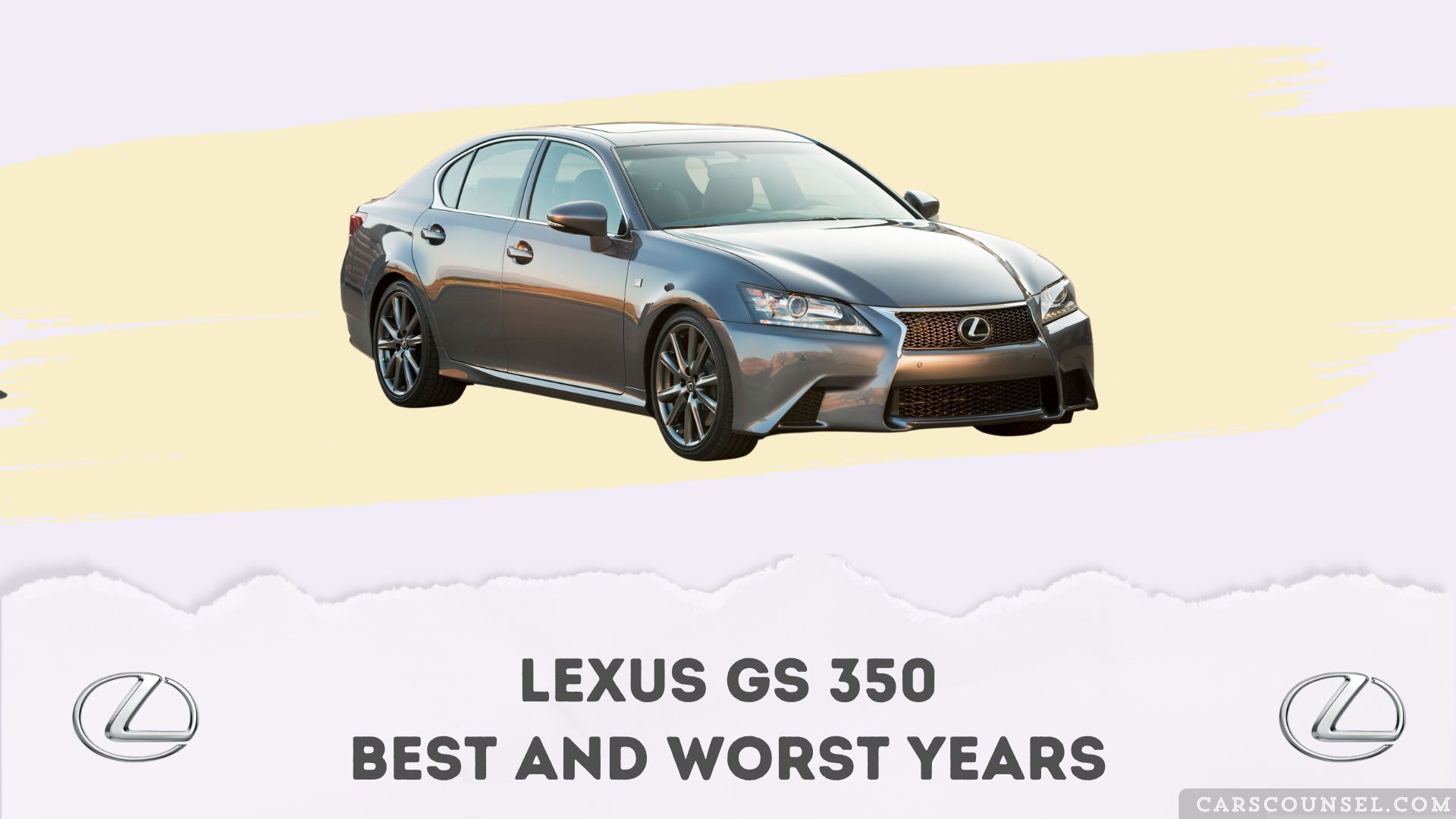
The best Lexus GS 350 model years are 2017 through 2020. These later models offer standard advanced safety features and a mature, highly reliable platform. Buyers should approach the 2013 through 2015 models carefully due to first-year redesign quirks and polarizing infotainment controls.
Rankings are comparative, and no used vehicle is entirely flawless. Long-term reliability heavily depends on previous maintenance, accident history, and overall vehicle condition rather than just the model year.
Meaningful differences exist between the third and fourth generations. Engine outputs, transmission tuning, and available safety technology vary significantly, making your choice dependent on whether you prefer modern tech or classic comfort.
Quick Navigation
Best and Worst Lexus GS 350 Years at a Glance
| Model Year Range | Verdict | Main Reason | Buyer Guidance |
|---|---|---|---|
| 2017–2020 | Best Choice | Standard safety tech, mature platform | Top pick for daily driving |
| 2016 | Good Choice | Facelift year with updated styling | Verify safety feature inclusion |
| 2009–2011 | Best Older Choice | Reliable late third-generation build | Check for dashboard condition |
| 2013–2015 | Mixed | Early fourth-generation quirks | Test infotainment and transmission |
| 2007–2008 | Approach Carefully | Older tech, dashboard material issues | Inspect interior and service history |
Key Takeaways
- The 2017–2020 models are the strongest choices, featuring standard safety technology and refined powertrains.
- Selecting the right model years ensures a better ownership experience and fewer frustrating quirks.
- Third-generation models (2007–2011) are comfortable but lack modern active safety equipment and updated infotainment.
- The 2013–2015 models introduced sharper driving dynamics but suffer from polarizing Remote Touch interface complaints.
- The 3.5L V6 engine is exceptionally reliable across all generations, though water pump and accessory belt issues can occur.
- Always verify the VIN for open recalls, particularly regarding the Denso fuel pump and passenger airbag inflators.
How We Evaluated the Lexus GS 350 Model Years
Our analysis considers official recalls, manufacturer service campaigns, and long-term ownership data. We weigh powertrain differences, generation changes, and repair complexity to determine overall reliability.
Consumer complaints are not confirmed defects or failure rates. A recall does not automatically make a vehicle unreliable, and recent years naturally have less long-term ownership history.
Our verdicts identify comparatively stronger options. A Best Choice designation means the year has fewer documented issues than surrounding years, not that it is entirely flawless.
Best Lexus GS 350 Years
2017–2020: Best Choice
The 2017 through 2020 model years represent the peak of the fourth-generation GS 350. Lexus made the Lexus Safety System+ standard, adding pre-collision braking and adaptive cruise control.
The eight-speed automatic transmission and 3.5L V6 are thoroughly sorted. These years offer the best blend of modern luxury, athletic handling, and long-term dependability for used buyers.
2009–2011: Best Older Choice
For buyers on a stricter budget, the late third-generation models are excellent alternatives. Lexus resolved most early-build issues from the 2007 introduction, resulting in a very comfortable grand touring sedan.
While they lack modern touchscreens and active safety features, their mechanical components remain robust. Ensure the interior has been well-preserved before purchasing.
Best Year by Buyer Type
Best Overall: 2019
The 2019 model year is our top overall pick. It benefits from years of continuous refinement, standard advanced safety features, and excellent build quality without the depreciation of a brand-new vehicle.
Best Budget Option: 2010
The 2010 GS 350 offers outstanding value. It provides legendary Lexus smoothness and a spacious cabin at a fraction of the cost of newer models, provided maintenance records are complete.
Years to Approach Carefully
2013–2015: Mixed
The 2013 through 2015 models launched the fourth generation with sharper styling and a more engaging chassis. However, they are hampered by the early versions of the Remote Touch infotainment controller.
Many owners find the mouse-like joystick distracting and frustrating to use while driving. Mechanically, they are sound, but the interior technology requires patience and a thorough pre-purchase test drive.
2007–2008: Approach Carefully
Early third-generation models are generally reliable mechanically, but they are prone to the infamous sticky dashboard issue. The original dashboard material can degrade, melt, and reflect glare in hot climates.
Lexus issued a customer support program for this, but coverage has expired for most vehicles. Buyers must inspect the dashboard condition carefully and factor in potential replacement costs.
Lexus GS 350 Reliability by Generation
Third Generation (2007–2011)
The third-generation GS 350 replaced the GS 300, introducing a 303-horsepower 3.5L V6. It focuses heavily on ride comfort and highway cruising. Reliability is excellent, though aging electronics require attention.
Fourth Generation (2013–2020)
Lexus skipped the 2012 model year before launching the fourth generation. This era adopted a much stiffer chassis, aggressive styling, and the controversial Remote Touch interface.
A significant mid-cycle refresh arrived for 2016, updating the exterior and introducing new safety technology. The powertrain remained largely unchanged, proving the longevity of the naturally aspirated V6.
If you prefer a more focused sports sedan with available AWD, the Lexus IS 350 shares a similar corporate philosophy but in a smaller, more agile package.
Common Lexus GS 350 Problems
Sticky Dashboard (2007–2011)
Owners of early third-generation models frequently report cracked, melting, or excessively sticky dashboards. This cosmetic defect is caused by heat and humidity degrading the original materials.
While not a mechanical failure, it creates severe windshield glare and diminishes the luxury feel of the cabin. Replacement dashboards can be expensive and difficult to source.
Water Pump Leaks (All Generations)
The 3.5L V6 engine is remarkably durable, but the mechanical water pump can develop slow leaks as the vehicle ages. Coolant loss may trigger a check engine light or cause overheating if ignored.
Fortunately, the water pump is externally mounted and relatively straightforward to replace compared to engines where it is driven by the timing chain.
Denso Fuel Pump Failure (2013–2020)
A major manufacturer recall affects many fourth-generation models equipped with a specific Denso low-pressure fuel pump. The impeller inside the pump can deform, causing the engine to stall or fail to start.
Lexus has issued a fix to replace the fuel pump assembly. Buyers must verify the VIN to ensure this critical recall has been completed before purchase.
What to Check Before Buying a Used Lexus GS 350
- Verify the VIN for open recalls, specifically the Denso fuel pump and Takata airbag inflators.
- Inspect the dashboard surface for melting, cracking, or sticky residue on 2007–2011 models.
- Check the coolant reservoir and water pump weep hole for signs of leaks.
- Test the Remote Touch infotainment controller and parking assist to ensure you are comfortable using them while driving.
- Review service records to confirm regular oil changes and transmission fluid maintenance.
- Arrange an independent pre-purchase inspection to evaluate suspension bushings and brake wear.
Related Buying Guides
- Lexus IS 300 best and worst years: A smaller, more agile alternative for buyers who prioritize cornering over rear-seat space.
- Lexus ES 330 best and worst years: A front-wheel-drive sibling that prioritizes maximum ride comfort over sporty handling dynamics.
- Lexus SC430 best and worst years: A retractable hardtop convertible option for buyers seeking open-air luxury from the same era.
Frequently Asked Questions
Is the Lexus GS 350 a reliable car?
Yes, the GS 350 is highly reliable. Its naturally aspirated V6 and automatic transmission are known for exceptional longevity, provided routine maintenance is performed and open recalls are addressed.
What is the best year to buy a used GS 350?
The 2017 through 2020 model years are the best choices. They feature standard advanced safety technology, refined infotainment, and a fully matured fourth-generation platform.
Does the GS 350 have a twin-turbo engine?
No, the GS 350 uses a naturally aspirated 3.5L V6. Lexus offered a twin-turbo V6 in the GS Turbo and GS F models, but the 350 badge specifically denotes the naturally aspirated engine.
Why did Lexus discontinue the GS?
Lexus discontinued the GS after 2020 due to shifting consumer preferences toward SUVs and crossovers. The ES sedan and various SUVs largely absorbed its former market share.
Are parts expensive for the GS 350?
Maintenance costs are moderate for a luxury vehicle. Because it shares its underlying powertrain with other Toyota and Lexus models, many mechanical components are readily available and reasonably priced.
Does the GS 350 require premium fuel?
Yes, Lexus recommends premium unleaded fuel for the GS 350 to achieve its rated horsepower and maintain optimal engine performance and longevity over time.
Choosing the Right Lexus GS 350 Model Year
The Lexus GS 350 remains a fantastic used luxury sedan. The 2017 through 2020 models offer the best combination of modern safety features and proven reliability for daily driving.
Buyers on a budget will find excellent value in the 2009 through 2011 models, assuming the interior materials have held up well. Avoid early fourth-generation models if you dislike joystick infotainment controls.
Regardless of the year you choose, always verify the VIN for open recalls and invest in a thorough independent inspection to ensure your next luxury sedan is ready for the road.

