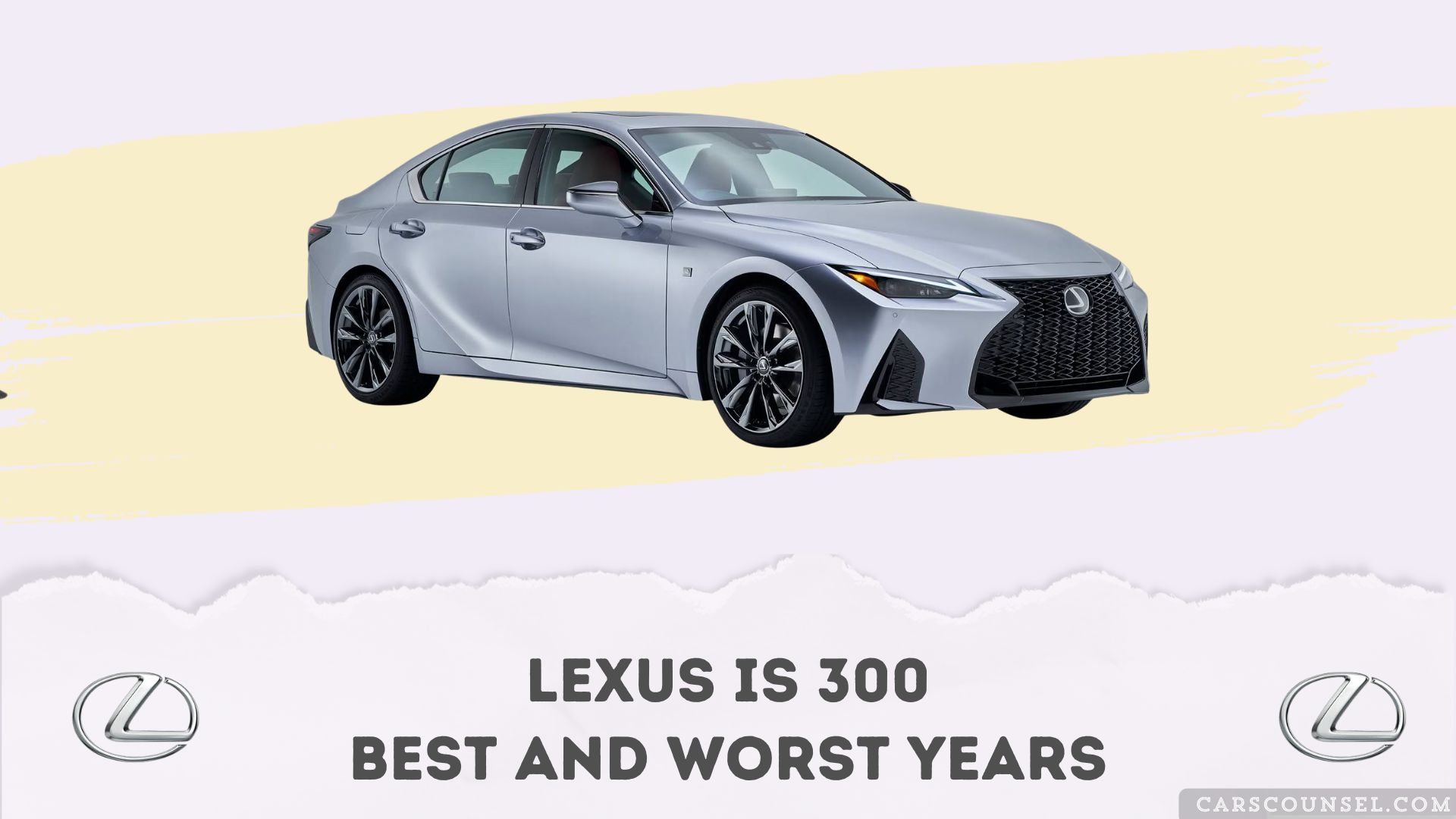
The best Lexus IS 300 years for used buyers are the 2016–2020 models, which offer proven reliability and modern safety. The 2001–2005 models are excellent enthusiast choices but require strict rust inspections. There are no official model years that carry a strict avoid verdict.
Rankings are comparative, meaning no used vehicle is entirely flawless. Long-term reliability heavily depends on previous maintenance records, accident history, and how well the vehicle was stored. Always verify the exact configuration before purchasing.
The IS 300 features distinct powertrain differences across its history. Early models use a naturally aspirated inline-6, while modern versions rely on a turbocharged four-cylinder or a V6. The IS 300 badge was not even used in the US market between 2006 and 2015.
Quick Navigation
Best and Worst Lexus IS 300 Years at a Glance
| Model Year | Verdict | Main Reason | Buyer Guidance |
|---|---|---|---|
| 2001–2005 | Good With Inspection | Legendary engine, but aging rubber and rust risk. | Inspect subframe and suspension for rust. |
| 2006–2015 | Not Applicable | IS 300 badge not used in the US market. | Look into IS 250 or IS 350 guides for these years. |
| 2016–2020 | Good Choice | Proven turbo and V6 powertrains with modern safety. | Verify turbo maintenance and AWD fluid service. |
| 2021–2025 | Too New to Judge | Current generation with updated tech but limited long-term data. | Rely on warranty and certified pre-owned programs. |
Key Takeaways
- The US-market Lexus IS 300 has two distinct eras: the early 2000s inline-6 era and the 2016-present turbo and V6 era.
- The IS 300 badge was not used in the US from 2006 to 2015; buyers searching these years are actually looking at the IS 250 or IS 350.
- First-generation models are enthusiast favorites but require strict rust and aging-component inspections.
- Modern IS 300 models offer a great blend of reliability and daily-drivable comfort with proven powertrains.
- Always check for open recalls and verify the exact powertrain, as RWD and AWD models use entirely different engines.
How We Evaluated the Lexus IS 300 Model Years
Our analysis considers official recalls, manufacturer service campaigns, consumer complaints, and powertrain differences across generations. We evaluate the severity and recurrence of reported issues alongside repair complexity.
It is important to understand that consumer complaints are not confirmed failure rates, and a recall does not automatically make a vehicle unreliable. Recent model years have less ownership history, and a comparative best rating means a year is stronger than its peers, not flawless.
Best Lexus IS 300 Years
2016–2020: Good Choice
The return of the IS 300 badge brought modern safety and efficient powertrains. Rear-wheel-drive models use a reliable 2.0-liter turbocharged engine, while all-wheel-drive models use a proven 3.5-liter V6.
These years benefit from mature platform engineering and widespread parts availability. While the infotainment system in earlier third-generation models can be frustrating, the mechanical components remain highly dependable for daily driving.
2001–2005: Good With Inspection
The first-generation IS 300 is celebrated for its robust 3.0-liter inline-6 engine. This naturally aspirated powertrain is incredibly durable when properly maintained, making it a favorite among driving enthusiasts.
However, these vehicles are now over two decades old. Buyers must carefully inspect the chassis for structural rust and budget for aging rubber components, suspension bushings, and outdated safety technology.
Best Year by Buyer Type
Best Enthusiast Choice: 2001–2005
Early models offer a pure rear-wheel-drive experience with a legendary inline-6 engine. They are ideal for collectors and enthusiasts willing to perform preventative maintenance and rust remediation.
Best Daily Driver: 2017–2020
These years provide a refined balance of modern safety features, comfortable ride quality, and proven turbocharged or V6 reliability. They are perfect for commuters seeking a premium compact sedan.
Worst Lexus IS 300 Years and Nameplate Confusion
There are no official model years of the US-market Lexus IS 300 that carry a strict avoid verdict. However, a major point of confusion exists for used car shoppers.
From 2006 to 2015, Lexus did not sell an IS 300 in the United States. The lineup consisted of the IS 250 and the Lexus IS 350. Many buyers mistakenly search for an IS 300 from this era but end up looking at the IS 250.
If you are considering a 2006–2013 model, you are likely looking at an IS 250. We strongly recommend reviewing our guide on the Lexus IS 250 years to avoid, as those specific models suffer from known carbon buildup and cylinder scoring issues that do not apply to the IS 300 nameplate.
Lexus IS 300 Reliability by Generation
First Generation (2001–2005)
Built on the XE10 platform, this generation shares its underlying architecture with the Lexus SC430 and early Toyota Altezza models. The mechanicals are exceptionally robust, though interior materials like the dashboard are prone to cracking from sun exposure.
Second Generation Hiatus (2006–2015)
During the XE20 generation, the IS 300 badge was retired in the US market. Lexus utilized the IS 250 and IS 350 nameplates instead. Buyers must verify the exact badging and engine size when shopping for vehicles from this decade.
Third Generation (2016–2020)
The XE30 generation reintroduced the IS 300 badge. Rear-wheel-drive models received a 2.0-liter turbocharged four-cylinder, while all-wheel-drive models received a 3.5-liter V6. Both powertrains are shared with other Lexus models, including the Lexus GS 350, ensuring excellent parts availability and proven longevity.
Fourth Generation (2021–Present)
The current XE40 generation is a heavy refresh of the previous platform. It retains the same reliable turbocharged and V6 powertrains but introduces updated styling and improved infotainment. Long-term reliability data is still accumulating for the newest electronic systems.
Common Lexus IS 300 Problems
Rust and Corrosion (2001–2005)
First-generation models are highly susceptible to rust, particularly on the rear subframe, lower control arms, and exhaust components. This is especially prevalent in regions that use road salt during winter.
A failing subframe is a severe safety and financial issue. Buyers in the snow belt must place the vehicle on a lift to inspect the structural integrity of the undercarriage before purchasing.
Dashboard and Interior Cracking (2001–2005)
The dashboard material on early models is known to degrade, crack, and become shiny when exposed to prolonged sunlight. While this does not affect the mechanical reliability of the vehicle, it significantly impacts the interior aesthetic and resale value.
Turbocharger Wastegate Rattle (2016–2020)
Some owners of the 2.0-liter turbocharged rear-wheel-drive models report a rattling noise from the turbocharger wastegate during cold starts or deceleration. This is often a cosmetic annoyance rather than a sign of imminent catastrophic failure, but it should be verified by a technician.
What to Check Before Buying a Used Lexus IS 300
- Verify the VIN to check for any open safety recalls or manufacturer service campaigns.
- Inspect the rear subframe and suspension components for severe rust on 2001–2005 models.
- Review service records to confirm regular oil changes, which are critical for the turbocharged 2.0-liter engine.
- Test the all-wheel-drive system and verify transfer case fluid service on V6 models.
- Check the condition of the dashboard and interior trim for sun damage on first-generation examples.
- Listen for unusual wastegate rattling during a cold start on 2016–2020 turbocharged models.
- Arrange an independent pre-purchase inspection to evaluate aging rubber components and suspension bushings.
Related Buying Guides
- Lexus LS 430 best and worst years: Explore the flagship luxury sedan from the same era as the first-generation IS 300 for a more comfort-focused alternative.
- Lexus LS 400 best and worst years: Discover the legendary V8 sedan that established the brand’s reputation for bulletproof reliability.
- Lexus ES 350 years to avoid: If you prefer front-wheel-drive comfort over rear-wheel-drive sportiness, review our guide to the ES lineup.
Frequently Asked Questions
Is the Lexus IS 300 a reliable car?
Yes, the IS 300 is generally reliable. The early inline-6 and modern turbo or V6 engines are durable. However, first-generation models require strict rust inspections due to their age.
What years did Lexus make the IS 300?
In the US, Lexus sold the IS 300 from 2001 to 2005. The badge was retired until 2016, when it returned and has remained in production through the current 2025 model year.
Does the Lexus IS 300 have a turbo?
Modern rear-wheel-drive IS 300 models from 2017 onward use a 2.0-liter turbocharged four-cylinder engine. All-wheel-drive models use a naturally aspirated 3.5-liter V6.
Is the Lexus IS 300 the same as the IS 250?
No. From 2006 to 2015, the US market received the IS 250 and IS 350, but not the IS 300. The IS 250 has different engines and known carbon buildup issues that do not apply to the IS 300.
How long can a Lexus IS 300 last?
Well-maintained examples can reach high mileage. Longevity depends heavily on rust prevention, timely oil changes, and replacing aging suspension components as the vehicle matures.
Is the Lexus IS 300 all-wheel drive?
The IS 300 is available in both rear-wheel drive and all-wheel drive configurations. Since 2016, US-market all-wheel-drive models have been equipped exclusively with the 3.5-liter V6 engine.
Which Lexus IS 300 Year Should You Buy?
For most used buyers, the 2016–2020 model years represent the best balance of modern safety, daily comfort, and proven reliability. These models offer excellent powertrain durability without the extensive rust concerns of older vehicles.
Enthusiasts seeking a classic driving experience will appreciate the 2001–2005 models, provided they conduct a thorough undercarriage inspection. Always verify the exact powertrain configuration, check for open recalls, and arrange an independent inspection before finalizing your purchase.

