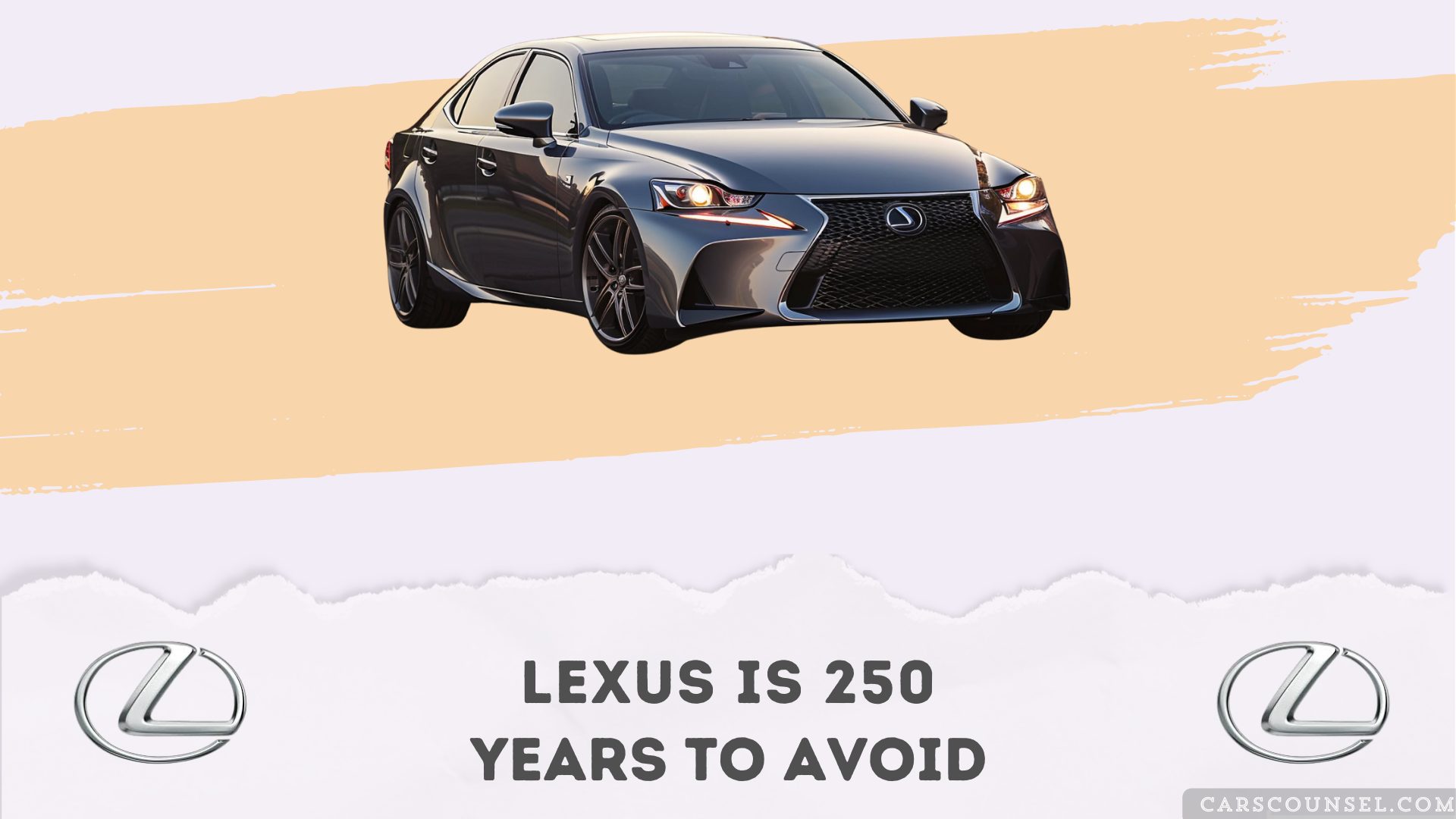
The best Lexus IS 250 model year is 2015, offering refined third-generation styling and mature reliability. Buyers should avoid 2006 and 2007 models due to early production issues and melting dashboards.
Rankings are comparative, and no used vehicle is flawless. Maintenance history, overall condition, and prior repairs matter more than the badge on the trunk.
The IS 250 uses a direct-injection V6 engine across all years. This requires specific maintenance to prevent carbon buildup, regardless of the model year chosen.
Quick Navigation
Best and Worst Lexus IS 250 Years at a Glance
| Model Year | Verdict | Main Reason | Buyer Guidance |
|---|---|---|---|
| 2006-2007 | Avoid | Dashboard melting and early electrical bugs | Seek later models |
| 2008-2009 | Approach Carefully | Improved features but carbon buildup remains | Verify maintenance records |
| 2010-2013 | Good With Inspection | Mature platform with updated styling | Budget for walnut blasting |
| 2014 | Mixed | First year of redesign with frustrating infotainment | Test the Remote Touch system |
| 2015 | Best Choice | Final production year with ironed-out quirks | Top pick for used buyers |
Key Takeaways
- 2015 is the strongest choice for a refined, late-production example.
- Avoid 2006 and 2007 models due to dashboard and interior defects.
- All years use a direct-injection V6 prone to intake valve carbon buildup.
- The 2014 model year introduced a new generation but retained the older engine.
- Always verify if the intake valves have been cleaned recently.
- Check the VIN for open recalls and service campaigns before purchasing.
How We Evaluated the Lexus IS 250 Model Years
Our analysis reviews official recalls, manufacturer service campaigns, and consumer complaint databases. We also track powertrain differences, generation changes, and long-term ownership costs.
Complaints are not confirmed defects or failure rates. A recall does not automatically make a vehicle unreliable, and recent models simply have less road exposure.
Best means comparatively stronger within this specific lineup. No year is perfect, and individual vehicle condition always dictates the final buying decision.
Best Lexus IS 250 Years
2015: Best Choice
The 2015 model represents the final year of the IS 250 nameplate. By this point, Lexus had resolved most third-generation assembly quirks and interior material complaints.
It features the updated exterior styling and improved chassis dynamics introduced in 2014. While the engine remains the same, the overall package feels much more modern.
Buyers still need to budget for carbon cleaning. However, it remains the most refined and desirable iteration of this specific compact sedan.
2010-2013: Good With Inspection
These years belong to the mature phase of the second generation. Lexus introduced LED daytime running lights and updated interior trim options during this span.
The infotainment system and navigation interfaces are generally more user-friendly than earlier versions. Suspension tuning was also refined for a smoother daily commute.
These models are solid choices if you can verify recent maintenance. Ensure the previous owner performed regular intake valve cleaning to maintain engine performance.
Best Lexus IS 250 Years by Buyer Type
Best Overall: 2015
The 2015 model offers the best blend of modern styling, refined chassis dynamics, and resolved manufacturing quirks. It is the safest bet for most used buyers.
Best Budget Option: 2010-2011
These years provide a great balance of affordability and reliability. They feature the updated second-generation styling without the premium attached to the final production years.
Best Enthusiast Alternative: Lexus IS 350
If you want more power and dual-injection engine technology, look at the IS 350. It avoids the severe carbon buildup issues found in the 2.5L V6.
Years to Approach Carefully
2008-2009: Approach Carefully
These models bridge the gap between early second-generation bugs and the later refresh. The 2009 facelift brought improved styling and standard Bluetooth connectivity.
However, the direct-injection engine still demands strict maintenance. The dashboard melting issue was also prevalent in these years, though later production runs saw improvements.
Inspect the dashboard surface and door handles carefully. Only proceed if the carbon buildup has been addressed and the interior remains intact.
2014: Mixed
The 2014 model year launched the third generation. It brought a completely new exterior design, a revamped interior, and significantly improved handling dynamics.
Unfortunately, it also introduced the controversial Remote Touch infotainment controller. Many drivers find this system distracting and difficult to use while driving.
Mechanically, it carries over the same 2.5L V6 engine. Buyers must weigh the modern styling against the frustrating interface and first-year assembly quirks.
Worst Lexus IS 250 Years
2006-2007: Avoid
The inaugural years of the second-generation IS 250 suffer from several frustrating defects. The most notorious is the melting or sticky dashboard pad.
This issue worsens in hot climates and creates a dangerous glare on the windshield. Lexus issued a customer support program, but many vehicles aged out.
These early models also lack modern convenience features and suffer from brittle interior plastics. We recommend skipping these years entirely in favor of later models.
Lexus IS 250 Reliability by Generation
Second Generation (2006-2013)
This generation established the IS as a capable sport sedan. The 2009 facelift improved aesthetics and added standard features like Bluetooth and updated navigation.
Mechanically, the 4GR-FSE engine is durable but requires walnut blasting to remove carbon deposits. Interior plastics and dashboard materials are the primary weak points.
Third Generation (2014-2015)
Lexus completely redesigned the IS for 2014. The new platform offered sharper steering and a more aggressive stance, appealing to driving enthusiasts.
Despite the new body, Lexus retained the older 2.5L V6 engine. The interior quality and infotainment system received mixed reviews from owners and critics.
Common Lexus IS 250 Problems
Engine Carbon Buildup
The 2.5L V6 uses direct injection, which sprays fuel directly into the combustion chamber. This prevents fuel from washing over the intake valves.
Over time, oil vapors bake onto the valves, causing rough idling, misfires, and reduced power. Walnut blasting is required every 60,000 to 80,000 miles.
Melting or Sticky Dashboard
Models from 2006 to 2009 frequently suffer from a deteriorating dashboard pad. The surface becomes sticky, shiny, and can crack in extreme heat.
This creates a hazardous glare on the windshield. While Toyota offered an enhancement program, coverage has largely expired for these older vehicles.
Brittle Interior Door Handles
The inner door handles on second-generation models are made from a fragile plastic compound. They frequently snap off when pulled, leaving you trapped inside.
Replacing them requires removing the door panel. Many owners opt for aftermarket metal reinforcements or upgraded OEM parts from later model years.
Repair-Cost Overview
| Problem | Commonly Affected Years | Approximate Repair Range | Important Notes |
|---|---|---|---|
| Carbon Buildup Cleaning | 2006-2015 | $400 – $800 | Requires specialized walnut blasting equipment |
| Dashboard Replacement | 2006-2009 | $800 – $1,500 | OEM replacements may still degrade over time |
| Inner Door Handle | 2006-2013 | $150 – $300 | Labor intensive due to door panel removal |
| VVT-i Gear Rattle | 2006-2015 | $1,200 – $2,000 | Cold start rattle; requires cam gear replacement |
Repair costs vary significantly by region, labor rates, and parts choice. Independent specialists often charge less than dealerships for specialized services like walnut blasting.
What to Check Before Buying a Used Lexus IS 250
- Verify the VIN for open recalls and expired service campaigns.
- Inspect the dashboard surface for stickiness, cracking, or excessive glare.
- Test all interior door handles for brittleness and proper operation.
- Listen for a rattling noise from the engine during a cold start.
- Check service records for recent intake valve carbon cleaning.
- Scan for diagnostic codes to ensure no hidden misfires exist.
- Arrange an independent pre-purchase inspection to verify suspension health.
Related Buying Guides
- Lexus IS 350 best and worst years: Discover which years of the V6-powered IS 350 offer superior performance without the carbon buildup.
- Lexus ES 350 years to avoid: Explore our guide on the larger, comfort-oriented ES sedan for a completely different driving experience.
Frequently Asked Questions
Is the Lexus IS 250 a reliable car?
The IS 250 is mechanically robust, but its direct-injection engine requires strict maintenance. Without regular carbon cleaning, it will suffer from performance issues and misfires.
What is the main problem with the IS 250?
Carbon buildup on the intake valves is the most widespread issue. Early models also suffer from melting dashboards and brittle interior plastics that require replacement.
Does the IS 250 require premium fuel?
Yes, Lexus recommends premium unleaded fuel for the IS 250. Using lower octane fuel can reduce performance and potentially cause engine knocking over time.
How often should I clean the intake valves?
Most owners and mechanics recommend walnut blasting the intake valves every 60,000 to 80,000 miles. This prevents rough idling and restores lost engine power.
Did Lexus fix the dashboard issue?
Lexus offered a customer support program for melting dashboards, but it had strict time and mileage limits. Most affected vehicles are now outside coverage.
Should I buy an IS 250 or IS 350?
The IS 350 offers significantly more power and uses a dual-injection system that prevents carbon buildup. It is generally the better choice for enthusiasts.
Which Lexus IS 250 Year Should You Buy?
The 2015 Lexus IS 250 is the best choice for used buyers. It offers modern styling and resolved third-generation quirks, making it the most refined example.
Avoid the 2006 and 2007 models due to severe interior defects. If you choose an older model, ensure the carbon buildup has been properly addressed.
Always verify the VIN, review maintenance records, and arrange an independent inspection. A well-maintained IS 250 can be a rewarding and comfortable daily driver.

