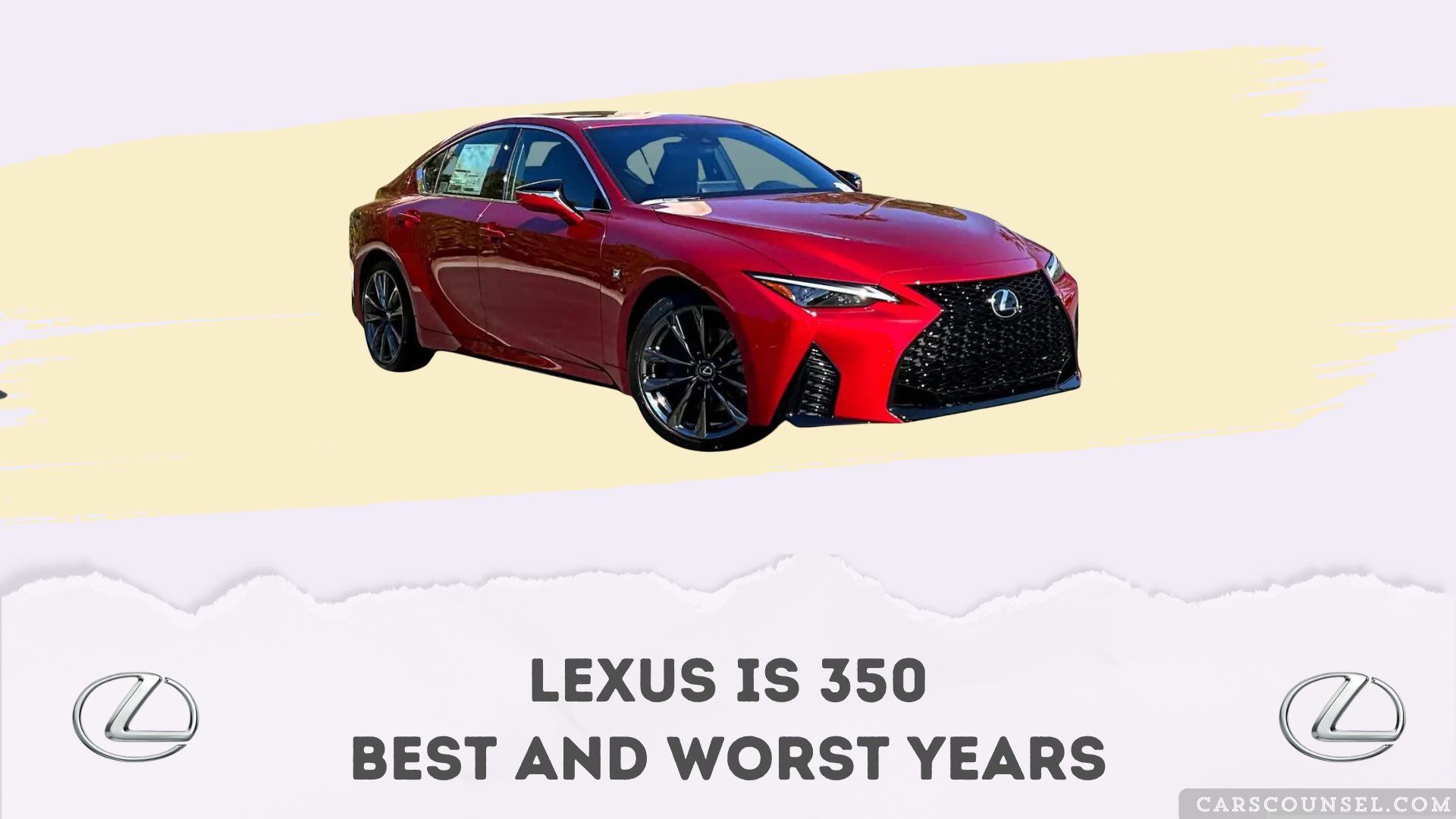
The best Lexus IS 350 years are 2016 through 2020, offering an updated V6 and an eight-speed automatic transmission. Buyers should avoid 2006 through 2008 models due to variable valve timing gear failures and excessive oil consumption.
These rankings are comparative. No used luxury sport sedan is flawless, and a thorough pre-purchase inspection alongside verified maintenance records remains essential for any model year.
Reliability varies significantly by generation and powertrain. The transition to the updated V6 in 2016 and the platform redesigns in 2014 and 2021 create distinct ownership experiences across the lineup.
Quick Navigation
Best and Worst Lexus IS 350 Years at a Glance
| Model Year | Verdict | Main Reason | Buyer Guidance |
|---|---|---|---|
| 2006-2008 | Avoid | VVT-i gear rattle, oil consumption, dashboard degradation | Seek later first-generation models instead. |
| 2009-2010 | Approach Carefully | Lingering oil consumption risks, early interior wear | Verify engine oil history and dashboard condition. |
| 2011-2013 | Best Older Choice | Facelifted design, sorted V6 mechanics | Excellent budget option with strong reliability. |
| 2014-2015 | Good Choice | New generation, but early infotainment and six-speed auto | Inspect electronics and ensure software updates. |
| 2016-2020 | Best Choice | Updated V6, eight-speed automatic, refined chassis | The sweet spot for modern performance and reliability. |
| 2021-2024 | Too New to Judge | Current generation, long-term durability data pending | Buy with confidence but maintain strict warranty coverage. |
Key Takeaways
- The 2016-2020 models represent the best overall value, featuring the improved 2GR-FKS engine and eight-speed transmission.
- Avoid 2006-2008 models due to costly variable valve timing gear failures and excessive oil consumption.
- The 2011-2013 years are the most reliable older choices, benefiting from late first-generation refinements.
- Always verify if open recalls for airbags or fuel systems have been completed on any used example.
- Recent models (2021-2024) are promising but lack long-term ownership data.
How We Evaluated the Lexus IS 350 Model Years
Our analysis reviews official NHTSA recalls, manufacturer service campaigns, and long-term ownership data. We separate verified mechanical defects from isolated complaints.
Complaints are not confirmed failure rates, and a recall does not automatically make a vehicle unreliable. We also account for generation changes, powertrain updates, and the limited exposure of recent models.
Best Lexus IS 350 Years
2016-2020: Best Choice
The 2016 model year introduced the updated 2GR-FKS V6 engine and an eight-speed automatic transmission for rear-wheel-drive models. This powertrain refinement improved both performance and longevity.
These years benefit from a mature second-generation platform with sorted electronics. They offer modern safety features and robust build quality without the first-year redesign risks of the 2014 models.
2011-2013: Best Older Choice
The late first-generation models received a comprehensive refresh that addressed many early mechanical and interior complaints. The 3.5-liter V6 is highly durable when properly maintained.
These years provide excellent driving dynamics and luxury at a lower entry price. Buyers should prioritize examples with documented fluid changes and inspect the dashboard for degradation.
Best Year by Buyer Type
Best Overall: 2018
The 2018 model sits in the middle of the highly reliable 2016-2020 run. It offers the updated V6, modern infotainment, and widespread availability of certified pre-owned examples.
Best Budget Option: 2012
For buyers wanting the classic IS driving feel without early first-generation headaches, the 2012 model is a sorted, reliable choice that avoids the worst VVT-i issues.
Years to Approach Carefully
2009-2010: Approach Carefully
While improved over the launch years, these models can still exhibit higher oil consumption as they age. The interior materials are also prone to premature wear and sticky surfaces.
Buyers should have the engine compression tested and verify that the dashboard and door panels are intact before purchasing.
2014-2015: Good Choice
As the first years of the second generation, these models introduced a new chassis and styling. Mechanically, they share the robust 2GR-FSE V6 with the previous generation.
However, early second-generation models faced some infotainment glitches and trackpad complaints. Ensure the system has received all available software updates from the dealer.
2021-2024: Too New to Judge
The third generation returned to a more athletic design and updated interior tech. Mechanically, it carries over the proven 2GR-FKS V6 and eight-speed transmission.
Because these vehicles have limited long-term mileage data, we cannot yet assign a definitive long-term reliability score. They remain a safe purchase under factory or certified pre-owned warranty.
Worst Lexus IS 350 Years
2006-2008: Avoid
The launch years of the IS 350 are plagued by several expensive issues. The most severe is the failure of the variable valve timing gear, which causes a loud rattle on cold starts.
These years also suffer from excessive oil consumption and a notorious dashboard material defect that causes the dash to melt and crack in sunlight. Later first-generation years are much safer investments.
Lexus IS 350 Reliability by Generation
First Generation (2006-2013)
The first generation established the IS 350 as a serious sport sedan. Early years struggled with VVT-i gear and oil issues, but the 2011 facelift brought significant improvements in interior quality.
If shopping this generation, the Lexus IS 300 from later years offers a different powertrain option, but the 3.5L V6 in the 350 remains the performance benchmark.
Second Generation (2014-2020)
The second generation grew in size and luxury. The 2016 powertrain update is the most critical dividing line, swapping the older six-speed for a smoother eight-speed automatic on rear-wheel-drive models.
Buyers seeking a larger luxury sedan with a similar powertrain might also cross-shop the Lexus GS 350, which shares the same excellent V6 architecture but offers a more spacious cabin.
Third Generation (2021-Present)
The current generation features sharper styling and a heavily revised interior. It retains the proven 3.5-liter V6, ensuring strong baseline reliability while competitors shift to smaller turbocharged engines.
Common Lexus IS 350 Problems
Variable Valve Timing Gear Rattle
Affected Years: 2006-2008
The 2GR-FSE V6 in early models can develop a loud rattle upon cold startup due to wear in the VVT-i camshaft gear. If ignored, it can lead to timing discrepancies and engine damage.
Dashboard and Interior Degradation
Affected Years: 2006-2008
Early first-generation models used a dashboard material that reacts poorly to heat and UV exposure. The surface can become sticky, shiny, and eventually crack, requiring expensive replacement or aftermarket covers.
Excessive Oil Consumption
Affected Years: 2006-2010
Some early 3.5-liter V6 engines consume oil faster than expected between changes. This is often tied to piston ring design and carbon accumulation. Regular oil level checks are mandatory for high-mileage examples.
What to Check Before Buying a Used Lexus IS 350
- Listen for a loud rattle on a completely cold engine start to rule out VVT-i gear failure.
- Inspect the dashboard and door panels for stickiness, shine, or cracking.
- Check the oil level and review maintenance records for frequent top-offs.
- Verify that all open safety recalls, including airbag inflators, have been completed.
- Test the infotainment system and trackpad for responsiveness and software glitches.
- Inspect the suspension components, as lower control arm bushings can wear on higher-mileage examples.
- Arrange an independent pre-purchase inspection to check for hidden accident damage or deferred maintenance.
Related Buying Guides
- Lexus GS 350 best and worst years: The larger sedan sibling that shares the IS 350’s excellent V6 powertrain but offers more rear-seat space.
- Lexus IS 300 best and worst years: The alternative trim level that offers different engine configurations and all-wheel-drive options across various generations.
- Lexus SC430 best and worst years: A look at Lexus’s earlier retractable hardtop convertible for buyers interested in classic luxury cruisers.
- Lexus LS 430 best and worst years: The flagship V8 sedan that defined an era of bulletproof Lexus reliability and ride comfort.
Frequently Asked Questions
What is the most reliable Lexus IS 350 year?
The 2016 through 2020 models are the most reliable. They feature the updated 2GR-FKS engine, an eight-speed automatic transmission, and a sorted second-generation platform with minimal widespread defects.
Should I avoid the 2007 Lexus IS 350?
Yes, the 2006 through 2008 model years should generally be avoided. They are prone to expensive variable valve timing gear failures, excessive oil consumption, and dashboard material degradation.
Does the Lexus IS 350 have transmission problems?
Widespread transmission failures are rare. Early models used a durable six-speed automatic, while 2016 and newer rear-wheel-drive models use a reliable eight-speed. Always check service records for fluid changes.
Is the Lexus IS 350 expensive to maintain?
Maintenance costs are moderate for a luxury sport sedan. It shares many components with other Toyota and Lexus V6 models, keeping routine service affordable, though performance tires and brakes cost more.
How long can a Lexus IS 350 last?
Well-maintained examples frequently reach high mileage. Longevity depends heavily on strict adherence to oil change intervals, rust prevention, and addressing minor issues before they become major failures.
What is the difference between the IS 300 and IS 350?
The IS 350 features a more powerful 3.5-liter V6 engine. Depending on the generation, the IS 300 uses either a smaller V6 or a turbocharged four-cylinder, offering a different balance of performance.
Which Lexus IS 350 Year Should You Buy?
For the best balance of modern performance and proven reliability, target the 2016 through 2020 model years. These offer the updated V6 engine and superior transmission without first-year redesign risks.
If you are on a stricter budget, the 2011 through 2013 models are excellent older choices that avoid the severe mechanical flaws of the 2006 through 2008 launch years.
Always verify the VIN for open recalls, demand comprehensive maintenance records, and invest in an independent pre-purchase inspection before finalizing your purchase.

