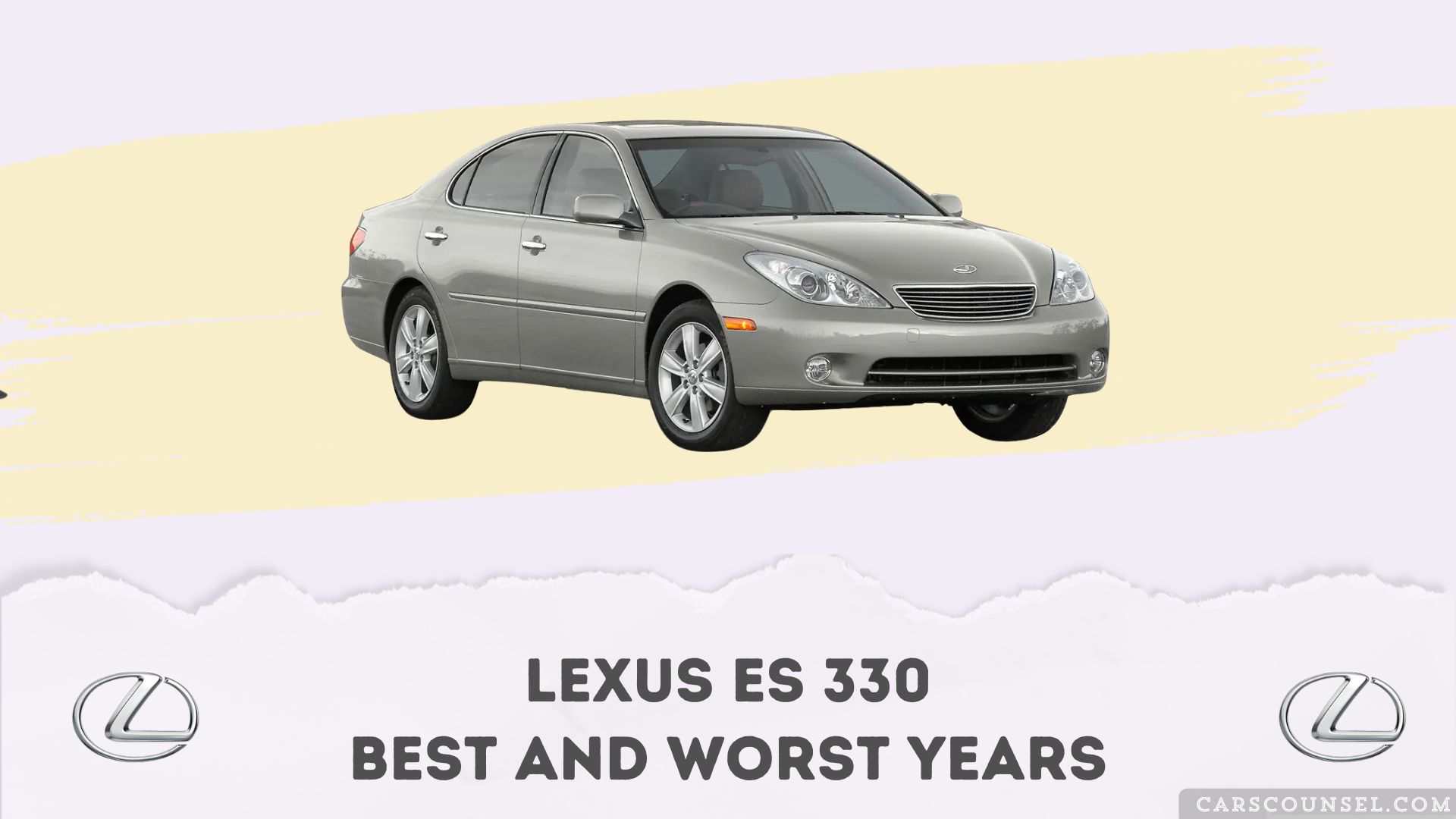
The best Lexus ES 330 model years are 2005 and 2006. These years offer refined transmission tuning and exceptional V6 reliability. The 2004 model year is the one to approach carefully due to higher reports of harsh shifting and interior material defects.
Rankings are comparative, and no used luxury sedan is flawless. Proper maintenance, rust-free conditions, and a thorough pre-purchase inspection matter more than the badge alone when evaluating twenty-year-old vehicles.
Lexus only used the ES 330 badge from 2004 through 2006. Earlier models were badged ES 300, while later generations became the ES 350. This guide focuses strictly on the 3.3-liter V6 ES 330 configuration.
Quick Navigation
Best and Worst Lexus ES 330 Years at a Glance
| Model Year | Verdict | Main Reason | Buyer Guidance |
|---|---|---|---|
| 2004 | Approach Carefully | First-year transmission tuning and dashboard defects | Test drive for harsh shifts; inspect dashboard |
| 2005 | Best Choice | Refined 5-speed automatic and proven V6 reliability | Check maintenance records and interior condition |
| 2006 | Best Choice | Final production year with mature XV30 platform | Verify recall completion and inspect for sun damage |
Key Takeaways
- The 2005 and 2006 Lexus ES 330 models are the strongest choices for used buyers.
- The 2004 model year requires more caution due to early transmission software quirks.
- Lexus only produced the ES 330 for three years (2004–2006) before switching to the ES 350.
- Dashboard melting and cracking is a widespread issue across all three years.
- The 3.3-liter V6 engine is shared with the Toyota Camry and Highlander, ensuring good parts availability.
- Always check the VIN for open recalls, particularly regarding airbags and floor mats.
How We Evaluated the Lexus ES 330 Model Years
We analyzed NHTSA records, manufacturer service campaigns, and long-term ownership data for the 2004–2006 Lexus ES 330.
Our evaluation weighs powertrain durability, official safety actions, and recurring repair complexity.
Complaints are not confirmed defects, and a recall does not automatically make a vehicle unreliable.
Because these vehicles are now two decades old, maintenance history and current condition outweigh original factory reliability scores.
This approach aligns with our broader guides on years to avoid across the automotive market.
Best Lexus ES 330 Years
2005 Lexus ES 330
The 2005 model year resolved the transmission shift complaints that plagued the initial launch.
The 3.3-liter V6 engine proved exceptionally durable, offering a smooth and quiet driving experience.
Buyers should still inspect the dashboard for sun damage, but the mechanicals are very resilient.
2006 Lexus ES 330
As the final year of the XV30 generation, the 2006 ES 330 benefits from mature manufacturing and resolved early bugs.
It remains a top pick for buyers seeking a comfortable, soft-riding luxury sedan.
Verify that all interior electronics function properly and check for any lingering fluid leaks.
Best Year by Buyer Type
- Best Overall: 2006 (Most refined year of the generation)
- Best Budget Option: 2005 (Often priced lower than 2006 with similar reliability)
- Best Modern Alternative: Look into the Lexus ES 350 for updated safety and technology.
Years to Approach Carefully
2004 Lexus ES 330
The 2004 model year introduced the new 3.3-liter V6 and a five-speed automatic transmission.
Some owners reported harsh or delayed shifting when the transmission was cold or under load.
While not a catastrophic failure, it detracts from the refined luxury experience Lexus is known for.
Thoroughly test drive a 2004 model to ensure the transmission shifts smoothly before purchasing.
Worst Lexus ES 330 Years
No Lexus ES 330 model year carries a strict Avoid verdict.
Even the 2004 model year is generally reliable compared to many rival luxury sedans from the same era.
However, it is the weakest link in this specific three-year run due to early transmission calibration issues.
If you find a well-maintained 2004 model at a significant discount, it can still be a good purchase.
Lexus ES 330 Reliability by Generation
The ES 330 belongs to the fourth-generation Lexus ES, known internally as the XV30 platform.
This generation ran from 2002 to 2006, but the ES 330 badge was only applied to the 2004–2006 models.
Earlier 2002 and 2003 models were badged as the Lexus ES 300.
Following 2006, Lexus introduced the fifth generation with a larger engine, badging it the ES 350.
The XV30 platform shares its underlying architecture with the Toyota Camry and Avalon, contributing to excellent parts availability.
Common Lexus ES 330 Problems
Dashboard Melting and Cracking
The most widespread complaint across all 2004–2006 ES 330 models involves the dashboard material.
Prolonged exposure to sunlight causes the dashboard to melt, become sticky, and eventually crack.
Toyota previously offered a warranty enhancement program for this, but coverage has expired for these model years.
VVT-i Oil Line Leaks
The 3.3-liter V6 engine uses a rubber and metal oil line to feed the Variable Valve Timing system.
Over time, the rubber portion can degrade and leak oil onto the engine bay.
Replacing the line with an updated all-metal part is a common and relatively straightforward repair.
Steering Shaft Clunking
Some owners report a clunking noise or play in the steering wheel when turning at low speeds.
This is typically caused by wear in the intermediate steering shaft or slip yoke.
Inspect the steering components during a test drive to ensure a tight, quiet feel.
What to Check Before Buying a Used Lexus ES 330
- Verify the VIN for open airbag and floor mat recalls.
- Inspect the dashboard for stickiness, glare, or cracking.
- Check the VVT-i oil line for signs of weeping or active leaks.
- Test the transmission for smooth shifts, especially when cold.
- Listen for clunking in the steering column during low-speed turns.
- Review maintenance records for regular oil and fluid changes.
- Scan for diagnostic codes to ensure components like O2 sensors and the ignition coil are functioning properly.
- Arrange an independent pre-purchase inspection to check for rust and suspension wear.
Related Buying Guides
- Lexus RX 330 best and worst years: Discover how the same 3.3-liter V6 engine performs in the popular midsize SUV.
- Toyota Camry best and worst years: Learn about the mainstream sibling that shares vital mechanical components with the ES 330.
- Lexus IS 300 best and worst years: Explore a sportier, rear-wheel-drive alternative from the same era.
- Lexus IS 350 best and worst years: Discover a more modern performance sedan option.
- Lexus SC430 best and worst years: Learn about the luxury hardtop convertible from the same generation.
- Lexus LS 430 best and worst years: Step up to the flagship luxury sedan that shares the XV30 era.
Frequently Asked Questions
What years did Lexus make the ES 330?
Lexus only produced the ES 330 for the 2004, 2005, and 2006 model years. Earlier models were the ES 300, and later models became the ES 350.
Is the Lexus ES 330 a reliable car?
Yes, the ES 330 has a strong reliability record. Its 3.3-liter V6 engine is durable, though buyers must inspect the dashboard for sun damage and check for minor oil leaks.
What is the most common problem with the Lexus ES 330?
The most common issue is the dashboard material melting, cracking, or becoming sticky after prolonged sun exposure. This affects all three production years.
Does the Lexus ES 330 have transmission problems?
The 2004 model year had some reports of harsh shifting. The 2005 and 2006 models received software and hardware refinements that largely eliminated these complaints.
How many miles can a Lexus ES 330 last?
Well-maintained examples frequently reach high mileage. Longevity depends heavily on rust prevention, regular oil changes, and addressing minor oil leaks promptly.
Is the Lexus ES 330 expensive to maintain?
No, maintenance costs are relatively low. Because it shares its engine and platform with the Toyota Camry and Highlander, parts are widely available and affordable.
Choosing the Right Lexus ES 330 Model Year
The 2005 and 2006 Lexus ES 330 models are the best choices for used buyers seeking a comfortable, reliable luxury sedan.
The 2004 model year requires a more careful inspection, particularly regarding transmission shift quality.
Regardless of the year, always inspect the dashboard for sun damage and verify the VIN for open recalls.
A thorough pre-purchase inspection is essential to ensure the vehicle has been properly maintained over the last two decades.

