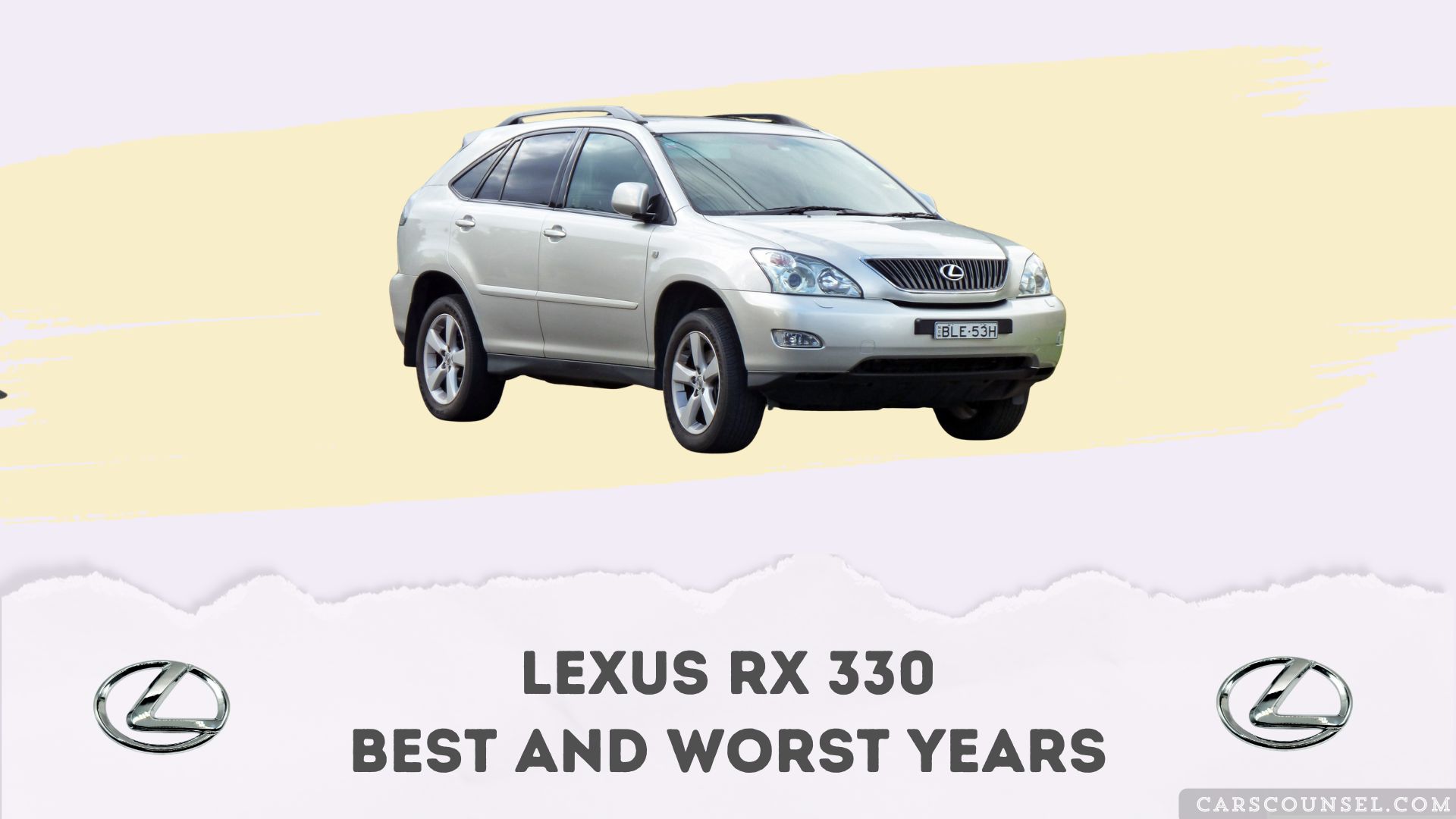
The 2006 model year is the best choice for a used Lexus RX 330. As the final production year, it benefits from late-cycle refinements and avoids the first-year bugs of the 2004 redesign.
No model year is entirely flawless. All RX 330 examples share a well-documented vulnerability to dashboard cracking, and buyers must carefully inspect maintenance records regardless of the year.
The RX 330 was produced exclusively from 2004 through 2006. It features a 3.3-liter V6 engine and a five-speed automatic transmission, bridging the gap between the older RX 300 and the newer RX 350.
Quick Navigation
Best and Worst Lexus RX 330 Years at a Glance
| Model Year | Verdict | Main Reason | Buyer Guidance |
|---|---|---|---|
| 2006 | Best Choice | Final production year with late-cycle refinements. | Inspect dashboard condition and verify maintenance history. |
| 2005 | Good Choice | Solid reliability with carryover mechanicals. | Check for dashboard cracking and steering rack leaks. |
| 2004 | Good With Inspection | First year of the XU30 generation redesign. | Verify all recalls are complete and inspect the dashboard. |
Key Takeaways
- The 2006 model year is the strongest choice for a used Lexus RX 330.
- All 2004–2006 models are prone to severe dashboard cracking and melting.
- The 3.3-liter V6 engine is generally reliable but requires strict adherence to oil change intervals.
- Earlier RX 300 models suffered from oil sludge, but the RX 330 largely resolved this with revised engine components.
- Always check the complete VIN for open recalls and warranty enhancements before purchasing.
- An independent pre-purchase inspection is highly recommended to check for steering rack leaks and suspension wear.
How We Evaluated the Lexus RX 330 Model Years
Our analysis considers official NHTSA records, manufacturer service campaigns, consumer complaint patterns, and long-term ownership data. We separate confirmed mechanical defects from cosmetic annoyances and normal wear items.
Complaints are not failure rates, and a recall does not automatically make a vehicle unreliable. Recent data is weighed against the vehicle’s age, and “best” means comparatively stronger, not flawless.
Best Lexus RX 330 Years
2006: Best Choice
The 2006 Lexus RX 330 represents the final year of the second-generation XU30 platform and the 3.3-liter V6 nameplate. By this year, Lexus had ironed out minor first-year assembly quirks from the 2004 redesign.
The 3.3-liter V6 engine and five-speed automatic transmission offer a smooth, refined driving experience. While the dashboard cracking issue still affects this year, the underlying mechanicals are among the most dependable in the segment.
Best Year by Buyer Type
Best Overall: 2006
The 2006 model year offers the most refined version of the 3.3-liter V6 powertrain. It provides an excellent balance of luxury, reliability, and value for daily commuters and small families.
Years to Approach Carefully
2004: Good With Inspection
The 2004 model year marked a complete redesign for the Lexus RX, introducing the XU30 platform and the new 3.3-liter V6. While mechanically sound, first-year production runs often carry minor assembly inconsistencies.
Buyers should carefully inspect the suspension components, steering rack, and interior electronics. Ensuring that all early-production service campaigns were performed is essential for long-term peace of mind.
Worst Lexus RX 330 Years
The Lexus RX 330 does not have any model years that warrant a strict “Avoid” verdict. The powertrain is fundamentally robust, and catastrophic mechanical failures are rare when the vehicle is properly maintained.
However, the 2004 and 2005 models are slightly less desirable than the 2006 model year simply due to their age and their status as earlier production years. Buyers prioritizing maximum reliability should focus on 2006.
Lexus RX 330 Reliability by Generation
Second Generation (XU30: 2004–2006)
The second-generation Lexus RX introduced sharper styling, a more car-like unibody chassis, and the 3.3-liter 3MZ-FE V6 engine. This generation replaced the first-generation RX 300, which was notorious for oil sludge issues.
Toyota and Lexus heavily revised the engine block and maintenance schedules for the 3.3-liter V6, largely resolving the sludge problem. The XU30 generation is widely regarded as a benchmark for luxury crossover reliability.
Common Lexus RX 330 Problems
Dashboard Cracking and Melting
The most pervasive issue across all 2004–2006 Lexus RX models is a defective dashboard material. Exposure to heat and sunlight causes the plastic to crack, melt, and become dangerously reflective on the windshield.
Lexus previously offered a warranty enhancement program for this issue, but coverage has largely expired. Owners typically must pay out-of-pocket for a replacement dashboard or install an aftermarket dash cover to hide the damage.
Steering Rack Leaks
Some owners report power steering rack leaks as the vehicles age and accumulate higher mileage. While not an epidemic, it is a known wear item on the XU30 platform that requires attention.
Symptoms include whining noises when turning or visible fluid on the ground. Replacing the steering rack assembly is moderately expensive, so buyers should inspect the steering components carefully during a test drive.
Water Pump and Cooling System Wear
The 3.3-liter V6 engine relies on a conventional water pump that can begin to seep coolant around 100,000 miles. Regular cooling system inspections, including the radiator, are necessary to prevent overheating.
Replacing the water pump and serpentine belt is a standard maintenance item, but ignoring a slow leak can lead to severe mechanical failures. Always check the reservoir for proper levels and use quality engine oil.
Transmission and Drivetrain Health
Unlike some other Toyota trucks of the era, the RX 330 does not suffer from widespread radiator cross-contamination issues. The five-speed automatic transmission is generally robust, provided the fluid was changed at appropriate intervals.
Buyers should test the vehicle for smooth shifting and listen for unusual whining noises. A well-maintained SUV from this generation will easily provide reliable service for daily commuting and family transportation.
More Lexus Reliability Guides
When looking at other models from this era, buyers might also consider the Lexus ES 330, which shares the same 3.3-liter V6 engine in a sedan configuration.
For those seeking different body styles, our guides on the Lexus GS 350, Lexus IS 300, and Lexus IS 350 provide detailed reliability breakdowns.
What to Check Before Buying a Used Lexus RX 330
- Verify the VIN for any open safety recalls or expired warranty enhancements.
- Inspect the dashboard for cracks, melting, or shiny reflections.
- Check the power steering rack and suspension components for fluid leaks.
- Review service records to ensure strict adherence to oil change intervals.
- Test the operation of the power windows, door locks, and infotainment screen.
- Look for uneven tire wear, which may indicate worn ball joints or alignment issues.
- Arrange an independent pre-purchase inspection to evaluate the transmission and engine health.
Related Buying Guides
- Lexus RX 350 best and worst years: Discover how the successor to the RX 330 improved upon the formula with a larger V6 engine.
- Lexus RX 300 best and worst years: Learn about the first-generation model and the oil sludge issues the RX 330 was designed to fix.
- Toyota Highlander years to avoid: Compare the RX 330 against its more affordable, non-luxury platform sibling.
Frequently Asked Questions
What is the best year for the Lexus RX 330?
The 2006 model year is the best choice. As the final production year, it benefits from late-cycle manufacturing refinements and offers the most dependable version of the 3.3-liter V6 powertrain.
Did the Lexus RX 330 have transmission problems?
The RX 330 does not suffer from widespread transmission failures. The five-speed automatic is generally robust, provided the transmission fluid was changed at appropriate intervals during the vehicle’s life.
Why do Lexus RX 330 dashboards crack?
Toyota and Lexus used a defective plastic material for the 2004–2006 dashboards. Heat and UV exposure cause the material to melt, crack, and become sticky, requiring a costly replacement or an aftermarket cover.
Is the Lexus RX 330 prone to engine oil sludge?
Unlike the older RX 300, the RX 330’s 3.3-liter V6 largely resolved the oil sludge issue. However, buyers must verify that previous owners followed strict oil change intervals to prevent sludge buildup.
How long can a Lexus RX 330 last?
Well-maintained examples frequently reach high mileage. Longevity depends heavily on rust prevention, cooling system maintenance, and timely replacement of wear items like the water pump and suspension components.
Are parts expensive for the Lexus RX 330?
Repair costs are slightly higher than average non-luxury SUVs but lower than many European rivals. Because the RX 330 shares many mechanical components with Toyota models, aftermarket and OEM parts remain widely available.
Which Lexus RX 330 Year Should You Buy?
The 2006 Lexus RX 330 remains the strongest choice for used buyers seeking a reliable, comfortable luxury crossover. It avoids the first-year quirks of the 2004 redesign while offering a proven powertrain.
Buyers must accept that dashboard cracking is a common flaw for this generation. Budgeting for a dash cover or replacement is a necessary part of ownership for these specific model years.
Always verify the VIN, demand comprehensive service records, and arrange an independent inspection. A well-maintained 2006 example will provide years of dependable service for daily commuting and family transportation.


Comments are closed.