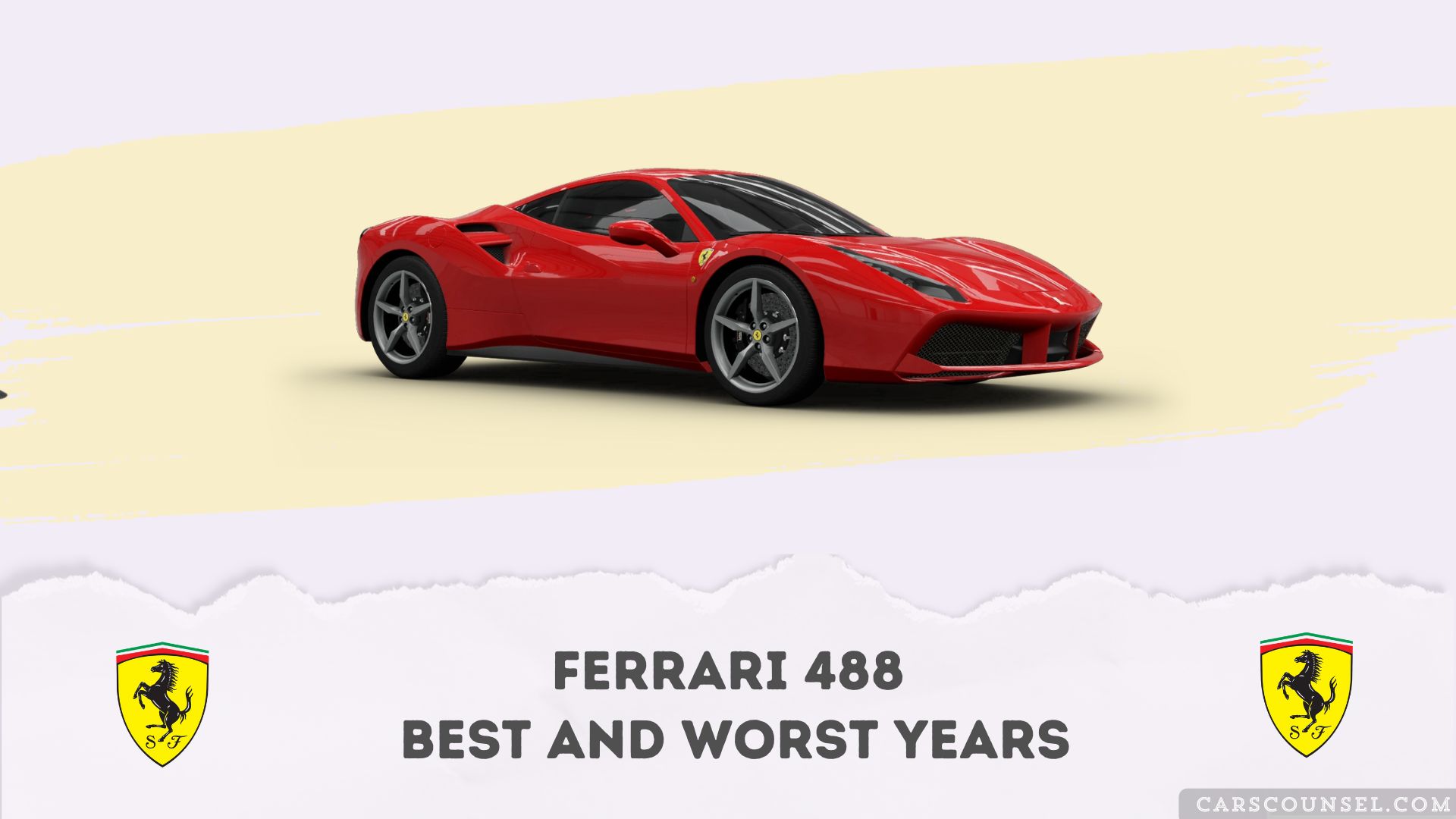
The best Ferrari 488 model years are 2017 and 2018. These years benefit from factory refinements and a mature twin-turbo V8 platform, offering an excellent balance of performance and reliability.
Rankings are comparative, and no supercar is flawless. Maintenance history, proper warm-up procedures, and overall condition matter far more than mileage alone when evaluating a used 488.
Meaningful differences exist between the standard GTB, the open-top Spider, and the track-focused Pista. Buyers must also verify VIN-specific recall completions, as certain fuel line and brake campaigns affect specific production ranges.
Quick Navigation
Best and Worst Ferrari 488 Years at a Glance
| Model Year | Verdict | Main Reason | Buyer Guidance |
|---|---|---|---|
| 2015 | Approach Carefully | First year of twin-turbo V8; early turbo bearing wear concerns. | Verify turbo health and service history. |
| 2016 | Approach Carefully | Fuel line recall; early turbo concerns. | Check recall completion and turbo condition. |
| 2017 | Best Choice | Factory refinements; robust F154 engine. | Ideal balance of performance and reliability. |
| 2018 | Best Choice | Introduction of Pista; mature GTB/Spider platform. | Excellent choice for enthusiasts. |
| 2019 | Good With Inspection | Fuel line recall; Pista brake recall. | Verify VIN for open recalls. |
| 2020 | Good With Inspection | Pista production; brake fluid recall. | Confirm brake system recall completion. |
Key Takeaways
- The 2017 and 2018 model years are the strongest choices, featuring a mature F154 twin-turbo V8 and factory refinements.
- Early 2015 and 2016 models require careful inspection due to first-year turbo bearing wear concerns and fuel line recalls.
- The track-focused 488 Pista offers incredible performance but is subject to a specific brake fluid recall.
- Carbon buildup on intake valves is a known trait of direct-injection engines and requires periodic cleaning.
- Ferrari’s 7-year maintenance program is a major asset, so buyers should always request complete service records.
- Always check the VIN for open recalls, as campaigns for fuel lines and brakes are tied to specific production ranges.
- An independent pre-purchase inspection by a Ferrari specialist is essential before purchasing any 488.
How We Evaluated the Ferrari 488 Model Years
Our analysis considers official NHTSA recalls, manufacturer service campaigns, and long-term ownership data. Buyers often research the best and worst years to avoid costly supercar repairs and evaluate powertrain differences.
Consumer complaints are not confirmed failure rates, and a recall does not automatically make a vehicle unreliable. Recent or low-production years have less ownership history, so Best means comparatively stronger, not flawless.
Best Ferrari 488 Years
2017–2018: Best Choice
The 2017 and 2018 model years represent the sweet spot for the standard Ferrari 488 GTB and Spider. By this time, the manufacturer had implemented meaningful factory refinements to the 3.9-liter twin-turbo V8.
These years avoid the first-year teething issues of the 2015 launch while remaining clear of the specific brake recall that affected later Pista models. The 7-speed dual-clutch transmission proves robust in these years.
Buyers should still look for examples with documented service history, as the 7-year maintenance program covers scheduled fluids and filters. Proper warm-up procedures by previous owners are critical for turbo longevity.
Best Ferrari 488 Years by Buyer Type
Best Overall: 2017–2018 GTB
The 2017 and 2018 GTB models offer the best combination of modern supercar performance, refined electronics, and proven F154 engine reliability.
Best Enthusiast Choice: 2018–2019 Pista
The Pista variant delivers 711 horsepower and massive torque with track-focused aerodynamics. While subject to a brake recall, completed examples offer an unparalleled driving experience.
Best Open-Air Option: 2017–2018 Spider
The Spider features a retractable hardtop that operates smoothly without compromising the chassis rigidity, making it an excellent choice for grand touring.
Years to Approach Carefully
2015–2016: Approach Carefully
The 2015 model year marked the transition from the naturally aspirated 458 to the turbocharged 488. Early F154CB engines have been associated with turbocharger bearing wear under specific high-load conditions.
Additionally, a fuel line and vapor leak recall affects many 2016 models. While Ferrari addressed these issues, buyers must verify that the recall repairs were completed by an authorized dealer.
Turbo wastegate rattle and carbon buildup on the direct-injection intake valves are also more prevalent in higher-mileage examples from these early years. A specialized inspection is mandatory.
Common Ferrari 488 Problems
Turbocharger and Wastegate Concerns
The 3.9-liter twin-turbo V8 relies on complex turbo plumbing. Some owners report wastegate rattle or turbo bearing wear, particularly in early models subjected to track use without proper cool-down periods.
Replacing a turbocharger on the 488 is a major expense. Buyers should listen for unusual fluttering or metallic rattling during deceleration during a test drive.
Carbon Buildup
Like many direct-injection engines, the F154 is prone to carbon accumulation on the intake valves. This can cause rough idling or hesitant acceleration over time.
Periodic manual carbon cleaning or the use of specialized induction services helps maintain optimal airflow and throttle response.
Infotainment and Electronics
The 488’s infotainment system is notoriously dated compared to modern standards. While not a mechanical failure, the slow interface and lack of modern smartphone integration frustrate some daily drivers.
What to Check Before Buying a Used Ferrari 488
- Verify the VIN for open recalls, specifically the fuel line and brake fluid campaigns.
- Request complete service records to confirm Ferrari’s 7-year maintenance program was utilized.
- Inspect the turbochargers for wastegate rattle or shaft play during a cold start and deceleration.
- Check for carbon buildup symptoms, such as rough idling or misfires under load.
- Test the dual-clutch transmission for smooth shifts and proper clutch engagement in both automatic and manual modes.
- Inspect the ceramic brake rotors for wear, as replacement is extremely costly.
- Ensure the retractable hardtop on Spider models cycles smoothly without binding or excessive noise.
- Arrange a pre-purchase inspection by an independent Ferrari specialist or authorized dealer.
Related Buying Guides
- Ferrari F40 best and worst years: The legendary turbocharged flagship that originally pioneered the forced-induction lineage the 488 continues today.
- Ferrari 296 GTB best and worst years: The modern V6 hybrid successor that carries the torch for mid-engine Maranello performance.
- Lamborghini Huracán best and worst years: The direct naturally aspirated V10 rival from Italy, offering a completely different auditory and driving experience.
Frequently Asked Questions
Is the Ferrari 488 reliable?
The 488 is generally reliable for a modern supercar, particularly 2017 and later models. The F154 twin-turbo V8 is robust, but maintenance costs and turbo inspections remain critical ownership factors.
What is the best Ferrari 488 year to buy?
The 2017 and 2018 model years are the best choices. They feature factory refinements to the twin-turbo V8 and avoid the first-year concerns and specific recall campaigns affecting other years.
Are there any recalls for the Ferrari 488?
Yes, certain 488 models are subject to fuel line vapor leak recalls and a brake fluid recall affecting the Pista variant. Always verify the exact VIN to confirm recall completion.
How much does it cost to maintain a Ferrari 488?
Ferrari’s 7-year maintenance program covers scheduled services like engine oil and filters. Out-of-warranty repairs, especially for turbos or carbon-ceramic brakes, can cost thousands of dollars.
Does the Ferrari 488 have turbo lag?
Early reviews noted minor turbo lag compared to the naturally aspirated 458. However, Ferrari’s variable boost management software effectively masks lag in real-world driving conditions.
Should I buy a 488 GTB or Spider?
The GTB offers slightly better chassis rigidity, while the Spider provides open-air enjoyment. Both share the same reliable drivetrain and performance metrics.
Which Ferrari 488 Year Should You Buy?
The 2017 and 2018 Ferrari 488 GTB and Spider models represent the strongest choices for used buyers. These years benefit from a mature twin-turbo V8 platform and crucial factory refinements.
Early 2015 and 2016 models require careful inspection for turbo health and recall completion. The track-focused Pista is incredible but demands strict verification of its brake system recall.
Regardless of the year, a complete service history and an independent pre-purchase inspection are mandatory. Always check the VIN for open recalls before finalizing your investment.

