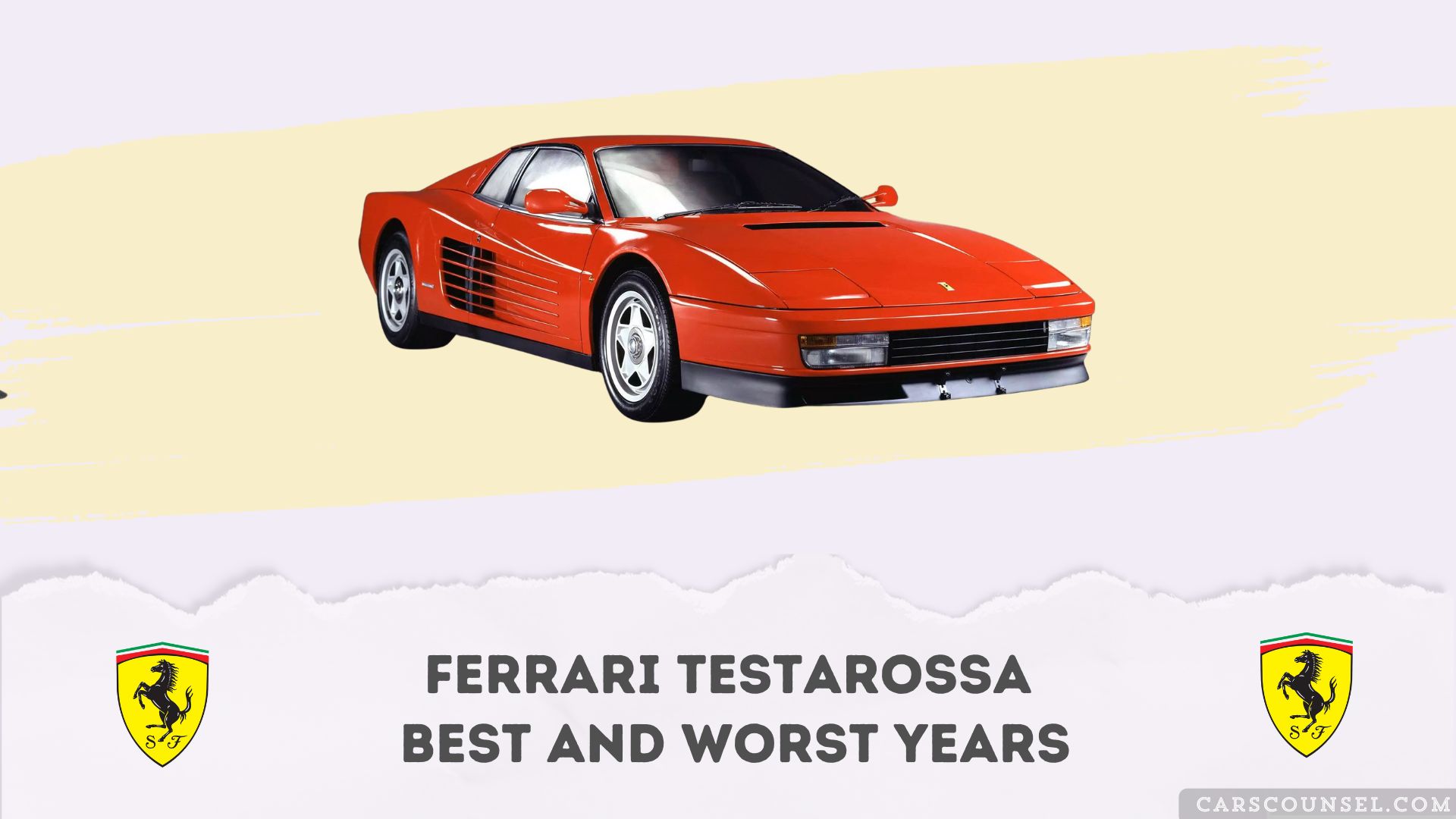
The best Ferrari Testarossa years are the 512 TR (1992–1994) for driving and the F512 M (1995–1996) for collectors. Early models from 1984 to 1988 should be approached carefully due to quirky ergonomics and cabin heat issues.
These rankings are comparative. No vintage Ferrari is flawless or maintenance-free. Long-term reliability depends entirely on meticulous service history, proper storage, and immediate attention to any mechanical warnings.
Meaningful differences exist between the original Testarossa, the revised 512 TR, and the rare F512 M. Engine updates, weight distribution changes, and headlight designs significantly affect usability and collector value.
Quick Navigation
Best and Worst Ferrari Testarossa Years at a Glance
| Model Year | Verdict | Main Reason | Buyer Guidance |
|---|---|---|---|
| 1984–1988 | Approach Carefully | Single flying mirror, cabin heat | Inspect cooling and interior |
| 1989–1991 | Good Choice | Dual mirrors, updated interior | Verify timing belt service |
| 1992–1994 (512 TR) | Best Choice | Better weight distribution, refined engine | Top pick for regular driving |
| 1995–1996 (F512 M) | Best Enthusiast Choice | Fixed headlights, extreme rarity | Reserve for serious collectors |
Key Takeaways
- The 512 TR offers the best balance of usability and classic flat-12 character.
- Early 1984–1988 models feature an asymmetrical single mirror and hotter cabins.
- Timing belt services require engine removal and cost thousands of dollars.
- The F512 M is exceptionally rare and commands a massive collector premium.
- Always verify that major engine-out services were performed on schedule.
- Check the VIN for open historical bulletins before purchasing.
- Arrange an independent pre-purchase inspection by a Ferrari specialist.
How We Evaluated the Ferrari Testarossa Model Years
Our analysis considers factory service requirements, generation changes, and long-term ownership costs. We evaluate timing belt intervals, cooling system efficiency, and electrical reliability.
Complaints are not failure rates. A recall does not automatically make a year unreliable. Best means comparatively stronger within this specific lineage, not flawless.
Best Ferrari Testarossa Years
1992–1994 (512 TR) — Best Choice
The 512 TR represents the sweet spot of the lineage. Ferrari relocated the engine and transmission lower and further forward to improve weight distribution.
This revision drastically improved handling and cabin ergonomics. It also received 18-inch wheels and a more reliable air conditioning system.
1995–1996 (F512 M) — Best Enthusiast Choice
The F512 M is the final and rarest evolution. It abandoned pop-up headlights for fixed units and featured a revised chassis.
Only 500 examples were built globally. It is the ultimate choice for serious collectors seeking exclusivity and peak analog performance.
1989–1991 (Late Testarossa) — Good Choice
Later original Testarossa models corrected early ergonomic complaints. They feature standard dual mirrors and an updated center console.
These years remain good choices if maintained properly. However, they still suffer from more cabin heat than the subsequent 512 TR.
Best Year by Buyer Type
- Best Overall: 1992–1994 (512 TR)
- Best Collector Option: 1995–1996 (F512 M)
- Best Budget Option: 1989–1991 (Late Testarossa)
Years to Approach Carefully
1984–1988 (Early Testarossa) — Approach Carefully
Early models are famous for the single “flying” mirror on the driver’s side. This was a quirky solution to aerodynamic and regulatory challenges.
These early cars also suffer from significant cabin heat due to side-mounted radiators and early insulation methods. Interior build quality was inconsistent.
They are not inherently bad cars, but they require more patience. Buyers should carefully inspect the cooling system and electrical components.
Worst Ferrari Testarossa Years
We do not classify any year as a strict “Avoid” if properly maintained. However, the 1984–1988 models are the least desirable for regular driving.
The combination of the single mirror, heavy clutch, and excessive cabin heat makes them less usable. Later revisions addressed most of these ergonomic flaws.
Ferrari Testarossa Reliability by Generation
Original Testarossa (1984–1991)
This generation established the iconic side-strake design. It uses a 4.9-liter flat-12 engine. Early models have unique quirks, while late models refined the interior.
512 TR (1992–1994)
The 512 TR received a revised engine with higher compression and better engine management. Weight distribution was optimized, making it much more predictable at the limit.
F512 M (1995–1996)
The F512 M features a lighter body and fixed headlights. It is the most developed version but requires the highest entry price due to extreme rarity.
Common Ferrari Testarossa Problems
Timing Belt Service
The flat-12 engine requires timing belt replacements every three to five years. This service requires removing the engine from the chassis.
Neglecting this interval can cause catastrophic engine failure. Buyers must verify recent engine-out service records before purchasing.
Cooling System Issues
The side-mounted radiators are prone to clogging and debris accumulation. This can lead to overheating, especially in slow traffic.
Regular flushing and inspection of the cooling fans are mandatory. Cabin heat is also a byproduct of this radiator placement.
Electrical Gremlins
Vintage Ferrari electrical systems are notoriously sensitive. Grounding issues and aging wiring can cause warning lights or accessory failures.
A thorough electrical diagnostic is essential. Ensure all gauges and power accessories function correctly during the test drive.
Repair-Cost Overview
| Problem | Commonly Affected Years | Approximate Repair Range | Important Notes |
|---|---|---|---|
| Timing Belt Service | All Years | $5,000 – $10,000+ | Requires engine removal |
| Water Pump Replacement | All Years | $3,000 – $6,000 | Often done with timing belts |
| Clutch Replacement | All Years | $4,000 – $8,000 | Heavy use accelerates wear |
Costs vary significantly by region, labor rates, and parts choice. Independent Ferrari specialists often provide better value than main dealerships for vintage models.
What to Check Before Buying a Used Ferrari Testarossa
- Verify the VIN and factory build sheet.
- Confirm the date of the last engine-out timing belt service.
- Inspect the side radiators for debris or corrosion.
- Test the air conditioning system under load.
- Check for proper operation of the pop-up headlights.
- Inspect the leather seats for excessive bolster wear.
- Arrange an independent inspection by a marque specialist.
Related Buying Guides
- Ferrari LaFerrari best and worst years: Explore the modern hybrid hypercar that represents the pinnacle of Ferrari engineering.
- Ferrari F40 best and worst years: Discover the legendary twin-turbo V8 icon that defined the late 1980s supercar era.
- Ferrari 812 best and worst years: Learn about the modern front-engine V12 grand tourer that carries the brand’s legacy forward.
Frequently Asked Questions
What is the most reliable Ferrari Testarossa year?
The 512 TR (1992–1994) is the most reliable. It features updated engine management and improved weight distribution, making it more robust for regular driving than earlier models.
Why do early Testarossas have only one mirror?
Early models used a single high-mounted mirror to meet specific aerodynamic and regulatory requirements. Ferrari later switched to conventional dual mirrors on updated models.
How often does the timing belt need replacement?
The timing belt requires replacement every three to five years, regardless of mileage. This is an engine-out service that is critical to prevent catastrophic failure.
Is the Ferrari Testarossa a good daily driver?
No vintage Ferrari is a true daily driver. The 512 TR is the most usable, but heavy steering, wide dimensions, and maintenance needs limit practical daily use.
Are parts hard to find for the Testarossa?
Mechanical parts are generally available through specialist networks. However, specific cosmetic trim and early interior components can be difficult and expensive to source.
What is the difference between the 512 TR and F512 M?
The F512 M features fixed headlights, a lighter chassis, and revised styling. It is much rarer than the 512 TR and commands a significant collector premium.
Choosing the Right Ferrari Testarossa Model Year
The 512 TR offers the best combination of classic styling and improved driving dynamics. It remains the smartest choice for enthusiasts wanting to drive their cars.
Early models require careful inspection of the cooling and electrical systems. Always prioritize documented engine-out service history over superficial cosmetic condition.
Verify the VIN and arrange a specialist inspection before purchasing. Proper maintenance is the only way to ensure long-term enjoyment of this iconic flat-12 supercar.