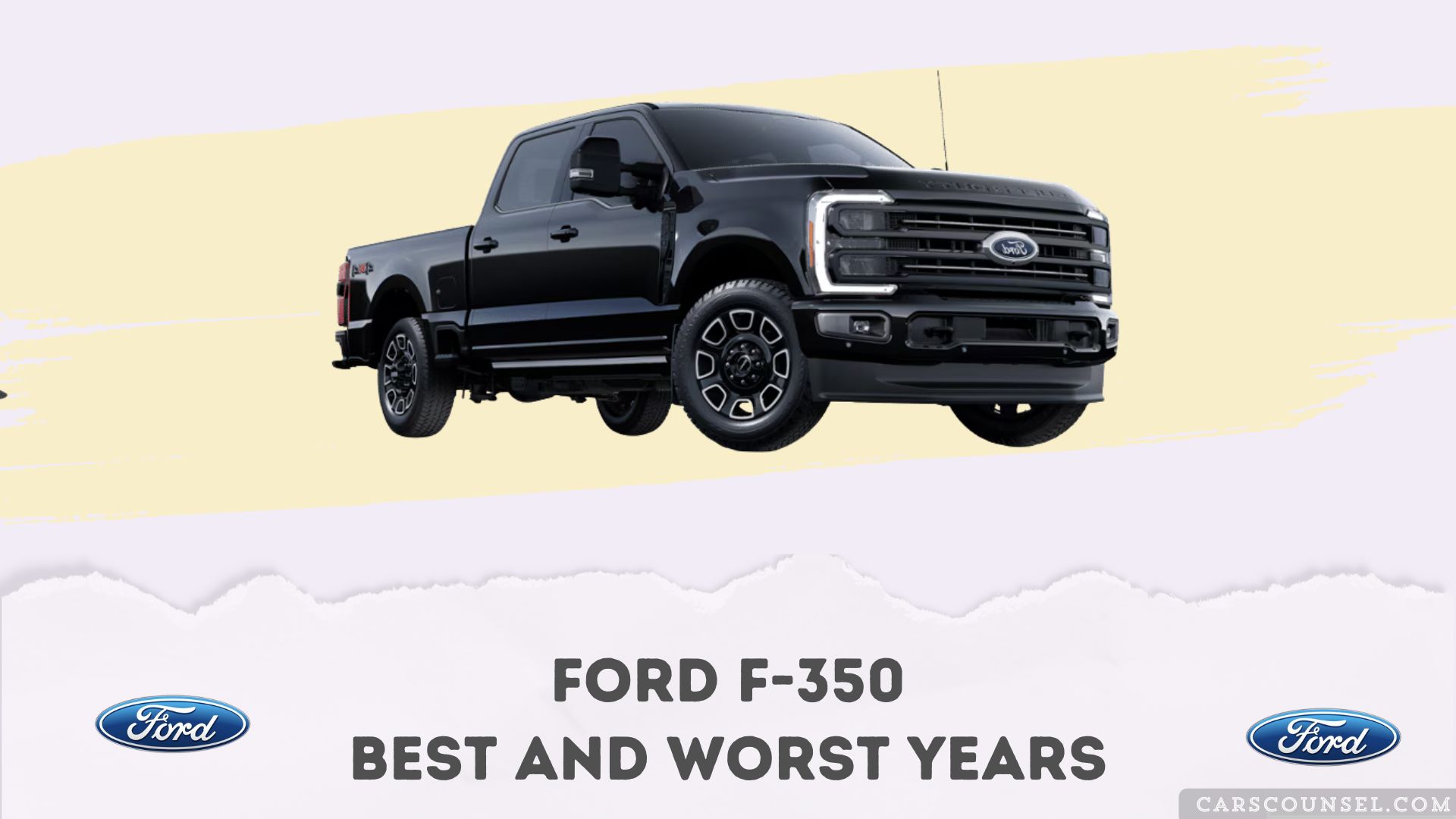
The best Ford F-350 years are 2015 through 2022, featuring the mature 6.7L Power Stroke diesel and 7.3L gas engines. The 1999-2003 models with the 7.3L diesel are also excellent older choices.
Avoid the 2004-2007 models with the 6.0L diesel and the 2008-2010 models with the 6.4L diesel. Both generations suffer from complex emissions and cooling system failures that lead to expensive repairs.
Rankings are comparative, and no used heavy-duty truck is flawless. Maintenance history, rust, and prior modifications heavily influence individual reliability. Always verify the VIN for open recalls before purchasing.
Configuration differences matter significantly. A gas-powered F-350 will have a completely different ownership experience and repair profile than a diesel model. Evaluate your specific towing needs and budget before choosing a powertrain.
Quick Navigation
Best and Worst Ford F-350 Years at a Glance
| Model Year Range | Verdict | Main Reason | Buyer Guidance |
|---|---|---|---|
| 1999-2003 (7.3L Diesel) | Best Older Choice | Legendary durability, simpler emissions. | Inspect for rust and aging hoses. |
| 2004-2007 (6.0L Diesel) | Avoid | EGR, oil cooler, and head gasket failures. | High repair risk; seek other years. |
| 2008-2010 (6.4L Diesel) | Avoid | DPF, radiator, and emissions issues. | Complex repairs make these a financial risk. |
| 2011-2014 (6.7L Diesel) | Good With Inspection | Early turbocharger concerns. | Verify turbo and emissions service history. |
| 2015-2022 (6.7L / 7.3L Gas) | Best Choice | Mature powertrains, excellent capability. | Top picks for heavy towing and daily use. |
| 2023-Present | Too New to Judge | High-output diesel available; limited data. | Great on paper, but long-term exposure is low. |
Key Takeaways
- The 2015-2022 models offer the best blend of modern capability and proven powertrain reliability.
- The 1999-2003 7.3L Power Stroke remains a favorite for enthusiasts and heavy-duty buyers.
- Avoid the 6.0L (2004-2007) and 6.4L (2008-2010) diesels due to severe emissions and cooling defects.
- Gas engines like the 6.2L and 7.3L are generally reliable alternatives to avoid diesel repair costs.
- Always check the VIN for open recalls and verify that emissions equipment has not been illegally deleted.
How We Evaluated the Ford F-350 Model Years
Our analysis reviews official NHTSA recalls, manufacturer service campaigns, and technical service bulletins. We also track consumer complaint patterns, powertrain differences, and generation changes to identify recurring defects.
Complaints are not failure rates, and a recall does not automatically make a year unreliable. Recent models have less ownership history, so long-term data remains limited. Best means comparatively stronger, not flawless.
Best Ford F-350 Years
2015-2022 (6.7L Power Stroke and 7.3L Gas)
The 2015 through 2022 model years represent the sweet spot for modern Super Duty trucks. Ford resolved the early turbocharger issues found in the first-generation 6.7L Power Stroke, resulting in a highly capable diesel engine.
In 2020, Ford introduced the 7.3L Godzilla gas V8. This pushrod engine provides excellent low-end torque and avoids the complex emissions systems that plague older diesel models.
These years offer advanced safety features, improved transmissions, and massive towing capacity. They are the top recommendation for buyers needing a reliable daily driver that can still handle heavy fifth-wheel trailers.
1999-2003 (7.3L Power Stroke)
The early 7.3L Power Stroke diesel is widely regarded as one of the most durable engines Ford ever built. It lacks the complex diesel particulate filters and DEF systems found on newer trucks.
While the interior and technology are dated, the powertrain can easily reach high mileage with basic maintenance. Buyers should carefully inspect the undercarriage for rust and check for aging rubber components.
Best Year by Buyer Type
Best Overall: 2020-2022
These years combine the reliable 10-speed automatic transmission, the proven 6.7L diesel or 7.3L gas engines, and modern interior technology. They offer the best balance of capability and daily comfort.
Best Budget Option: 2011-2014 Gas Models
If you want a newer body style but want to avoid diesel repair bills, the 6.2L Boss V8 gas models from this era are a solid choice. They lack the towing limits of the diesel but are much cheaper to maintain.
Years to Approach Carefully
2011-2014 (Early 6.7L Power Stroke)
The first iteration of the 6.7L Power Stroke introduced in 2011 featured a unique Garrett GT32 turbocharger. This specific turbo is known to fail prematurely and is expensive to replace.
Ford switched to the much more reliable GT37 turbo for the 2015 model year. If you are considering a 2011-2014 diesel, verify whether the turbo has already been replaced or budget for the repair.
1999-2010 Gas Models (5.4L and 6.8L Triton)
The Triton V8 and V10 gas engines from this era are generally robust, but they share a notorious defect. The three-valve cylinder heads can suffer from broken spark plugs during removal.
Additionally, the cam phasers on the 5.4L V8 can fail, causing timing issues and expensive repairs. Inspect service records carefully before purchasing an older gas-powered Super Duty.
Worst Ford F-350 Years
2004-2007 (6.0L Power Stroke)
The 6.0L Power Stroke is infamous for its reliability issues. The engine suffers from restrictive oil coolers that fail and subsequently clog the EGR coolers, leading to blown head gaskets.
While aftermarket bulletproofing kits exist, they require significant labor and investment. Unless a previous owner has already performed all necessary upgrades with documented receipts, these years are a major financial risk.
2008-2010 (6.4L Power Stroke)
The 6.4L twin-turbo diesel replaced the 6.0L but introduced a new set of expensive problems. The diesel particulate filter system frequently clogged, and the engine was known to consume excessive fuel during regeneration cycles.
Radiator leaks and cracked up-pipes are also common. The repair costs for the emissions and cooling systems on the 6.4L often exceed the value of the truck itself.
Ford F-350 Reliability by Generation
First Generation (1999-2007)
This generation established the Super Duty nameplate. The 7.3L diesel years are excellent, while the 6.0L years are best avoided. The gas engines are acceptable but suffer from spark plug and cam phaser issues.
Second Generation (2008-2010)
Ford updated the styling and interior, but the introduction of the 6.4L diesel severely hurt the generation’s reliability reputation. Gas models from this era remain a safer, albeit thirsty, alternative.
Third Generation (2011-2016)
A major redesign brought the 6.2L gas V8 and the new 6.7L diesel. Early diesel models require turbo inspection, but the 2015-2016 refresh years are highly recommended for their improved powertrain durability.
Fourth Generation (2017-2022)
Ford switched to an aluminum-alloy body to reduce weight. This generation introduced the 10-speed automatic transmission and the 7.3L Godzilla gas V8, making it one of the most capable and reliable generations available.
Fifth Generation (2023-Present)
The current generation features updated styling and a high-output version of the 6.7L diesel. While early reports are positive, long-term reliability data is still accumulating, leaving it too new to fully judge.
Common Ford F-350 Problems
Diesel Emissions and Cooling Failures
The 6.0L and 6.4L engines are plagued by EGR cooler failures, clogged DPF systems, and radiator leaks. These issues often cascade, causing head gasket failures or severe engine damage if ignored.
Spark Plug and Cam Phaser Issues
Older 5.4L and 6.8L Triton gas engines are known for spark plugs breaking off in the cylinder head. The 5.4L also suffers from cam phaser wear, which causes a rattling noise and check engine lights.
Death Wobble and Suspension Wear
Some owners of solid-front-axle Super Duty trucks report a violent shaking of the front end at highway speeds. This is typically caused by worn track bar bushings, ball joints, or steering stabilizers.
What to Check Before Buying a Used Ford F-350
- Verify the VIN to ensure all open recalls and emissions campaigns have been completed by a dealer.
- Inspect the undercarriage and frame for severe rust, especially on models from the Rust Belt.
- Check for illegal emissions deletions, which can cause inspection failures and void financing options.
- Review service records for evidence of timely oil changes, which are critical for diesel turbo longevity.
- Test the four-wheel-drive system and listen for binding or clunking noises from the front axle.
- Scan the OBD-II ports for pending codes that a seller may have recently cleared.
Related Buying Guides
- Ford V10 years to avoid: Learn which model years of the Triton V10 engine suffer from spark plug and exhaust manifold issues.
- Ford F-250 years to avoid: The F-250 shares many powertrains with the F-350, but its payload limits and suspension setups differ.
- GMC Sierra 2500 best and worst years: Compare the Super Duty to GM’s heavy-duty Duramax offerings for your towing needs.
- Dodge Ram 2500 best and worst years: Explore the Cummins diesel reliability and common steering issues found in Ram’s heavy-duty lineup.
Frequently Asked Questions
What is the most reliable Ford F-350 diesel engine?
The 7.3L Power Stroke (1999-2003) and the updated 6.7L Power Stroke (2015-2022) are the most reliable diesel options. The 6.0L and 6.4L engines suffer from severe emissions and cooling defects.
Is the Ford F-350 gas engine reliable?
The 6.2L Boss and 7.3L Godzilla gas V8 engines are generally very reliable. They avoid expensive diesel emissions repairs, though they consume significantly more fuel when towing heavy loads.
What years of the F-350 have the “death wobble”?
Death wobble can affect any solid-front-axle Super Duty, but it is most commonly reported on 2005 and newer models. It is usually caused by worn suspension components rather than a manufacturing defect.
Are deleted diesel F-350s a good buy?
No. Deleting emissions equipment is illegal for road use, causes inspection failures, and can result in massive fines. It also complicates future repairs and severely limits your pool of potential buyers.
How long do Ford F-350 transmissions last?
The TorqShift automatic transmissions are generally robust when properly maintained. Regular fluid and filter changes are essential, especially for trucks that frequently tow near their maximum capacity.
Should I buy a dually or single-rear-wheel F-350?
A dually provides superior stability and higher payload capacity for fifth-wheel towing. A single-rear-wheel is easier to drive daily and fits in standard parking spaces, but has lower payload limits.
Which Ford F-350 Year Should You Buy?
For most used buyers, the 2015 through 2022 model years offer the best combination of modern technology, towing capability, and proven powertrain reliability. The 6.7L diesel and 7.3L gas engines are standout choices.
If you prefer a classic workhorse and are willing to perform regular maintenance, the 1999-2003 7.3L diesel remains a legendary option. Avoid the 6.0L and 6.4L diesels unless they have extensive, documented aftermarket upgrades.
Always verify the VIN for open recalls, inspect the frame for rust, and arrange an independent pre-purchase inspection. A heavy-duty truck’s reliability depends heavily on how it was maintained and used by previous owners.

