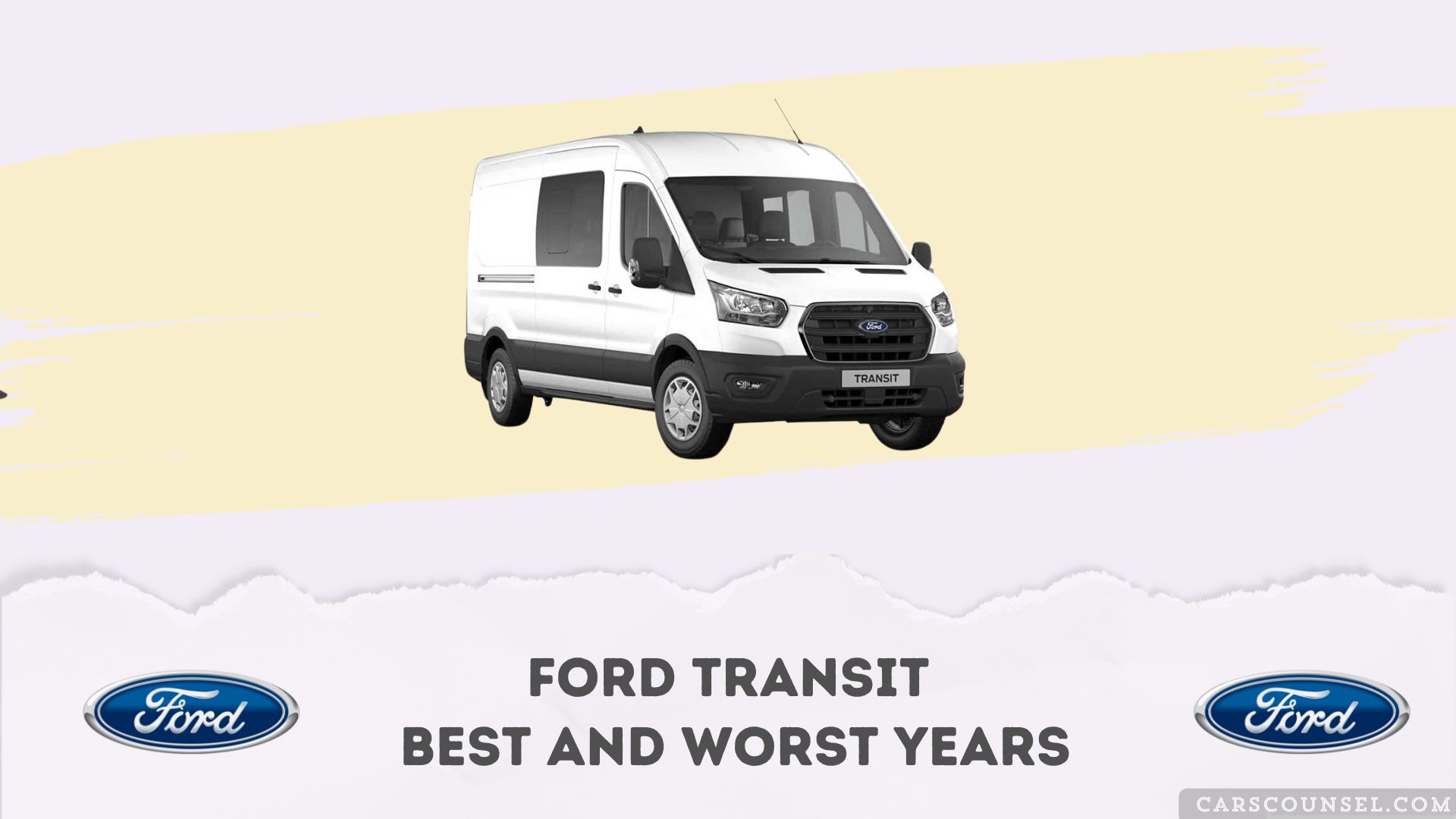
The best U.S.-market Ford Transit years are 2018 through 2022. These model years offer mature engineering, fewer recalls, and proven powertrains. Buyers should approach the 2015 model year carefully due to first-year production issues and numerous early recalls.
Rankings are comparative, and no commercial van is entirely flawless. Long-term reliability depends heavily on rigorous maintenance, driving conditions, and verifying that all open manufacturer recalls have been completed before purchase.
The Transit offers multiple roof heights, wheelbases, and powertrains. Naturally aspirated V6 engines generally require less maintenance than turbocharged EcoBoost or diesel options, making configuration choice critical for your specific commercial or personal needs.
Quick Navigation
Best and Worst Ford Transit Years at a Glance
| Model Year Range | Verdict | Main Reason | Buyer Guidance |
|---|---|---|---|
| 2015 | Approach Carefully | First U.S. model year with numerous recalls | Verify recall completion and inspect fuel system |
| 2016–2017 | Mixed | Improved but still early-production teething issues | Check service history and underbody condition |
| 2018–2019 | Best Older Choice | Mature platform with proven powertrains | Excellent for budget-conscious fleet buyers |
| 2020–2022 | Best Late-Generation Choice | Refreshed styling, 10-speed automatic, AWD option | Top pick for modern features and capability |
| 2023–Present | Too New to Judge | Limited long-term ownership data available | Inspect warranty coverage and diesel options |
Note: The U.S.-market Ford Transit launched for the 2015 model year, replacing the E-Series. Model years prior to 2015 refer to the E-Series or European-market Transits and are not covered in this U.S. guide.
Key Takeaways
- The 2018 through 2022 model years represent the strongest choices for used buyers.
- The 2015 model year requires careful inspection due to first-year production challenges.
- The 3.5L naturally aspirated V6 is generally the most straightforward engine to maintain.
- All-wheel drive became available starting with the 2020 model year refresh.
- Always verify the VIN to ensure all safety recalls have been performed.
How We Evaluated the Ford Transit Model Years
Our analysis examines official safety recalls, manufacturer service campaigns, and consumer complaint patterns. We also track powertrain changes, generation updates, and long-term ownership costs.
Consumer complaints are not confirmed defect rates, and a recall does not automatically make a vehicle unreliable. Recent models have less road exposure, meaning long-term evidence remains limited. “Best” indicates comparatively stronger reliability, not absolute perfection.
Best Ford Transit Years
2018–2019: Best Older Choice
These years represent the most mature phase of the initial U.S. generation. The manufacturer resolved many early production issues, resulting in a more stable ownership experience for commercial fleets and private owners.
The 3.2L Power Stroke diesel and 3.7L V6 were well-established by this time. Buyers seeking a reliable workhorse without the premium of newer models will find excellent value here.
2020–2022: Best Late-Generation Choice
A significant refresh arrived for 2020, updating the exterior and introducing a 10-speed automatic transmission. The 3.5L V6 and 3.5L EcoBoost V6 replaced older engine options.
This generation also introduced an all-wheel-drive system, expanding the van’s capability in adverse weather. These years offer modern safety features and improved drivability without first-year redesign risks.
Best Ford Transit Year by Buyer Type
- Best Overall: 2021 offers a great balance of modern features, the 10-speed transmission, and proven reliability.
- Best Budget Option: 2018 provides mature engineering and lower depreciation for fleet buyers.
- Best for Snow and Rain: 2020 or newer, which offer the optional all-wheel-drive system.
- Best for Heavy Cargo: Models equipped with the 3.5L EcoBoost V6 or the 3.2L diesel (2015–2019).
Years to Approach Carefully
2015: First-Year Challenges
The 2015 model year marked the Transit’s North American debut, replacing the long-running E-Series. First-year production often involves assembly learning curves, and this year was no exception.
Early models faced numerous recalls, including issues related to the fuel pump delivery module, seatbelt pretensioners, and underbody coatings. While many have been repaired, buyers must verify VIN-specific recall completion.
2016–2017: Mixed Reliability
While improved over the launch year, these models still exhibit some early-generation quirks. When researching years to avoid, buyers often flag these models for occasional driveshaft vibrations and minor electrical gremlins.
A thorough pre-purchase inspection is essential. Focus on the drivetrain, suspension components, and underbody corrosion protection, especially if the van operated in regions that use road salt.
Ford Transit Reliability by Generation
First U.S. Generation (2015–2019)
This generation introduced the global Transit platform to North America for Ford. It offered three roof heights and multiple wheelbases. Engine options included a 3.7L V6, a 3.5L EcoBoost V6, and a 3.2L five-cylinder diesel engine.
Reliability improved significantly by 2018. Buyers should note that the Ford F-150 shares the 3.5L EcoBoost engine family, meaning similar maintenance requirements apply to the turbocharged system.
Refreshed Generation (2020–Present)
The 2020 refresh brought a new front fascia, a 10-speed automatic transmission, and updated engine choices. The 3.7L and 3.2L diesel were dropped in favor of a 3.5L naturally aspirated V6 and an updated EcoBoost.
A 2.0L EcoBlue diesel was later introduced for the U.S. market. This generation is generally more refined, though the newest diesel configurations remain too new to judge for long-term durability.
Common Ford Transit Problems
Fuel Delivery Module Issues
Some early models (particularly 2015) experienced issues with the fuel delivery module, which could cause the engine to stall or fail to start. The manufacturer issued recalls and extended coverage programs for affected vehicles.
Always verify that the updated part has been installed. A stalling hazard in a heavy commercial vehicle presents a significant safety risk on highways.
EcoBoost Cam Phaser Wear
The 3.5L EcoBoost V6 can experience cam phaser wear, leading to a rattling noise on cold starts and potential check-engine lights. This issue is shared with other vehicles using this engine family.
Repairing cam phasers is labor-intensive and requires specialized timing tools. Listen carefully for rattling during a cold start before purchasing an EcoBoost-equipped Transit.
Underbody Corrosion and Driveshaft
Some owners report premature underbody corrosion and vibration, particularly in earlier model years. Service campaigns were issued to address coating and balancing issues on affected chassis.
Inspect the undercarriage thoroughly. Check the driveshaft U-joints and center bearing for excessive play or rust scaling, especially on high-mileage cargo vans.
What to Check Before Buying a Used Ford Transit
- Run the VIN to confirm all open safety recalls have been completed by a dealer.
- Listen for cam phaser rattle on a completely cold EcoBoost engine start.
- Inspect the underbody for rust scaling and verify driveshaft balance.
- Check the fuel delivery module service history on 2015 models.
- Test the 10-speed transmission for smooth shifting under heavy load.
- Verify the condition of the heavy-duty suspension components and leaf springs.
- Ensure the cargo area bulkheads and tie-down points are secure and undamaged.
- Arrange an independent pre-purchase inspection by a commercial vehicle specialist.
Related Buying Guides
- Ford F-350 Best and Worst Years: If you need heavy towing capacity and a traditional truck bed instead of an enclosed van, the Super Duty lineup offers superior payload ratings.
- Ford Bronco Sport Best and Worst Years: For buyers who need a compact footprint for urban deliveries rather than maximum cargo volume, this crossover is a practical alternative.
- Ford Edge Years to Avoid: If your cargo needs are modest and you prefer a midsize SUV for passenger comfort, the Edge offers a different buyer path.
- Ford V10 Years to Avoid: Buyers looking at heavy-duty commercial chassis cabs or older RV platforms should review the reliability patterns of the large modular V10 engines.
Frequently Asked Questions
What is the best year to buy a used Ford Transit?
The 2021 model year is a top choice. It benefits from the 2020 refresh, offering a reliable 10-speed transmission, modern safety features, and proven powertrains without first-year redesign risks.
Did Ford make a Transit van before 2015?
In the United States, the Transit launched for the 2015 model year. Prior to 2015, the E-Series (Econoline) was sold in North America. Earlier Transit models were sold exclusively in Europe and other global markets.
Is the Ford Transit 3.5L EcoBoost reliable?
The EcoBoost offers excellent torque for heavy cargo but requires strict maintenance. Cam phaser wear and turbo-related maintenance can be expensive. The naturally aspirated 3.5L V6 is generally simpler and cheaper to maintain long-term.
When did the Ford Transit get all-wheel drive?
An all-wheel-drive option was introduced starting with the 2020 model year refresh. It is a valuable feature for buyers operating in regions with frequent snow, ice, or unpaved job sites.
How long do Ford Transit vans last?
Well-maintained examples can reach high mileage, often exceeding 200,000 miles. Longevity depends heavily on rigorous commercial maintenance, driving conditions, rust prevention, and addressing powertrain issues promptly.
Are there any major recalls for the Ford Transit?
Early models, particularly 2015, had numerous recalls involving fuel systems, seatbelts, and underbody coatings. Later years have fewer recalls. Always check the NHTSA database using the specific VIN before purchasing.
Choosing the Right Ford Transit Model Year
For most used buyers, the 2018 through 2022 model years offer the best balance of reliability, capability, and value. The 2015 launch year requires careful scrutiny and strict recall verification.
Choose the naturally aspirated V6 for simpler maintenance, or the EcoBoost for maximum towing. Always verify the VIN, review service records, and arrange an independent inspection before finalizing your purchase.

