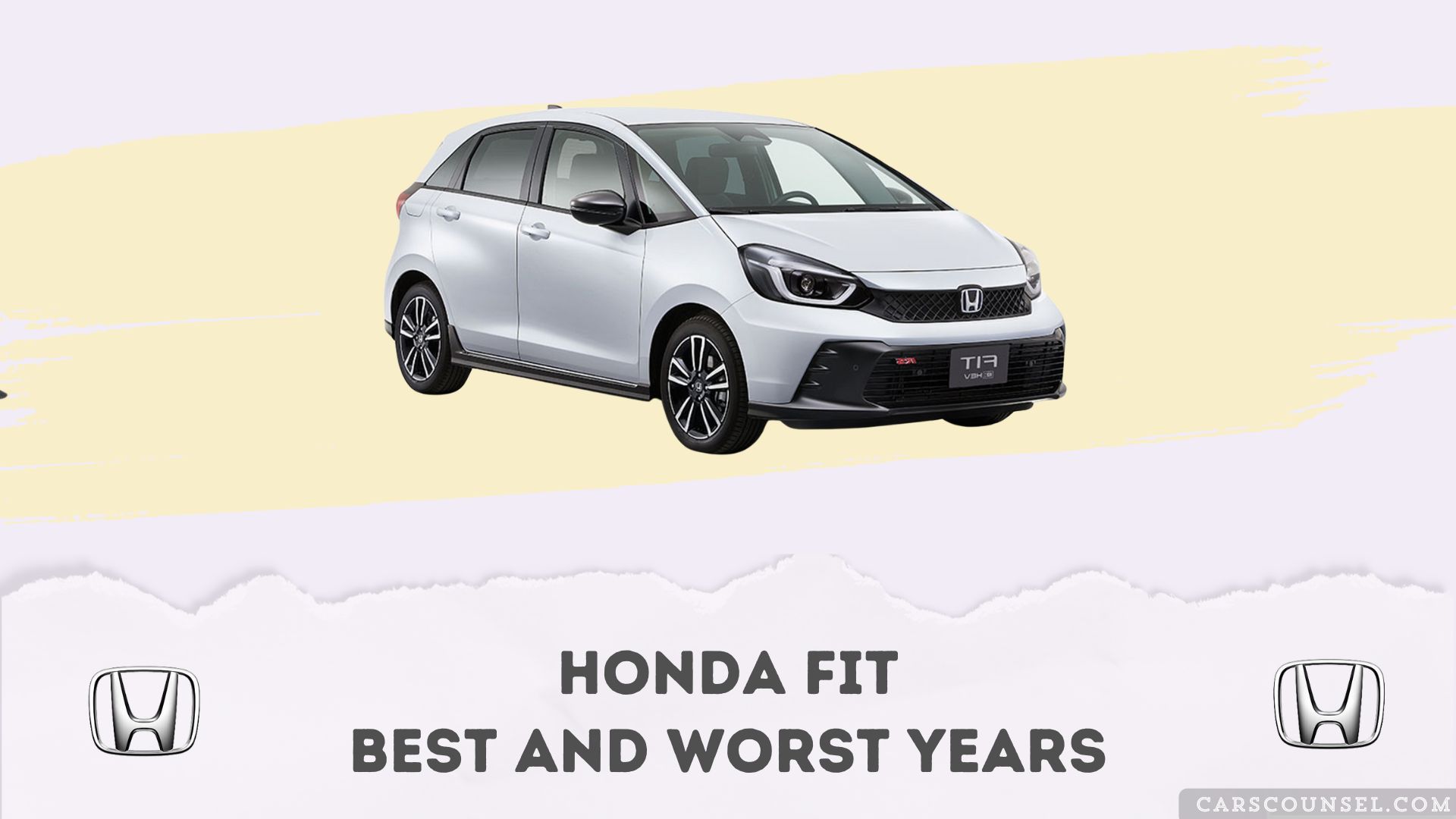
The best Honda Fit years are 2012, 2013, 2019, and 2020. These model years offer excellent reliability, mature powertrains, and strong safety features. Buyers should approach the 2015 model year carefully due to infotainment and transmission complaints.
Rankings are comparative, and no used vehicle is entirely flawless. A well-maintained Fit from a cautious year can still serve you well, while neglected examples from the best years may require costly repairs. Always verify service history.
Meaningful differences exist between generations. The first and second generations use conventional automatic transmissions, while the third generation switched to a continuously variable transmission. Your choice depends on your preference for driving dynamics and modern safety technology.
Quick Navigation
Best and Worst Honda Fit Years at a Glance
| Model Year | Verdict | Main Reason | Buyer Guidance |
|---|---|---|---|
| 2019-2020 | Best Late-Generation Choice | Refined CVT, Honda Sensing standard | Check for open fuel pump recalls |
| 2016-2018 | Good Choice | Solid reliability, modern features | Verify infotainment operation |
| 2015 | Approach Carefully | Infotainment failures, CVT judder | Test transmission and radio thoroughly |
| 2014 | N/A | Not sold in the US market | Look for 2013 or 2015 instead |
| 2012-2013 | Best Older Choice | Peak 2nd-gen reliability, 5-speed auto | Check for starter and ignition coil wear |
| 2009-2011 | Good Choice | Reliable, practical hatchback | Inspect for age-related rubber wear |
| 2007-2008 | Good With Inspection | Early 1st-gen teething issues, age | Verify Takata airbag recall completion |
Key Takeaways
- The 2012, 2013, 2019, and 2020 model years are the strongest choices for used buyers.
- The 2015 model year requires careful inspection due to first-year redesign complaints.
- Third-generation models (2015-2020) use a CVT, while earlier models use a traditional automatic.
- Always check the NHTSA database for open recalls, especially regarding Takata airbags on older models.
- Recent model years have less long-term ownership data but benefit from advanced safety suites.
- A pre-purchase inspection is essential to verify the condition of the clutch or CVT.
How We Evaluated the Honda Fit Model Years
Our analysis considers official recalls, manufacturer service campaigns, consumer complaints, and powertrain differences across Honda generations. We evaluate the severity of reported issues to determine the best and worst years.
Complaints are not confirmed failure rates, and a recall does not automatically make a vehicle unreliable. Recent model years naturally have less ownership history. Ultimately, our ratings indicate comparatively stronger reliability, not absolute perfection.
Best Honda Fit Years
2019-2020: Best Late-Generation Choice
The final years of the US-market Fit benefit from a mature platform and standard Honda Sensing safety features. The continuously variable transmission operates smoothly, and the Earth Dreams engine delivers excellent fuel economy.
Buyers should verify that the fuel pump recall has been addressed on these specific vehicles. While long-term data is still accumulating, these years represent the most refined and technologically advanced versions of the hatchback.
2012-2013: Best Older Choice
The final years of the second generation are widely celebrated for their dependability. Honda resolved earlier minor issues, resulting in a highly capable subcompact with a reliable five-speed automatic transmission and versatile Magic Seats.
These models lack modern active safety features, but their mechanical simplicity makes them inexpensive to maintain. They remain an excellent choice for budget-conscious buyers seeking a practical daily commuter.
Best Year by Buyer Type
- Best Overall: 2019 (Combines modern safety with proven hatchback practicality).
- Best Budget Option: 2012 (Offers peak second-generation reliability at a lower price point).
- Best City Commuter: 2013 (Compact dimensions, excellent visibility, and reliable automatic transmission).
Honda Fit Years to Approach Carefully
2015: First-Year Redesign Concerns
The 2015 model year introduced the third generation and brought several frustrations for early adopters. Owners frequently report infotainment system failures, Bluetooth connectivity drops, and uncomfortable seating.
Some drivers also note a shudder or hesitation from the new continuously variable transmission during low-speed acceleration. While not mechanically catastrophic, these issues make the 2015 Fit less desirable than updated later models.
2007-2008: Aging First-Generation Models
As the oldest vehicles on the market, early first-generation models require thorough inspections. Common age-related concerns include failing starter motors, worn ignition coils, and peeling clear coat.
Crucially, buyers must verify that the Takata airbag recall has been completed. If the service history is unknown or the recall remains open, these early models carry unnecessary safety and financial risks.
Honda Fit Reliability by Generation
First Generation (2007-2008)
The US debut of the Fit introduced the brilliant Magic Seat and a peppy 1.5L engine. While generally robust, these early models are now quite old. Buyers should expect to replace wear items like the ignition coil and starter.
Second Generation (2009-2013)
Honda refined the formula with better aerodynamics and improved interior materials. The 2012 and 2013 models are the pinnacle of this era, offering a dependable five-speed automatic that avoids the complexity of early CVTs.
Third Generation (2015-2020)
After a brief hiatus in 2014, the Fit returned with a new chassis and an Earth Dreams direct-injection engine. Honda replaced the traditional automatic with a CVT to maximize fuel economy. Later years added crucial driver-assistance technology.
Common Honda Fit Problems
Starter Motor and Ignition Issues
First and second-generation models occasionally experience starter motor failures or faulty ignition coil packs. Symptoms include extended cranking times or engine misfires. These are relatively straightforward and inexpensive repairs at most independent shops.
Infotainment and Electrical Gremlins
The 2015 model year is particularly prone to radio and touchscreen failures. Owners report screens going completely black or losing Bluetooth connectivity. Replacing the head unit can be costly, so test all electronics thoroughly during your test drive.
CVT Judder (Early Third Generation)
Some early third-generation models exhibit a shudder during light acceleration. This is often related to the CVT fluid or software calibration. A fluid drain and fill, combined with a dealer software update, usually resolves the hesitation.
Fuel System and Sensors
While rare, some high-mileage examples may require attention to the fuel injectors or oxygen sensors . Symptoms include rough idling or decreased fuel economy. These components are standard wear items on older direct-injection engines.
What to Check Before Buying a Used Honda Fit
- Verify the VIN for open NHTSA recalls, especially the Takata airbag and fuel pump campaigns.
- Test the infotainment screen, Bluetooth pairing, and backup camera for proper operation.
- Check for smooth acceleration to ensure the CVT or traditional automatic is not shuddering.
- Inspect the service history for regular transmission fluid changes.
- Look for excessive rust on the undercarriage and suspension components.
- Arrange an independent pre-purchase inspection to check for hidden accident damage.
Related Buying Guides
- Honda HR-V best and worst years: The HR-V is built on the Fit platform but offers a raised ride height and crossover styling for buyers needing more ground clearance.
- Honda Civic years to avoid: The Civic provides a more engaging driving experience and a larger trunk, making it a great alternative for those who do not need the Fit’s tall hatchback cargo area.
- Honda CR-V years to avoid: If you need all-wheel drive and significantly more passenger space, the CR-V is the logical next step up in Honda’s lineup.
Frequently Asked Questions
What is the most reliable Honda Fit year?
The 2013 and 2019 model years are among the most reliable. The 2013 represents the peak of the second generation with a proven automatic transmission, while the 2019 offers modern safety features and a refined CVT.
Why was the Honda Fit discontinued in the US?
Honda discontinued the US-market Fit after 2020 due to shifting consumer preferences toward subcompact crossovers like the HR-V. The Fit remains in production and highly popular in other global markets.
Does the Honda Fit have transmission problems?
Most Fits are very reliable, but the 2015 model year has reports of CVT shuddering. Earlier models with the five-speed automatic are largely trouble-free. Regular fluid changes help prevent transmission wear.
Are Honda Fits expensive to maintain?
No, the Fit is one of the most affordable subcompacts to maintain. Parts are widely available, and the simple mechanical design keeps labor costs low at both dealerships and independent repair shops.
What is the Honda Fit Magic Seat?
The Magic Seat is a versatile rear seating system that allows the bottom cushions to fold up or the seatbacks to fold completely flat. This creates exceptional cargo capacity for a vehicle of its size.
Is the Honda Fit good for long road trips?
The Fit is capable on highways, but the third-generation seats are notably stiff and may cause fatigue on very long drives. Earlier generations offer slightly more comfortable seating for extended travel.
Choosing the Right Honda Fit Model Year
The Honda Fit remains a benchmark for subcompact practicality and fuel efficiency. For the best blend of modern safety and reliability, target the 2019 or 2020 model years. Budget buyers should seek out the highly dependable 2012 or 2013 models.
Approach the 2015 model year with caution due to infotainment and transmission complaints, and thoroughly inspect any 2007-2008 examples for age-related wear and open recalls. Always verify the VIN and secure a pre-purchase inspection before finalizing your purchase.

