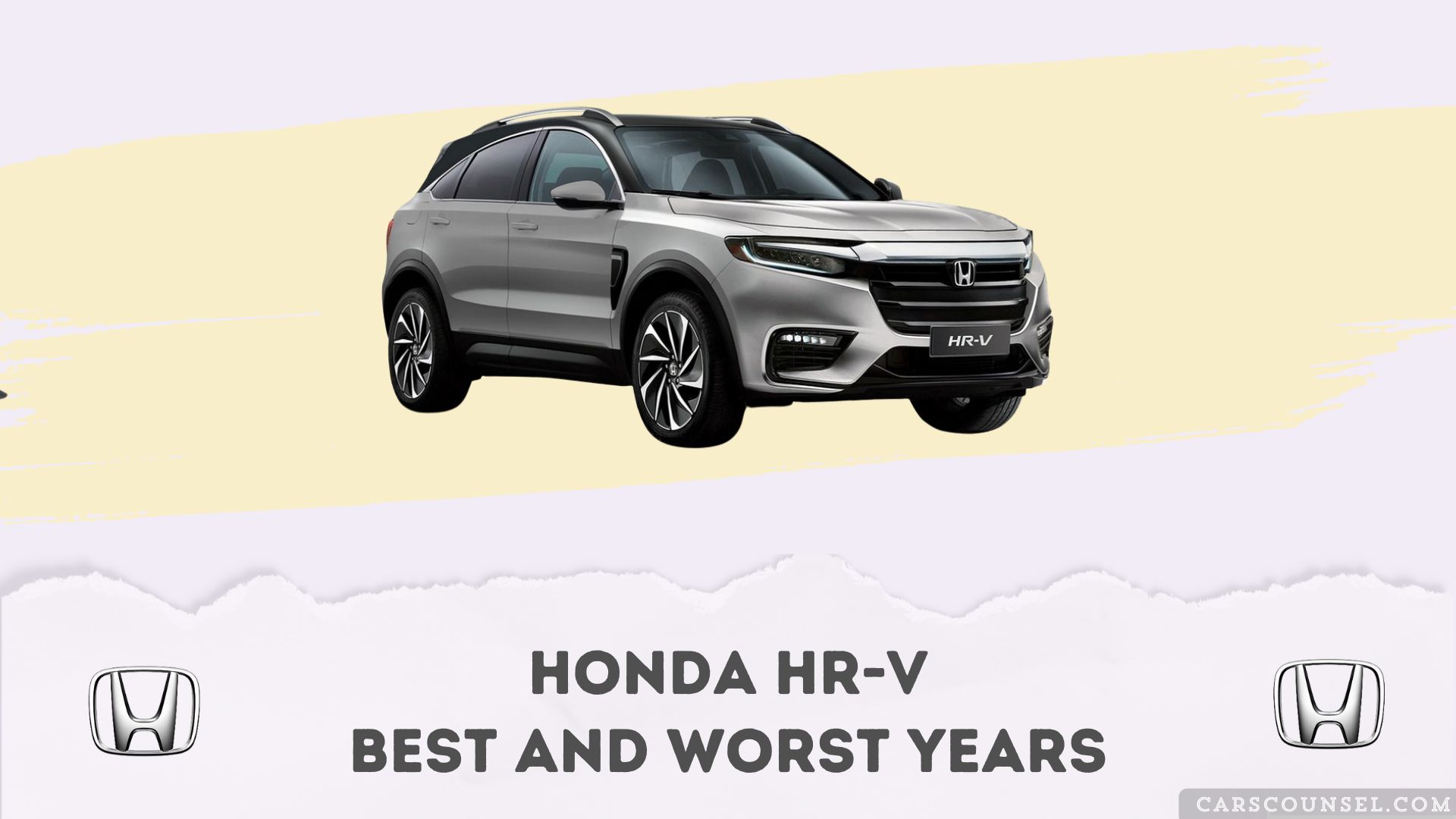
The 2019 through 2022 Honda HR-V model years are the best choices for used buyers. We recommend approaching the 2016 through 2018 models with care due to early-production infotainment frustrations and brake wear complaints.
These rankings are comparative. No used vehicle is flawless, and individual maintenance history matters more than the model year alone when evaluating long-term reliability.
The HR-V spans two distinct generations. The first generation uses a 1.8-liter engine, while the redesigned 2023 and newer models switched to a 2.0-liter engine and a new platform.
Quick Navigation
Best and Worst Honda HR-V Years at a Glance
| Model Year Range | Verdict | Main Reason | Buyer Guidance |
|---|---|---|---|
| 2023–2025 | Too New to Judge | Second-generation redesign with limited long-term data | Verify warranty status and check for open recalls |
| 2019–2022 | Best Choice | Mature first-generation platform with updated infotainment | Prioritize these years for daily commuting and cargo versatility |
| 2018 | Good With Inspection | Pre-refresh model with some brake and transmission complaints | Inspect brake rotors and verify CVT fluid service history |
| 2016–2017 | Approach Carefully | First-year redesign issues and frustrating touchscreen interface | Test the infotainment system and check for fuel pump recalls |
Key Takeaways
- The 2019 through 2022 model years offer the most refined first-generation experience.
- Early models from 2016 and 2017 suffer from an unresponsive, knob-less infotainment system.
- The 2023 redesign introduced a new platform, making recent models too new to fully judge.
- Premature brake wear is a recurring complaint on 2016 through 2018 models.
- Always verify the VIN for the widespread Denso fuel pump recall affecting 2016 through 2020 models.
How We Evaluated the Honda HR-V Model Years
Our analysis reviews official NHTSA recalls, manufacturer service campaigns, and consumer complaint databases. We also track powertrain changes, generation redesigns, and mid-cycle refreshes.
Consumer complaints indicate owner frustration but do not represent confirmed failure rates. A recall does not automatically make a vehicle unreliable if the remedy is available.
Recent model years have less ownership history, limiting long-term durability conclusions. Best Choice indicates a comparatively stronger option, not a flawless vehicle.
Best Honda HR-V Years
2019–2022: Best Choice
The 2019 model year introduced a crucial mid-cycle refresh. Honda finally added a physical volume knob and updated the touchscreen interface, resolving the biggest complaint from earlier years.
Honda Sensing safety features became more widely available across the trim lineup. The 1.8-liter engine and continuously variable transmission had several years to mature, resulting in fewer drivetrain complaints.
The 2020 through 2022 models carry over these improvements. They represent the most refined versions of the first-generation subcompact crossover before the 2023 redesign.
Best Year by Buyer Type
Best Overall: 2021
The 2021 model year benefits from late-production maturity. It includes the updated infotainment system, standard safety features on higher trims, and a proven 1.8-liter powertrain.
Best Budget Option: 2018
If the 2019 refresh is out of your budget, the 2018 model offers similar mechanical reliability. Just be prepared to deal with the older, slower touchscreen interface.
Years to Approach Carefully
2016–2017: Approach Carefully
The 2016 launch year brought the HR-V to the United States. First-year models often suffer from early-production teething issues, and this generation is no exception.
Owners frequently report premature front brake wear and frustrating infotainment behavior. The touchscreen lacks physical buttons, making it difficult to use while driving.
2018: Good With Inspection
The 2018 model year is mechanically similar to the launch years. While major engine failures are rare, brake pad and rotor wear remains a common maintenance expense.
Buyers should have a mechanic measure the brake rotors and inspect the continuously variable transmission fluid condition before purchasing.
Honda HR-V Reliability by Generation
First Generation (2016–2022)
This generation rides on the Honda Fit platform. It uses a 1.8-liter four-cylinder engine paired with a CVT or a six-speed manual transmission on early base models.
The 2019 refresh significantly improved daily usability. Late-production models from 2019 through 2022 are generally robust, provided the CVT fluid is changed at recommended intervals.
Second Generation (2023–Present)
Honda moved the HR-V to the Civic platform for 2023. The new 2.0-liter engine provides more power, and the interior quality saw a major upgrade.
Because this generation is relatively new, long-term reliability data remains limited. Buyers should rely on warranty coverage and monitor for early service bulletins.
If you need more cargo space and all-wheel-drive capability, consider looking into the Honda CR-V, which shares Honda’s modern safety architecture but offers a larger footprint.
Common Honda HR-V Problems
Infotainment System Frustrations
Models from 2016 through 2018 feature an outdated touchscreen. The system is notoriously slow to respond and lacks a physical volume knob, forcing drivers to use the screen for basic audio adjustments.
Premature Brake Wear
Owners of 2016 through 2018 models frequently report needing front brake pad and rotor replacements earlier than expected. This is a common maintenance item rather than a safety defect.
Fuel Pump Failure
Honda issued a massive recall for the Denso fuel pump impeller across many models, including the 2016 through 2020 HR-V. The impeller can deform, causing the engine to stall.
Buyers must verify if the fuel pump recall remedy was performed on any used first-generation model.
What to Check Before Buying a Used Honda HR-V
- Run the VIN to confirm the fuel pump recall status.
- Test the touchscreen responsiveness and audio controls on pre-2019 models.
- Inspect front brake rotors for warping or excessive wear.
- Review service records for CVT fluid drain-and-fill intervals.
- Listen for CVT shudder or hesitation during low-speed acceleration.
- Check for uneven tire wear, which may indicate alignment issues.
Related Buying Guides
- Honda Fit Best and Worst Years: The first-generation HR-V shares its underlying platform with the Fit hatchback.
- Honda Civic Years to Avoid: The second-generation HR-V borrows its chassis and 2.0-liter engine architecture from the Civic.
Frequently Asked Questions
What is the best Honda HR-V model year to buy?
The 2019 through 2022 model years are the best choices. They feature the updated infotainment system with a volume knob and benefit from late-production manufacturing maturity.
What years of the Honda HR-V should I avoid?
You should approach the 2016 and 2017 model years with care. These early first-generation models suffer from a frustrating touchscreen interface and higher rates of premature brake wear complaints.
Does the Honda HR-V have transmission problems?
Widespread transmission failure is rare. However, some owners report CVT shudder or hesitation. Regular transmission fluid drain-and-fill services help maintain long-term smooth operation.
Is the Honda HR-V expensive to maintain?
No, the HR-V is generally inexpensive to maintain. It shares many components with other Honda models, keeping parts affordable and allowing most independent mechanics to perform routine services easily.
Did Honda fix the HR-V infotainment issues?
Yes, Honda addressed the major complaints during the 2019 mid-cycle refresh. They added a physical volume knob and improved the touchscreen responsiveness for the remainder of the first generation.
Is the 2023 Honda HR-V reliable?
The 2023 model is the first year of a complete redesign. It is currently classified as Too New to Judge, as it lacks the long-term ownership data required to confirm its durability.
Which Honda HR-V Year Should You Buy?
Target the 2019 through 2022 model years for the best ownership experience. These vehicles offer the refined infotainment system and mature mechanicals that buyers expect from the brand.
Approach the 2016 through 2018 models carefully. If you choose an earlier year, budget for potential brake service and ensure you can tolerate the older touchscreen interface.
Always verify the VIN for open recalls, particularly the fuel pump campaign. Finally, arrange an independent pre-purchase inspection to evaluate the exact condition of the vehicle.

