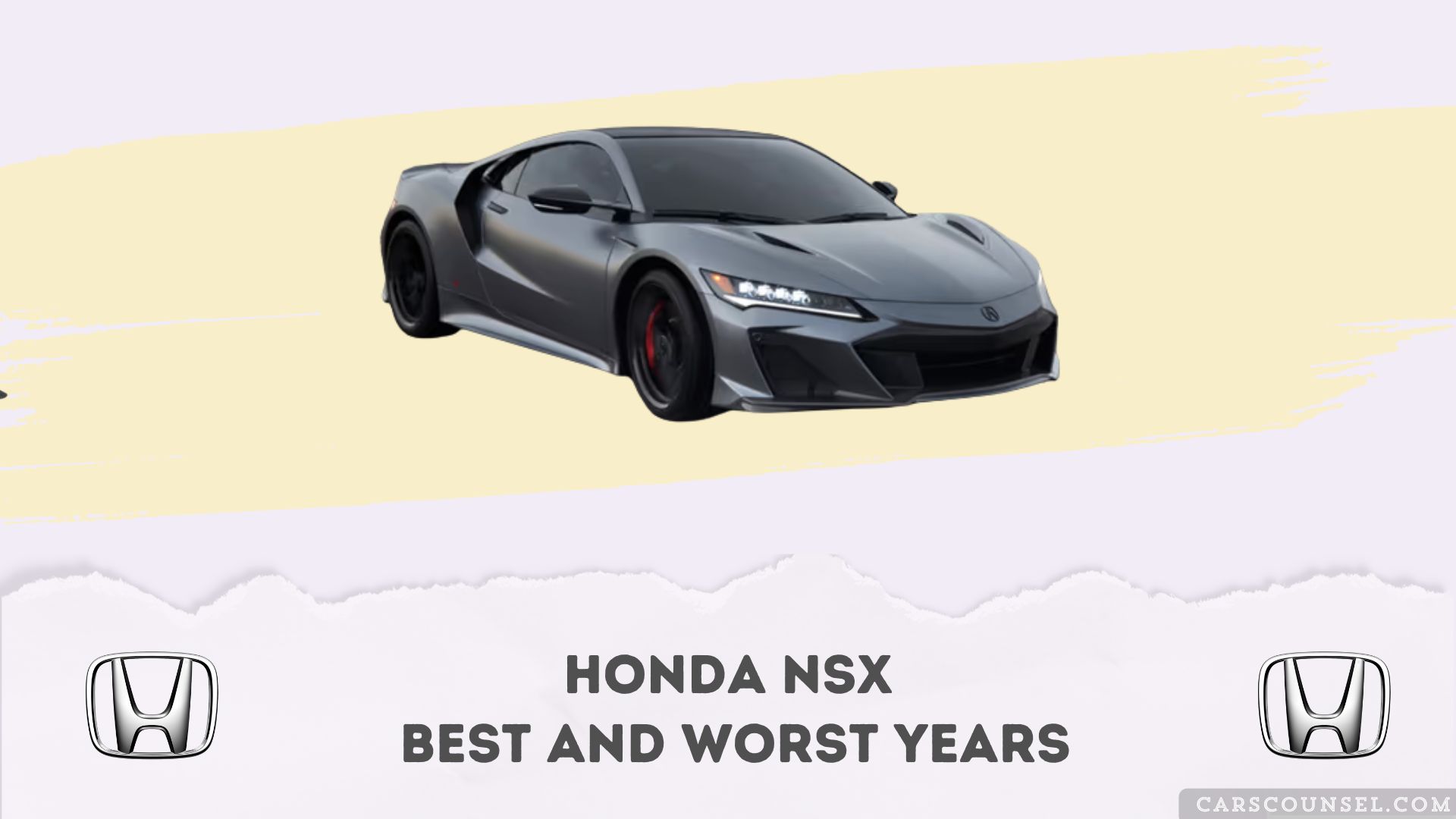
The best Acura NSX years are 1997 through 2005 for the first generation, and 2019 through 2022 for the second generation. Avoid early 1990s manuals and 2017 models due to transmission and hybrid system concerns.
Rankings are comparative, and no vintage supercar is flawless. Maintenance history, timing belt service, and overall condition matter far more than the odometer reading when evaluating these high-performance vehicles.
Meaningful differences exist between the naturally aspirated first generation and the twin-turbo hybrid second generation. Transmission types and specific facelift years also heavily influence reliability and long-term ownership costs.
Quick Navigation
Best and Worst Acura NSX Years at a Glance
| Model Year or Range | Verdict | Main Reason | Buyer Guidance |
|---|---|---|---|
| 1991–1996 | Good With Inspection | Early manual transmission snap-ring risk | Verify transmission service history |
| 1997–2005 | Best Choice | 3.2L engine and mature platform | Prioritize timing belt documentation |
| 2017 | Avoid | Early hybrid and DCT teething issues | High risk of expensive software and drivetrain faults |
| 2018 | Approach Carefully | First-year hybrid carryover gremlins | Verify all technical service bulletins |
| 2019–2022 | Good Choice | Refreshed second generation | Check hybrid battery health |
Key Takeaways
- The 1997–2005 first-generation models offer the most reliable ownership experience.
- Avoid 2017 models due to early second-generation hybrid and transmission gremlins.
- First-generation engines are durable, but timing belt replacements require specialized labor.
- Second-generation models feature complex Sport Hybrid systems that demand specialized diagnostics.
- Always verify open recalls and complete service records before purchasing any NSX.
How We Evaluated the Acura NSX Model Years
Our analysis considers official recalls, manufacturer service campaigns, and verified owner complaints. We evaluate powertrain differences, generation changes, and repair complexity to determine long-term reliability.
Consumer complaints are not confirmed defects, and a recall does not automatically make a vehicle unreliable. Recent models have less ownership history, making long-term predictions difficult.
Best Acura NSX Years
1997–2005 (First Generation)
These years represent the pinnacle of the original NSX design. The 1997 model year introduced a larger 3.2-liter V6 and a six-speed manual transmission for improved performance.
Later models received a comprehensive facelift with fixed HID headlights and revised suspension. The platform was thoroughly sorted, making these the most dependable options for collectors.
2019–2022 (Second Generation)
Following its 2017 debut, the second-generation NSX received crucial software and mechanical updates. The 2019 refresh improved suspension tuning and standard features, resolving many early-production quirks.
The 2022 Type S serves as the ultimate farewell edition. While maintenance costs are high, these late-model years offer the most refined hybrid supercar experience available.
Best Year by Buyer Type
- Best Overall: 2002–2005. These facelifted first-generation models combine modern styling with bulletproof naturally aspirated reliability.
- Best Enthusiast Choice: 1997–2001. The introduction of the 3.2-liter engine and six-speed manual transmission makes these highly desirable for driving purists.
- Best Modern Alternative: 2020–2022. Later second-generation models offer cutting-edge hybrid performance without the teething issues of the 2017 launch year.
Years to Approach Carefully
1991–1996 (First Generation)
Early first-generation models are legendary, but 1991 and 1992 manual transmissions suffered from a notorious snap-ring flaw. This issue could cause catastrophic transmission failure if left unaddressed.
Additionally, aging electronics and pop-up headlight motors frequently require attention. Buyers must verify that the transmission was rebuilt or updated and that the timing belt was serviced.
2018 (Second Generation)
The 2018 model year carried over the initial launch hardware before the 2019 refresh. While improved via software updates, it still shares some early hybrid system vulnerabilities.
Buyers must ensure all technical service bulletins were applied. A comprehensive dealership diagnostic scan is mandatory to verify the high-voltage system and dual-clutch transmission health.
Worst Acura NSX Years
2017 (Second Generation)
The 2017 model year is the most problematic of the modern era. As a first-year redesign featuring an incredibly complex twin-turbo hybrid powertrain, it suffered from numerous software and transmission issues.
Owners reported DCT hesitation, 12-volt battery drains, and hybrid system warnings. While later updates resolved some concerns, the 2017 model remains the riskiest modern NSX to purchase.
Acura NSX Reliability by Generation
First Generation (1991–2005)
Sold as the Acura NSX in the United States, this generation is famous for its Honda engineering. The naturally aspirated V6 engines are incredibly durable when properly maintained.
The primary concern is the timing belt and water pump service, which requires dropping the engine or extensive labor. Rust and aging rubber components also demand careful inspection.
Second Generation (2017–2022)
The NC1 generation introduced a twin-turbo V6 paired with a three-motor Sport Hybrid system. While technologically advanced, the complexity makes out-of-warranty repairs exceptionally expensive.
Reliability heavily depends on software updates and hybrid battery health. Unlike the first generation, these cars are not suited for DIY maintenance and require specialized Acura dealerships.
Common Acura NSX Problems
Transmission Snap-Ring Failure (1991–1992)
Early manual transmissions featured a faulty snap-ring that could break and destroy the gearbox. Acura issued a recall, but buyers must verify the repair was completed decades ago.
Timing Belt and Water Pump Service (All First-Gen)
While not a defect, the timing belt must be replaced every six years or 90,000 miles. The mid-engine layout makes this a labor-intensive and expensive maintenance requirement.
Hybrid System and DCT Issues (2017–2018)
Early second-generation models experienced dual-clutch transmission shudder and hybrid system software faults. Ensuring all technical service bulletins and recall updates are applied is critical for these years.
What to Check Before Buying a Used Acura NSX
- Verify the VIN for open recalls, especially regarding the second-generation fuel tank and hybrid system.
- Inspect documentation for timing belt and water pump replacements on all first-generation models.
- Test the dual-clutch transmission for shudder or hesitation during low-speed maneuvers on second-generation cars.
- Check the operation of pop-up headlight motors and aging interior electronics on pre-2002 models.
- Arrange an independent pre-purchase inspection with a specialist familiar with mid-engine Honda vehicles.
Related Buying Guides
- Acura Integra best and worst years: A practical and engaging alternative for enthusiasts seeking reliable Japanese performance without supercar maintenance costs.
- Honda Clarity best and worst years: An informative guide for buyers interested in Honda’s complex hybrid and plug-in electric powertrain technologies.
Frequently Asked Questions
What is the most reliable Acura NSX year?
The 2002 through 2005 model years are the most reliable. These late first-generation models feature a thoroughly sorted platform, fixed headlights, and mature engineering.
Why are early 1990s NSX models risky?
The 1991 and 1992 manual transmissions had a snap-ring defect that could destroy the gearbox. Buyers must verify this specific recall was addressed decades ago.
Is the second-generation NSX reliable?
The 2019 through 2022 models are reasonably reliable but highly complex. The twin-turbo hybrid system requires specialized dealership maintenance and is expensive to repair out-of-warranty.
How often does an NSX need a timing belt?
First-generation models require a timing belt and water pump replacement every six years or 90,000 miles. This mid-engine service is labor-intensive and relatively expensive.
Did Acura recall the modern NSX?
Yes, the second-generation NSX faced several recalls, including issues with the fuel tank and hybrid system software. Always verify recall completion using the vehicle identification number.
Are NSX parts hard to find?
Mechanical parts for the first generation are becoming scarce, though Honda has launched a heritage parts program. Second-generation hybrid components remain strictly dealer-only items.
Choosing the Right Acura NSX Model Year
The 1997 through 2005 first-generation models remain the strongest choices for collectors seeking reliable analog performance. The 2002 facelift offers the best blend of modern styling and proven durability.
Avoid the 2017 launch year due to early hybrid and transmission issues. If you prefer the second generation, target 2019 or newer models with complete software update histories.
Regardless of the generation, always verify timing belt service on older cars and hybrid battery health on newer ones. A specialist pre-purchase inspection is essential for any NSX.

