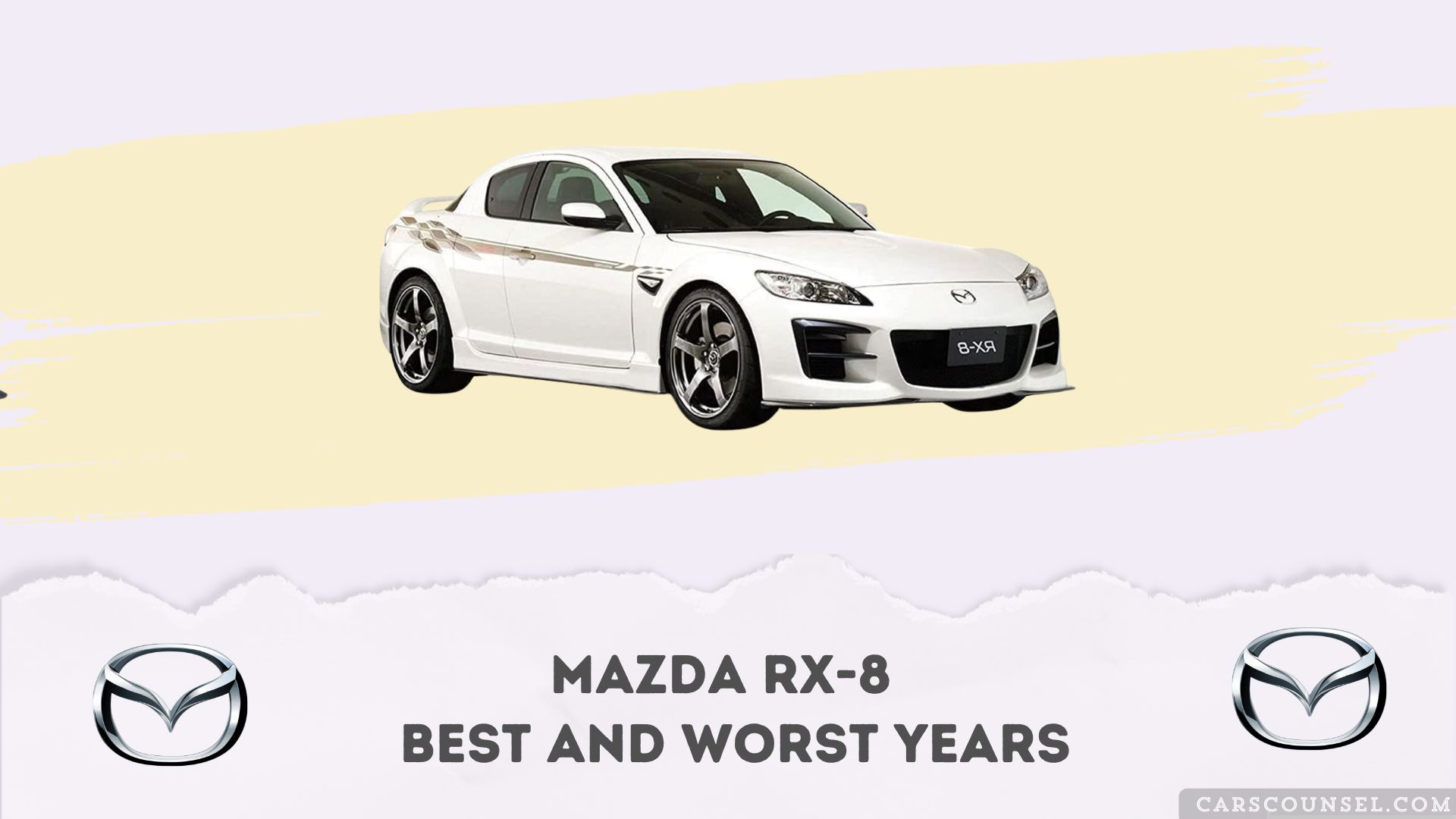
The best Mazda RX-8 model years are 2009 through 2011. These Series II models feature crucial engine refinements. Buyers should generally avoid the 2004 and 2005 model years due to early reliability teething issues and higher complaint volumes.
Remember that rankings are comparative. No used sports car is flawless, and the RX-8 demands strict maintenance. A well-documented service history is often more important than the specific model year.
Significant differences exist between early and late models. The 2009 refresh introduced a revised engine and updated electronics. Manual transmissions are generally preferred by enthusiasts over the older automatic options.
Quick Navigation
Best and Worst Mazda RX-8 Years at a Glance
| Model Year | Verdict | Main Reason | Buyer Guidance |
|---|---|---|---|
| 2009-2011 | Best Choice | Series II engine refinements and better reliability | Prioritize manual transmission examples with compression test records |
| 2006-2008 | Good With Inspection | Introduction of the 6-speed manual, but still requires strict care | Verify ignition coil replacements and oil metering pump condition |
| 2004-2005 | Avoid | Highest complaint volumes and early Renesis engine vulnerabilities | High risk of expensive engine rebuilds; look elsewhere |
Key Takeaways
- The 2009 through 2011 model years are the strongest choices due to Series II mechanical updates.
- The 2004 and 2005 model years carry the highest risk of premature engine failure and electrical gremlins.
- A pre-purchase rotary compression test is mandatory for any RX-8, regardless of the model year.
- Aftermarket ignition coils frequently cause misfires; verify that OEM Mazda coils are installed.
- Recent years have limited long-term data, but the 2011 final edition remains highly sought after by enthusiasts.
- Always check the VIN for open recalls and verify that the oil metering pump functions correctly.
How We Evaluated the Mazda RX-8 Model Years
Our analysis reviews official recalls for Mazda vehicles, manufacturer service campaigns, and consumer complaint databases. We also weigh powertrain differences, generation changes, and repair complexity.
Consumer complaints are not confirmed failure rates. A recall does not automatically make a vehicle unreliable. Furthermore, the RX-8 requires specialized rotary knowledge, meaning general reliability scores often miss critical maintenance nuances.
Best Mazda RX-8 Years
2009-2011: Best Choice
The 2009 through 2011 model years represent the Series II generation. Mazda revised the 1.3L Renesis engine, improving the oil metering pump and updating the engine control unit. These changes significantly reduced cold-start flooding and premature wear.
These later models also feature a more robust six-speed automatic and a refined six-speed manual. While they still require strict rotary maintenance, their overall ownership experience is comparatively favorable. Always verify engine compression before purchasing.
Best Year by Buyer Type
Best Enthusiast Choice: 2011
The 2011 model year is the final production year and often commands a premium. It benefits from all Series II refinements and represents the most developed version of the RX-8. Enthusiasts value its rarity and performance packages.
Best Budget Option: 2007
If you cannot afford a Series II model, the 2007 model year offers a middle ground. It introduced the desirable six-speed manual transmission. However, it still requires rigorous maintenance and a thorough pre-purchase inspection.
Years to Approach Carefully
2006-2008: Good With Inspection
The 2006 through 2008 model years bridge the gap between early teething issues and the Series II refresh. The 2006 introduction of the six-speed manual is a major plus for driving dynamics.
Buyers must inspect the ignition coils, catalytic converters, and engine compression. If the previous owner neglected frequent oil changes or used low-quality aftermarket coils, the engine may already suffer from low compression or apex seal wear.
Worst Mazda RX-8 Years
2004-2005: Avoid
The 2004 and 2005 model years are the most problematic. As the inaugural years, they suffered from early Renesis engine vulnerabilities, including severe cold-start flooding and weak ignition coil packs. They also feature a sluggish four-speed automatic.
These years consistently show the highest volumes of consumer complaints regarding engine stalling and premature failure. Unless you are a rotary specialist willing to perform an immediate engine rebuild, it is safer to look at later years.
Mazda RX-8 Reliability by Generation
First Generation (2004-2011)
The RX-8 was produced in a single generation, but it is divided into two distinct series. The Series I introduced the unique four-door coupe layout and the 1.3L Renesis rotary engine. Early models struggled with engine flooding.
The Series II brought a comprehensive refresh. Mazda updated the engine internals, improved the oil injection system, and revised the exterior styling. Buyers seeking a traditional piston-engine sports car often look to the Mazda MX-5.
Common Mazda RX-8 Problems
Engine Flooding and Cold Start Issues
The Renesis engine is prone to flooding if shut off before reaching operating temperature. Unburned fuel washes past the apex seals, leading to a loss of compression and a failure to start. This was most prevalent in early models.
Ignition Coil Failures
Weak or failing ignition coils cause misfires, which can quickly destroy the catalytic converter and damage the engine. The RX-8 requires strict use of OEM Mazda ignition coils. Cheap aftermarket alternatives frequently fail and exacerbate flooding issues.
Low Compression and Apex Seal Wear
Rotary engines consume oil by design to lubricate the apex seals. If previous owners neglected oil level checks or delayed oil changes, the seals wear prematurely. This results in low compression, requiring a very expensive engine rebuild.
What to Check Before Buying a Used Mazda RX-8
- Perform a Rotary Compression Test: Standard engine testers do not work on rotaries. A specialized rotary compression test is mandatory to verify apex seal health.
- Inspect Ignition Coils: Verify that the car uses OEM Mazda ignition coils and check when they were last replaced.
- Check for Flooded Engine Symptoms: Ask the seller to start the car completely cold to ensure it fires up immediately without excessive cranking.
- Review Service Records: Confirm that the oil was changed every 3,000 to 5,000 miles using the correct weight synthetic oil.
- Inspect Fuel Delivery: Check the condition of the fuel pumps and fuel lines to ensure proper delivery to the rotary engine.
- Verify VIN and Recalls: Ensure all manufacturer service campaigns have been completed.
Related Buying Guides
- Mazda MX-5 best and worst years: A traditional piston-engine alternative that offers similar handling dynamics with significantly lower maintenance requirements.
- Mazda 3 sedan best and worst years: A practical daily driver alternative for buyers who want Mazda styling without the complexities of a rotary sports car.
- Mazda 2 best and worst years: A compact, fuel-efficient alternative for buyers who want Mazda engineering in an easy-to-maintain daily driver package.
Frequently Asked Questions
What is the most reliable Mazda RX-8 year?
The 2011 model year is generally the most reliable. It benefits from all Series II refinements, improved engine internals, and represents the final, most developed version of the RX-8 before production ended.
Why are early Mazda RX-8 models considered unreliable?
The 2004 and 2005 models suffered from early Renesis engine teething issues, including severe cold-start flooding and weak ignition coils. They also feature older transmission options and show the highest volumes of consumer complaints.
Is the Mazda RX-8 expensive to maintain?
Yes, the RX-8 requires strict, specialized maintenance. It consumes oil by design, requires frequent fluid changes, and demands OEM replacement parts. Neglecting these specific rotary needs quickly leads to catastrophic and expensive engine failure.
Can a flooded RX-8 engine be fixed easily?
A flooded engine can sometimes be cleared using a specific pedal-dance procedure. However, frequent flooding damages the catalytic converter and indicates underlying ignition or compression issues that require professional diagnosis and repair.
Does the Mazda RX-8 have a timing belt?
No, the Mazda RX-8 uses a rotary engine, which does not have a traditional timing belt or chain. This eliminates one major maintenance item, but replaces it with the critical need to monitor apex seal health.
Should I buy a manual or automatic RX-8?
The manual transmission is highly recommended. Early automatic models used a sluggish four-speed unit, and while later models received a six-speed automatic, the manual offers the best driving experience and is preferred by enthusiasts.
Which Mazda RX-8 Year Should You Buy?
For the best ownership experience, target the 2009 through 2011 Series II models. These years feature crucial engine refinements that address the most common rotary vulnerabilities found in earlier cars.
Avoid the 2004 and 2005 model years due to high failure rates and early design flaws. Regardless of the year, never purchase an RX-8 without a specialized rotary compression test and a thorough review of its maintenance history.

