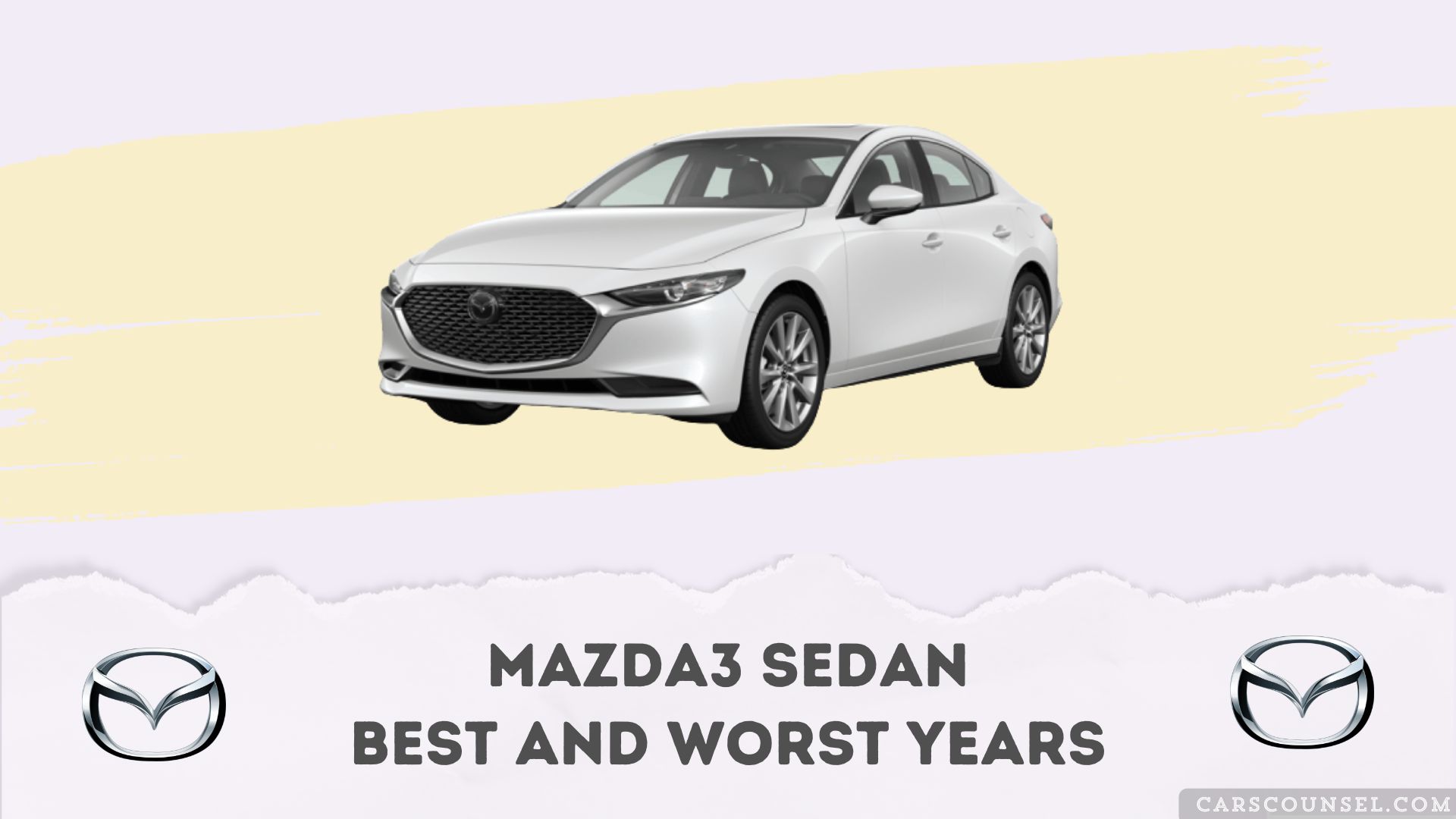
The best Mazda3 years are 2016 through 2018 and 2021 through 2023, offering mature SkyActiv reliability. Buyers should approach the 2010 and 2011 models carefully due to manual transmission clutch issues.
Rankings are comparative, and no compact car is flawless. Strict maintenance, rust prevention, and specialized inspections matter more than the specific model year when evaluating older examples.
Meaningful differences exist between the older MZR engines and the newer SkyActiv powertrains. The introduction of the 2.5-liter turbo and all-wheel drive in 2021 also created distinct configurations.
Quick Navigation
Best and Worst Mazda3 Years at a Glance
| Model Year | Verdict | Main Reason | Buyer Guidance |
|---|---|---|---|
| 2024-2025 | Too New to Judge | Latest models, limited long-term data | Await long-term reliability evidence |
| 2021-2023 | Best Choice | Mature 4th gen, SkyActiv reliability | Verify AWD and turbo maintenance |
| 2019-2020 | Good With Inspection | 2019 PCM recall for stalling | Verify PCM software update completion |
| 2016-2018 | Best Choice | Peak 3rd gen reliability, sorted tech | Inspect for standard wear |
| 2014-2015 | Good Choice | Early SkyActiv, solid engines | Check infotainment and brake wear |
| 2012-2013 | Good Choice | Introduction of SkyActiv 2.0L | Inspect for carbon buildup |
| 2010-2011 | Approach Carefully | Manual clutch failures, MZR engines | Test manual clutch, check for leaks |
| 2004-2009 | Approach Carefully | Rear subframe rust, aging parts | Inspect rear suspension heavily |
Key Takeaways
- Strongest choices are the 2016-2018 and 2021-2023 model years.
- Approach the 2010-2011 models carefully due to manual transmission clutch issues.
- The 2019 model requires verification of a powertrain control module software recall.
- First-generation models (2004-2009) require strict inspections for rear subframe rust.
- The 2021 model year introduced the available 2.5-liter turbo and all-wheel drive.
- Always verify the VIN for open recalls and structural rust campaigns.
- An independent pre-purchase inspection is essential for any older compact car.
How We Evaluated the Mazda3 Model Years
Analysis considers NHTSA records, manufacturer service bulletins, engine-specific reliability patterns, and long-term ownership costs.
Complaints and forum reports are not confirmed defects. A recall does not automatically make a year unreliable.
Recent models have limited long-term exposure. Best means comparatively stronger for the configuration, not flawless.
Best Mazda3 Years
2021-2023 (2.5L SkyActiv & 2.5L Turbo)
These years represent the most mature phase of the fourth-generation platform.
The standard 2.5-liter SkyActiv engine is highly reliable, while the optional turbo provides excellent performance.
Buyers should verify maintenance records, especially for the turbocharged and all-wheel-drive configurations.
2016-2018 (2.0L & 2.5L SkyActiv)
These third-generation models benefit from years of platform refinement and sorted electronics.
The SkyActiv powertrains are proven, and the manual transmission issues of earlier years were resolved.
They offer an excellent balance of modern safety features and long-term mechanical dependability.
Best Year by Buyer Type
Best Modern Alternative: 2021-2023 Mazda3
Offers premium interior materials, advanced driver aids, and the availability of all-wheel drive and turbocharged power.
Best Budget Option: 2014-2015 Mazda3
Provides the reliable SkyActiv engines and modern styling at a lower entry price, though aging infotainment systems require patience.
Years to Approach Carefully
2019-2020: Good With Inspection
The 2019 model year was subject to a NHTSA recall for powertrain control module software that could cause engine stalling.
Buyers must verify that the PCM software update has been completed by a dealer before purchase.
The 2020 model is mechanically identical but avoids the bulk of the first-year software glitches.
2010-2011 and 2004-2009: Approach Carefully
The 2010 and 2011 models with manual transmissions are prone to premature clutch wear and clutch pedal assembly failures.
First-generation models from 2004 through 2009 suffer from severe rear subframe and control arm rust.
This structural corrosion can lead to suspension separation, requiring intensive undercarriage inspections before purchase.
Common Mazda3 Problems
Manual Transmission Clutch Issues (2010-2011)
Owners of manual transmission models report premature clutch wear and clutch master cylinder failures.
The clutch pedal assembly can also crack, requiring replacement of the entire pedal bracket.
Rear Suspension and Subframe Rust (2004-2009)
First-generation models are highly susceptible to structural rust on the rear subframe and control arms.
Mazda issued extended coverage programs for this issue, but many older examples remain at risk of suspension failure.
PCM Software Stalling (2019)
A software error in the powertrain control module can cause the engine to stall unexpectedly while driving.
This safety issue was addressed through a mandatory dealer software flash.
Infotainment and Electrical Gremlins (2014-2016)
Early third-generation models experience freezing screens, ghost touches, and Bluetooth connectivity drops.
Software updates mitigate some issues, but the early Mazda Connect system remains frustrating for some users.
What to Check Before Buying a Used Mazda3
- Verify the VIN for open recalls, especially the 2019 PCM software campaign.
- Inspect the rear subframe, wheel arches, and rocker panels for structural rust on 2004-2013 models.
- Test the clutch pedal for stiffness, slipping, or unusual noises on manual transmission examples.
- Scan for stored diagnostic codes, even if the check engine light is off.
- Test the infotainment screen for dead zones or unresponsive touch inputs.
- Arrange an independent pre-purchase inspection by a qualified technician.
Related Buying Guides
- Mazda CX-30 best and worst years: A subcompact crossover alternative for buyers who prefer a higher ride height and available all-wheel drive over a traditional sedan.
- Mazda CX-50 best and worst years: A rugged, outdoors-focused SUV alternative for buyers who need more cargo space and off-road capability than the Mazda3 provides.
- Mazda CX-90 best and worst years: A large, three-row family SUV alternative for buyers who prioritize maximum passenger space and inline-six performance.
- Mazda RX-7 best and worst years: A historical sports car alternative for enthusiasts seeking rotary engine heritage and pure driving dynamics over daily practicality.
Frequently Asked Questions
Is the Mazda3 reliable?
The 2016-2018 and 2021-2023 models offer strong reliability. Early generations and specific manual transmission years require larger repair budgets due to clutch and structural rust issues.
What year of the Mazda3 is most dependable?
The 2016 through 2018 model years are the most dependable. They benefit from a mature third-generation platform, sorted SkyActiv powertrains, and resolved early-production electronic issues.
What year should you avoid?
No year requires strict avoidance, but approach the 2010-2011 manual models carefully. They suffer from premature clutch wear, and first-generation models require strict inspections for severe rear subframe rust.
What are the most common problems?
Common issues include manual transmission clutch failures on 2010-2011 models, rear subframe rust on 2004-2009 models, and a 2019 PCM software recall that can cause engine stalling.
How long does a Mazda3 last?
Longevity depends entirely on strict maintenance and rust prevention. Well-maintained SkyActiv examples can reach high mileage, provided the undercarriage is protected from road salt and corrosion.
Was there a 2019 Mazda3 engine stalling recall?
Yes, the 2019 model year was recalled for powertrain control module software that could cause the engine to stall. Buyers must verify the dealer software update is completed.
Which Mazda3 Year Should You Buy?
The 2016 through 2018 and 2021 through 2023 Mazda3 models offer the best combination of modern features, SkyActiv reliability, and sorted platform engineering.
Approach the 2010 and 2011 manual transmission models carefully, and always inspect older examples for severe structural rust.
Always verify the VIN, review the service history, and arrange an independent inspection before buying any used compact car.

