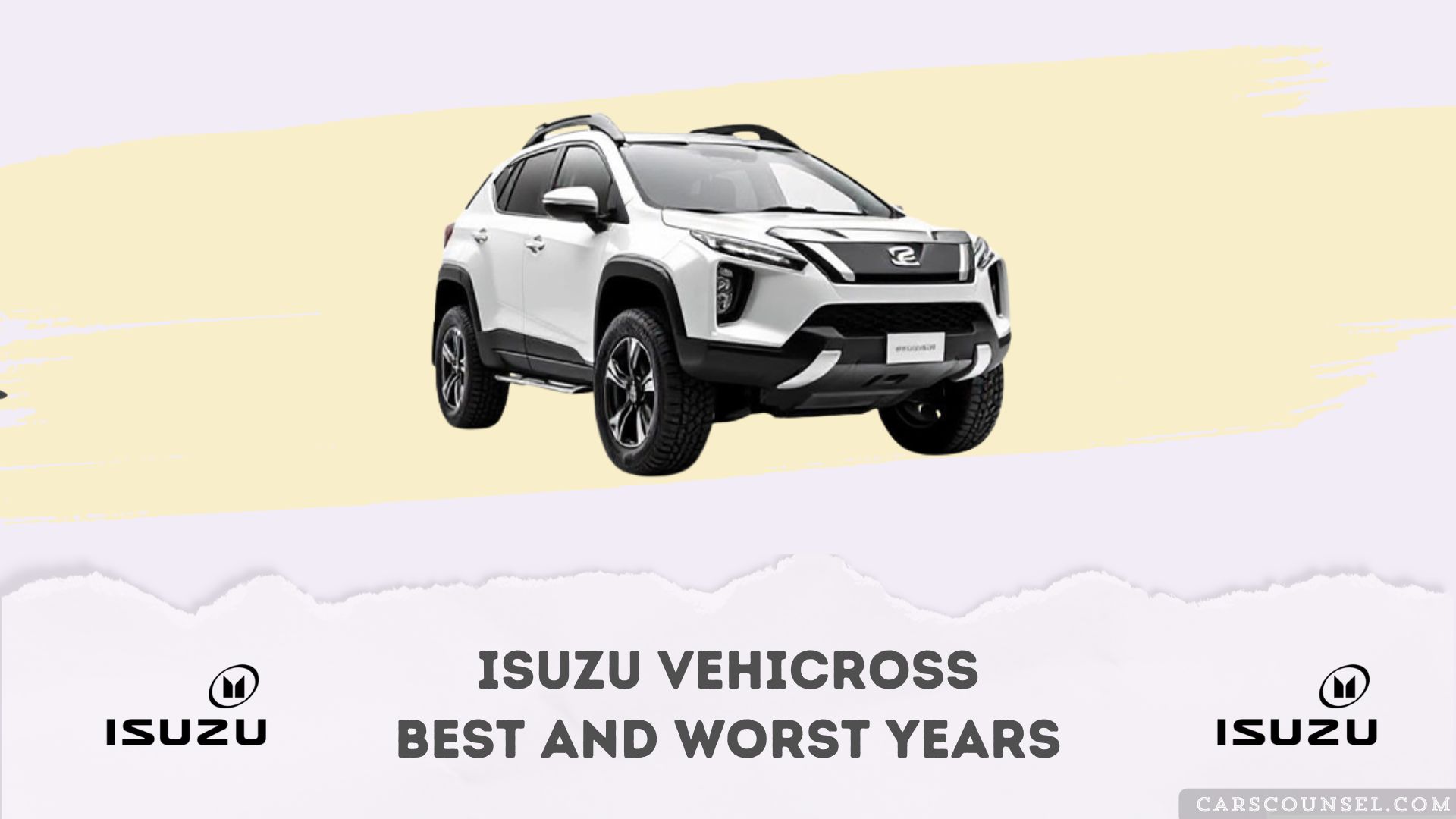
The best Isuzu VehiCross years are the entire 1999 through 2001 US production run. Because this rare SUV shares the same powertrain across all years, buyers should approach any example carefully, prioritizing structural condition over the specific model year.
Rankings for this discontinued off-roader are strictly comparative. Buyers searching for years to avoid will find that individual maintenance, rust prevention, and 4WD system health matter far more than the badge year.
Meaningful differences do not exist between the 1999, 2000, and 2001 models. The 3.5-liter V6 and BorgWarner Torque-on-Demand system remain constant, making pre-purchase inspections the ultimate deciding factor.
Quick Navigation
Best and Worst Isuzu VehiCross Years at a Glance
| Model Year | Verdict | Main Reason | Buyer Guidance |
|---|---|---|---|
| 1999-2001 | Good With Inspection | Discontinued model with severe parts scarcity. | Verify frame rust, TOD 4WD system, and ABS module health. |
Key Takeaways
- The 1999-2001 models are mechanically identical, making condition the primary deciding factor.
- Frame rust and compromised structural integrity are the most severe threats to these body-on-frame SUVs.
- The BorgWarner Torque-on-Demand (TOD) 4WD system requires specialized diagnostic testing.
- ABS module failures are common and expensive to repair due to extreme parts scarcity.
- Window regulators and multifunction switches frequently fail and require sourcing used or aftermarket parts.
- Always verify the complete VIN and arrange an independent inspection by a 4WD specialist.
How We Evaluated the Isuzu VehiCross Model Years
Our analysis considers NHTSA records, enthusiast community feedback, and the unique realities of owning a discontinued Isuzu. We evaluate the 3.5L V6, the GM-sourced transmission, and the severe impact of parts scarcity.
Complaints are not failure rates. A recall does not automatically make a year unreliable. Best means comparatively stronger, not flawless. For a rare collector vehicle, long-term survival depends entirely on meticulous storage and specialist maintenance.
Best Isuzu VehiCross Years
1999-2001 Isuzu VehiCross
The entire US production run of the VehiCross is highly desirable for off-road enthusiasts. These years feature the robust 3.5-liter V6 and an aggressive, short-overhang design that provides exceptional off-road capability.
Buyers must verify the condition of the custom BorgWarner TOD 4WD system. Proper maintenance of the drivetrain and suspension is critical for these rare machines.
Best Year by Buyer Type
Best Enthusiast Choice: 1999-2001 Isuzu VehiCross
For collectors seeking a unique piece of 1990s off-road history, the VehiCross offers unparalleled exclusivity. Its Recaro seats and striking design make it a standout, provided the chassis remains solid.
Years to Approach Carefully
Good With Inspection: 1999-2001 Isuzu VehiCross
While the entire production run is mechanically sound, these vehicles require careful inspection due to their age and discontinued status. Buyers must approach any example showing surface rust or modified suspension setups carefully.
Lifting the torsion bar front suspension drastically accelerates wear on ball joints and CV axles. Always prioritize stock, unmodified examples with verifiable service histories.
Isuzu VehiCross Reliability by Generation
First Generation (1999-2001 US Market)
The US-market VehiCross was produced exclusively between 1999 and 2001. It utilizes a shortened Isuzu Rodeo chassis, a 215-horsepower 3.5-liter V6, and a four-speed automatic transmission.
Following its discontinuation, Isuzu eventually exited the US passenger vehicle market entirely. This makes long-term factory support non-existent, forcing owners to rely on aftermarket fabricators and enthusiast networks.
Common Isuzu VehiCross Problems
Frame Rust and Corrosion
The body-on-frame chassis is highly susceptible to severe rust, particularly in the rear crossmembers and body mounts. A compromised frame can render the entire vehicle unsafe and financially unviable to repair.
Engine and Sensor Failures
The 3.5L V6 is generally robust but can suffer from failing ignition coils, clogged fuel injectors, or a bad crankshaft position sensor, leading to stalling.
Torque-on-Demand (TOD) 4WD Failures
The BorgWarner TOD system relies on complex sensors and actuators to distribute power. Owners frequently report system faults, flashing dashboard lights, and failure to engage four-wheel drive, requiring specialized diagnostic equipment.
ABS Module and Electrical Gremlins
The anti-lock brake modules on this era of Isuzu vehicles are prone to internal solder joint failures. Combined with failing multifunction switches, owners often experience erratic turn signals, cruise control loss, and brake warning lights.
Window Regulator and Interior Failures
The power window regulators are notorious for failing, leaving windows stuck in the down position. Sourcing replacement interior trim and specific electronic modules is incredibly difficult due to the low production volume.
What to Check Before Buying a Used Isuzu VehiCross
- Inspect the frame, body mounts, and rear crossmembers for severe rust or poorly executed patch jobs.
- Test the Torque-on-Demand 4WD system in all modes to ensure proper engagement.
- Verify the condition of the front torsion bars and check for lifted suspension modifications.
- Scan for ABS and TOD diagnostic codes using an Isuzu-compatible scanner.
- Check the operation of all power windows, turn signals, and cruise control functions.
- Arrange an independent inspection by a specialist familiar with vintage body-on-frame SUVs.
Related Buying Guides
- Toyota 4Runner best and worst years: A practical, mass-market off-road alternative for buyers who want rugged capability without the extreme financial risks of a discontinued, low-volume vehicle.
- Nissan Xterra years to avoid: A compact, body-on-frame alternative that offers similar trail-riding potential with significantly better parts availability and dealership support.
Frequently Asked Questions
Is the Isuzu VehiCross reliable?
The 3.5L V6 is robust, but the vehicle requires constant specialist attention. Traditional reliability metrics do not apply, and ownership is a massive mechanical undertaking due to extreme parts scarcity.
What engine is in the VehiCross?
It features a 3.5-liter DOHC V6 engine producing 215 horsepower. It is paired with a GM-sourced four-speed automatic transmission and a BorgWarner Torque-on-Demand four-wheel-drive system.
How many VehiCross SUVs were sold in the US?
Approximately 4,000 to 5,000 units were sold in the United States between 1999 and 2001. This extreme scarcity makes it one of the rarest modern production SUVs on the road today.
Why did Isuzu stop making the VehiCross?
The vehicle was always intended as a low-volume halo model to showcase Isuzu’s engineering. High production costs, slow sales, and the company’s eventual exit from the US passenger market ended production.
Are VehiCross parts hard to find?
Yes, bespoke body panels, custom electrical components, and specific TOD drivetrain parts are exceptionally rare. Owners rely on specialty fabricators, Isuzu truck parts, and the enthusiast community for repairs.
Can I daily drive an Isuzu VehiCross?
It is not recommended for daily driving due to the harsh ride quality, poor fuel economy, bespoke electrical gremlins, and the severe lack of dealership support or replacement body parts.
Choosing the Right Isuzu VehiCross Model Year
The 1999 through 2001 Isuzu VehiCross models are the only choices for US buyers. They represent a unique era of experimental, short-wheelbase off-road vehicle manufacturing.
Avoid any example with severe frame rust, compromised body mounts, or undocumented suspension lifts. The structural integrity of the chassis is the most critical factor in determining long-term viability.
Always verify the VIN and arrange an independent inspection. Checking the TOD 4WD system and electrical modules is essential for securing a capable and enjoyable classic off-roader.

