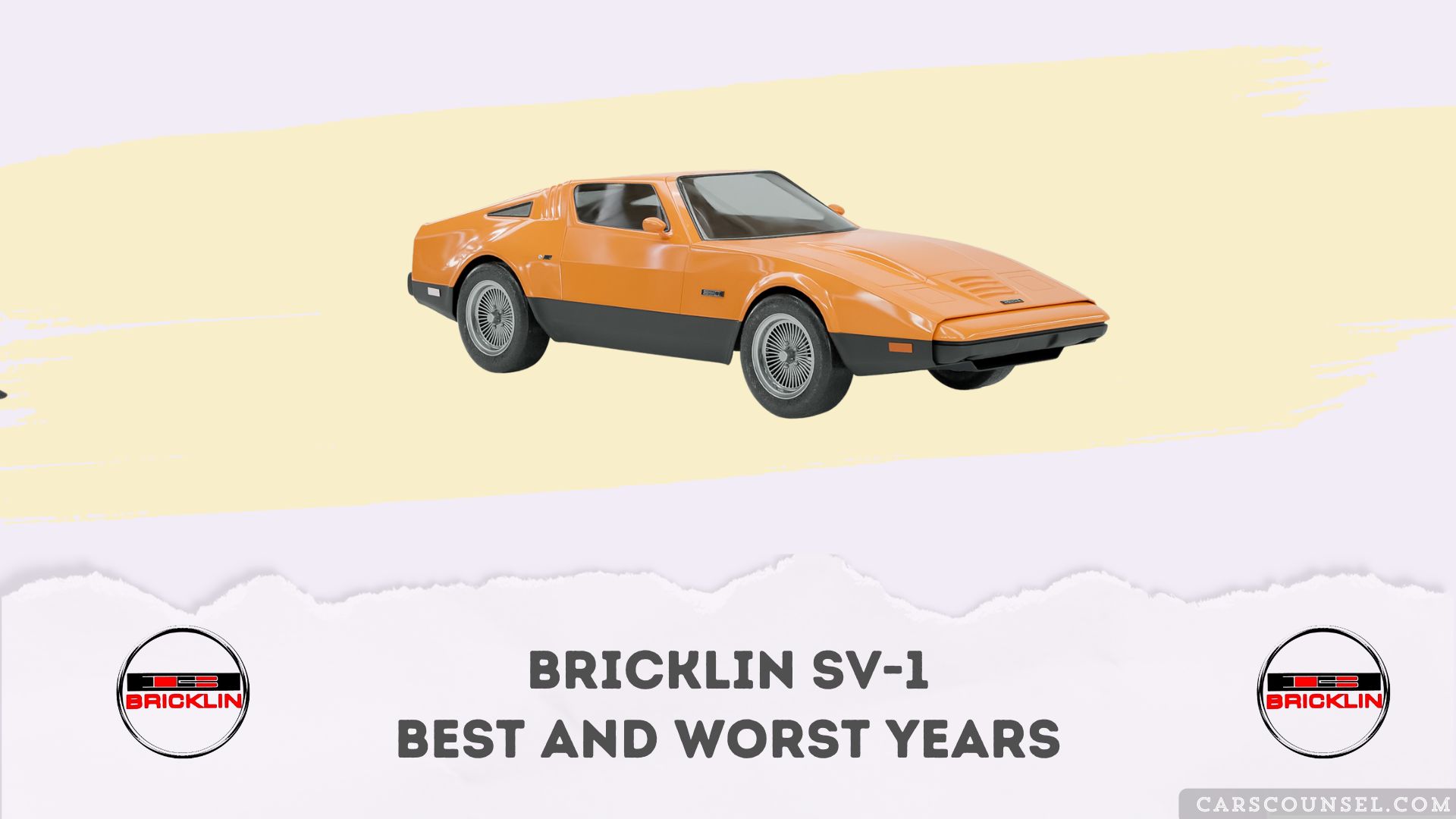
The best Bricklin SV-1 model year is 1975, which benefits from a more serviceable Ford V8 engine. Buyers should approach the 1974 model year carefully due to early production build flaws and an obscure AMC powertrain.
Rankings for rare classic cars remain comparative. No fifty-year-old boutique vehicle is flawless, and individual restoration quality, structural integrity, and specialized maintenance matter far more than the factory build year.
Meaningful differences exist between the two production years. The 1974 models use an AMC V8, while the 1975 models switched to a Ford V8, altering parts availability and long-term serviceability for collectors.
Quick Navigation
Best and Worst Bricklin SV-1 Years at a Glance
| Model Year | Verdict | Main Reason | Buyer Guidance |
|---|---|---|---|
| 1974 | Approach Carefully | AMC 360 V8 and early acrylic bonding failures. | Verify panel adhesion and inspect door hydraulics. |
| 1975 | Good With Inspection | Ford 351 V8 offers better serviceability. | Demand documentation of hydraulic and electrical sorting. |
Key Takeaways
- The 1975 model is the strongest choice, featuring the more reliable and serviceable Ford 351 V8 engine.
- Buyers researching years to avoid should note that the 1974 model requires extreme vigilance regarding early build quality.
- The acrylic-fiberglass body panels are prone to severe delamination if the original bonding agent failed.
- The heavy gullwing doors rely on a complex hydraulic system that frequently fails, trapping occupants.
- Always verify the vehicle’s restoration history and arrange an independent inspection by a classic car specialist.
How We Evaluated the Bricklin SV-1 Model Years
Our analysis considers original factory specifications, powertrain changes, and long-term collector ownership patterns. We evaluate body material integrity, hydraulic door mechanisms, and the critical importance of specialized restoration.
Consumer complaints and historical reports highlight recurring engineering flaws. Individual condition and service history dictate value. Best means comparatively stronger for collectors, not flawless.
Best Bricklin SV-1 Years
1975: Good With Inspection
The 1975 model year represents a slight improvement in powertrain serviceability. Bricklin switched from the AMC 360 to the Ford 351 Windsor V8, making engine parts significantly easier for modern collectors to source and maintain.
Despite the improved engine, the 1975 model still suffers from the fundamental engineering compromises of the SV-1. The heavy steel chassis and acrylic body panels require meticulous, climate-controlled storage to prevent structural and cosmetic deterioration.
Best Year by Buyer Type
Best Enthusiast Choice: 1975 Ford V8
The 1975 model with the Ford 351 V8 is the definitive enthusiast choice. It offers the iconic gullwing styling and safety-focused wedge design while providing a powertrain that classic Ford mechanics can easily understand and repair.
Years to Approach Carefully
1974: Approach Carefully
The inaugural 1974 model year is the most challenging for collectors. It relies on the AMC 360 V8, an engine that is much harder to source parts for today compared to the later Ford V8.
Furthermore, early 1974 production suffered from severe teething issues regarding the acrylic-to-fiberglass bonding agent. Many early cars experienced catastrophic body panel delamination when exposed to direct sunlight and high heat.
Bricklin SV-1 Reliability by Generation
First Generation (1974-1975)
The SV-1 spans a single, short-lived generation built on a dedicated steel tube-frame chassis. Malcolm Bricklin, who previously founded Subaru of America, envisioned it as the ultimate safety vehicle.
It featured energy-absorbing bumpers and a reinforced passenger cell. While it shares no meaningful architectural components with mainstream vehicles, its powertrain sourcing shifted dramatically between its two production years.
Common Bricklin SV-1 Problems
Body and Structural Problems
The most critical issue is the acrylic-fiberglass body construction. The original bonding agent used to fuse the acrylic color layer to the fiberglass substrate frequently failed, causing panels to bubble, warp, or separate entirely.
Gullwing Door Mechanisms
The hydraulic struts and pneumatic rams that operate the heavy 90-pound gullwing doors are notorious for failing. A blown seal or weak compressor can leave the doors stuck open or, worse, trap occupants inside the cabin.
Electrical and Cooling Problems
The SV-1’s tight engine bay and heavy weight lead to chronic overheating issues. Additionally, the 1970s-era electrical wiring and pop-up headlight motors frequently degrade, causing frustrating gremlins and reduced visibility.
What to Check Before Buying a Used Bricklin SV-1
- Inspect every acrylic body panel for bubbling, warping, or signs of delamination from the fiberglass substrate.
- Test the gullwing door hydraulic system multiple times to ensure the compressor and struts hold pressure.
- Verify the engine configuration and check for severe oil leaks or overheating in the cramped engine bay.
- Examine the steel tube chassis for hidden structural rust, particularly in the floor pans and suspension mounting points.
- Test the pop-up headlights, power windows, and interior gauges for proper 1970s electrical functionality.
- Arrange an independent pre-purchase inspection with a specialist familiar with boutique classic cars.
Related Buying Guides
- Yugo GV best and worst years: A later Malcolm Bricklin automotive venture, offering a completely different budget-friendly hatchback experience for buyers interested in the history of unconventional American car imports.
Frequently Asked Questions
Which Bricklin SV-1 year is the most desirable?
The 1975 model year is the most desirable. It features the Ford 351 V8 engine, which offers vastly superior parts availability and serviceability for modern collectors compared to the 1974 AMC V8.
Is the Bricklin SV-1 reliable?
The SV-1 is a complex, low-production classic car, not a reliable daily driver. It requires constant, meticulous maintenance and specialized knowledge to keep the hydraulic doors and acrylic body panels functioning correctly.
What is the most common Bricklin SV-1 problem?
Hydraulic door failures and acrylic body panel delamination are the most common problems. The original bonding agent failed in the sun, and the heavy gullwing doors frequently overwhelm the factory hydraulic struts.
Will the Bricklin SV-1 hold its value?
Yes, surviving, well-restored examples have seen steady appreciation. They are highly sought after by collectors as a unique, eccentric piece of 1970s American automotive history and Malcolm Bricklin’s safety vision.
Does the SV-1 share parts with other cars?
The 1975 model shares its 351 V8 engine and some automatic transmission components with classic Ford trucks and cars of the era. However, the body, chassis, and hydraulic systems are entirely unique.
Should I buy a used Bricklin SV-1?
You should only buy an SV-1 if you have access to a classic car specialist and a substantial restoration budget. Individual condition, documented hydraulic repairs, and flawless acrylic body panels are critical.
Choosing the Right Bricklin SV-1 Model Year
The 1975 model year offers the ultimate classic SV-1 experience, delivering the iconic gullwing styling and the serviceable Ford 351 V8 engine. Buyers should approach the 1974 models with extreme caution.
Because these are fifty-year-old boutique vehicles, individual condition and comprehensive restoration records dictate the car’s true value. Never finalize a purchase without verifying the body panel adhesion and arranging an independent specialist inspection.