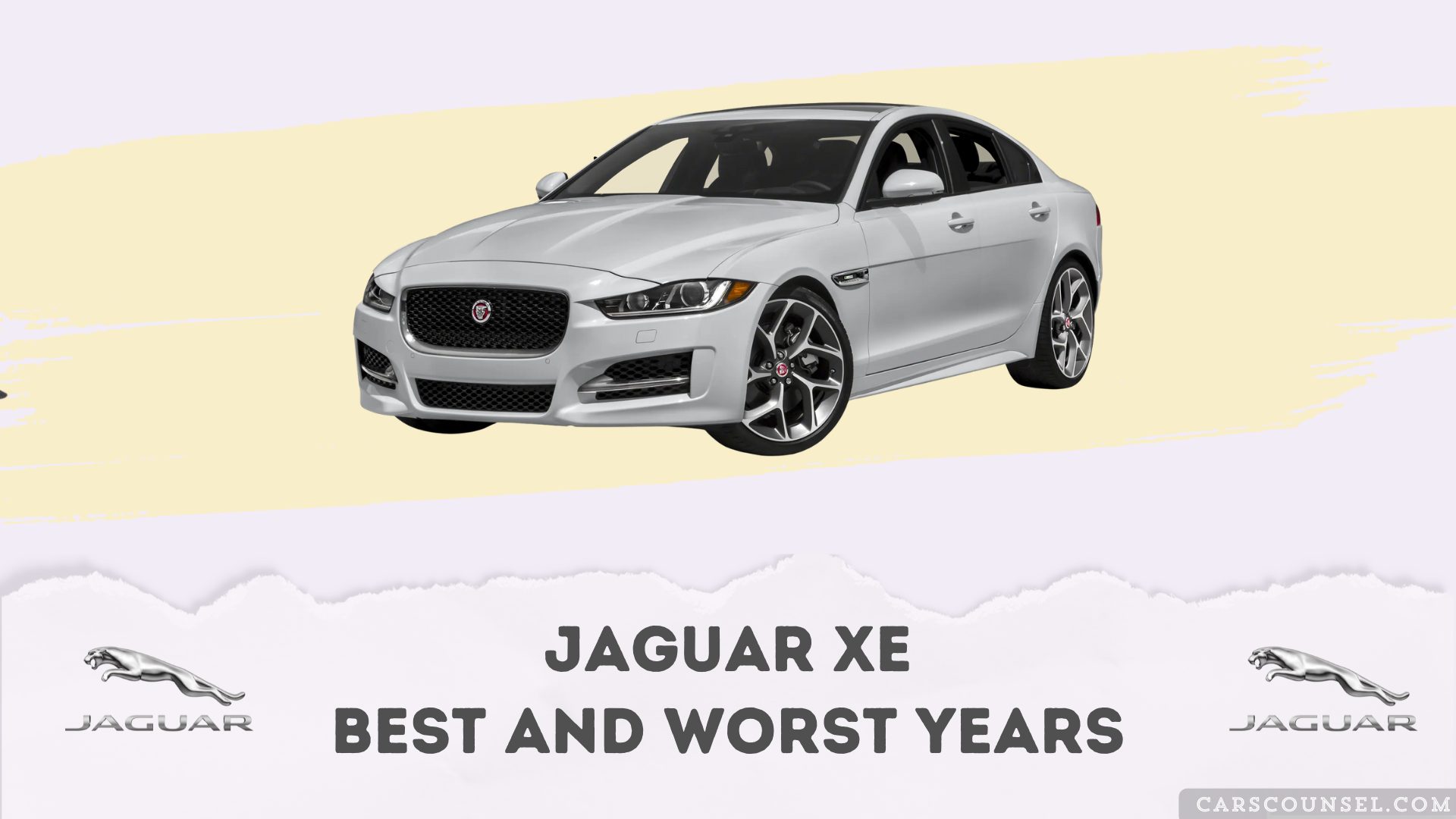
The best US-market Jaguar XE years are 2019 and 2020. These final production years offer the most sorted experience with fewer powertrain complaints. Approach 2017 models carefully due to first-year recalls and timing chain concerns.
Rankings are comparative within the compact luxury segment. Because the US model run ended in 2020, no year is flawless. Long-term dependability relies heavily on strict maintenance and verifying recall completion.
Meaningful differences exist between early and late models. The 2020 model introduced a mild-hybrid system and updated infotainment, while earlier years used conventional turbocharged or supercharged engines without the revised electrical architecture.
Quick Navigation
Best and Worst Jaguar XE Years at a Glance
| Model Year or Range | Verdict | Main Reason | Buyer Guidance |
|---|---|---|---|
| 2020 | Best Late-Generation Choice | Most sorted, updated tech | Verify mild-hybrid system maintenance |
| 2019 | Good Choice | Improved infotainment, fewer complaints | Inspect cooling system components |
| 2018 | Good With Inspection | Better than debut year | Check for timing chain service |
| 2017 | Approach Carefully | First US year, multiple recalls | Verify all recall repairs |
Key Takeaways
- Strongest choices: 2019 and 2020 Jaguar XE models.
- Caution years: 2017 models require verification of early safety recalls.
- Powertrain distinction: 2020 models use a mild-hybrid system, while earlier years use conventional setups.
- Major concern: Cooling system plastic components and early timing chain wear.
- Recent limitation: The US model was discontinued after 2020.
- Always verify the VIN for open safety recalls.
- Demand a pre-purchase inspection focusing on fluid leaks and electrical gremlins.
How We Evaluated the Jaguar XE Model Years
Our analysis examines NHTSA records, manufacturer service campaigns, and ownership patterns. We help buyers understand which model years to avoid and which offer the best experience.
Consumer complaints are not confirmed defects. A recall does not automatically make a vehicle unreliable. Because the US model run ended in 2020, long-term data is established.
Best Jaguar XE Years
2020: Best Late-Generation Choice
The 2020 model year represents the end of the US production run. By this time, Jaguar had resolved early assembly quirks, resulting in a highly refined compact sedan.
The updated mild-hybrid powertrain and revised infotainment system proved robust. Owners report excellent driving dynamics and minimal electrical complaints, making this the safest used purchase.
2019: Good Choice
The 2019 model year received significant mid-cycle updates. Jaguar improved the interior materials, upgraded the digital instrument cluster, and refined the suspension tuning for better ride quality.
While not quite as sorted as the final year, the 2019 XE avoids the major first-year recalls. It remains a strong choice for buyers seeking modern luxury.
Best Year by Buyer Type
Best Performance Configuration
Buyers seeking maximum acceleration should target 2018 or 2019 models equipped with the supercharged 3.0-liter V6. Jaguar discontinued this engine after 2019 in favor of four-cylinder efficiency.
Years to Approach Carefully
2017: Approach Carefully
The 2017 launch year in the US saw several major service campaigns. Issues included potentially faulty fuel rails, power steering hoses, and seatbelt pretensioner assemblies.
These are serious safety concerns that require immediate dealer attention. Buyers must verify that all open recalls were performed before considering any first-year example.
2018: Good With Inspection
The 2018 model carries over with similar early-production caveats. While mechanically sound, some owners report lingering infotainment bugs and minor cooling system seepage.
These are not catastrophic failures, but they warrant a thorough pre-purchase inspection. Ensure the vehicle has a complete service history from a certified Jaguar technician.
Worst Jaguar XE Years
No US-market year earns a strict Avoid verdict. However, the 2017 model year is the most troublesome. It joins a lineage of compact Jaguar vehicles, though its US debut was rocky.
Common Jaguar XE Problems
Cooling System Leaks
Owners frequently report cracks in plastic cooling system components. The thermostat housing and coolant expansion tank are particularly vulnerable to heat cycling and age-related degradation.
If these plastic housings fail, the engine can rapidly overheat. Buyers must inspect the coolant reservoir for discoloration and verify that updated aluminum components were installed.
Timing Chain Wear
Early Ingenium turbocharged four-cylinder engines can experience premature timing chain stretch. This issue typically manifests as a rattling noise during cold starts or check engine lights.
Replacing the timing chain is an expensive, labor-intensive repair. Buyers should request maintenance records proving the use of correct oil specifications to minimize chain wear.
Electrical Gremlins
The InControl infotainment system in earlier models is prone to freezing or rebooting unexpectedly. Software updates from the dealer can improve stability, but hardware failures still occur.
What to Check Before Buying a Used Jaguar XE
- Verify the VIN for open recalls, especially fuel system campaigns.
- Review maintenance records for strict oil change intervals.
- Inspect plastic cooling system housings for stress cracks.
- Test the infotainment screen for freezing or rebooting.
- Listen for timing chain rattle during cold starts.
- Arrange a pre-purchase inspection by a qualified technician.
Related Buying Guides
- Jaguar XF best and worst years: A larger executive sedan that offers more rear passenger space and a smoother ride for buyers who find the XE too compact.
- Jaguar F-Pace best and worst years: A performance-oriented luxury SUV for enthusiasts who want Jaguar driving dynamics but require practical cargo capacity and all-weather ground clearance.
- Jaguar F-Type best and worst years: A dedicated sports car for buyers who prioritize raw acceleration and aggressive styling over daily commuting practicality and rear-seat usability.
Frequently Asked Questions
Is the Jaguar XE reliable?
The US-market XE has mixed reliability. Later years are much better, but maintenance costs remain high. Strict adherence to service intervals is mandatory for long-term dependability.
What year of the Jaguar XE is most dependable?
The 2020 model year is the most dependable. As the final US production year, it benefits from resolved early assembly quirks and an updated mild-hybrid powertrain.
What year should you avoid?
No US year is strictly avoided, but approach 2017 models carefully. As the first US production year, it is more prone to cooling system and fuel system recalls.
What are the most common problems?
The most frequent issues involve cooling system leaks, early timing chain wear on four-cylinder models, and intermittent infotainment screen failures.
Was the Jaguar XE sold with a V6?
Yes, earlier US models offered a supercharged 3.0-liter V6. Jaguar discontinued this engine for the 2020 model year, replacing it exclusively with a turbocharged four-cylinder mild-hybrid setup.
How long does a Jaguar XE last?
Well-maintained examples can reach high mileage. Longevity depends entirely on strict adherence to cooling system updates, timely oil changes, and addressing minor electrical gremlins promptly.
Which Jaguar XE Year Should You Buy?
Target the 2019 and 2020 model years for the most sorted ownership experience. These final production years offer the best balance of luxury features and proven mechanical durability.
Approach 2017 models with realistic expectations regarding first-year service campaigns. Always verify the VIN for open recalls and arrange an independent pre-purchase inspection before finalizing your purchase.