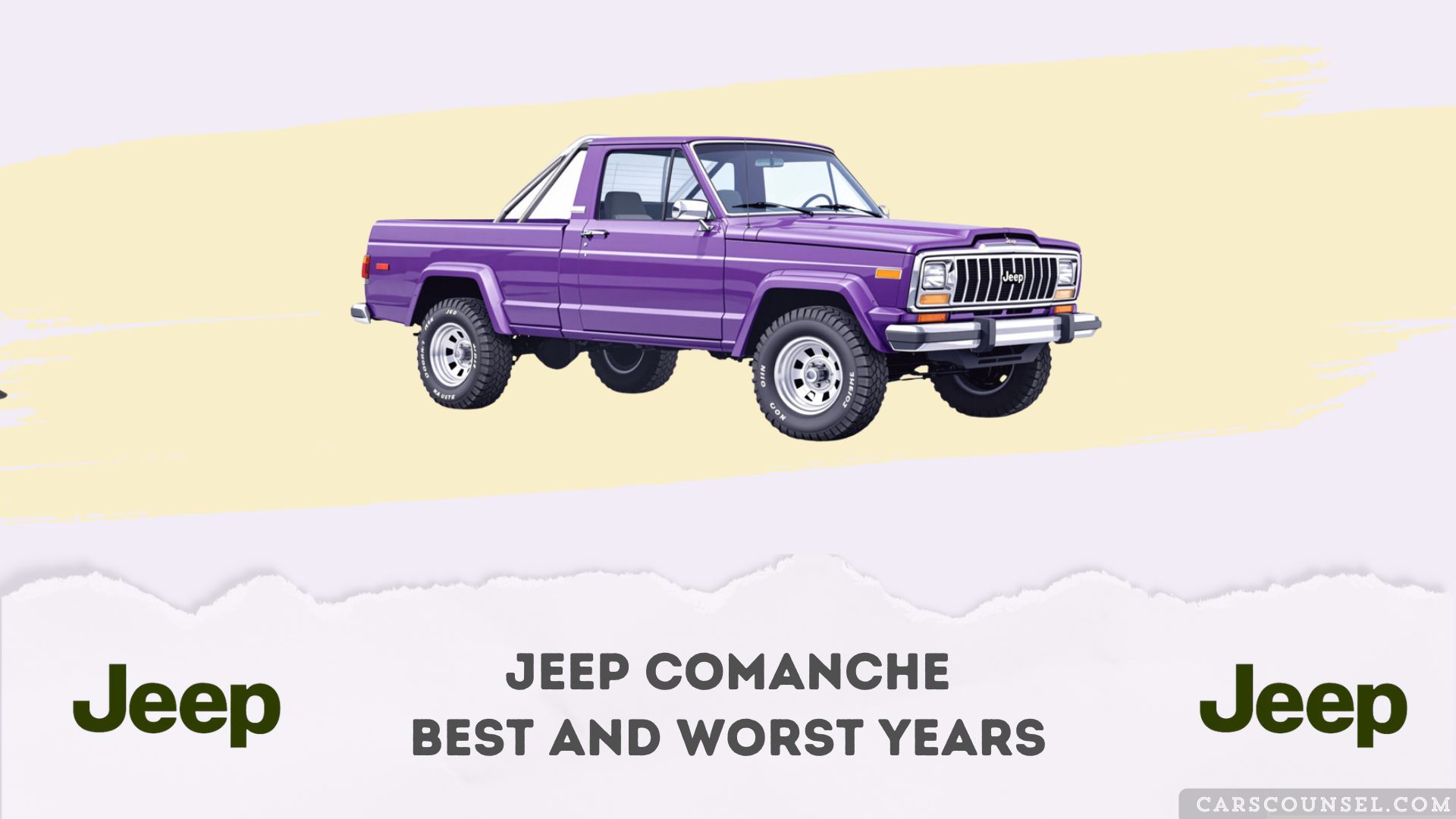
The best Jeep Comanche model years are 1991 and 1992, featuring the highly desirable 4.0L High Output engine and robust AX-15 manual or AW4 automatic transmissions. Buyers should approach the 1986 model year carefully, specifically avoiding the problematic 2.8L GM V6 configuration.
Rankings for classic compact trucks remain comparative. No thirty-year-old vehicle is flawless, and individual maintenance, rust prevention, and modifications matter far more than the factory build year.
Meaningful differences exist across the powertrains and transmissions. The transition from Renix to Chrysler fuel injection and the upgrade from the fragile BA-10/5 to the AX-15 manual transmission define the best examples.
Quick Navigation
Best and Worst Jeep Comanche Years at a Glance
| Model Year Range | Verdict | Main Reason | Buyer Guidance |
|---|---|---|---|
| 1991-1992 | Best Choice | 4.0L High Output engine and strong AX-15/AW4 transmissions. | Demand strict maintenance records and inspect for frame rust. |
| 1990 | Good Choice | 4.0L Renix engine paired with the upgraded AX-15/AW4. | Verify transmission swap history if equipped with a manual. |
| 1988-1989 | Good With Inspection | 4.0L Renix engine, but early manuals use the weak BA-10/5. | Prioritize automatic AW4 examples or verify manual transmission condition. |
| 1987 | Approach Carefully | First year of the 4.0L engine, plagued by the fragile BA-10/5. | Inspect the manual transmission and early Renix wiring harness. |
| 1986 | Approach Carefully | Unique front clip; the 2.8L GM V6 is an Avoid configuration. | Strictly avoid the 2.8L V6; prioritize the 2.5L four-cylinder. |
Key Takeaways
- The 1991-1992 models are the strongest choices, offering the 190-horsepower 4.0L High Output engine.
- Buyers researching years to avoid should strictly bypass any Comanche equipped with the 2.8L GM V6.
- The BA-10/5 manual transmission used from 1987 to mid-1989 is fragile and prone to failure.
- The AX-15 manual and AW4 automatic transmission are highly robust and desirable.
- The 1986 model features a unique front clip and firewall, complicating later 4.0L engine swaps.
- Always inspect the unibody frame rails and bed mounts for severe structural rust.
- An independent pre-purchase inspection by a classic Jeep specialist is mandatory.
How We Evaluated the Jeep Comanche Model Years
Our analysis considers factory powertrain configurations, transmission durability, and long-term enthusiast ownership patterns. We evaluate engine variations, fuel injection systems, and the critical importance of rust prevention for unibody trucks.
Consumer complaints and forum reports highlight recurring mechanical flaws. Individual condition and service history dictate value and reliability. Best means comparatively stronger for collectors, not flawless.
Best Jeep Comanche Years
1991-1992: Best Choice
The final two years of the Comanche represent the pinnacle of its development. Jeep replaced the complex Renix fuel injection with a more conventional Chrysler OBD-I system and introduced the 4.0L High Output engine, producing 190 horsepower.
These models benefit from the robust AX-15 manual and AW4 automatic transmissions as standard equipment. While they remain the most desirable and valuable examples, buyers must still carefully inspect the unibody frame for structural rust.
1990: Good Choice
The 1990 model year bridges the gap between the early Renix era and the final High Output models. It retains the 173-horsepower 4.0L Renix engine but finally receives the heavy-duty AX-15 manual transmission, eliminating the fragile BA-10/5.
These trucks offer excellent drivability and parts availability. However, the older Renix wiring harnesses can become brittle with age, requiring careful inspection of the engine bay electronics.
Best Jeep Comanche Year by Buyer Type
Best Enthusiast Choice: 1991-1992 4.0L High Output
The 1991-1992 models with the 4.0L High Output engine and AX-15 manual transmission are the ultimate configuration for off-road builds and daily driving. They offer the best blend of classic styling and reliable, modernized powertrain components.
Years to Approach Carefully
1988-1989: Good With Inspection
These years feature the desirable 4.0L inline-six with Renix fuel injection. However, manual transmission examples from this era are still equipped with the Peugeot-sourced BA-10/5 gearbox, which is notorious for fragile shift forks and case failures.
Buyers should prioritize examples equipped with the robust AW4 automatic transmission. If a manual is preferred, verify whether the previous owner has already swapped in the stronger AX-15 unit.
1987: Approach Carefully
The 1987 model year marks the introduction of the legendary 4.0L inline-six. Unfortunately, it was initially paired with the weak BA-10/5 manual transmission, which struggles to handle the engine’s torque output reliably.
Additionally, first-year Renix fuel injection systems can suffer from sensor and wiring degradation. Buyers must be prepared for potential electrical troubleshooting and transmission maintenance.
1986: Approach Carefully (Avoid 2.8L V6)
The inaugural 1986 model year features a unique front clip, hood, and firewall that differ from all subsequent years, making later 4.0L engine swaps notoriously difficult. Furthermore, the optional 2.8L GM V6 is widely considered an Avoid configuration.
Buyers should strictly seek out the 2.5L AMC four-cylinder examples if purchasing a 1986 model. Even then, the unique body panels and early electrical gremlins demand a thorough specialist inspection.
Worst Jeep Comanche Years
Avoid the 2.8L GM V6 Configuration (1986-1988)
While not limited to a single year, the 2.8L GM V6 engine option available in early Comanches is a configuration to strictly avoid. It produces sluggish performance, suffers from cooling issues, overheating, and lacks the legendary durability of the AMC inline engines.
Finding replacement parts for this specific GM V6 is also more difficult than sourcing components for the ubiquitous AMC 2.5L and 4.0L powerplants. Always verify the engine code before purchasing an early model.
Jeep Comanche Reliability by Generation
First Generation (1986-1992)
The Comanche spans a single generation based on the XJ Cherokee platform, utilizing a unibody chassis with a bolt-on rear subframe. This shared architecture means the Comanche shares its core powertrains and suspension components with the contemporary Cherokee.
While sharing architecture does not mean they share identical defects, the unibody design makes both vehicles highly susceptible to frame rust. The rear bed mounts and unibody rails require strict rust prevention to maintain structural integrity.
Common Jeep Comanche Problems
Transmission Failures (BA-10/5)
The Peugeot-sourced BA-10/5 manual transmission used from 1987 to mid-1989 is the most significant mechanical weak point. It is prone to shift fork breakage and main case cracking under the torque of the 4.0L inline-six.
Frame and Unibody Rust
The XJ unibody platform is notorious for rusting from the inside out. The rear leaf spring mounts, bed floor supports, and front frame rails are critical structural areas that can compromise the entire vehicle if severely corroded.
Renix Electrical Gremlins
The 1987-1990 Renix fuel injection system relies on complex sensors and a specific wiring harness. Over decades of heat cycling, the brittle wiring and failing grounds can cause rough idling, stalling, and erratic gauge behavior.
Cooling System Neglect
The 4.0L inline-six requires a pristine cooling system to prevent warping the cylinder head. Neglecting the radiator, water pump, and coolant flushes can lead to catastrophic engine failure.
Cracked Exhaust Manifolds
The factory cast-iron exhaust manifolds on the 4.0L engines are prone to warping and cracking. This leads to exhaust leaks, ticking noises, and potentially damaged cylinder head studs if left unaddressed over time.
What to Check Before Buying a Used Jeep Comanche
- Verify the engine and transmission combination, strictly avoiding the 2.8L GM V6 and BA-10/5 manual.
- Inspect the unibody frame rails, rear bed mounts, and floor pans for severe structural rust.
- Check the Renix wiring harness (1987-1990) for brittle insulation, spliced wires, and poor grounds.
- Examine the 4.0L exhaust manifold for cracks and inspect the cylinder head studs for stretching.
- Test the 4WD system, including the transfer case engagement and front axle vacuum disconnect.
- Arrange an independent pre-purchase inspection with a classic Jeep specialist.
Related Buying Guides
- Jeep Gladiator best and worst years: The modern spiritual successor to the Comanche, offering contemporary pickup utility and reliability with classic Jeep styling cues.
- Jeep Grand Wagoneer best and worst years: A classic luxury alternative for buyers who want vintage Jeep heritage and woodgrain styling, though it lacks the compact pickup utility of the Comanche.
Frequently Asked Questions
Which Jeep Comanche year is the most desirable?
The 1991 and 1992 model years are the most desirable. They feature the 190-horsepower 4.0L High Output engine, the robust AX-15 manual transmission, and a more reliable Chrysler fuel injection system.
Is the Jeep Comanche reliable?
A well-maintained Comanche with the 4.0L inline-six and AX-15 or AW4 transmission is remarkably reliable. However, early models with the BA-10/5 manual or GM V6 suffer from significant mechanical flaws.
What is the most common Jeep Comanche problem?
Structural rust is the most common and severe problem. The unibody frame rails and rear bed mounts are highly susceptible to corrosion, which can compromise the truck’s structural integrity and safety.
Will the Jeep Comanche hold its value?
Yes, clean, rust-free Comanches, especially the 1991-1992 High Output models, have seen massive appreciation. They are highly sought after by collectors and off-road enthusiasts as classic, compact utility vehicles.
Does the Comanche share parts with the Cherokee?
Yes, the Comanche is built on the XJ Cherokee platform. They share the 4.0L inline-six engine, transmissions, suspension components, and interior parts, making mechanical restoration and parts sourcing relatively easy.
Should I buy a used Jeep Comanche?
You should only buy a Comanche if you can find a rust-free example with the preferred 4.0L engine and AX-15 or AW4 transmission. Individual condition and rust prevention are far more important than the specific model year.
Choosing the Right Jeep Comanche Model Year
The 1991 and 1992 model years offer the ultimate classic Comanche experience, delivering the 4.0L High Output engine and robust transmissions. Buyers should approach early models carefully, strictly avoiding the 2.8L GM V6 and fragile BA-10/5 manual.
Because these are thirty-year-old unibody trucks, individual condition and comprehensive rust prevention dictate the vehicle’s true value. Never finalize a purchase without an independent inspection from a qualified classic Jeep specialist.

