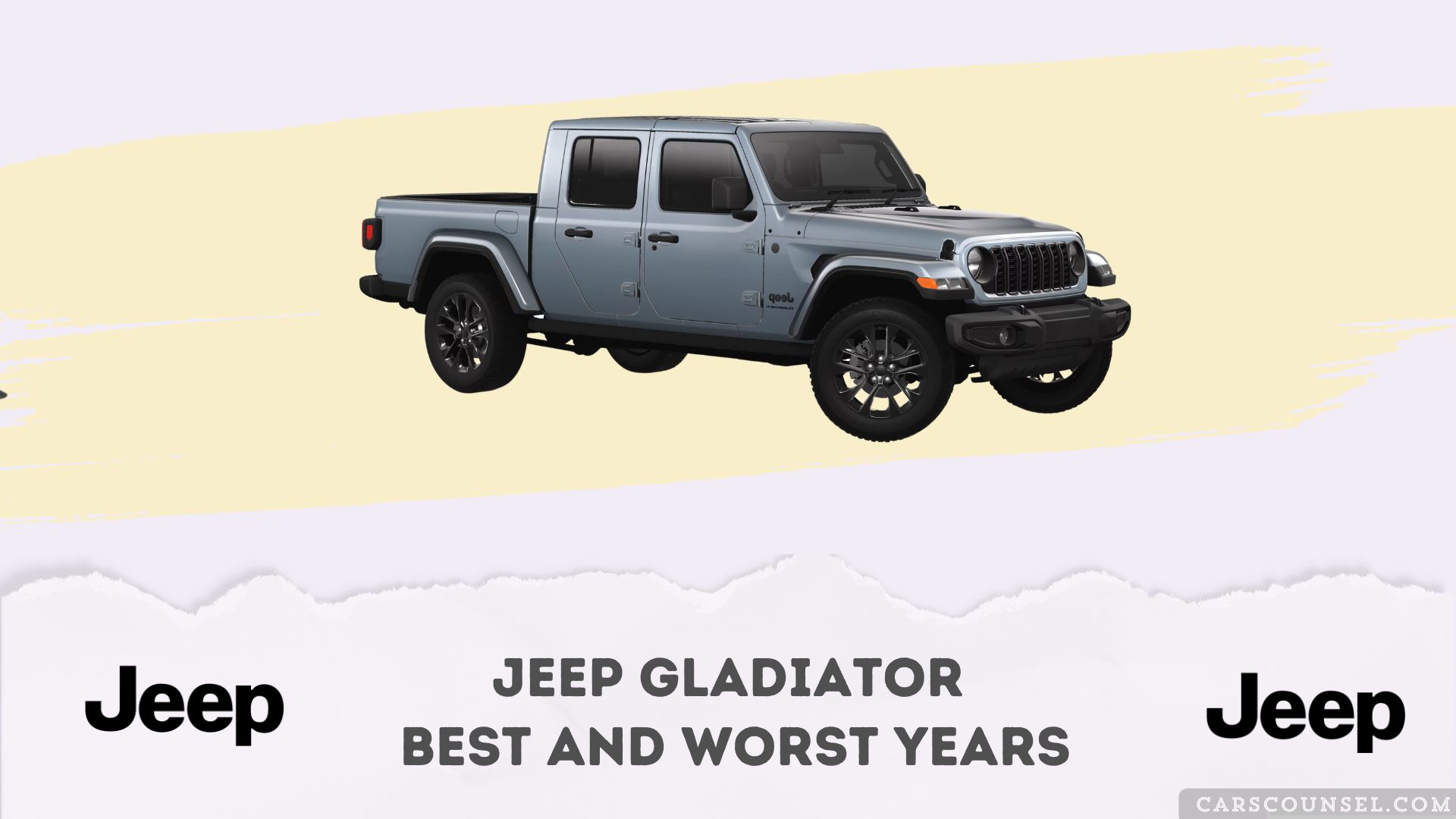
The 2022 and 2023 Jeep Gladiator model years offer the best combination of reliability and updated features for used buyers. Conversely, the inaugural 2020 model year suffers from numerous recalls and steering complaints, making it a year to avoid.
These rankings are comparative, meaning no used truck is entirely flawless. Long-term reliability heavily depends on previous ownership care, routine maintenance, and whether all open manufacturer recalls were properly addressed before the vehicle changed hands.
Reliability also varies by powertrain. The standard V6 engine generally outlasts the complex mild-hybrid eTorque system. Buyers must also weigh the off-road focused trims against daily driving comfort when selecting a specific configuration.
Quick Navigation
Best and Worst Jeep Gladiator Years at a Glance
| Model Year | Verdict | Main Reason | Buyer Guidance |
|---|---|---|---|
| 2020 | Avoid | First-year defects and steering issues | Skip unless heavily discounted and repaired |
| 2021 | Approach Carefully | Better than 2020, but early risks remain | Verify recall completion and steering feel |
| 2022 | Best Choice | Mid-cycle refresh and improved electronics | Excellent choice for most used buyers |
| 2023 | Best Choice | Carryover reliability with mature production | Highly recommended for towing and off-roading |
| 2024-2025 | Too New to Judge | Limited long-term ownership data | Inspect thoroughly and check for early bulletins |
Key Takeaways
- The 2022 and 2023 model years provide the most dependable ownership experience with updated infotainment systems.
- Buyers should avoid the 2020 launch year due to a high volume of steering and electrical complaints.
- The standard 3.6-liter V6 engine is generally more reliable than the eTorque mild-hybrid configuration.
- Solid front axle designs require careful inspection for steering wander and suspension wear.
- Always verify that all open manufacturer recalls have been completed before finalizing your purchase.
How We Evaluated the Jeep Gladiator Model Years
Our analysis reviews official manufacturer recalls, government safety investigations, and technical service bulletins. We also track consumer complaint patterns to identify recurring mechanical failures across different production years.
Complaints alone do not equal confirmed defects, and a single recall does not automatically ruin a model year. We weigh the severity, repair complexity, and frequency of each reported issue.
Recent model years naturally have fewer complaints due to limited road exposure. Therefore, we group the newest releases separately until sufficient long-term ownership data becomes available for accurate evaluation.
Best Jeep Gladiator Years
2022 Jeep Gladiator
The 2022 model year marks a significant turning point for the Gladiator lineup. Jeep introduced a major interior refresh, upgrading the infotainment system and improving overall cabin material quality.
Mechanically, early production bugs from the launch year were largely resolved. The standard eight-speed automatic transmission operates smoothly, and the traditional 3.6-liter V6 remains a dependable workhorse for daily driving.
2023 Jeep Gladiator
Building on the improvements of the previous year, the 2023 Gladiator benefits from mature assembly line processes. Complaint volumes remain remarkably low compared to the initial launch window.
This year is an excellent choice for buyers needing maximum towing capability. The chassis feels well-sorted, and the available off-road packages retain their rugged utility without sacrificing highway manners.
Best Year by Buyer Type
Best Overall Choice
The 2023 model year stands out as the best overall choice. It combines the refined interior technology introduced in 2022 with the most stable production quality of the current generation.
Best Older Budget Option
If you must look at earlier models, a well-maintained 2021 example can serve as a budget alternative. However, buyers must be vigilant about verifying steering component replacements and recall status.
Years to Approach Carefully
2021 Jeep Gladiator
The 2021 model year shows notable improvement over the launch year, but it still carries some early-generation baggage. Some owners report lingering issues with the mild-hybrid eTorque system stalling.
Steering wander at highway speeds also appears in complaint databases. While not universally problematic, these trucks require a thorough pre-purchase inspection to ensure the suspension geometry remains within factory specifications.
Worst Jeep Gladiator Years
2020 Jeep Gladiator
As the inaugural model year, the 2020 Gladiator suffers from typical first-year production challenges. It holds the highest concentration of consumer complaints and manufacturer recalls in the vehicle’s history.
Owners frequently report severe steering wander, requiring constant correction on the highway. Electrical gremlins and premature suspension wear further complicate ownership, making this a year most used buyers should avoid.
Jeep Gladiator Reliability by Generation
First Generation (2020-Present)
The modern Gladiator shares its underlying architecture with the contemporary Wrangler. This body-on-frame platform provides exceptional off-road articulation but introduces inherent steering and ride quality compromises compared to unibody trucks.
Reliability improved dramatically after the 2022 mid-cycle refresh. While the platform remains capable, buyers seeking a different midsize truck experience often cross-shop the Toyota Tacoma.
Common Jeep Gladiator Problems
Steering and Death Wobble
Solid front axle designs are prone to steering wander and the dreaded death wobble. This violent shaking usually occurs after hitting a bump at highway speeds, causing a loss of confidence.
Jeep has issued technical service bulletins and steering damper updates to address this. Buyers should test drive the truck on rough pavement to check for excessive play in the steering box.
eTorque Mild-Hybrid Stalling
The 3.6-liter V6 equipped with the eTorque mild-hybrid system has a history of rough idle and unexpected stalling. Software glitches within the battery management system are often the primary culprit.
Many owners report that dealer software updates resolve the hesitation. However, buyers sensitive to drivetrain interruptions should prioritize models equipped with the traditional, non-hybrid V6 engine configuration.
What to Check Before Buying a Used Jeep Gladiator
- Run the VIN through the official database to confirm all open recalls are completed.
- Test drive at highway speeds to check for steering wander or suspension vibrations.
- Inspect the undercarriage for excessive rust or damage if the truck was used for heavy off-roading.
- Verify the maintenance history, paying special attention to differential and transfer case fluid services.
- Scan the infotainment system for pending software updates and ensure all cameras function properly.
Related Buying Guides
- Jeep Wrangler years to avoid: The Gladiator’s platform sibling shares similar off-road capabilities and steering characteristics.
- Jeep Grand Cherokee years to avoid: A more refined, unibody alternative for buyers who prioritize on-road comfort over truck utility.
- Chevrolet Colorado years to avoid: A direct domestic rival offering a different approach to midsize pickup packaging and powertrain options.
Frequently Asked Questions
What is the most reliable Jeep Gladiator year?
The 2023 model year is currently the most reliable option. It benefits from mature production processes and lacks the first-year defects that plagued the initial launch window.
Should I avoid the eTorque mild-hybrid engine?
The eTorque system has a higher rate of stalling complaints compared to the standard V6. If you want maximum peace of mind, seek out a traditional gas-only configuration.
Do all Jeep Gladiators suffer from death wobble?
Not every truck experiences this issue, but the solid front axle design makes them susceptible. Proper alignment, balanced tires, and updated steering components significantly reduce the risk.
Is the 2020 Jeep Gladiator safe to buy used?
The 2020 model year carries the highest volume of recalls and steering complaints. Unless heavily discounted with documented repairs, most buyers are better served by newer model years.
How is the Gladiator’s towing capacity?
When properly equipped, the Gladiator offers class-leading towing capabilities. Ensure the specific truck has the factory tow package and verify the payload sticker for your exact configuration.
Will a lifted Gladiator cause more problems?
Aftermarket suspension lifts often exacerbate steering wander and accelerate driveline wear. For the most reliable ownership experience, prioritize examples retaining their factory ride height and suspension geometry.
Which Jeep Gladiator Year Should You Buy?
For most used truck shoppers, the 2022 and 2023 Jeep Gladiator model years represent the smartest purchases. They offer modern technology, refined interiors, and vastly improved build quality.
Buyers should actively avoid the 2020 launch year due to its extensive recall history and steering complaints. The 2021 model remains a secondary option requiring careful mechanical scrutiny.
Regardless of the year you choose, always prioritize a thorough pre-purchase inspection. Verifying maintenance records and checking for completed recalls will protect your investment for miles to come.

