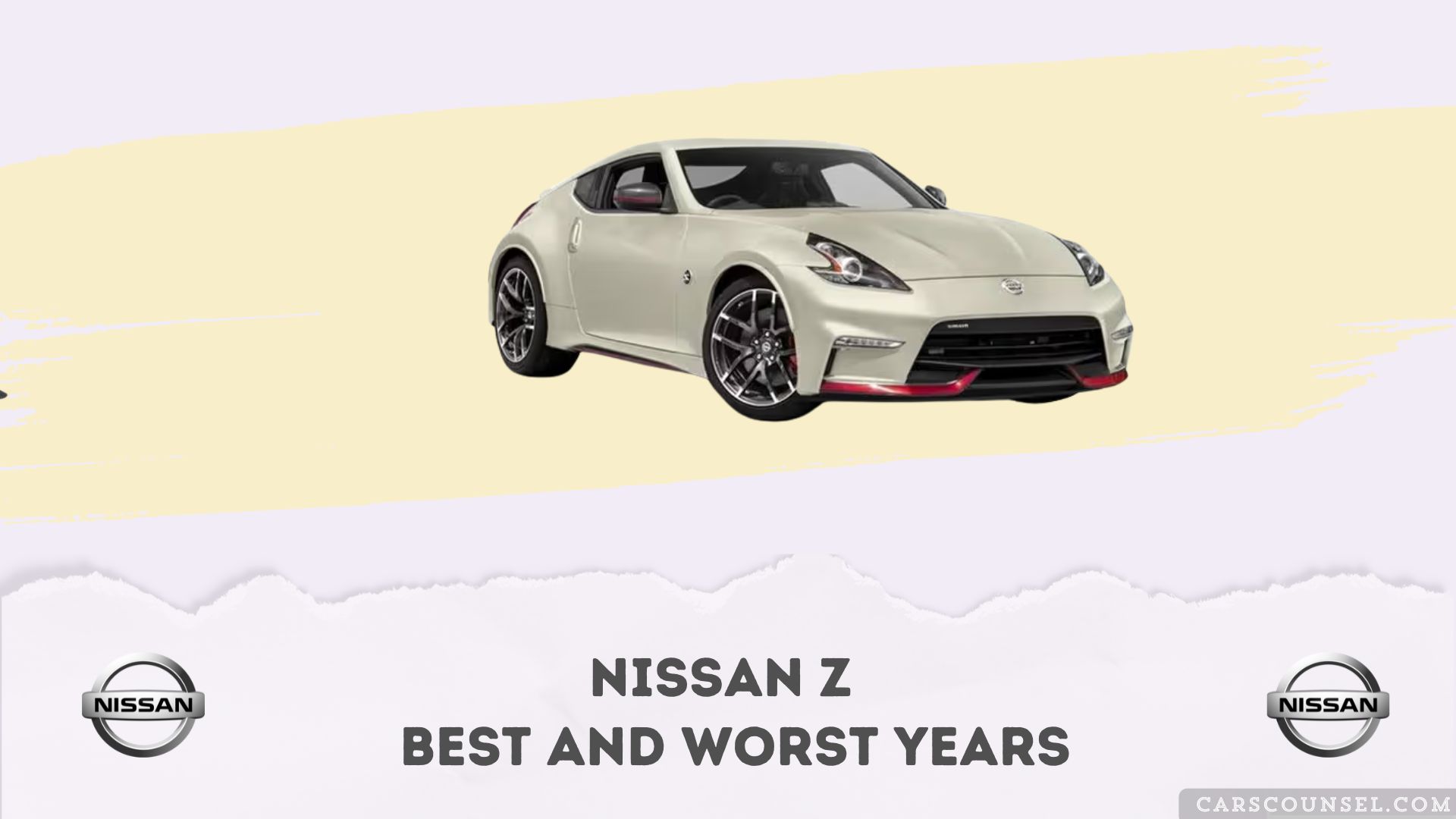
The best Nissan Z years for used buyers are the 2007-2008 350Z and the 2014-2020 370Z, offering refined V6 power and mature reliability. Buyers should approach 2003-2006 models carefully due to oil consumption, and avoid the 2009 model year due to steering column lock failures.
Rankings are comparative, and no vintage or modern sports car is entirely flawless. Proper maintenance, rust prevention, and a thorough pre-purchase inspection are critical for any Z-car ownership experience.
Meaningful differences exist between generations, particularly the switch to the VQ35HR engine in 2007 and the introduction of the twin-turbo V6 in 2023. Configuration and transmission choice also heavily impact long-term ownership costs.
Quick Navigation
Best and Worst Nissan Z Years at a Glance
| Model Year Range | Verdict | Main Reason | Buyer Guidance |
|---|---|---|---|
| 1970-1978 | Best Enthusiast Choice | Classic styling and analog driving feel | Inspect heavily for rust and original parts |
| 1990-1996 | Good With Inspection | Legendary performance but complex engineering | Verify timing belt and vacuum hose condition |
| 2003-2006 | Approach Carefully | VQ35DE oil consumption and early electronics | Check oil levels and inspect for dash melting |
| 2007-2008 | Best Choice | Improved VQ35HR engine and mature platform | Prioritize manual transmission examples |
| 2009 | Avoid | Electronic Steering Column Lock (ESCL) failures | Look for proof of the Nissan bypass update |
| 2010-2013 | Mixed | Continuing ESCL concerns and oil gallery gaskets | Verify service history and recall completion |
| 2014-2020 | Best Late-Generation Choice | Refined VQ37VHR engine and sorted electronics | Check for differential and transmission fluid leaks |
| 2023-Present | Too New to Judge | New twin-turbo platform with early transmission recalls | Wait for long-term manual transmission data |
Key Takeaways
- The 2007-2008 350Z and 2014-2020 370Z are the strongest used choices.
- Avoid the 2009 model year due to stranding risks from steering column lock failures.
- The 1990-1996 300ZX is an enthusiast dream but requires meticulous maintenance.
- Early 350Z models (2003-2006) are prone to excessive oil consumption.
- The 2023+ models are currently too new to judge for long-term durability.
- Always verify the VIN for open recalls and insist on a pre-purchase inspection.
How We Evaluated the Nissan Z Model Years
Our analysis considers official recalls, manufacturer service campaigns, and long-term ownership data. We evaluate powertrain changes, generation redesigns, and the severity of recurring mechanical issues across all configurations.
Consumer complaints are not failure rates, and a single recall does not automatically make a vehicle unreliable. Recent model years have limited long-term exposure, meaning “Best” indicates comparatively stronger reliability.
Best Nissan Z Years
2007-2008 (350Z)
These years represent the peak of the 350Z generation. Nissan introduced the VQ35HR engine, producing more horsepower and featuring a higher redline. The platform was fully sorted, making these the most reliable modern Z-cars.
2014-2020 (370Z)
The later 370Z models benefit from a mature platform and the resolution of early electronic gremlins. The VQ37VHR engine is robust when properly maintained, offering modern amenities without first-year redesign risks.
1970-1978 (240Z, 260Z, 280Z)
The original S30 chassis remains a benchmark for analog sports cars. While not daily drivers by modern standards, well-preserved examples offer unmatched enthusiast appeal. Rust is the primary enemy, so structural inspection is mandatory.
Best Year by Buyer Type
- Best Overall: 2007-2008 350Z
- Best Enthusiast Choice: 1970-1973 240Z
- Best Late-Generation Choice: 2014-2020 370Z
- Best Modern Alternative: 2023+ Nissan Z (Pending long-term data)
Years to Approach Carefully
2003-2006 (350Z)
The early Z33 models are engaging to drive but suffer from known VQ35DE oil consumption issues. Owners must monitor oil levels closely to prevent engine damage. The dashboard material is also prone to melting in hot climates.
1990-1996 (300ZX)
The Z32 generation is a technological marvel, featuring available twin-turbocharging and four-wheel steering. However, the engine bay is notoriously cramped, making routine maintenance difficult and expensive. Buy only if comprehensive service records are available.
2010-2013 (370Z)
While improved over the launch year, these models still carry some risk regarding the electronic steering column lock and early oil gallery gasket failures. Verify that the steering lock bypass has been performed and check for synthetic oil consumption.
Worst Nissan Z Years
2009 (370Z)
The inaugural year of the 370Z is plagued by Electronic Steering Column Lock failures. When this module fails, the car will not start and can leave the driver stranded. Unpatched examples remain a significant liability for used buyers.
Nissan Z Reliability by Generation
S30 and S130 (1970-1983)
These classic models are mechanically simple but highly susceptible to rust. The inline-six engines are durable if the cooling system is maintained. Parts availability is good, but finding unmodified examples is increasingly difficult.
Z31 and Z32 (1984-1996)
The 300ZX generations introduced complex electronics and turbocharging. The Z32 offers incredible performance but demands strict adherence to maintenance schedules, particularly for timing belts. For more on Nissan’s sports cars, review our Nissan 350Z and Nissan 370Z guides.
Z33 and Z34 (2003-2020)
The 350Z and 370Z returned to a simpler, more robust formula. The VQ engine family is legendary for its longevity, provided oil consumption is managed. Manual transmissions are generally preferred over the automatic options.
RZ34 (2023-Present)
The current generation utilizes the VR30DDTT twin-turbo V6. Early manual transmission models experienced gear grinding and clutch issues, prompting manufacturer attention. Long-term reliability data is still accumulating for this new platform.
Common Nissan Z Problems
Engine Oil Consumption
The VQ35DE and some early VQ37VHR engines are known to consume oil between changes. Failure to monitor levels can lead to oil starvation and catastrophic engine failure.
Electronic Steering Column Lock (ESCL)
Affecting primarily 2009-2012 models, the ESCL module can fail, preventing the vehicle from starting. A permanent bypass or module replacement is required to restore reliability and prevent stranding.
Dashboard Melting
Many 2003-2008 350Z models suffer from a dashboard material defect that causes the surface to melt, become sticky, and create dangerous windshield glare in hot weather.
Manual Transmission Gear Grinding
The 2023+ models equipped with the manual transmission have reported grinding when shifting between certain gears, leading to early warranty claims and manufacturer updates.
Repair-Cost Overview
| Problem | Commonly Affected Years | Approximate Repair Range | Important Notes |
|---|---|---|---|
| ESCL Bypass/Replacement | 2009-2013 | $150 – $600 | Bypass is cheaper; OEM module replacement costs more |
| Dashboard Replacement | 2003-2008 | $400 – $900 | Aftermarket covers are a cheaper alternative |
| Clutch Replacement | 2003-2020 | $1,200 – $2,200 | Varies heavily by shop and performance parts used |
| Oil Consumption Fix | 2003-2006 | $3,000 – $5,500 | Engine rebuild or replacement if starved of oil |
Costs vary significantly by region, labor rates, parts choice, and whether you use a dealer or an independent specialist.
What to Check Before Buying a Used Nissan Z
Verify the VIN for open recalls, especially the ESCL campaign on 370Z models. Check for excessive oil consumption by inspecting the dipstick and asking for oil change records.
Inspect the dashboard for melting, stickiness, or glare issues. Test the manual transmission for gear grinding or synchro wear. Look for structural rust on classic S30 and S130 chassis models.
Verify timing belt and water pump service on 1990-1996 Z32 models. Arrange an independent pre-purchase inspection focusing on the drivetrain and suspension components.
Related Buying Guides
- Nissan Altima best and worst years: A practical sedan alternative for daily driving.
- Nissan Frontier years to avoid: For buyers who need Nissan utility and towing instead of a sports car.
- Nissan Juke best and worst years: A quirky, compact crossover option for city driving.
Frequently Asked Questions
What is the most reliable Nissan Z year?
The 2007-2008 350Z and 2014-2020 370Z are the most reliable, featuring sorted electronics and robust V6 engines.
Why should I avoid the 2009 Nissan 370Z?
The 2009 model year suffers from Electronic Steering Column Lock failures that can strand drivers and prevent the car from starting.
Do Nissan Z cars have engine problems?
Early 350Z models (2003-2006) are prone to excessive oil consumption, which requires strict monitoring to prevent severe engine damage.
Is the 1990-1996 300ZX a good daily driver?
No, the Z32 is highly complex and cramped, making it better suited as a weekend enthusiast car rather than a reliable daily driver.
Are the new 2023+ Nissan Z models reliable?
They are currently too new to judge, as early manual transmission models have experienced gear grinding and required warranty attention.
What should I inspect on a classic 240Z?
Rust is the primary concern. Inspect the frame rails, floor pans, and hatch area for structural corrosion before purchasing any classic example.
Which Nissan Z Year Should You Buy?
The 2007-2008 350Z offers the best blend of modern reliability and analog driving feel. If you prefer a newer vehicle, the 2014-2020 370Z is an excellent choice for used buyers.
Avoid the 2009 model year due to steering lock failures, and approach early 350Z models with caution regarding oil consumption. Always verify the VIN and secure an independent inspection before purchasing.