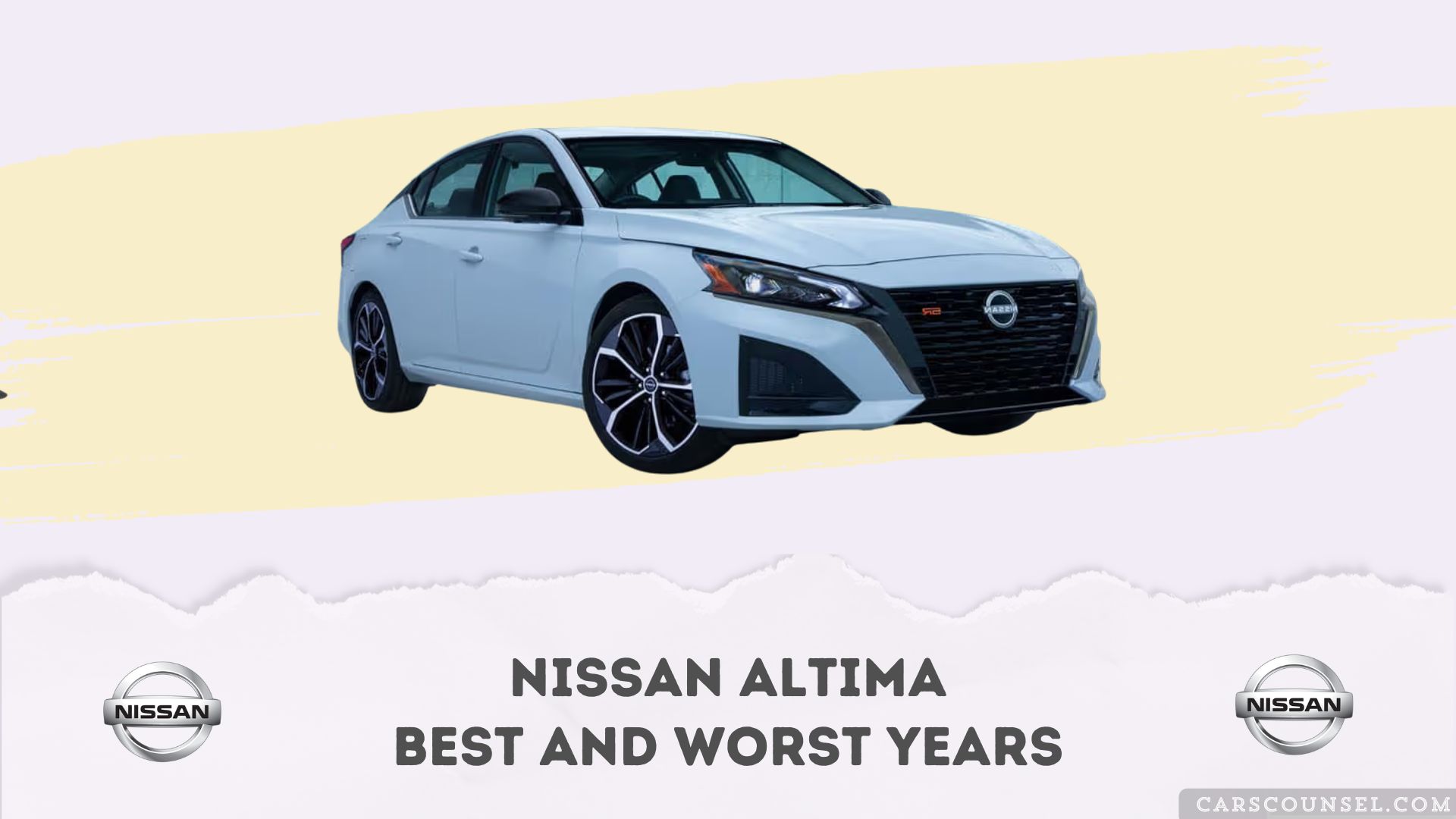
The best Nissan Altima years include 2011, 2012, 2017, 2018, and 2020 through 2022. These models offer mature powertrains and fewer complaints. Buyers should strictly avoid the 2002, 2013, and 2014 model years due to severe engine and transmission defects.
These rankings are comparative. No used Altima is flawless, and maintenance history heavily influences reliability. Always verify service records and check for open recalls before purchasing any used vehicle.
Reliability varies significantly by engine and generation. The naturally aspirated four-cylinder is generally more durable than early continuously variable transmissions. Hybrid and turbocharged configurations require specialized inspection.
Quick Navigation
Best and Worst Nissan Altima Years at a Glance
| Model Year | Verdict | Main Reason | Buyer Guidance |
|---|---|---|---|
| 2023-2024 | Too New to Judge | Limited long-term data | Wait for more ownership history. |
| 2020-2022 | Best Late-Generation Choice | Refined AWD and powertrain | Check for open recalls. |
| 2019 | Mixed | First-year redesign bugs | Inspect electronics and CVT. |
| 2017-2018 | Good Choice | Post-facelift improvements | Verify transmission service. |
| 2016 | Mixed | Transition year | Check hood latch and CVT. |
| 2013-2015 | Avoid | CVT failures and recalls | Look for newer alternatives. |
| 2010-2012 | Good Choice | Mature fourth generation | Inspect for rust and steering lock. |
| 2007-2009 | Approach Carefully | Steering lock and brake issues | Verify warranty repairs. |
| 2003-2006 | Mixed | Aging components | Demand full service history. |
| 2002 | Avoid | Severe oil consumption | Do not purchase. |
Key Takeaways
- Strongest choices include 2011, 2012, 2017, 2018, and 2020 through 2022.
- Avoid 2002, 2013, and 2014 due to engine and transmission failures.
- The 2.5L four-cylinder is generally more reliable than early CVTs.
- First-year redesigns like 2013 and 2019 carry higher risk.
- Recent models lack long-term ownership data.
- Always check the VIN for open recalls and service history.
How We Evaluated the Nissan Altima Model Years
Our analysis considers official recalls, manufacturer service campaigns, and consumer complaint patterns. We evaluate powertrain differences, generation changes, and repair complexity to determine relative reliability.
Complaint totals are not confirmed failure rates. A recall does not automatically make a model year unreliable. Recent models have less ownership history, so long-term evidence remains limited.
Best means comparatively stronger, not flawless. Maintenance, driving conditions, and rust exposure heavily impact the longevity of any used Nissan Altima.
Best Nissan Altima Years
2020 Through 2022: Best Late-Generation Choice
The sixth generation matured significantly by 2020. Nissan ironed out early electrical bugs and refined the Xtronic continuously variable transmission. Available all-wheel drive improves traction for northern buyers.
2017 and 2018: Good Choice
These post-facelift fifth-generation models benefit from improved safety features and updated transmission programming. They avoid the severe defects of the 2013 launch year while offering modern conveniences.
2011 and 2012: Good Choice
Late fourth-generation examples represent a mature platform. The naturally aspirated engines are durable, provided previous owners maintained them properly. They lack modern safety tech but offer solid value.
Best Year by Buyer Type
- Best Overall: 2021 (Mature sixth-generation with standard safety features)
- Best Budget Option: 2011 (Affordable, reliable fourth-generation)
- Best Family Alternative: Nissan Rogue (Offers more cargo space and standard all-wheel drive)
- Best Performance Configuration: 2019+ 2.0T VC-Turbo (Innovative engine, but requires strict maintenance)
Years to Approach Carefully
2019: Mixed
As a first-year redesign, the 2019 model experienced early production teething issues. Some owners reported infotainment glitches and minor transmission hesitations. A thorough pre-purchase inspection is essential.
2007 Through 2009: Approach Carefully
These early fourth-generation models are known for steering column lock failures and brake pedal issues. While Nissan issued warranty extensions, buyers must verify that these repairs were completed.
Worst Nissan Altima Years
2013 Through 2015: Avoid
The launch of the fifth generation brought severe continuously variable transmission failures and hood latch corrosion issues. Repair costs for the transmission often exceed the vehicle’s value.
2002: Avoid
The third-generation launch year is notorious for excessive oil consumption in the 2.5L engine. This defect frequently leads to catalytic converter failure and complete engine replacement.
Nissan Altima Reliability by Generation
Third Generation (2002-2006)
This generation grew in size but suffered from early engine defects. The 2002 model year is particularly problematic. Later years improved, but aging rubber and suspension components require attention.
Fourth Generation (2007-2012)
Nissan introduced the continuously variable transmission and push-button start. Early years faced steering lock failures. The 2010 refresh brought better reliability, making 2011 and 2012 solid budget choices.
Fifth Generation (2013-2018)
The 2013 launch year was plagued by transmission and interior defects. Nissan addressed many issues during the 2016 refresh. Buyers should target 2017 and 2018 for the best experience.
Sixth Generation (2019-Present)
This current generation introduced a turbocharged variable-compression engine and available all-wheel drive. While generally reliable, long-term data for the complex turbo engine remains limited. Stick to the naturally aspirated 2.5L for maximum dependability.
Common Nissan Altima Problems
Transmission Problems
Early Xtronic continuously variable transmissions are prone to shuddering, overheating, and complete failure. This issue heavily impacts 2013 through 2015 models. Always verify fluid changes and check for hesitation during a test drive.
Engine Oil Consumption
The 2.5L QR25DE engine in early third-generation models consumes excessive oil. This can lead to oil starvation, engine seizure, and catalytic converter damage. Check the dipstick and monitor exhaust smoke.
Steering Column Lock
Fourth-generation models frequently experience steering column lock failures. The vehicle may refuse to start or the wheel may lock while driving. Verify if the electronic steering lock bypass or replacement was performed.
Hood Latch Corrosion
Fifth-generation models suffer from hood latch corrosion, which can cause the hood to open unexpectedly while driving. Nissan issued recalls for this issue, so verify the VIN for completion.
Repair-Cost Overview
| Problem | Commonly Affected Years | Approximate Repair Range | Important Notes |
|---|---|---|---|
| CVT Replacement | 2013-2015 | $3,500 – $5,000 | Often exceeds vehicle value. |
| Steering Column Lock | 2007-2012 | $400 – $800 | Verify warranty extension status. |
| Catalytic Converter | 2002-2006 | $1,200 – $2,000 | Often caused by oil burning. |
| Hood Latch Assembly | 2013-2015 | $150 – $300 | Check for open recalls first. |
Repair costs vary significantly by region, labor rates, parts choice, and vehicle configuration. Independent shops may offer lower rates than dealerships. Always get multiple quotes for major repairs.
What to Check Before Buying a Used Nissan Altima
- Verify the VIN for open recalls, especially hood latches and airbags.
- Check the continuously variable transmission fluid condition and service history.
- Test the steering column lock by turning the wheel and starting the car.
- Inspect the engine bay for oil leaks and check the dipstick level.
- Look for rust around the hood latch and suspension components.
- Scan for diagnostic codes, even if the check engine light is off.
- Arrange an independent pre-purchase inspection before finalizing the purchase.
Related Buying Guides
- Nissan Maxima best and worst years: The Maxima shares platform architecture but offers a standard V6 and premium features.
- Nissan Sentra best and worst years: A smaller, more fuel-efficient alternative for urban commuters.
- Nissan Murano years to avoid: A midsize crossover that shares the V6 and transmission lineage.
Frequently Asked Questions
What is the most reliable Nissan Altima year?
The 2011, 2012, 2017, and 2021 model years are comparatively the most reliable. They benefit from mature powertrains and fewer first-year redesign defects. Always verify maintenance history.
Which Nissan Altima years should I avoid?
Avoid the 2002, 2013, 2014, and 2015 model years. These years suffer from severe engine oil consumption, transmission failures, and major safety recalls that make them poor investments.
Do Nissan Altimas have transmission problems?
Yes, early Xtronic continuously variable transmissions in 2013 through 2015 models are prone to shuddering and failure. Later models received software updates and improved cooling, reducing the failure rate.
Is the 2.5L or 3.5L engine better?
The naturally aspirated 2.5L four-cylinder is generally more reliable and cheaper to maintain. The 3.5L V6 offers more power but carries higher repair costs and lower fuel economy.
How long do Nissan Altimas last?
Well-maintained examples can reach high mileage, but longevity depends heavily on transmission care and rust prevention. Individual outcomes vary based on driving conditions and service history.
Are used Nissan Altimas good cars?
A used Altima can be a good value if you select the right model year. Target late-generation examples, avoid known problematic years, and insist on a thorough pre-purchase inspection.
Which Nissan Altima Year Should You Buy?
Target the 2011, 2012, 2017, 2018, and 2020 through 2022 model years for the best ownership experience. These years offer mature powertrains and fewer severe defects.
Avoid the 2002, 2013, 2014, and 2015 models due to costly engine and transmission failures. Always check the VIN for open recalls and demand complete service records.
No used vehicle is flawless. Arrange an independent inspection to verify the transmission condition and check for rust before signing any paperwork.

