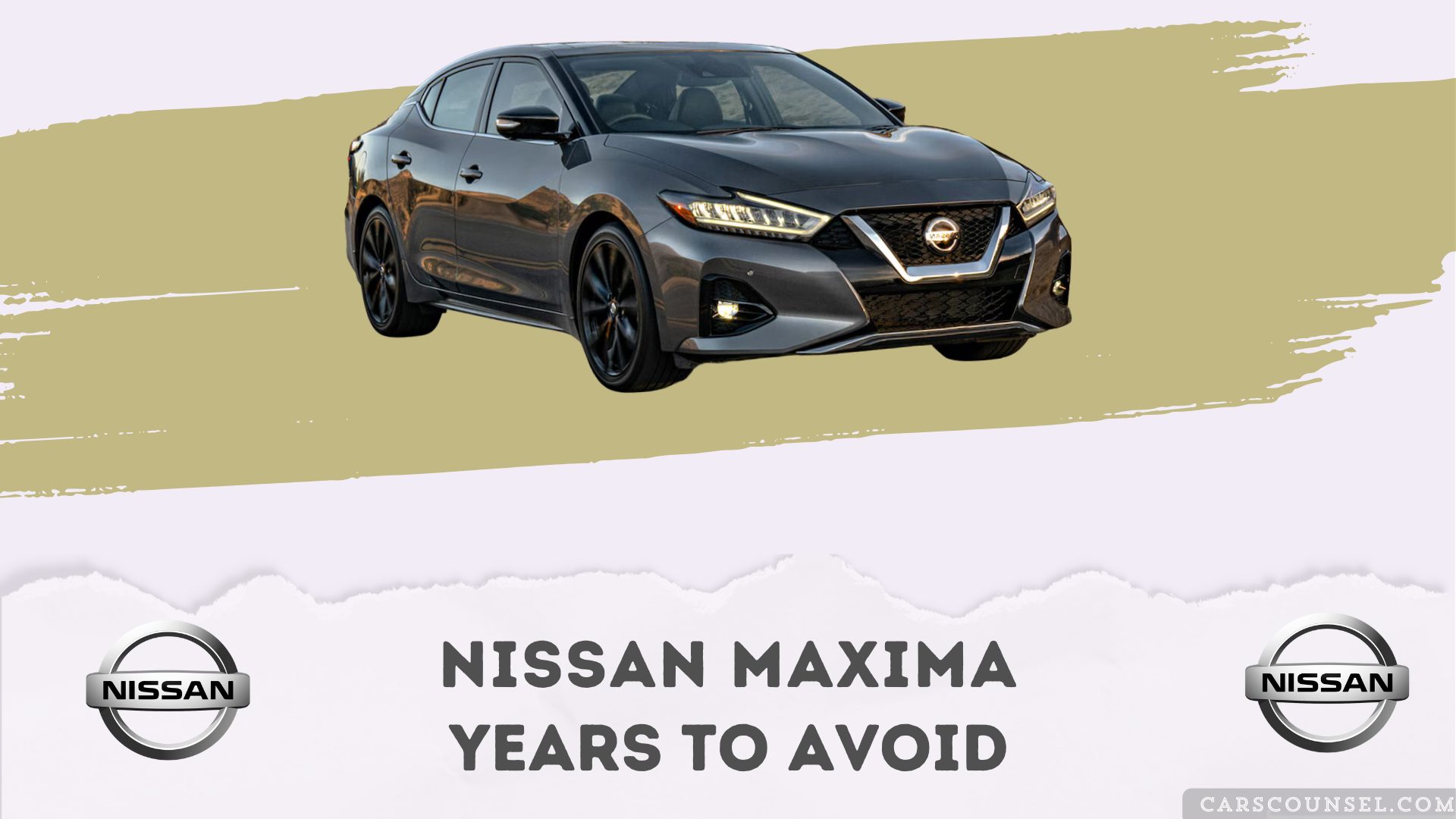
The best Nissan Maxima years are 2019 through 2023. Buyers should avoid 2009 through 2011 models due to severe early CVT transmission failures and steering rack leaks.
Rankings are comparative, meaning no used sedan is entirely flawless. Long-term reliability depends heavily on maintenance records, previous ownership habits, and overall vehicle condition.
Significant differences exist between the traditional five-speed automatics and newer continuously variable transmissions. Safety technology, specifically automatic emergency braking, also varies by generation.
Quick Navigation
Best and Worst Nissan Maxima Years at a Glance
| Model Year Range | Verdict | Main Reason | Buyer Guidance |
|---|---|---|---|
| 2019–2023 | Best Late-Generation Choice | Refined CVT, mature platform | Top pick for modern buyers. |
| 2016–2018 | Good Choice | 8th gen redesign, early CVT quirks | Verify CVT service history. |
| 2012–2014 | Good With Inspection | Late 7th gen, better CVT tuning | Inspect CVT fluid and operation. |
| 2009–2011 | Avoid | Early CVT failures, steering leaks | Look at newer models instead. |
| 2004–2008 | Approach Carefully | Aging electronics, steering leaks | Inspect steering rack and sensors. |
| 2000–2003 | Good With Inspection | Age, Takata airbag recall | Verify airbag recall completion. |
Key Takeaways
- Strongest Choices: The 2019–2023 models offer the best balance of modern features and proven reliability.
- Years to Avoid: The 2009–2011 models suffer from catastrophic early CVT failures and steering rack leaks.
- Powertrain Distinction: The seventh and eighth generations use a CVT, while older models use a traditional automatic.
- Major Verified Concern: Early continuously variable transmissions require strict fluid maintenance to prevent premature failure.
- Recent-Year Limitation: Nissan discontinued the Maxima after 2023, making all examples used vehicles.
- Inspection Reminder: Always verify the VIN for open recalls and arrange an independent pre-purchase inspection.
How We Evaluated the Nissan Maxima Model Years
Our analysis examines official safety recalls, manufacturer service campaigns, and long-term ownership patterns. We weigh the severity and recurrence of mechanical failures against repair complexity.
Consumer complaints indicate owner frustration but do not automatically confirm a widespread mechanical defect. Similarly, a safety recall does not inherently make a specific model year unreliable if repaired.
Recent model years naturally possess less ownership history. Therefore, our top recommendations reflect comparative strength and proven maturity rather than absolute perfection.
Best Nissan Maxima Years
2019–2023 (Best Late-Generation Choice)
These final production years feature a refined CVT and updated safety systems. Nissan addressed the phantom braking issues found in earlier models, resulting in a predictable driving experience.
Buyers gain a highly capable full-size sedan with modern infotainment. Finding a well-maintained example represents the pinnacle of Maxima reliability.
Best Year by Buyer Type
Best Overall Value: 2020 Nissan Maxima
The 2020 model year sits perfectly in the reliability curve. It features a mature platform, sorted CVT programming, and updated safety technology without steep depreciation.
Best Practical Alternative: Nissan Altima
Buyers seeking better fuel economy and lower running costs should consider the Nissan Altima best and worst years. It shares the brand’s sedan heritage but offers a smaller footprint.
Years to Approach Carefully
2016–2018 (Good Choice)
These inaugural eighth-generation models introduced a new platform and aggressive styling. However, early build dates experienced phantom automatic emergency braking and minor CVT shuddering.
Nissan issued software updates to address the braking system. Buyers must verify the update was applied and test the transmission carefully during a pre-purchase drive.
2004–2008 (Approach Carefully)
These sixth-generation models use a robust five-speed automatic, avoiding the CVT pitfalls of later years. However, they are prone to power steering rack leaks and aging electronic sensors.
Inspect the steering rack for fluid weeping and scan for hidden diagnostic codes. With proper maintenance, these remain comfortable cruisers.
2000–2003 (Good With Inspection)
These fifth-generation models feature the legendary VQ V6 engine but are severely limited by age. They are also affected by the critical Takata airbag recall.
Verify the VIN to ensure the airbag inflators were replaced by a dealer. Once completed, these offer robust performance for enthusiasts willing to maintain them.
Worst Nissan Maxima Years
2009–2011 (Avoid)
The inaugural seventh-generation years introduced the continuously variable transmission to the Maxima lineup. These early units suffer from severe shuddering, whining, and premature belt failure.
Combined with widespread power steering rack leaks, these years present a massive financial risk. The high cost of replacing both components makes them a poor investment.
Nissan Maxima Reliability by Generation
Fifth Generation (2000–2003)
These early models feature robust V6 engines but are limited by age and obsolete safety equipment. Strict Takata airbag recall verification is mandatory.
Sixth Generation (2004–2008)
This era uses a reliable five-speed automatic but suffers from aging electronics and power steering rack leaks. Thorough pre-purchase inspections are essential.
Seventh Generation (2009–2014)
The introduction of the CVT brought severe early reliability issues. The 2012–2014 models saw minor software improvements, but the transmission remains a weak point.
Eighth Generation (2016–2023)
A return to form with excellent styling and refined CVTs. The 2019–2023 facelifted models represent the most reliable and capable Maximas ever built.
Common Nissan Maxima Problems
CVT Shudder and Failure
Affecting primarily 2009–2014 models. The early continuously variable transmissions suffer from inadequate cooling and software flaws, leading to severe shuddering and eventual failure.
Power Steering Rack Leaks
Found across 2004–2011 models. The factory steering racks develop internal seal leaks, leading to fluid loss, whining noises, and eventual loss of power assist.
Phantom Automatic Emergency Braking
Affecting 2016–2018 models. The radar-based system misinterprets shadows or road signs as obstacles, applying the brakes suddenly at highway speeds without warning.
What to Check Before Buying a Used Nissan Maxima
- Verify Recall Status: Enter the VIN on the NHTSA website to confirm all Takata airbag and braking system recalls are closed.
- Inspect CVT Fluid: On 2009–2018 models, check the fluid condition and verify strict service intervals were followed to prevent premature failure.
- Test Steering Rack: Turn the wheel lock-to-lock while stationary to check for whining noises or fluid leaks common on 2004–2011 models.
- Scan for Codes: Use an OBD2 scanner to check for hidden transmission or automatic emergency braking module codes.
- Arrange Inspection: Hire an independent mechanic to evaluate the suspension, brakes, and overall structural condition.
Related Buying Guides
- Nissan Murano years to avoid: A direct platform and powertrain relative that shares the VQ35 engine and CVT architecture while offering a crossover body style.
Frequently Asked Questions
What are the worst years for the Nissan Maxima?
The 2009 through 2011 model years are the worst due to catastrophic early CVT failures and widespread power steering rack leaks. These repairs are incredibly expensive.
What is the most reliable Nissan Maxima year?
The 2020 model year is widely considered the most reliable. It features a mature eighth-generation platform, sorted CVT programming, and updated safety technology without steep depreciation.
Do Nissan Maximas have transmission problems?
Yes, the 2009 through 2014 models suffer from severe CVT shuddering and premature failure. Later models from 2016 onward feature significantly improved transmission durability and refined shifting.
Why did Nissan discontinue the Maxima?
Nissan discontinued the Maxima after the 2023 model year due to declining sedan sales and a strategic shift toward crossovers and SUVs. All examples are now used vehicles.
What causes the Nissan Maxima steering rack leak?
The 2004 through 2011 models use a factory steering rack prone to internal seal degradation. This causes fluid loss, whining noises, and eventual loss of power steering assist.
Does the Nissan Maxima have timing chain issues?
The early VQ35DE V6 engines in 2002 through 2006 models experienced premature timing chain guide wear. This causes a distinct whining noise and requires an expensive engine teardown.
Which Nissan Maxima Year Should You Buy?
For the best balance of modern comfort and proven reliability, target the 2019 through 2023 models. These final examples offer sorted CVT programming and excellent daily driving dynamics.
Strictly avoid the 2009 through 2011 models due to the high risk of catastrophic transmission failures. Always verify the exact powertrain configuration and recall status before purchasing.
Finally, arrange an independent pre-purchase inspection to assess transmission health, steering rack condition, and overall vehicle structure. Proper maintenance remains the most critical factor in preserving any sedan.

