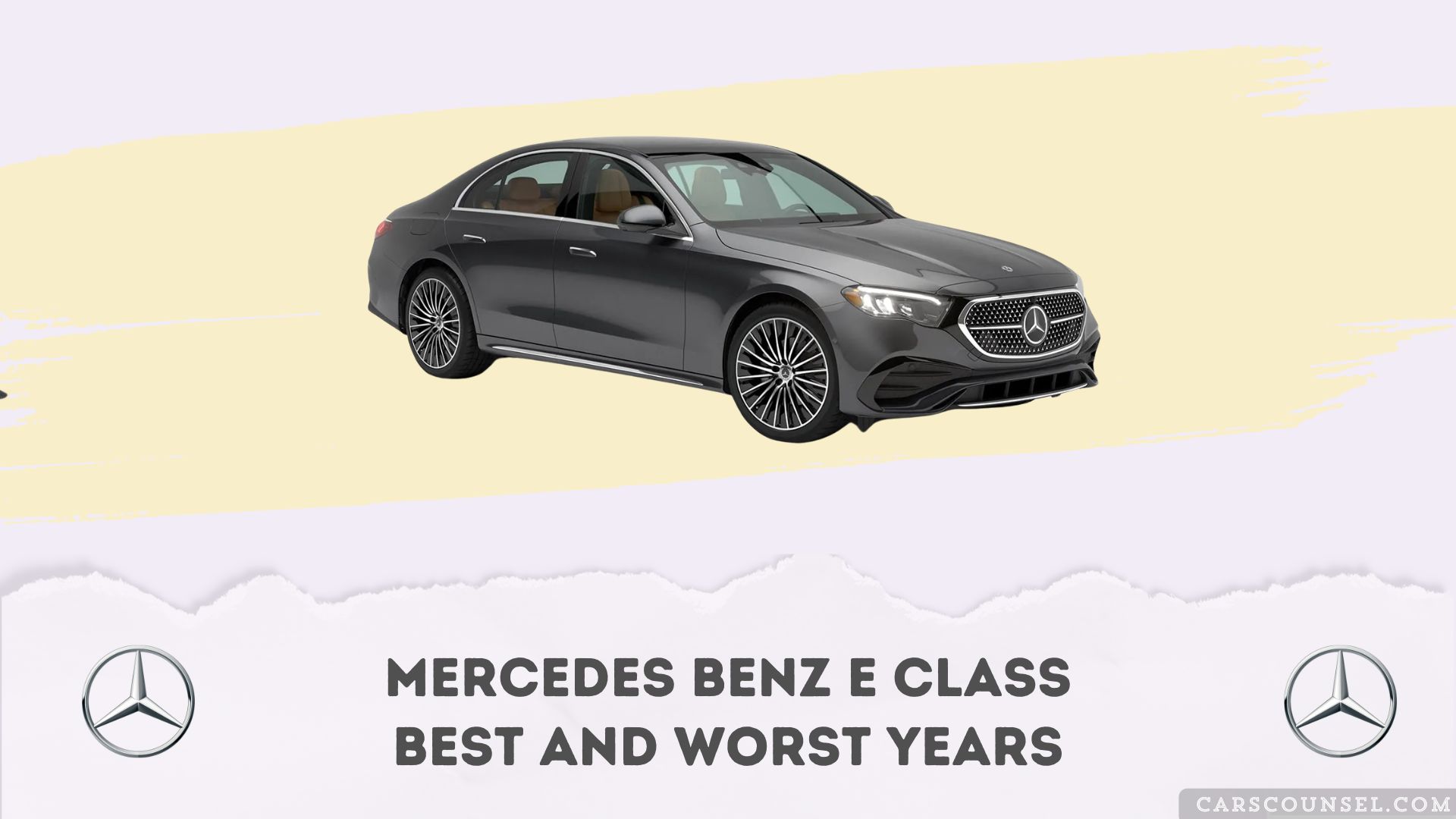
The best Mercedes-Benz E-Class years are 2013 through 2016, offering peak reliability and refined powertrains. Buyers should avoid the 2000 through 2006 models due to severe electrical gremlins and expensive brake system failures.
These rankings are comparative, and no luxury German sedan is entirely flawless. Strict maintenance history, rust prevention, and timely electronic diagnostics heavily influence long-term ownership costs and daily usability.
Significant differences exist between the problematic early V6 engines and the later, highly dependable configurations. Diesel variants also require specialized emissions system inspections to prevent massive repair bills.
Quick Navigation
Best and Worst Mercedes-Benz E-Class Years at a Glance
| Model Year Range | Verdict | Main Reason | Buyer Guidance |
|---|---|---|---|
| 2000-2006 | Avoid | SBC brake failures, severe rust | Bypass entirely |
| 2007-2009 | Approach Carefully | M272/M273 engine timing risks | Inspect engine internals |
| 2010-2012 | Good Choice | Solid W212 chassis, aging V8s | Verify maintenance records |
| 2013-2016 | Best Choice | Reliable M276/M278 engines | Top pick for used buyers |
| 2017-2023 | Best Late-Generation Choice | Excellent tech, proven 9-speed | Great modern alternative |
| 2024-2026 | Too New to Judge | Limited long-term exposure | Wait for reliability data |
Key Takeaways
- The 2013-2016 models represent the best choices, featuring highly reliable engines and a mature, robust platform.
- Avoid 2000-2006 models due to the expensive Sensotronic Brake Control system and widespread electrical faults.
- The 2007-2009 models require strict inspections for premature timing chain and balance shaft gear wear.
- Diesel BlueTEC models demand careful inspection of the AdBlue heater and oil cooler seals.
- Always verify the VIN for open recalls and insist on a pre-purchase inspection focusing on air suspension.
How We Evaluated the Mercedes-Benz E-Class Model Years
Our analysis reviews official recalls, manufacturer service campaigns, technical service bulletins, and long-term ownership data. We weigh the severity of mechanical failures against repair costs and daily usability.
Complaints are not failure rates, and a recall does not automatically make a year unreliable. Recent models have less ownership history, so best means comparatively stronger, not flawless.
Best Mercedes-Benz E-Class Years
2013-2016 (W212 Facelift)
The 2013 refresh introduced the M276 V6 and M278 V8 engines, which resolved the severe timing issues of their predecessors. These years offer a superb blend of modern technology, exceptional build quality, and dependable powertrains.
Buyers should still inspect the air suspension struts for leaks, as they remain a wear item on higher-mileage examples.
2017-2023 (W213 Generation)
This generation brought a massive leap in interior technology, featuring a stunning digital dashboard and advanced semi-autonomous driving features. The transition to the nine-speed automatic transmission improved both fuel economy and long-term drivetrain durability.
While highly dependable, complex driver-assistance sensors can be costly to recalibrate after minor front-end collisions.
Best Year by Buyer Type
Best Enthusiast Choice
The 2014-2016 E63 AMG models offer incredible performance with the hand-built 5.5L biturbo V8. While maintenance is expensive, the engine is remarkably robust when properly serviced by a specialist.
Best Modern Alternative
The 2018-2023 models provide the best balance of current infotainment standards, advanced safety tech, and proven mechanical reliability for daily commuting.
Years to Approach Carefully
2007-2009 (Late W211)
Mercedes wisely removed the problematic SBC brake system, reverting to conventional brakes. However, the early COMAND infotainment system was buggy, and the M272 V6 and M273 V8 engines suffer from premature timing component wear.
Repairing these engine internal defects requires engine removal, making a pre-purchase teardown inspection mandatory.
2010-2012 (Early W212)
The W212 chassis is incredibly solid and safe. However, early examples still utilized the outgoing M272 and M273 engines, carrying over the same timing component risks found in the previous generation.
Worst Mercedes-Benz E-Class Years
2000-2006 (W210 and Early W211)
The 2000-2002 models suffer from severe structural rust and failing electronics. The 2003-2006 models introduced the Sensotronic Brake Control system, which frequently fails and requires massively expensive replacements.
Combined with early air suspension failures and complex electrical gremlins, these years pose a severe financial risk to used buyers.
Mercedes-Benz E-Class Reliability by Generation
W210 (1996-2002)
While comfortable, this generation is notorious for severe rust issues, particularly in the snow belt. Early five-speed automatic transmissions also suffer from premature failure.
W211 (2003-2009)
This era is defined by the SBC brake recall and the M272/M273 engine defects. The 2007-2009 facelift improved styling and removed SBC, but engine risks remain.
W212 (2010-2016)
Widely considered the most reliable modern E-Class. The 2013-2016 facelift perfected the formula with updated engines and excellent build quality.
W213 (2017-2023)
This generation prioritized digital luxury and semi-autonomous features. Mechanical reliability is excellent, though complex electronics and sensors require careful diagnostic scans.
W214 (2024-Present)
The latest generation introduces heavily electrified powertrains and massive hyperscreens. Long-term reliability data remains insufficient to judge.
Common Mercedes-Benz E-Class Problems
Air Suspension Failures (Airmatic)
Affecting most V8 models and optional on V6s, the air struts and compressors eventually leak or fail. Symptoms include a sagging corner and a warning message.
M272/M273 Engine Timing Defects
Found on 2006-2012 V6 and V8 models, the balance shaft gears and timing chain guides wear prematurely. This causes check engine lights, rough running, and requires an engine-out repair.
SBC Brake System Failure
Affecting 2003-2006 models, the Sensotronic Brake Control pump wears out after a set number of actuations. Replacement is exceptionally expensive, though Mercedes previously offered extended warranties.
BlueTEC Emissions Issues
Found on diesel models, the AdBlue heater and NOx sensors frequently fail. Additionally, the V6 diesel is prone to severe oil cooler seal leaks located deep in the engine valley.
What to Check Before Buying a Used Mercedes-Benz E-Class
- Verify the VIN for open recalls, specifically regarding rear subframe mounting points and SBC brake systems.
- Inspect the engine balance shaft and timing chain components on 2006-2012 V6 and V8 models.
- Test the Airmatic suspension by lowering and raising the vehicle, checking for sagging overnight.
- Scan all control modules for hidden fault codes using a Mercedes-specific diagnostic tool.
- Inspect the rear subframe and suspension mounting points for severe structural rust.
- Arrange a pre-purchase inspection with a certified Mercedes-Benz specialist.
Related Buying Guides
- Mercedes-Benz C-Class best and worst years – Compact luxury alternative for buyers wanting similar German engineering and interior prestige in a smaller, more affordable package.
- Mercedes-Benz CLS best and worst years – Platform sibling for buyers preferring sleek, coupe-like styling and performance-oriented dynamics over traditional rear-seat passenger space.
Frequently Asked Questions
Which Mercedes-Benz E-Class year is most reliable?
The 2013-2016 models offer the strongest ownership records. They benefit from the robust M276 and M278 engines, avoiding the severe timing defects of earlier generations.
Does the E-Class have expensive engine problems?
Yes. The 2006-2012 V6 and V8 engines suffer from premature balance shaft and timing chain guide wear. Repairing these internal defects requires complete engine removal.
Is the E-Class air suspension reliable?
The Airmatic suspension provides a superb ride but is a known wear item. Air struts and compressors eventually leak, requiring expensive replacements on higher-mileage examples.
Are the diesel E-Class models good?
The BlueTEC diesels offer great torque and fuel economy but suffer from costly emissions system failures and deep oil cooler seal leaks on the V6 models.
Why should I avoid the 2003-2006 models?
These years feature the Sensotronic Brake Control (SBC) system, which frequently fails and requires massively expensive replacements. They also suffer from complex electrical gremlins.
Is the new E-Class reliable?
The 2024 and newer models feature heavily electrified powertrains and massive digital screens. Long-term reliability data remains insufficient to judge these latest configurations.
Choosing the Right Mercedes-Benz E-Class Model Year
Choosing the right Mercedes-Benz E-Class requires strict attention to engine configurations and suspension options. The 2013-2016 models provide the most secure ownership experience for buyers seeking a dependable luxury sedan.
Buyers must avoid the 2000-2006 models due to severe brake system and electrical failures. Ensuring the timing components have been inspected is mandatory for all 2006-2012 V6 and V8 examples.
Before purchasing, verify the VIN for open recalls and hire a specialist for a thorough diagnostic scan. Knowing which models stand out ensures driving satisfaction rather than severe financial consequences.

