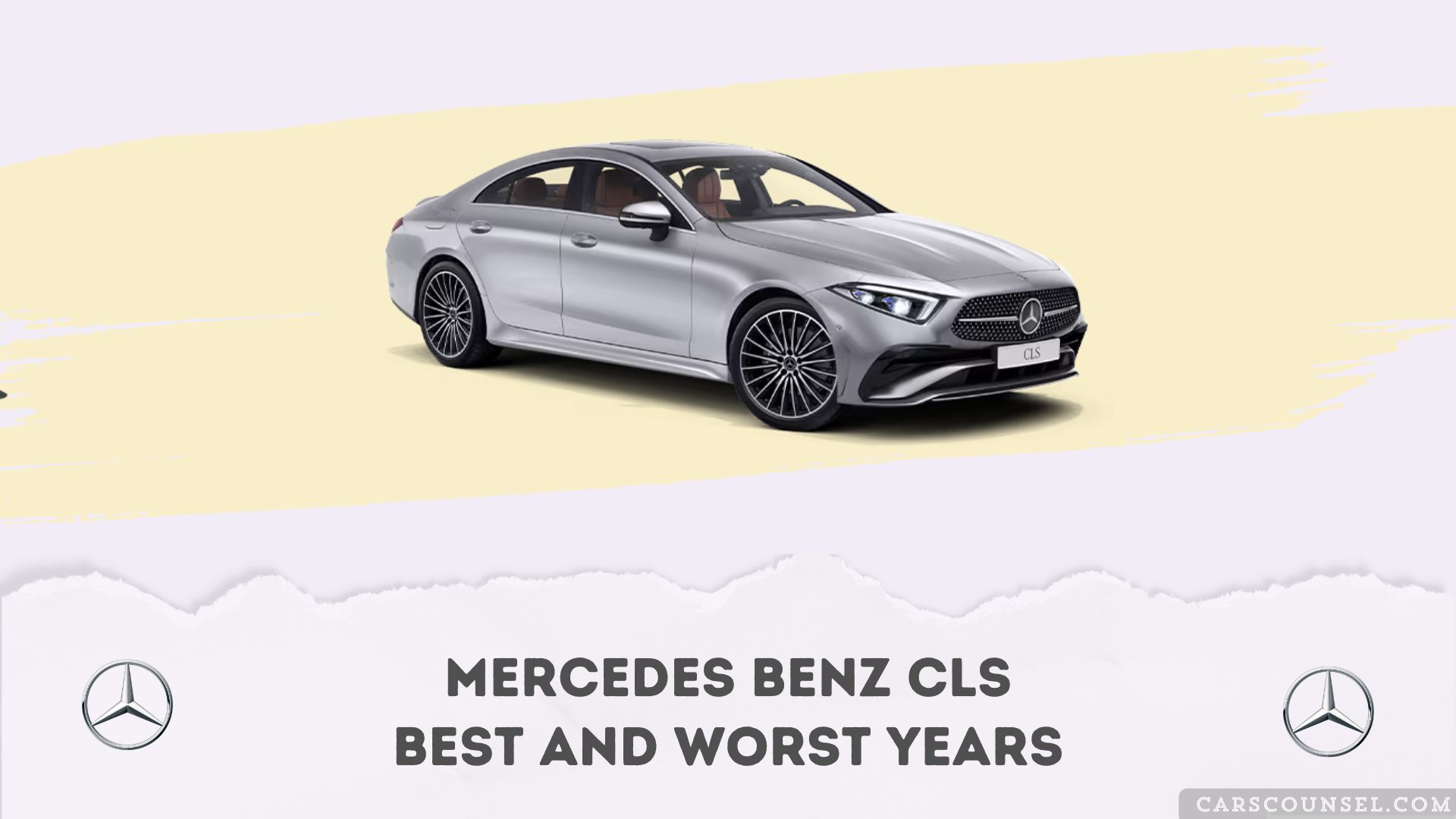
The best Mercedes-Benz CLS years are 2020 through 2023, featuring a reliable inline-six engine. The 2017 and 2018 models are strong V8 choices. Avoid 2006 through 2008 due to severe engine and brake defects.
These rankings are comparative. No luxury performance sedan is flawless. Long-term reliability depends heavily on strict maintenance, previous ownership care, and addressing deferred repairs promptly.
Reliability varies significantly by generation and powertrain. Early V8 engines carry severe mechanical risks. Later inline-six mild-hybrid models offer vastly improved durability, though complex air suspension remains a recurring expense.
Quick Navigation
Best and Worst Mercedes-Benz CLS Years at a Glance
| Model Year Range | Verdict | Main Reason | Buyer Guidance |
|---|---|---|---|
| 2020-2023 | Best Choice | Mature inline-six mild-hybrid powertrain | Verify EQ Boost system diagnostics |
| 2019 | Good Choice | First-year redesign with new engine | Check for software updates and warranty |
| 2017-2018 | Best Late-Generation Choice | Facelift updates and 9-speed transmission | Top V8 option before inline-six switch |
| 2014-2016 | Mixed | Revised V8, aging air suspension | Check service records for timing components |
| 2012-2013 | Approach Carefully | Early twin-turbo V8 timing chain concerns | Listen closely for cold-start engine rattles |
| 2009-2011 | Good With Inspection | Improved V8, aging suspension components | Verify air suspension and maintenance history |
| 2006-2008 | Avoid | Severe balance shaft and brake system defects | Strictly avoid unless fully documented repairs exist |
Key Takeaways
- The 2020 through 2023 models offer the most reliable powertrain configuration.
- Early V8 engines from 2006 through 2013 carry severe mechanical risks.
- Airmatic air suspension failures are a recurring expense across most generations.
- The inline-six mild-hybrid engine avoids the costly timing chain issues of older V8s.
- Recent models have limited long-term ownership data compared to older generations.
- Always verify open recalls and check the VIN before purchasing.
- An independent pre-purchase inspection is mandatory for any used CLS.
How We Evaluated the Mercedes-Benz CLS Model Years
Our analysis considers official recalls, manufacturer service campaigns, and consumer complaints. We evaluate powertrain differences, generation changes, and repair complexity.
Consumer complaints are not confirmed failure rates. A recall does not automatically make a vehicle unreliable. Recent models have less ownership history available for review.
Our verdicts identify comparatively stronger years. No luxury vehicle is flawless. Maintenance records and current mechanical condition matter more than the model year alone.
Best Mercedes-Benz CLS Years
2020-2023: Best Choice
The third-generation CLS450 uses a turbocharged 3.0L inline-six engine. This powertrain is significantly more reliable than the older V8 configurations.
The mild-hybrid EQ Boost system provides smooth power delivery. By 2020, initial first-year software issues were largely resolved. These models offer modern technology and strong daily drivability.
Buyers should still verify the health of the mild-hybrid battery system. Routine maintenance remains essential to preserve long-term reliability.
2017-2018: Best Late-Generation Choice
These years represent the final iteration of the second generation. Mercedes introduced a nine-speed automatic transmission, improving efficiency and shift quality.
The twin-turbo 4.7L V8 engine received revisions to address earlier timing component concerns. These models offer a compelling mix of V8 horsepower and modernized interior technology.
Airmatic suspension remains a maintenance factor. Buyers must budget for potential air strut replacements as these vehicles age.
Best Year by Buyer Type
Best Overall: 2021-2023
The inline-six engine provides excellent reliability and fuel economy. These final production years benefit from mature software and resolved early-generation defects.
Best Enthusiast Choice: 2014-2018 CLS63 AMG
The hand-built AMG V8 offers immense torque and aggressive styling. Maintenance costs are high, but the driving experience is unparalleled for performance seekers.
Best Older Choice: 2011
The final year of the first generation features the most sorted version of the naturally aspirated V8. It avoids the severe balance shaft issues of earlier models.
Years to Approach Carefully
2012-2013: Approach Carefully
The introduction of the M278 twin-turbo V8 brought new performance metrics. Unfortunately, early versions suffered from fragile timing chain guides and camshaft adjuster issues.
Cold-start rattles indicate guide wear. Ignoring this noise can lead to catastrophic engine failure. Only consider these years if timing components have been professionally replaced.
2009-2011: Good With Inspection
Mercedes revised the naturally aspirated V8 to address earlier balance shaft flaws. The engine is mechanically sound if maintenance was followed strictly.
However, the Airmatic suspension components are now quite old. Air leaks and compressor failures are highly likely without recent replacement records.
Worst Mercedes-Benz CLS Years
2006-2008: Avoid
The M273 V8 engine in these early models has a flawed balance shaft sprocket. This part wears prematurely and sheds metal debris into the oil pan.
Replacing it requires removing the entire engine. Repair bills frequently exceed four thousand dollars. The 2006 models also use the problematic Sensotronic Brake Control system.
This complex hydraulic brake system is prone to sudden failure. Mercedes later replaced it with conventional brakes. The combination of engine and brake defects makes these years a severe financial risk.
Mercedes-Benz CLS Reliability by Generation
First Generation (2006-2011)
The original CLS introduced the four-door coupe concept. Early models suffered from severe engine and brake defects. Later years improved, but aging electronics and suspension remain costly.
Second Generation (2012-2018)
This generation shifted to twin-turbocharged V8 engines. Early models faced timing chain guide failures. A 2017 facelift brought a nine-speed transmission and improved reliability.
The CLS shares its underlying architecture with the Mercedes-Benz E-Class, though the CLS features unique bodywork and distinct suspension tuning.
Third Generation (2019-2023)
Mercedes abandoned the V8 for the mainstream CLS450, adopting a turbocharged inline-six. This engine is vastly more reliable. Production ended globally after the 2023 model year.
Common Mercedes-Benz CLS Problems
Engine Timing and Balance Shaft Defects
Early V8 engines suffer from severe internal flaws. The M273 balance shaft sprocket wears prematurely. The M278 timing chain guides can break apart during cold starts.
Both issues require extensive labor to repair. Engine removal is often necessary. Listen for rattling noises during startup before purchasing any V8 model.
Airmatic Suspension Failures
Airmatic air suspension is standard on most V8 configurations. The rubber air struts eventually develop leaks. The compressor then burns out from overuse.
Expect to replace these components as the vehicle ages. The ride quality suffers noticeably when the system begins to fail.
Sensotronic Brake Control (SBC)
The 2006 models used the SBC hydraulic brake system. This complex unit is prone to sudden internal failure, resulting in a loss of power braking assist.
Mercedes issued extended warranties for this component years ago. Most units have now been replaced, but buyers should verify the brake system type.
Repair-Cost Overview
| Problem | Commonly Affected Years | Approximate Repair Range | Important Notes |
|---|---|---|---|
| M273 Balance Shaft Repair | 2006-2008 | $3,000 – $5,000 | Requires engine removal |
| M278 Timing Chain Guides | 2012-2014 | $2,500 – $4,000 | Extensive labor intensive repair |
| Airmatic Strut Replacement | All Generations | $1,200 – $2,000 | Price is per corner |
| SBC Brake Pump Replacement | 2006 | $1,500 – $2,500 | Requires specialized programming |
Repair costs vary significantly by region, labor rate, and parts choice. Dealer rates are substantially higher than independent European specialists. Damage severity and vehicle configuration also impact final pricing.
What to Check Before Buying a Used Mercedes-Benz CLS
- Verify the VIN for open recalls and completed service campaigns.
- Listen carefully for engine rattles during a cold start.
- Test the Airmatic suspension by raising and lowering the vehicle.
- Review maintenance records for timing chain or balance shaft service.
- Scan the vehicle for hidden EQ Boost or mild-hybrid fault codes.
- Inspect the air suspension compressor for signs of overheating or burnout.
- Arrange an independent pre-purchase inspection with a Mercedes specialist.
Related Buying Guides
- Mercedes-Benz S-Class best and worst years: The flagship sedan alternative offering superior comfort and advanced technology.
- Mercedes-Benz AMG GT best and worst years: A dedicated sports car alternative for buyers prioritizing track performance over daily practicality.
- Mercedes-Benz G-Class best and worst years: An off-road capable alternative for buyers seeking rugged utility and iconic styling.
- Mercedes-Benz GLS-Class best and worst years: A three-row SUV alternative for buyers needing maximum passenger space and towing capacity.
- Mercedes-Benz ML best and worst years: A midsize SUV alternative offering a practical balance of luxury and cargo versatility.
Frequently Asked Questions
Is the Mercedes-Benz CLS reliable?
Later models with the inline-six engine are comparatively reliable. Early V8 models suffer from severe engine defects. Airmatic suspension remains a recurring maintenance expense across most generations.
What is the most common CLS problem?
Airmatic air suspension failures are the most widespread issue. Air struts leak over time, causing the compressor to fail. Early V8 engines also suffer from expensive timing chain defects.
Did Mercedes discontinue the CLS?
Yes, Mercedes-Benz discontinued the CLS-Class globally after the 2023 model year. The 2023 models represent the final production run. Buyers must now look at the used market.
Is the CLS450 better than the CLS550?
The CLS450 is generally more reliable. Its inline-six mild-hybrid engine avoids the severe timing chain issues found in the older CLS550 V8. The CLS550 offers more traditional V8 character.
How long do CLS engines last?
The inline-six engines can reach high mileage with proper care. Early V8 engines may suffer catastrophic failures before reaching 100,000 miles if the balance shaft or timing guides fail.
Does the CLS share a platform with the E-Class?
Yes, the CLS shares its underlying architecture with the E-Class. However, the CLS features unique exterior body panels, a distinct interior layout, and specific suspension tuning.
Which Mercedes-Benz CLS Year Should You Buy?
The 2020 through 2023 models are the strongest choices for used buyers. The inline-six mild-hybrid powertrain avoids the severe mechanical flaws of earlier generations.
If you prefer a V8 engine, the 2017 and 2018 models offer the most refined experience. Avoid the 2006 through 2008 models entirely due to catastrophic engine and brake defects.
Always verify the VIN for open recalls. Secure an independent inspection to evaluate the Airmatic suspension and engine timing components before finalizing your purchase.

