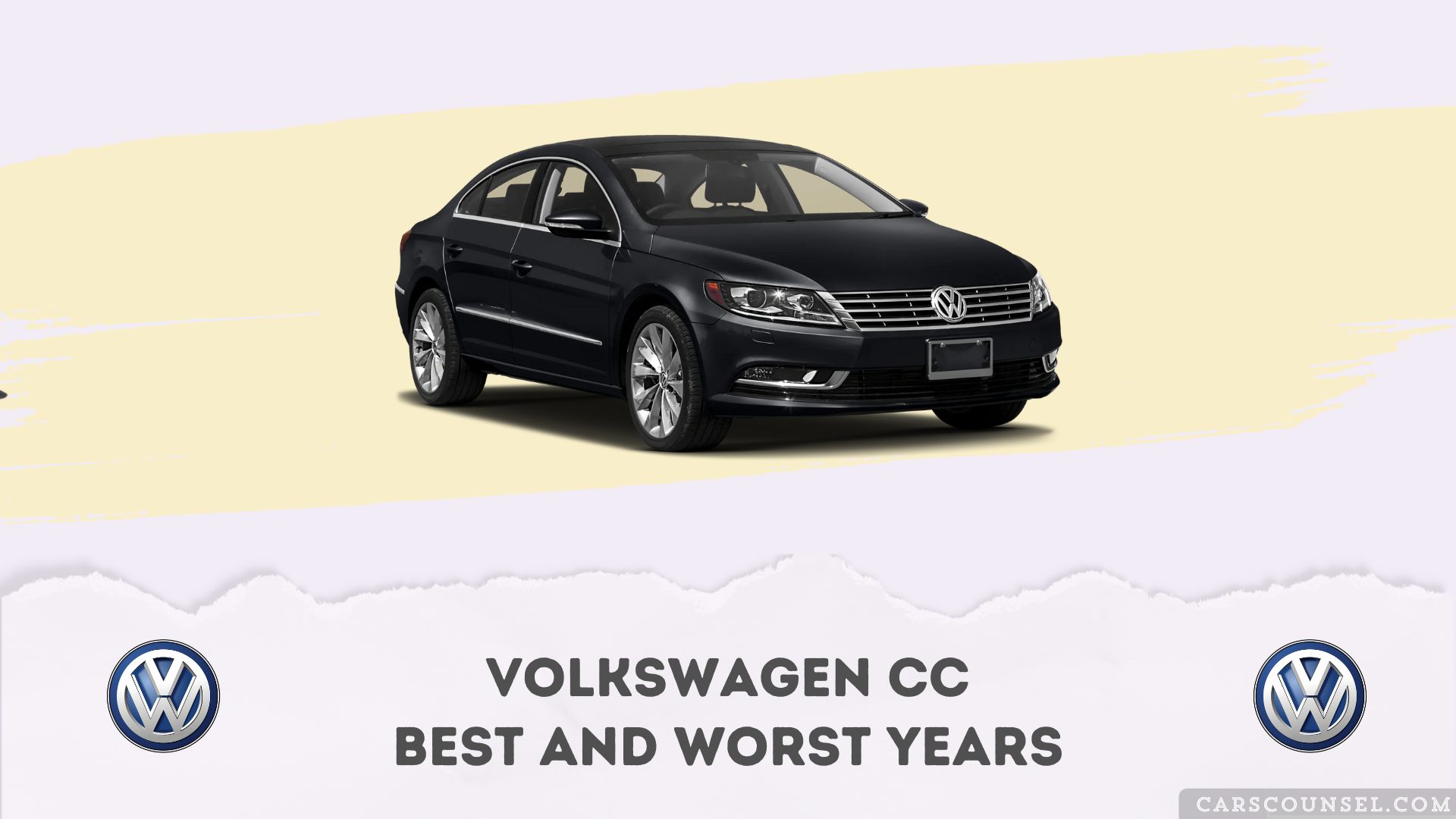
The best Volkswagen CC years are 2016 and 2017, offering the most refined features and updated components. We recommend avoiding the 2009 through 2012 model years due to severe engine timing chain defects and high repair costs.
Remember that rankings are comparative. No used CC is flawless, and long-term reliability heavily depends on strict maintenance records and whether critical engine components were proactively replaced by previous owners.
Reliability varies significantly by engine. The 3.6L VR6 is generally more robust than the 2.0L turbocharged four-cylinder, which requires careful inspection for timing chain tensioner failures and carbon buildup.
Quick Navigation
Best and Worst Volkswagen CC Years at a Glance
| Model Year | Verdict | Main Reason | Buyer Guidance |
|---|---|---|---|
| 2016-2017 | Best Choice | Most refined, updated features | Verify maintenance records |
| 2013-2015 (VR6) | Best Older Choice | Avoids four-cylinder timing defects | Check for rust and suspension wear |
| 2013-2015 (2.0T) | Good With Inspection | Facelift styling, better tech | Confirm timing chain tensioner update |
| 2009-2012 | Avoid | High risk of engine failure | Seek alternatives or VR6 models only |
Key Takeaways
- 2016 and 2017 are the strongest choices for a used CC.
- Avoid 2009-2012 models equipped with the early 2.0L TSI engine.
- The 3.6L VR6 engine is more reliable but harder to find.
- Clogged sunroof drains can cause severe interior water damage.
- Always verify the timing chain tensioner has been updated.
- Check the VIN for open recalls before purchasing.
- An independent pre-purchase inspection is essential.
How We Evaluated the Volkswagen CC Model Years
Our analysis reviews official NHTSA records, manufacturer service campaigns, and long-term ownership data. We weigh the severity of mechanical failures against repair costs.
Complaints are not confirmed defects, and a recall does not automatically make a vehicle unreliable. Recent models have less long-term exposure. “Best” means comparatively stronger, not flawless.
Best Volkswagen CC Years
2016-2017 (Best Choice)
These final model years benefit from Volkswagen’s continuous refinements. The infotainment systems are updated, and many early mechanical bugs were addressed through factory revisions.
They remain the most desirable options for buyers seeking a stylish four-door coupe. However, strict adherence to maintenance schedules is still mandatory.
2013-2015 VR6 Models (Best Older Choice)
If you can locate a CC equipped with the 3.6L VR6 engine, these years offer a compelling blend of reliability and performance. The VR6 avoids the severe timing chain issues plaguing the four-cylinder models.
Fuel economy is lower, but the engine is notably more robust for long-term ownership.
Best Year by Buyer Type
- Best Overall: 2017 (Latest refinements and standard features)
- Best Enthusiast Choice: 2013-2015 VR6 (Smooth power delivery and distinct sound)
- Best Budget Option: 2014 2.0T (Only if the timing chain tensioner is verified as updated)
Years to Approach Carefully
2013-2015 2.0T Models (Good With Inspection)
These facelifted models feature improved styling and technology. However, the 2.0L TSI engine may still harbor the notorious timing chain tensioner defect if the vehicle was built before the factory update.
Buyers must obtain maintenance records proving the updated tensioner was installed. Without this proof, the risk of catastrophic engine failure remains high.
Worst Volkswagen CC Years
2009-2012 (Avoid)
The earliest CC models are plagued by the first-generation EA888 2.0L TSI engine. The original timing chain tensioner is prone to sudden failure, which can destroy the engine and result in massive repair bills.
Additionally, these years suffer from excessive carbon buildup and early DSG transmission mechatronic failures. Unless you are buying a rare VR6 model or a project car, avoid these years entirely.
Volkswagen CC Reliability by Generation
First Generation Pre-Facelift (2009-2012)
Introduced as a sleeker alternative to the Volkswagen Passat, the early CC prioritized style over practicality. Unfortunately, the early powertrains were unreliable.
The 2.0L engine’s timing chain defects make this era a significant financial risk for used buyers.
First Generation Facelift (2013-2017)
Volkswagen updated the exterior styling, interior materials, and technology for 2013. While the VR6 models improved in reliability, the 2.0L engine still required careful monitoring until the tensioner was fully revised.
This era was eventually replaced by the Volkswagen Arteon, which adopted a more practical hatchback design.
Common Volkswagen CC Problems
Timing Chain Tensioner Failure
The early 2.0L TSI engines use a timing chain tensioner that can fail prematurely. If it fails, the timing chain jumps, causing the pistons to strike the valves and destroying the engine.
Verify if the updated part was installed. If you hear a rattling noise on cold starts, walk away immediately.
Carbon Buildup
Direct injection engines do not wash the intake valves with fuel. Over time, severe carbon buildup restricts airflow, causing rough idling, misfires, and power loss.
A professional walnut blasting service is required every 60,000 to 80,000 miles to restore proper engine performance.
Sunroof Drain Clogs
The CC’s panoramic sunroof features drain tubes that easily clog with debris. When blocked, water backs up and pours into the cabin, potentially destroying the under-seat electronics and control modules.
Regularly cleaning these drains is a mandatory ownership chore to prevent thousands of dollars in electrical damage.
Frameless Window Issues
The frameless doors look elegant but are prone to alignment issues. Over time, the window regulators wear out, causing wind noise, water leaks, and difficulty closing the doors properly.
Adjusting the window alignment requires patience and specialized knowledge to maintain a proper seal against the weather stripping.
Repair-Cost Overview
| Problem | Commonly Affected Years | Approximate Repair Range | Important Notes |
|---|---|---|---|
| Timing Chain Tensioner | 2009-2014 | $1,500 – $4,500 | Engine replacement needed if it fails |
| Carbon Buildup Cleaning | 2009-2017 | $400 – $800 | Required every 60k-80k miles |
| Sunroof Drain Repair | 2009-2017 | $200 – $1,500+ | Costs spike if electronics are fried |
| Water Pump Replacement | 2009-2017 | $600 – $1,100 | Housing is plastic and prone to cracking |
Repair costs vary significantly by region, labor rates, parts choice, and whether you use a dealership or an independent European specialist. These figures are approximate estimates for the United States market.
What to Check Before Buying a Used Volkswagen CC
- Verify the VIN for open recalls and Takata airbag status.
- Confirm the timing chain tensioner has been updated to the revised part.
- Listen for rattling noises during a cold start.
- Inspect the cabin carpets for dampness indicating sunroof drain failure.
- Review service records for DSG transmission fluid changes every 40,000 miles.
- Check for intake valve carbon buildup service history.
- Test all frameless windows for proper alignment and sealing.
- Arrange an independent pre-purchase inspection with a VW specialist.
Related Buying Guides
- Volkswagen Tiguan best and worst years: Shares the same 2.0L TSI engine, making its reliability patterns very relevant to CC shoppers.
- Volkswagen Eos best and worst years: Another stylish, niche VW with complex roof mechanisms and similar maintenance requirements.
- Audi A5 best and worst years: A premium alternative that offers similar coupe-like styling and comparable German engineering.
Frequently Asked Questions
What is the best year to buy a Volkswagen CC?
The 2017 model year is the best choice. It is the final production year, featuring the most refined technology and the highest likelihood that critical engine components were updated at the factory.
Why should I avoid the 2009-2012 Volkswagen CC?
These years feature the early 2.0L TSI engine with a defective timing chain tensioner. Failure causes catastrophic engine damage, making these early models a severe financial risk for used buyers.
Is the Volkswagen CC VR6 reliable?
Yes, the 3.6L VR6 engine is generally more reliable than the turbocharged four-cylinder. It avoids the timing chain tensioner defect, though it consumes more fuel and is much harder to find.
Do Volkswagen CCs have expensive maintenance?
Yes, the CC requires strict, expensive maintenance. DSG transmission services, carbon buildup cleaning, and specialized European labor rates make it costlier to maintain than a typical midsize sedan.
What causes water inside the Volkswagen CC cabin?
Clogged panoramic sunroof drain tubes cause water to overflow into the cabin. This can destroy expensive electronic control modules located under the front seats, leading to massive repair bills.
Was the Volkswagen CC replaced?
Yes, Volkswagen discontinued the CC after 2017. It was effectively replaced by the Arteon, which offers a more practical hatchback design while retaining the sleek, four-door coupe styling profile.
Choosing the Right Volkswagen CC Model Year
The Volkswagen CC offers undeniable style, but it demands an informed buyer. Target the 2016 and 2017 model years for the most refined experience, or seek out a rare VR6 model for better engine longevity.
Avoid the 2009 through 2012 models entirely unless the engine has been completely rebuilt. Always verify the timing chain tensioner update and inspect the sunroof drains before purchasing.
Protect your investment by checking the VIN for open recalls and hiring an independent specialist for a thorough pre-purchase inspection. Proper maintenance is the only way to keep a CC running smoothly.

