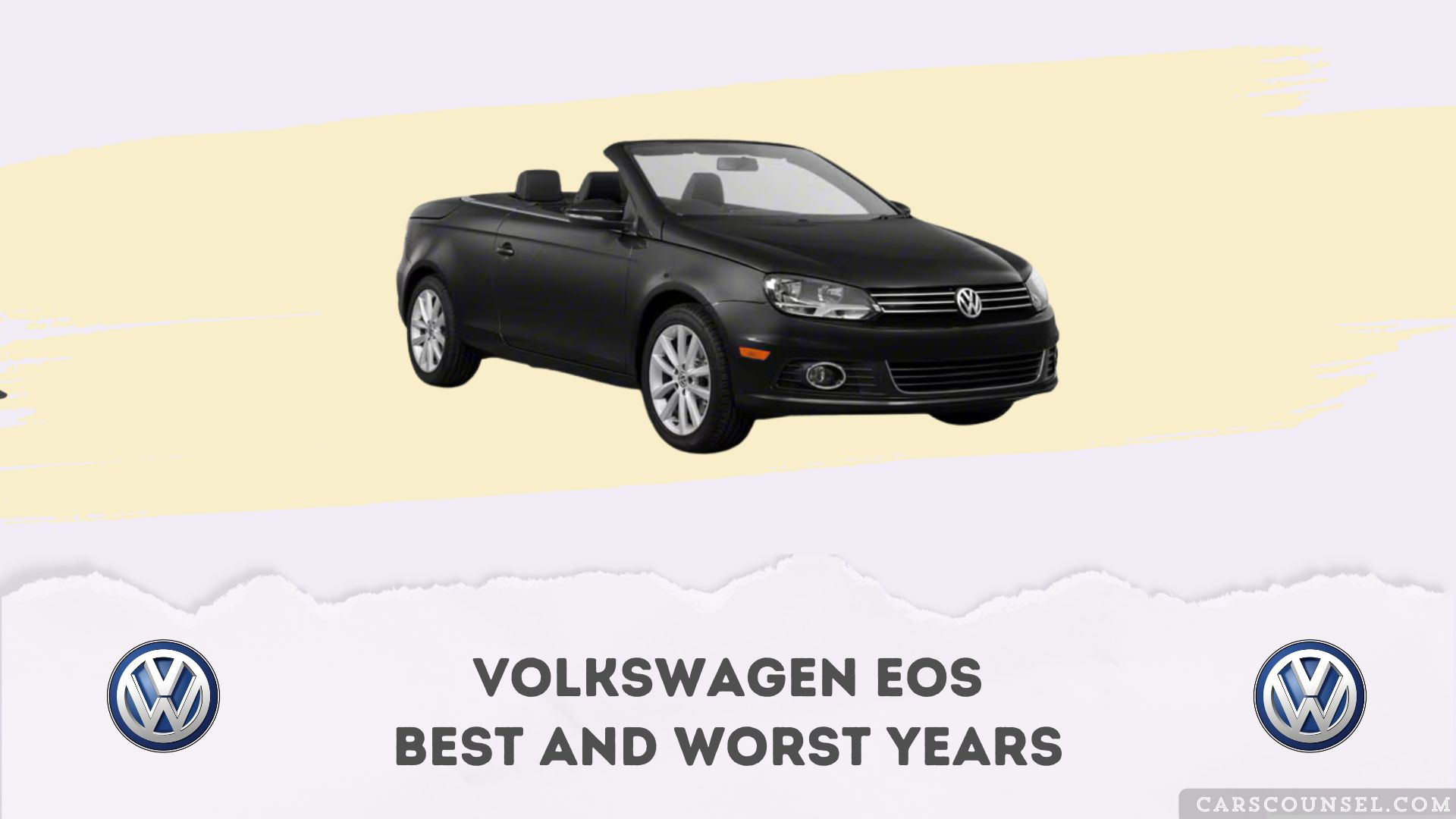
The best Volkswagen Eos years are 2012 through 2016, featuring a refreshed design and updated engine components. Buyers should avoid the 2009 through 2011 models due to severe timing chain tensioner failures that can destroy the engine.
Rankings are comparative, and no Eos model year is entirely flawless. The complex retractable hardtop requires strict maintenance, and overall reliability heavily depends on documented service history and previous repairs.
Significant differences exist between the early 2.0T FSI and VR6 engines and the later 2.0T TSI configurations. Transmission choices also heavily influence long-term ownership costs and daily usability.
Quick Navigation
Best and Worst Volkswagen Eos Years at a Glance
| Model Year Range | Verdict | Main Reason | Buyer Guidance |
|---|---|---|---|
| 2007-2008 | Approach Carefully | FSI cam follower and VR6 timing chain risks | Verify cam follower and chain guides |
| 2009-2011 | Avoid | High rate of catastrophic timing chain tensioner failures | Bypass unless tensioner is updated |
| 2012-2016 | Good With Inspection | Facelift updates, but roof and DSG remain complex | Inspect roof drains and DSG fluid |
Key Takeaways
- The 2012-2016 facelift models represent the best choices, featuring updated styling and revised engine components.
- Avoid 2009-2011 models due to the notorious EA888 Gen 1 timing chain tensioner defect.
- The complex retractable hardtop mechanism is a major failure point across all years and requires expensive repairs.
- Direct injection engines require manual walnut blasting to remove carbon buildup from the intake valves.
- Always verify the VIN for open recalls and insist on a pre-purchase inspection focusing on the roof drains.
How We Evaluated the Volkswagen Eos Model Years
Our analysis reviews official recalls, manufacturer service campaigns, technical service bulletins, and long-term ownership data. We weigh the severity of mechanical failures against repair costs and daily usability.
Complaints are not failure rates, and a recall does not automatically make a year unreliable. Recent models have less ownership history, so best means comparatively stronger, not flawless.
Best Volkswagen Eos Years
2012-2016 (Facelift and Final Years)
The 2012 refresh brought updated styling, improved infotainment, and revised engine components. Volkswagen addressed several early TSI engine flaws, making these later years comparatively stronger for used buyers.
However, the complex five-piece retractable hardtop remains a significant liability. Buyers must verify that the sunroof drains have been routinely cleared to prevent water from destroying interior electronics and control modules.
Best Year by Buyer Type
Best Enthusiast Choice
The 2007-2008 VR6 models paired with a manual transmission offer genuine enthusiast appeal. While the VR6 requires timing chain inspections, it avoids the problematic early TSI tensioners and the DSG mechatronic unit.
Years to Approach Carefully
2007-2008 (Pre-Facelift FSI and VR6)
The inaugural US models featured the 2.0T FSI engine, which is notorious for premature high-pressure fuel pump cam follower wear. If neglected, this wears through the camshaft, requiring massive repairs.
The 3.2L VR6 engine is smooth but suffers from timing chain stretch. Buyers must listen for cold-start rattles and demand proof of timing chain and tensioner replacements.
Worst Volkswagen Eos Years
2009-2011 (Early TSI Engines)
These years introduced the EA888 Gen 1 2.0T TSI engine, which suffered from a fatally flawed timing chain tensioner design. The tensioner can fail without warning, causing the valves to strike the pistons.
Unless the seller can provide definitive proof that the updated tensioner and timing chain were installed, buyers should bypass these model years entirely to avoid catastrophic financial risk.
Volkswagen Eos Reliability by Generation
First Generation (2007-2016)
The Eos was built on the PQ35 platform, sharing underlying architecture with the Golf and Jetta of the same era. While the chassis is solid, the heavy hardtop compromises structural rigidity.
Powertrain reliability varies wildly. The manual transmission is robust, but the DSG automatic requires strict fluid changes every 40,000 miles to prevent mechatronic unit failures.
Common Volkswagen Eos Problems
Retractable Hardtop Mechanism
Affecting all years, the complex roof system relies on multiple motors, sensors, and drain tubes. Clogged drains cause water to flood the cabin, destroying the comfort control module and causing severe electrical gremlins.
Timing Chain Tensioner (2.0T TSI)
Found primarily on 2009-2011 models, the original tensioner fails to maintain proper chain tension. This leads to chain stretch, skipped timing, and catastrophic engine interference. An updated part is mandatory.
Carbon Buildup
Affecting all direct-injection FSI and TSI engines, carbon accumulates on the intake valves over time. This causes rough idling, misfires, and power loss, requiring manual walnut blasting every 80,000 miles.
DSG Mechatronic Failures
Found on automatic models, the DSG mechatronic unit can fail due to degraded fluid or internal solenoid wear. Symptoms include harsh shifting, hesitation, and complete loss of gear engagement.
What to Check Before Buying a Used Volkswagen Eos
- Verify the VIN for open recalls and check for severe salvage history.
- Pour water over the roof to test the drain tubes and check the footwells for moisture.
- Confirm the timing chain tensioner has been updated on all 2.0T TSI models.
- Inspect the high-pressure fuel pump cam follower on 2007-2008 FSI models.
- Test the DSG transmission for smooth shifting and verify 40,000-mile service intervals.
- Arrange a pre-purchase inspection with a Volkswagen specialist.
Related Buying Guides
- Volkswagen Golf best and worst years – Hatchback alternative for buyers wanting the same reliable manual transmissions and turbocharged engines without the expensive hardtop mechanism.
- Volkswagen CC best and worst years – Platform sibling for buyers preferring a sleek four-door sedan with similar luxury features and shared powertrain configurations.
Frequently Asked Questions
Which Volkswagen Eos year is most reliable?
The 2012-2016 facelift models offer the strongest ownership records. They benefit from updated styling, revised engine components, and improved infotainment systems compared to earlier years.
Does the Volkswagen Eos have engine problems?
Yes. The 2009-2011 TSI engines suffer from catastrophic timing chain tensioner failures. The 2007-2008 FSI engines require strict cam follower inspections to prevent fuel pump damage.
Is the Volkswagen Eos expensive to maintain?
Yes. The complex retractable hardtop is costly to repair, and the DSG transmission requires strict fluid maintenance. Neglected roof drains can also cause severe electrical damage.
Are there any common water leak issues?
Yes. The roof drain tubes easily clog with debris, causing water to back up into the cabin. This frequently destroys the comfort control module and interior electronics.
Is the Eos a good daily driver?
It can be, provided the roof mechanism is meticulously maintained. However, the stiff suspension, heavy curb weight, and expensive repair bills make it a challenging daily commuter.
Why was the Eos discontinued?
Volkswagen discontinued the Eos after the 2016 model year due to declining sales, shifting consumer preferences toward crossovers, and the high manufacturing costs of the complex hardtop.
Choosing the Right Volkswagen Eos Model Year
Choosing the right Volkswagen Eos requires strict attention to engine configurations and roof maintenance. The 2012-2016 models provide the most secure ownership experience for buyers seeking a premium convertible.
Buyers must avoid the 2009-2011 models unless the timing chain tensioner has been definitively updated. Ensuring the roof drains are completely clear is mandatory for all examples.
Before purchasing, verify the VIN for open recalls and hire a specialist for a thorough inspection. Knowing which models stand out ensures driving satisfaction rather than severe financial consequences.

