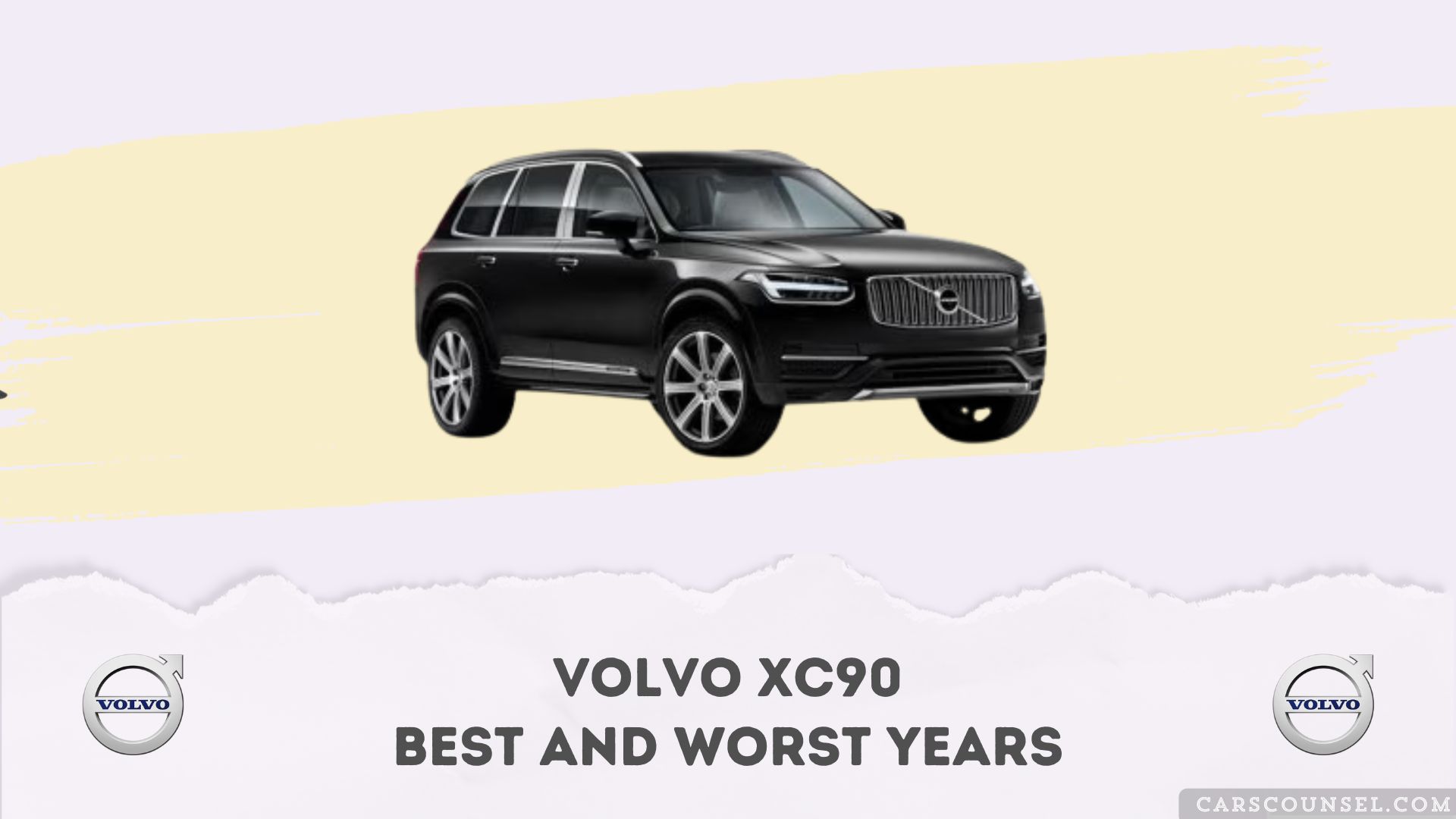
The best Volvo XC90 years are 2019 through 2021 for modern buyers, and 2011 through 2014 for budget shoppers. Avoid the 2003 through 2005 and 2016 model years due to severe transmission and infotainment defects.
These rankings are comparative. No used luxury SUV is flawless, and long-term reliability heavily depends on strict maintenance, accident history, and how previous owners treated the vehicle.
Meaningful differences exist between the first and second generations. Engine choices, infotainment systems, and hybrid components vary drastically, making specific configurations much safer than others.
Quick Navigation
Best and Worst Volvo XC90 Years at a Glance
| Model Year | Verdict | Main Reason | Buyer Guidance |
|---|---|---|---|
| 2022-2024 | Too New to Judge | New infotainment and mild-hybrid systems | Wait for long-term data |
| 2019-2021 | Best Late-Generation Choice | Refined SPA platform and sorted software | Top pick for modern features |
| 2017-2018 | Mixed | Improving but some lingering tech bugs | Inspect infotainment and T8 hybrid |
| 2016 | Avoid | First-year redesign with severe software glitches | Skip this inaugural model year |
| 2011-2014 | Best Older Choice | Final, most reliable years of the first generation | Check for rust and suspension wear |
| 2006-2010 | Approach Carefully | V8 balance shaft and 3.2L oil consumption | Avoid the V8, inspect the inline-6 |
| 2003-2005 | Avoid | Widespread automatic transmission failures | Do not purchase without a rebuild |
Key Takeaways
- The 2019-2021 models represent the sweet spot for the second generation.
- Avoid the 2016 model year due to inaugural SPA platform software and transmission issues.
- First-generation buyers should target 2011-2014 and avoid the expensive-to-repair 4.4L V8.
- The 2003-2005 models suffer from catastrophic automatic transmission failures.
- Recent models (2022+) feature a new Android-based infotainment system that lacks long-term reliability data.
- Always verify open recalls and complete service records before purchasing.
How We Evaluated the Volvo XC90 Model Years
Our analysis reviews official recalls, manufacturer service campaigns, and consumer complaint patterns. We weigh defect severity, repair complexity, and long-term ownership exposure.
Complaints are not confirmed failure rates, and a recall does not automatically condemn a model year. Recent vehicles simply have less ownership history to evaluate. Best means comparatively stronger, not flawless.
Best Volvo XC90 Years
2019-2021 (Best Late-Generation Choice)
These years represent the most refined versions of the second-generation SPA platform. Volvo resolved most early Sensus infotainment bugs and transmission shifting hesitations.
The T6 engine offers a great balance of power and reliability. Buyers get modern safety features without the first-year redesign risks associated with the 2016 launch.
2011-2014 (Best Older Choice)
The final years of the first generation benefit from over a decade of factory refinements. Most early electrical gremlins and transmission vulnerabilities were addressed by this point.
Stick to the naturally aspirated 3.2-liter inline-six. It lacks the explosive power of the V8 but avoids the catastrophic timing chain and balance shaft repairs.
Best Year by Buyer Type
- Best Overall: 2020 (Mature second-generation with excellent safety and sorted software)
- Best Budget Option: 2013 (Affordable first-generation with proven inline-six reliability)
- Best Family Alternative: 2019 (Spacious, safe, and free from major inaugural platform defects)
Years to Approach Carefully
2017-2018 (Mixed)
These models show improvement over the troubled 2016 launch year, but some owners still report Sensus screen freezing and T8 hybrid battery faults.
Have a technician verify the hybrid system health and test every infotainment feature. Non-hybrid T5 and T6 models are generally safer bets here.
2006-2010 (Approach Carefully)
This era introduced the Yamaha-developed 4.4-liter V8. While it sounds fantastic, the balance shaft chain is prone to stretching and failing, requiring engine-out repairs.
The 3.2-liter inline-six is much safer but suffers from oil consumption and PCV system issues. Inspect maintenance records meticulously before committing.
Worst Volvo XC90 Years
2016 (Avoid)
The 2016 model year marks the debut of the new SPA platform and the Sensus infotainment system. First-year models are plagued by system crashes, slow processing, and navigation failures.
Owners also report transmission hesitation and false activations of the automatic emergency braking system. The sheer volume of software-related complaints makes this year a major risk.
2003-2005 (Avoid)
The earliest first-generation models are notorious for premature automatic transmission failures. The AISIN five-speed automatic often requires complete replacement well before 100,000 miles.
Combined with early PCV system flaws and electrical sensor failures, these years are simply too expensive to maintain for the average used car buyer.
Volvo XC90 Reliability by Generation
First Generation (2003-2014)
The original XC90 established Volvo’s three-row SUV credentials. Early years (2003-2005) suffered from severe transmission and electrical defects.
A 2007 refresh brought updated styling and the new 3.2-liter and 4.4-liter engines. The final years (2011-2014) are the most reliable, provided buyers avoid the complex V8 engine.
Second Generation (2016-Present)
Volvo skipped the 2015 model year to completely redesign the XC90 on the new SPA architecture. This generation relies exclusively on 2.0-liter four-cylinder engines, often turbocharged, supercharged, or electrified.
While the 2016 launch was rough, later years improved significantly. The recent shift to Android Automotive OS and mild-hybrid systems means the newest models lack long-term durability data.
Common Volvo XC90 Problems
Infotainment and Electrical Faults
The Sensus system in 2016-2018 models frequently freezes, reboots, or loses audio connectivity. While software updates helped, complete screen replacements are sometimes necessary.
Newer models with Android Automotive OS (2022+) are still experiencing early software bugs, including GPS inaccuracies and app crashes.
Transmission Hesitation and Failure
First-generation models (especially 2003-2005) face complete automatic transmission failure due to valve body wear and solenoid issues.
Second-generation models (primarily 2016-2017) do not typically suffer mechanical failure, but owners report severe shifting hesitation and jerking that requires dealer software recalibration.
V8 Balance Shaft Chain (First Generation)
The 4.4-liter V8 engine features a balance shaft chain that can stretch or break. If it fails, it can cause catastrophic internal engine damage.
Repairing this chain often requires removing the engine, making it one of the most expensive repairs associated with the XC90 nameplate.
What to Check Before Buying a Used Volvo XC90
- Verify the VIN for open safety recalls, especially regarding airbags and fuel systems.
- Review service records to confirm transmission fluid and software updates were performed.
- Test the infotainment system for freezing, audio dropouts, and navigation accuracy.
- Inspect the engine bay for oil leaks, particularly around the PCV system on older models.
- Check for suspension wear, including control arm bushings and air suspension struts if equipped.
- Arrange an independent pre-purchase inspection with a Volvo specialist.
Related Buying Guides
- Volvo XC60 best and worst years: A smaller, two-row alternative that shares similar architecture and powertrains.
- Volvo V90 best and worst years: A luxurious wagon alternative built on the same modern SPA platform.
- Volvo XC70 best and worst years: A rugged, lifted wagon alternative for buyers who prefer a lower ride height.
Frequently Asked Questions
What is the best year for a used Volvo XC90?
The 2019 through 2021 model years are the best choices. They offer refined second-generation performance, sorted infotainment software, and excellent safety features without first-year redesign risks.
What years of Volvo XC90 should I avoid?
Avoid the 2003 through 2005 models due to widespread transmission failures. The 2016 model year should also be avoided because of severe inaugural software and electrical defects.
Does the Volvo XC90 have engine problems?
The first-generation 4.4-liter V8 is prone to expensive balance shaft chain failures. The second-generation 2.0-liter four-cylinder engines are generally reliable but require strict oil change adherence.
How long will a Volvo XC90 last?
Well-maintained examples can reach high mileage, often exceeding 150,000 miles. Longevity depends heavily on strict maintenance, avoiding the complex V8, and addressing electrical issues promptly.
Is the Volvo XC90 expensive to maintain?
Yes, luxury SUV maintenance costs are above average. Parts and specialized labor are expensive, and complex features like air suspension or hybrid batteries can lead to costly out-of-warranty repairs.
Did Volvo skip a year for the XC90?
Yes, Volvo skipped the 2015 model year in the United States. The company used this time to completely redesign the vehicle and transition to the new SPA platform for 2016.
Choosing the Right Volvo XC90 Model Year
Target the 2019 through 2021 model years for the best blend of modern safety, refined performance, and reliable infotainment. Budget buyers should look for a well-maintained 2011-2014 inline-six model.
Always avoid the 2003-2005 and 2016 model years. Verify all service records, check for open recalls, and secure an independent inspection before finalizing your purchase.

