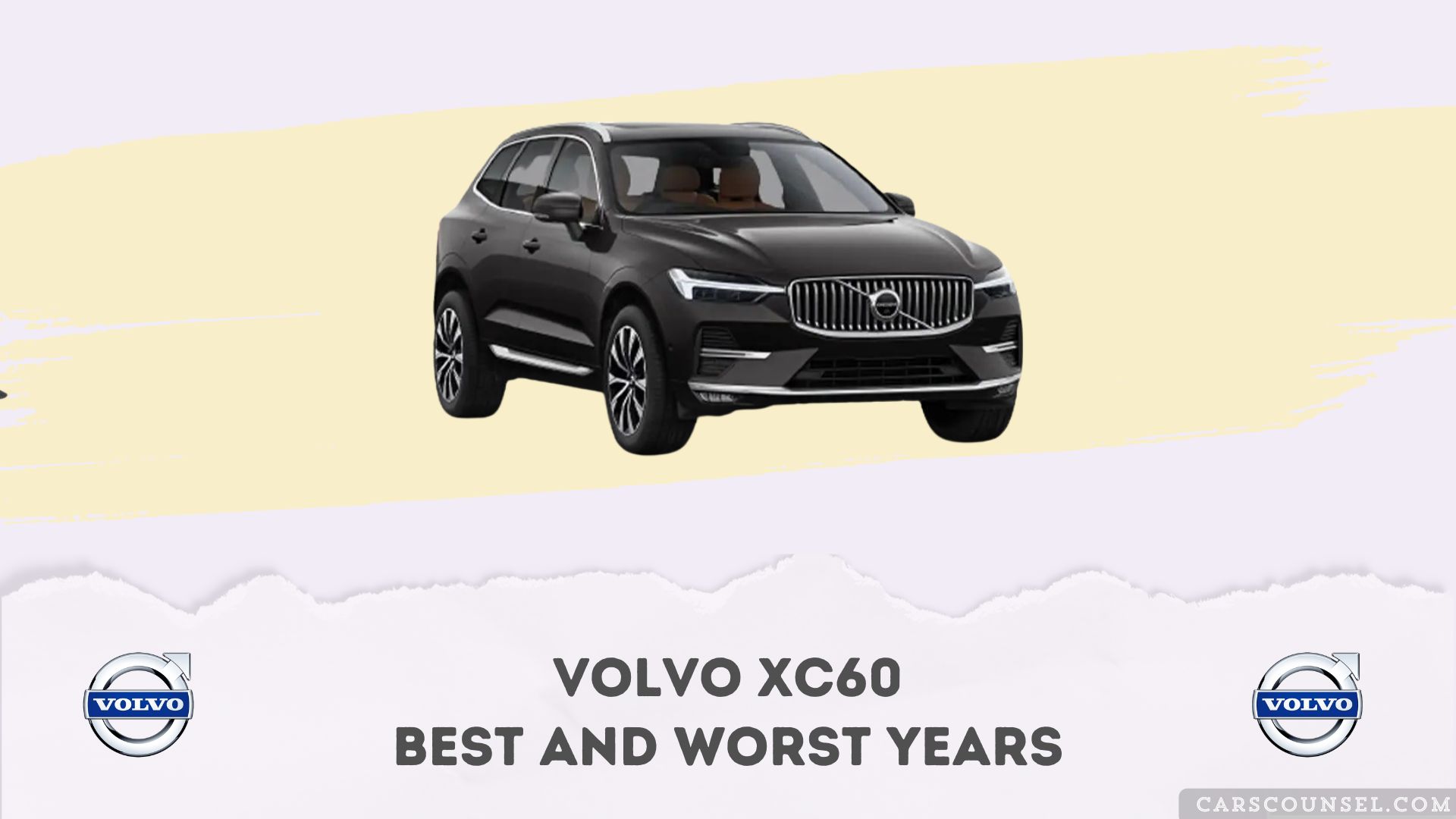
The best Volvo XC60 years are the 2018-2021 models, offering a refined platform and strong reliability. Buyers should approach the 2014-2015 models carefully due to early engine oil consumption issues.
These rankings are comparative, and no luxury SUV is entirely flawless. Maintenance history, previous ownership, and rust prevention heavily influence long-term reliability and ownership costs.
Significant differences exist between the older inline-six engines and the modern turbocharged four-cylinder configurations. The transition to mild-hybrid systems also requires specific inspection priorities.
Quick Navigation
Best and Worst Volvo XC60 Years at a Glance
| Model Year Range | Verdict | Main Reason | Buyer Guidance |
|---|---|---|---|
| 2010-2013 | Best Older Choice | Robust inline-six engines | Inspect for age-related wear |
| 2014-2015 | Approach Carefully | Early 2.0L oil consumption | Verify engine condition and oil history |
| 2016-2017 | Good Choice | Refined first generation | Check Drive-E maintenance records |
| 2018-2021 | Best Choice | Mature SPA platform | Excellent daily driver |
| 2022-2026 | Too New to Judge | Mild-hybrid transition | Long-term data remains limited |
Key Takeaways
- The 2018-2021 models represent the best choices, featuring a mature platform and refined turbocharged powertrains.
- Buyers must approach 2014-2015 models carefully, as early 2.0L Drive-E engines are prone to excessive oil consumption.
- The 2010-2013 models with the 3.2L and 3.0L inline-six engines offer excellent mechanical durability for older SUV shoppers.
- Regular maintenance is critical for the turbocharged four-cylinder engines and the available air suspension systems.
- Always verify the vehicle identification number for open recalls and insist on a pre-purchase inspection.
How We Evaluated the Volvo XC60 Model Years
Our analysis reviews official recalls, manufacturer service campaigns, technical service bulletins, and long-term ownership data. We weigh the severity of mechanical failures against repair costs.
Complaints are not failure rates, and a recall does not automatically make a year unreliable. Recent models have less ownership history, so “best” means comparatively stronger.
Best Volvo XC60 Years
2018-2021 (Second Generation)
The second-generation models built on the Scalable Product Architecture offer excellent build quality. Features like Pilot Assist and Blind Spot monitoring provide exceptional daily safety.
These models provide a comfortable, quiet ride ideal for daily commuting. Buyers should verify that all software updates for the infotainment system have been applied.
2010-2013 (First Generation Inline-Six)
The early first-generation models equipped with the 3.2L naturally aspirated or 3.0L turbocharged inline-six engines are highly regarded for their mechanical robustness. These engines avoid complex four-cylinder oiling issues.
While older, these models offer a traditional driving experience. Buyers must prioritize rust inspection and verify that the Haldex all-wheel-drive system has been properly serviced.
Best Year by Buyer Type
Best Overall
The 2018-2021 models provide the best balance of modern technology, daily comfort, and reliable turbocharged performance for most used luxury SUV buyers.
Best Budget Option
The 2010-2013 inline-six models offer excellent mechanical durability at a lower entry price, provided the buyer budgets for aging suspension components.
Years to Approach Carefully
2014-2015 (Early Drive-E Transition)
These transition years introduced the new 2.0L four-cylinder Drive-E engines to the front-wheel-drive lineup. Early production versions of this engine are known to suffer from defective piston rings.
This flaw leads to excessive oil consumption and potential engine damage. Buyers must demand extensive service records and perform a thorough engine compression test before purchasing.
Worst Volvo XC60 Years
There are no model years that universally warrant an absolute avoid verdict. However, the 2014-2015 front-wheel-drive models with the early 2.0L engine carry the highest risk of expensive internal repairs.
Buyers seeking a traditional, naturally aspirated engine should bypass these transition years in favor of the older 2010-2013 inline-six models or the updated 2016 and newer vehicles.
Volvo XC60 Reliability by Generation
First Generation (2010-2017)
The original model offered a car-like driving experience with robust inline-six powertrains. The mid-cycle transition to four-cylinder engines brought fuel economy gains but introduced early reliability hurdles.
Late first-generation models benefited from updated engine components and refined interior materials, making them solid used choices.
Second Generation (2018-Present)
The current generation introduced a minimalist Scandinavian design and advanced safety suites. The underlying powertrains are mature, though recent mild-hybrid additions require long-term observation.
The switch to a Google-based interface in newer models has drawn mixed owner feedback regarding software stability and screen responsiveness.
Common Volvo XC60 Problems
Engine Oil Consumption
Affecting the 2014-2015 models with the early 2.0L Drive-E engine, defective piston rings can cause severe oil burning. This requires an expensive engine teardown or short-block replacement.
Air Suspension Leaks
Models equipped with the optional rear air suspension may develop leaks in the air springs or compressor over time. Replacing these components is costly, though standard coil springs are unaffected.
Infotainment Software Glitches
Owners of the second-generation models occasionally report freezing or lagging touchscreens. Most of these issues are resolved through over-the-air or dealership software updates rather than hardware replacements.
What to Check Before Buying a Used Volvo XC60
- Verify the VIN for open recalls and software update completion.
- Inspect the engine bay for signs of oil leaks around the valve cover and turbocharger.
- Demand physical proof of piston ring replacement or a clean compression test for 2014-2015 models.
- Check the condition of the rear air suspension if equipped, listening for compressor strain.
- Scan diagnostic codes to check for failing oxygen sensors or turbocharger boost leaks.
- Arrange a pre-purchase inspection with a certified European automotive specialist.
Related Buying Guides
- Volvo XC40 best and worst years – Subcompact luxury alternative for buyers needing a smaller footprint for tight city parking.
- Volvo V60 best and worst years – Wagon alternative for enthusiasts prioritizing cargo versatility and a lower center of gravity.
- Volvo V90 best and worst years – Full-size luxury wagon alternative for buyers requiring maximum rear-seat space and highway comfort.
- Volvo V70 best and worst years – Historical wagon alternative for buyers seeking classic styling and simpler mechanical layouts.
Frequently Asked Questions
Which Volvo XC60 year is most reliable?
The 2018-2021 models offer the strongest reliability records. They benefit from the mature SPA platform and well-sorted 2.0L engines, avoiding the severe oil consumption flaws of earlier transition years.
Does the Volvo XC60 have engine problems?
The 2014-2015 models with the early 2.0L Drive-E engine are prone to excessive oil consumption due to faulty piston rings. The older inline-six and newer four-cylinder engines are generally robust.
Is the Volvo XC60 expensive to maintain?
Yes. While mechanically sound, luxury components like air suspension, advanced safety sensors, and turbocharged powertrains require specialized dealership or European specialist servicing compared to mainstream compact SUVs.
Are older Volvo XC60s reliable?
The 2010-2013 models with the 3.2L and 3.0L inline-six engines are highly regarded for their mechanical durability. However, buyers must budget for age-related suspension and electrical maintenance.
Did Volvo fix the oil burning issue?
Yes. Volvo updated the piston ring design and engine software for the 2016 and newer model years. The second-generation models do not share the widespread oil consumption vulnerabilities of the early engines.
Is the plug-in hybrid XC60 reliable?
The plug-in hybrid models offer excellent performance and fuel economy. The high-voltage battery is covered by a lengthy warranty, but the complex powertrain requires strict adherence to specialized maintenance schedules.
Choosing the Right Volvo XC60 Model Year
Choosing the right Volvo XC60 requires paying close attention to the engine configuration. The 2018-2021 models provide the most secure and refined ownership experience for modern luxury buyers.
Buyers must carefully evaluate 2014-2015 examples due to early four-cylinder oil consumption risks. The older inline-six models remain excellent budget alternatives if properly maintained.
Before purchasing, verify the VIN for open recalls and hire a specialist for a thorough inspection. Knowing which models stand out ensures driving satisfaction rather than severe financial consequences.

