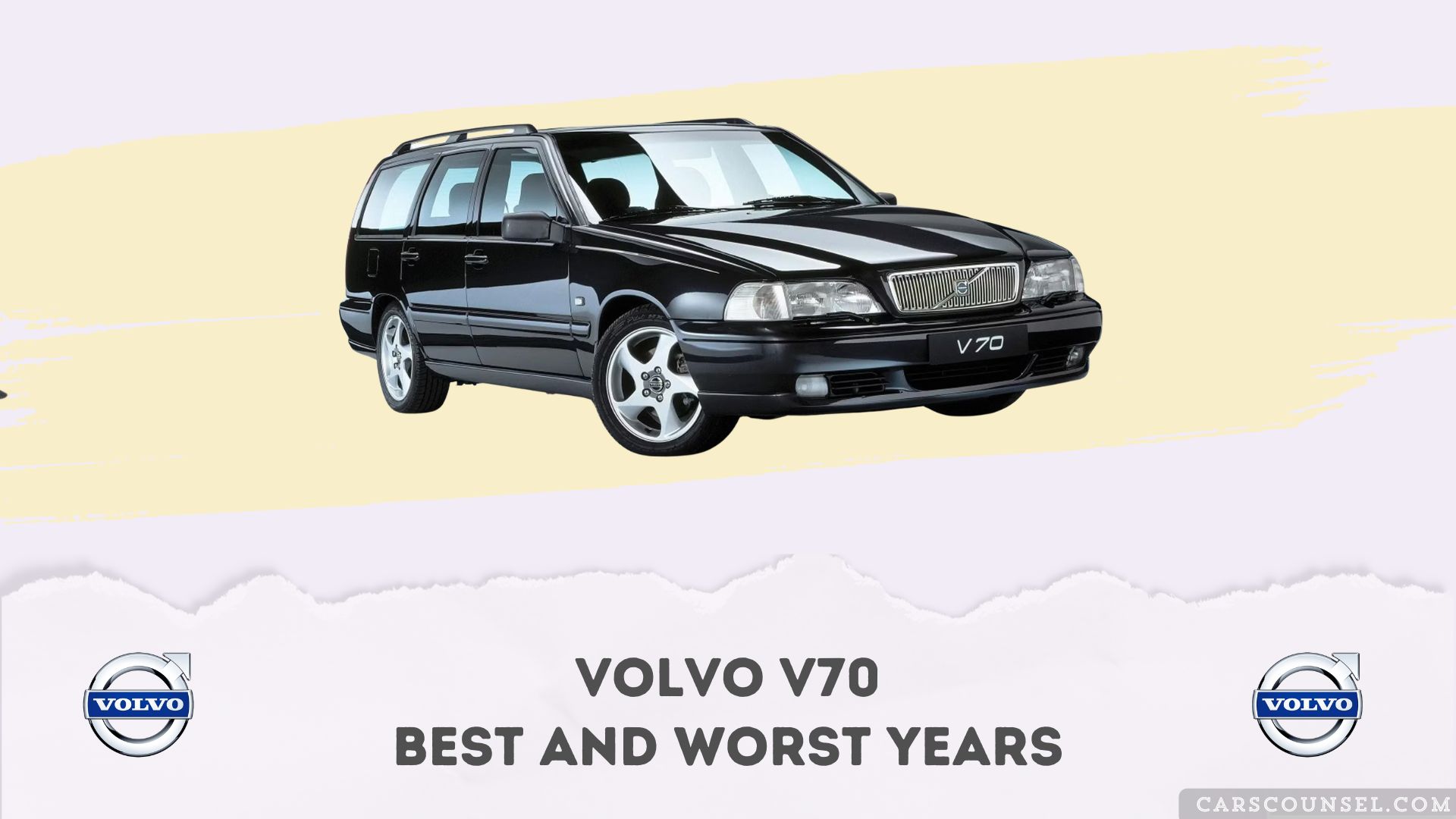
The best Volvo V70 years are the 2008-2016 models, offering a robust platform and top safety. Buyers should approach the 2001-2004 models carefully due to early automatic transmission and electronic throttle issues.
These rankings are comparative, and no older wagon is entirely flawless. Maintenance history, rust prevention, and previous ownership heavily influence long-term reliability and ownership costs for these vehicles.
Significant differences exist between the early five-cylinder engines and the later inline-six configurations. The transition to the P3 platform also brought major improvements in structural rigidity and safety features.
Quick Navigation
Best and Worst Volvo V70 Years at a Glance
| Model Year Range | Verdict | Main Reason | Buyer Guidance |
|---|---|---|---|
| 1998-2000 | Best Older Choice | Classic five-cylinder charm | Inspect for age-related wear |
| 2001-2004 | Approach Carefully | Early transmission and ETM flaws | Verify software and fluid service |
| 2005-2007 | Good Choice | Refined late-generation P2 | Check PCV and suspension parts |
| 2008-2016 | Best Choice | Mature P3 platform and safety | Top choice for family hauling |
Key Takeaways
- The 2008-2016 models represent the best choices, featuring a mature platform and robust inline-six engines.
- Buyers must approach 2001-2004 models carefully, as early P2 generations suffer from electronic throttle and transmission issues.
- The 2005-2007 models offer a solid middle ground with improved software and better overall reliability.
- Regular engine oil changes and timing belt services are critical for all five-cylinder and six-cylinder engines.
- Always verify the vehicle identification number for open recalls and insist on a pre-purchase inspection.
How We Evaluated the Volvo V70 Model Years
Our analysis reviews official recalls, manufacturer service campaigns, technical service bulletins, and long-term ownership data. We weigh the severity of mechanical failures against repair costs and daily usability.
Complaints are not failure rates, and a recall does not automatically make a year unreliable. Recent models have less ownership history, so “best” means comparatively stronger.
Best Volvo V70 Years
2008-2016 (Third Generation)
The third-generation models built on the P3 platform offer excellent build quality and safety. The available 3.2-liter inline-six and turbocharged T6 engines provide smooth torque and reliable daily performance.
These wagons provide a comfortable ride ideal for family commuting. Buyers should verify that all software updates for the transmission and climate control systems have been applied.
1998-2000 (First Generation)
The original models are highly regarded for their robust five-cylinder engines and classic styling. They offer an engaging driving experience that modern wagons struggle to replicate.
These classics require strict rust inspections and age-related maintenance. They are best suited for enthusiasts willing to perform frequent upkeep on older suspension and electrical components.
Best Year by Buyer Type
Best Overall
The 2008-2016 models provide the best balance of modern safety, daily comfort, and reliable inline-six performance for most used family wagon buyers.
Best Enthusiast Choice
The 1998-2000 models offer unmatched classic appeal and analog driving dynamics for dedicated collectors and vintage wagon enthusiasts.
Years to Approach Carefully
2001-2004 (Early Second Generation)
These transition years introduced the new P2 platform but suffered from early production issues. The electronic throttle module and early automatic transmissions are prone to premature failure and erratic shifting.
Buyers must demand extensive service records and verify that the transmission fluid has been flushed regularly. Ensuring the latest software updates are installed is mandatory before purchasing.
Worst Volvo V70 Years
There are no model years that universally warrant an absolute avoid verdict. However, the 2001-2004 models carry the highest risk of expensive electronic and transmission repairs.
Buyers seeking a traditional, trouble-free wagon should bypass these early second-generation years in favor of the updated 2005 and newer vehicles or the older first-generation classics.
Volvo V70 Reliability by Generation
First Generation (1998-2000)
The original model offered a car-like driving experience with robust five-cylinder powertrains. While mechanically sound, age and mileage now dictate reliability more than inherent design flaws.
Second Generation (2001-2007)
The P2 platform brought advanced safety and all-wheel-drive options. Early years struggled with electronic gremlins, but the 2005 facelift introduced improved components and better software integration.
Third Generation (2008-2016)
The final generation introduced a minimalist Scandinavian design and advanced safety suites. The underlying inline-six powertrains are mature, making this the most dependable iteration for modern buyers.
Common Volvo V70 Problems
Electronic Throttle Module (ETM) Failures
Affecting the 2001-2004 models, the ETM can develop internal contact wear, causing stalling, rough idling, or a check engine light. Volvo issued extended warranties and updated parts to resolve this.
Automatic Transmission Wear
Early second-generation automatic transmission units are sensitive to degraded fluid. Neglecting regular flushes can lead to harsh shifts, slipping, and eventual valve body failure requiring expensive rebuilds.
PCV System Clogs
The positive crankcase ventilation system on the five-cylinder engines can clog over time. This causes excessive crankcase pressure, leading to oil leaks from the camshaft seals and rear main seal.
What to Check Before Buying a Used Volvo V70
- Verify the VIN for open recalls and software update completion.
- Inspect the engine bay for signs of oil leaks around the camshaft and rear main seals.
- Demand physical proof of timing belt and water pump replacements on all five-cylinder and six-cylinder engines.
- Check the condition of the all-wheel-drive system, ensuring the Haldex fluid and filter have been serviced.
- Scan diagnostic codes to check for failing ABS modules or electronic throttle body faults.
- Arrange a pre-purchase inspection with a certified European automotive specialist.
Related Buying Guides
- Volvo V60 best and worst years – Direct successor offering modern turbocharged powertrains and updated infotainment for growing families.
- Volvo V50 best and worst years – Compact wagon alternative for buyers needing a smaller footprint for tight city parking.
- Volvo S80 best and worst years – Full-size luxury sedan alternative for buyers prioritizing rear-seat comfort over maximum cargo versatility.
- Volvo S90 best and worst years – Modern flagship sedan alternative for enthusiasts seeking cutting-edge safety tech and premium materials.
Frequently Asked Questions
Which Volvo V70 year is most reliable?
The 2008-2016 models offer the strongest reliability records. They benefit from the mature P3 platform and well-sorted inline-six engines, avoiding the severe electronic flaws of earlier transition years.
Does the Volvo V70 have transmission problems?
The 2001-2004 models are prone to automatic transmission wear and erratic shifting if fluid maintenance was neglected. The later second-generation and third-generation models are generally robust with proper care.
Is the Volvo V70 expensive to maintain?
Yes. While mechanically sound, luxury components, advanced safety sensors, and specialized European powertrains require dedicated specialist servicing compared to mainstream compact wagons.
Are older Volvo V70s reliable?
The 1998-2000 models are highly regarded for their mechanical durability. However, buyers must budget for age-related suspension, rubber, and electrical maintenance due to their vintage status.
Did Volvo fix the electronic throttle issue?
Yes. Volvo issued extended coverage programs and updated the electronic throttle module hardware and software for the affected early models. Later generations use revised, reliable throttle body designs.
Is the AWD V70 good in the snow?
Yes, when equipped with the Haldex AWD system and proper winter tires, the V70 provides confident traction and stability in snow and adverse weather conditions.
Choosing the Right Volvo V70 Model Year
Choosing the right Volvo V70 requires paying close attention to the generation and engine configuration. The 2008-2016 models provide the most secure and refined ownership experience for modern buyers.
Buyers must carefully evaluate 2001-2004 examples due to early electronic and transmission risks. The older first-generation models remain excellent enthusiast alternatives if properly maintained and stored.
Before purchasing, verify the VIN for open recalls and hire a specialist for a thorough inspection. Knowing which models stand out ensures driving satisfaction rather than severe financial consequences.

