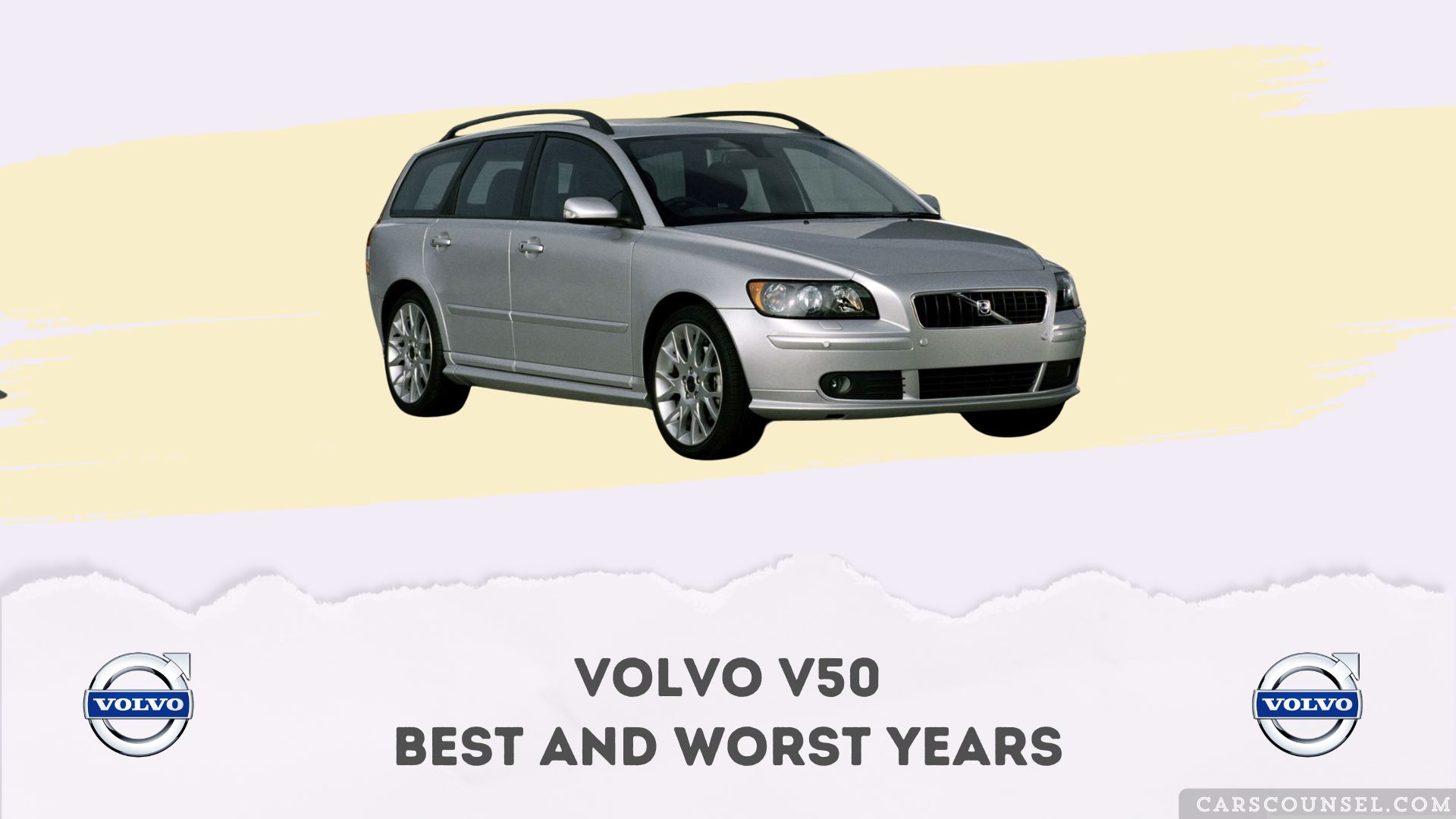
The best Volvo V50 years for US buyers are 2009-2011, offering refined powertrains and fewer electrical gremlins. Buyers should approach the 2005-2006 models carefully due to early production steering and electronic issues.
These rankings are comparative, and no used Swedish wagon is flawless. Strict adherence to timing belt intervals and maintenance history heavily influence long-term reliability and ownership costs.
Significant differences exist between the naturally aspirated 2.4-liter and turbocharged T5 engines. The transition to a six-speed automatic transmission in 2007 also improved daily drivability and overall performance.
Quick Navigation
Best and Worst Volvo V50 Years at a Glance
| Model Year Range | Verdict | Main Reason | Buyer Guidance |
|---|---|---|---|
| 2005-2006 | Approach Carefully | Early P1 electrical and steering lock faults | Verify CEM and steering column |
| 2007-2008 | Good Choice | Mid-cycle refresh, 6-speed auto introduced | Check timing belt and PCV service |
| 2009-2011 | Best Choice | Most reliable US years, refined T5 engine | Top choice for daily driving |
Key Takeaways
- The 2009-2011 models represent the best choices, featuring a mature platform and refined turbocharged powertrains.
- Buyers must approach 2005-2006 models carefully, as early US examples suffer from steering column lock and central electronic module issues.
- The 2.5-liter T5 engine offers excellent performance but requires strict attention to the PCV system to prevent oil leaks and turbocharger wear.
- Timing belt replacement is an absolute necessity on all five-cylinder engines to prevent catastrophic interference engine failure.
- Always verify the vehicle identification number for open recalls and insist on a pre-purchase inspection.
How We Evaluated the Volvo V50 Model Years
Our analysis reviews official recalls, manufacturer service campaigns, technical service bulletins, and long-term ownership data. We weigh the severity of mechanical failures against repair costs and daily usability.
Complaints are not failure rates, and a recall does not automatically make a year unreliable. Recent models have less ownership history, so “best” means comparatively stronger.
Best Volvo V50 Years
2009-2011 (Late First Generation)
The final US model years of the V50 benefit from factory refinements and resolved early-production bugs. The 2.5-liter T5 engine paired with the six-speed automatic transmission provides strong passing power.
These wagons offer a comfortable, practical cargo area ideal for daily commuting. Buyers should verify that the turbocharger spools smoothly and that all software updates have been applied.
Best Year by Buyer Type
Best Overall
The 2009-2011 models provide the best balance of modern reliability, daily comfort, and accessible turbocharged performance for most used compact wagon buyers.
Best Budget Option
The 2007-2008 models offer solid value and improved transmissions, provided the buyer verifies strict adherence to timing belt and PCV system maintenance schedules.
Years to Approach Carefully
2005-2006 (Early First Generation)
The inaugural US model years introduced the P1 platform but suffered from early electrical gremlins. The steering column lock mechanism and central electronic module are prone to failure, causing no-start conditions.
Additionally, early five-speed automatic transmissions are less responsive than the later six-speed units. Buyers must demand extensive diagnostic scans and service records before purchasing these early examples.
Worst Volvo V50 Years
There are no model years that universally warrant an absolute avoid verdict. However, the 2005-2006 models carry the highest risk of frustrating electrical and steering lock repairs.
Buyers seeking a trouble-free wagon should bypass these inaugural years in favor of the updated 2007 and newer vehicles, which offer significantly better daily reliability.
Volvo V50 Reliability by Generation
First Generation (2005-2011)
The US-market V50 was built on the Ford C1 platform, sharing related architecture with the S40 and C30. It offered car-like handling and robust five-cylinder powertrains.
Early years struggled with electrical integration, but the 2007 refresh introduced improved software and a six-speed transmission. The final years remain the most dependable iterations for modern buyers.
Common Volvo V50 Problems
Timing Belt Failures
Affecting all 2.4-liter and 2.5-liter five-cylinder engines, the timing belt must be replaced every 100,000 miles or 10 years. Because these are interference engines, a snapped belt causes catastrophic internal damage.
PCV System Clogs
The positive crankcase ventilation system can clog, leading to excessive crankcase pressure. This forces oil past the camshaft seals and turbocharger return lines, resulting in messy leaks and potential turbo starvation.
Steering Column Lock Faults
Primarily affecting 2005-2007 models, the electronic steering column lock can fail to disengage. This prevents the vehicle from starting and often requires replacing the entire lock assembly or bypassing the system.
What to Check Before Buying a Used Volvo V50
- Verify the VIN for open recalls and software update completion.
- Demand physical proof of timing belt, tensioner, and water pump replacements.
- Inspect the engine bay for oil leaks around the cam seals, crank seals, and turbo oil lines.
- Test the steering column lock by locking and unlocking the vehicle multiple times.
- Scan the central electronic module (CEM) for stored fault codes or communication errors.
- Arrange a pre-purchase inspection with a certified European automotive specialist.
Related Buying Guides
- Volvo V60 best and worst years – Direct successor offering modern turbocharged powertrains and updated infotainment for growing families.
- Volvo V70 best and worst years – Larger wagon alternative for buyers requiring maximum cargo volume and available inline-six power.
- Volvo S80 best and worst years – Full-size luxury sedan alternative for buyers prioritizing rear-seat comfort over maximum cargo versatility.
- Volvo S90 best and worst years – Modern flagship sedan alternative for enthusiasts seeking cutting-edge safety tech and premium materials.
Frequently Asked Questions
Which Volvo V50 year is most reliable?
The 2009-2011 models offer the strongest reliability records. They benefit from a mature platform and well-sorted T5 engines, avoiding the severe electrical flaws of early transition years.
Does the Volvo V50 have transmission problems?
The early five-speed automatic transmissions are somewhat sluggish, but the six-speed units introduced in 2007 are generally robust. Regular fluid changes are recommended to ensure longevity.
Is the Volvo V50 expensive to maintain?
Yes. While mechanically sound, European components, specialized five-cylinder engines, and advanced electronics require dedicated specialist servicing compared to mainstream compact wagons.
What happens if the timing belt breaks?
Because the five-cylinder engines are interference designs, a broken timing belt will cause the pistons to strike the valves. This results in catastrophic engine failure requiring a complete rebuild.
Are there any common oil leaks?
Yes. Clogged PCV systems often cause oil to leak from the camshaft seals, crankshaft seals, and turbocharger oil return lines. Keeping the PCV system clean is vital for preventing these leaks.
Is the V50 a good daily driver?
Yes, especially the 2009-2011 T5 models. They offer an excellent blend of practical cargo space, comfortable seating, and engaging turbocharged performance for daily commuting and light hauling.
Choosing the Right Volvo V50 Model Year
Choosing the right Volvo V50 requires paying close attention to the model year and maintenance history. The 2009-2011 models provide the most secure and refined ownership experience for modern buyers.
Buyers must carefully evaluate 2005-2006 examples due to early electrical and steering lock risks. Ensuring the timing belt has been replaced is mandatory for all five-cylinder engines.
Before purchasing, verify the VIN for open recalls and hire a specialist for a thorough inspection. Knowing which models stand out ensures driving satisfaction rather than severe financial consequences.

